
Maritime AI Software
Discover cutting-edge solutions from leading global suppliers
Robosys Automation, a developer of maritime autonomy solutions, has secured a contract to upgrade a 26-meter Damen 2610 Fast Crew Supplier (FCS) Twin Axe High Speed Support Vessel (HSSV) with its VOYAGER AI software.
Awarded by an undisclosed European client, this contract involves a comprehensive vessel retrofit to ensure the VOYAGER AI optimizes the ship’s performance in real-world offshore support operations, including crew transfers, logistics, and dynamic positioning tasks.
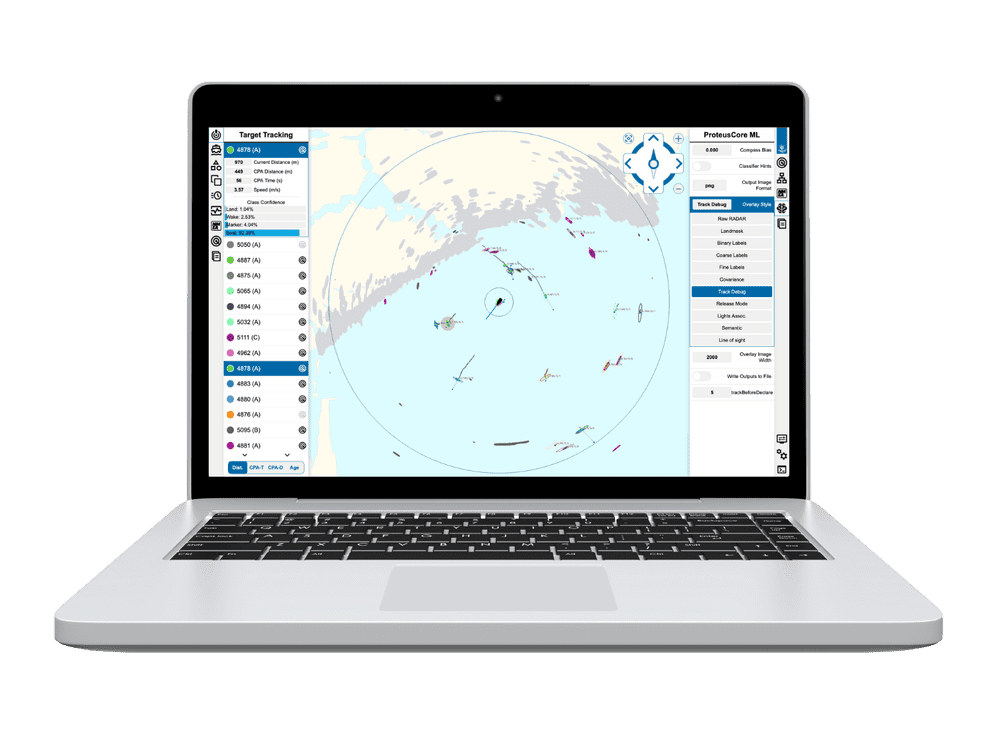
By seamlessly integrating the ship’s onboard systems with this AI software, the vessel will be able to operate under remote control and perform safe, autonomous navigation. The system also supports intelligent decision-making, using electronic navigation charts (ENCs/ECDIS) for route planning and adjustments, while following international collision regulations (COLREGS) to avoid accidents.
The VOYAGER AI software suite supports a wide range of surface and sub-surface vessel operations, including ports, naval defense, offshore energy and commercial shipping. It provides scalable autonomy, from decision-support to fully autonomous operations, and can integrate with existing vessel control systems with minimal disruption.
This adaptability was key in securing the retrofit contract, with VOYAGER AI complementing the vessel’s existing systems while enabling remote and autonomous operations.
Nigel Lee, Chief Strategy Officer at Robosys Automation, stated, “This project represents a significant leap forward not only for Robosys but for the offshore renewables industry. The integration of VOYAGER AI into this Damen FCS 2610 vessel highlights the confidence in remote and autonomous smart vessel technologies to enhance safety, operational efficiency, and sustainability, within offshore wind operations.
“The integration of Robosys’ VOYAGER AI into the Damen 2610 marks a major step forward in enhancing the safety, efficiency, and sustainability of our customer’s offshore operations. As the offshore wind industry continues to evolve, embracing advanced autonomy is a natural progression to meet future demands, for safer and cleaner seas.”
The vessel, built in 2015 to Lloyd’s Register classification standards, is powered by twin Caterpillar C32 engines with direct drives. It is equipped with an Alphatron autopilot, Böning control system, Bosch Rexroth ship controls, and a Hydrosta bow thruster system.
This will be the second integration of Robosys’ VOYAGER AI into a Crew Transfer Vessel (CTV), following the first retrofit 2019 on a similar 26-metre Damen CTV using the VOYAGER AI Autonomous Navigation System (ANS).
The new deployment demonstrates how intelligent autonomy solutions can future-proof vessel operations and support net-zero ambitions, as the global demand for offshore wind increases.