

NEPI by Numurus

verified This business has been claimed by NEPI by Numurus and verified by UST.
Verified companies work with us to ensure we display the most up-to-date and comprehensive product information, articles and other material to help you choose the right solution for your requirements.
Hardware-Agnostic Edge AI Software Platform for Smart Systems United States of America
Visit Website
Saved
Save
Contact
NEPI by Numurus

Hardware-Agnostic Edge AI Software Platform for Smart Systems

NEPI by Numurus is an advanced source-available software platform that accelerates the development of edge AI systems across a broad spectrum of applications, including drones and robotics, defense, science and research, industrial automation, and education.

Before Windows, only computer scientists could use computers. Windows changed this by providing an interface, built-in apps, and hardware that just worked – allowing everyone, not just computer scientists, to use computers. NEPI does the same for smart systems.

The hardware-agnostic solution enables teams to integrate sensors and hardware, run AI algorithms and models on edge computing devices. and automate workflows – without needing to build a stack from scratch.

NEPI by Numurus – The software platform for edge AI

Connect sensors, deploy AI models, and automate smart systems. Prototype in days, without building the infrastructure from scratch.

What problem does NEPI solve?

Most development teams building smart systems spend a significant amount of time building infrastructure that is not part of their end product. All this – which may include hardware drivers, AI pipelines, data collection logic, automation layers, control interfaces, and more – may take up to six months to a year of valuable development time before they even get started on their product.

Without NEPI, engineers face a number of major challenges:

  • Months of engineering lost to low-level integration before touching the real application
  • Fragmented AI tooling and brittle data pipelines
  • Sensor integration rewritten every time the hardware changes
  • No reliable way to run AI in the field where cloud connectivity is limited or absent

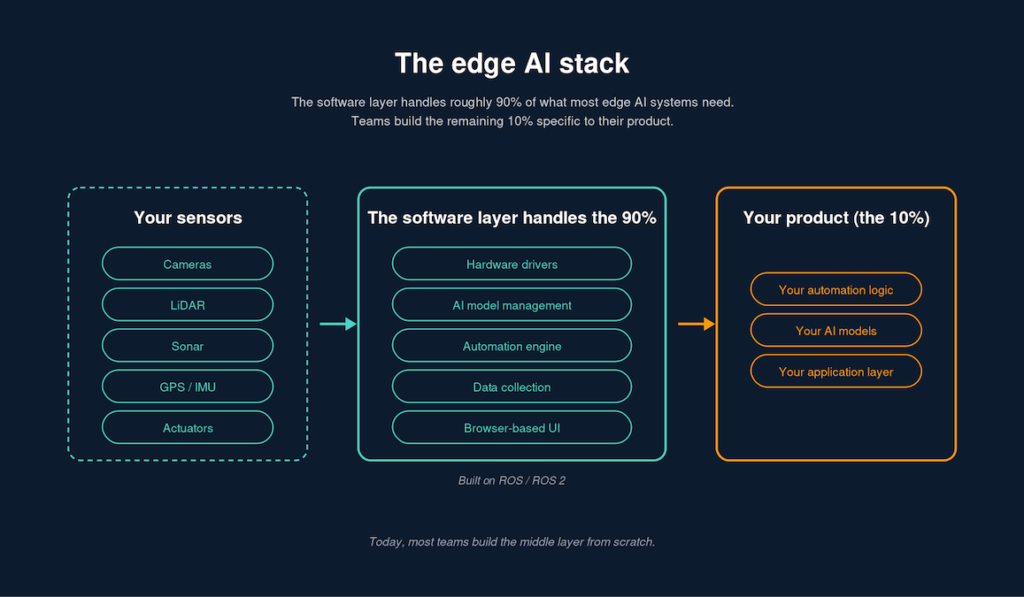
NEPI addresses these issues by providing approximately 90% of what most smart systems need out of the box: hardware abstraction drivers, AI model management, event-driven automation, data collection, and a browser-based UI. Teams can customize the remaining 10% for their specific application using their own AI models and low-code automation. The result is that a field-ready prototype can be created in days to weeks instead of months.

How NEPI works

NEPI is built on the widely-used ROS and ROS2, with low-code scripting that allows users to easily build and customize the remaining functionality required for their unique applications. The system runs fully at the edge, requiring no connectivity or cloud computing.

Thanks to its hardware-agnostic design, the platform handles the infrastructure layer the same way regardless of sensors, payloads or applications, allowing developers and OEMs in a diverse range of sectors to use and benefit from the same core tools.

NEPI consists of three tightly-integrated components:

  • Hardware Abstraction Drivers – an ever-expanding library of drivers provides abstraction of each device’s native interface to a NEPI standard SDK. This allows developers to change and upgrade hardware such as sensors and GPS receivers without needing to rewrite application code.
  • AI Model Management – NEPI also abstracts AI models’ native framework interfaces to a standard SDK, providing a drag-and-drop interface that enables users to deploy, swap and update without affecting the rest of the system.
  • Event-Driven Automation & Data Collection – low-code scripting allows users to quickly and easily define triggers, conditions, and actions for seamless automation. Sensor states, AI detections, and time-based triggers are integrated into structured and reliable data pipelines that work under demanding real-world conditions.

NEPI applications

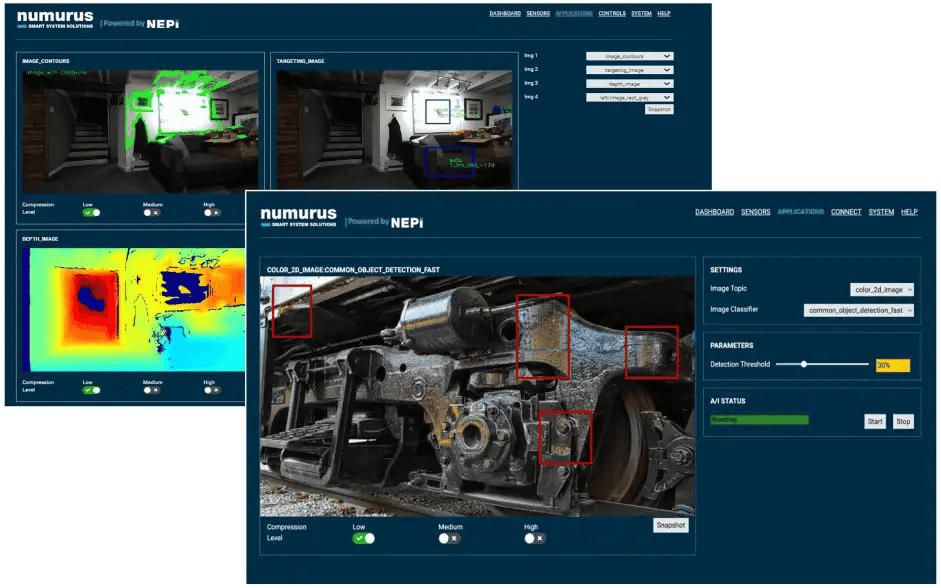
An intuitive UI enables you to configure, monitor and control your entire system from any browser, and provides dashboards for at-a glance system status, sensor feeds, AI outputs, and data management.

Why do engineers, OEMs, and integrators choose NEPI?

NEPI offers a wide range of advantages that provide enhanced benefits to developers, OEMs and system integrators compared to other approaches:

  • vs. building from scratch: NEPI provides a production-ready integration layer that enables teams to skip months of foundation work.
  • vs. AWS Greengrass and Azure IoT Edge: these solutions are cloud-dependent and built for enterprise IT fleets, not field robotics. NEPI runs fully at the edge with no cloud dependency.
  • vs. raw ROS and ROS 2: ROS gives you communication infrastructure but no AI model management, no hardware abstraction, no out-of-the-box automation or data collection. NEPI adds those layers on top.

Other standout advantages include:

  • NEPI is built on ROS and ROS 2, so teams already in that ecosystem can adopt the solution without abandoning their existing code.
  • NEPI has been proven beyond the laboratory, with a wide variety of real-world field deployments in extremely harsh environments including the open ocean, deep sea, and on board heavy-duty robotic vehicle platforms.
  • The solution is hardware-agnostic, enabling investment in software development to survive hardware changes.
  • Building supporting architecture for smart systems typically takes 2 to 4 engineers six months to over a year. NEPI removes this phase entirely.

Advanced edge AI & real-time processing

NEPI runs fully offline once installed, enabling all AI inference, automation, and data collection to take place on-device. An internet connection is only required for updates or optional remote dashboard access.

The system is AI model-agnostic, allowing you to load your own trained models or use built-in detection frameworks. Supported formats include Darknet/YOLO, TensorRT, ONNX, and PyTorch. NEPI manages loading, inference, output routing, and triggering automation from detection results.

NEPI User Interface

NEPI’s hardware abstraction and data management layer makes fusion across heterogeneous sensors practical without writing custom integration code for each combination. AI outputs drive event-driven automation directly on the device.

Versatile hardware compatibility & licensing

NVIDIA Jetson is the primary validated compute family for NEPI, with compatible models including Nano, Xavier NX, Orin Nano, Orin NX, and AGX Orin. NEPI can also run on x86 systems, with a Docker container that can be installed on any standard Linux laptop or desktop with no dedicated edge hardware required. NEPI’s abstraction layer sits between the physical hardware and the application, meaning that when you swap a camera or sensor and only the driver changes, not your application code.

Numurus also sells edge hardware with NEPI pre-installed for teams that want a ready-to-deploy system. All deployment options support a wide variety of sensors and payloads, including 2D and 3D imaging cameras, lidar, sonar, GPS and INS, IMUs, pan-tilt actuators, lights and strobes, and robotic control systems.

NEPI’s full source codebase is available on Github. Software licensing and support plans are available in a number of tiers – a free option for evaluation and education, and paid Professional and Enterprise tiers with commercial support and services. Numerus also offers professional development services to build custom application layers for teams that want a fully turnkey solution.

Applications for Unmanned Systems

NEPI has been proven in real-world autonomy and unmanned system deployments in the air, at sea and on land. No matter the domain, NEPI provides the sensor integration, AI deployment, and automation layer, freeing your team to create the mission logic and AI models.

USVs

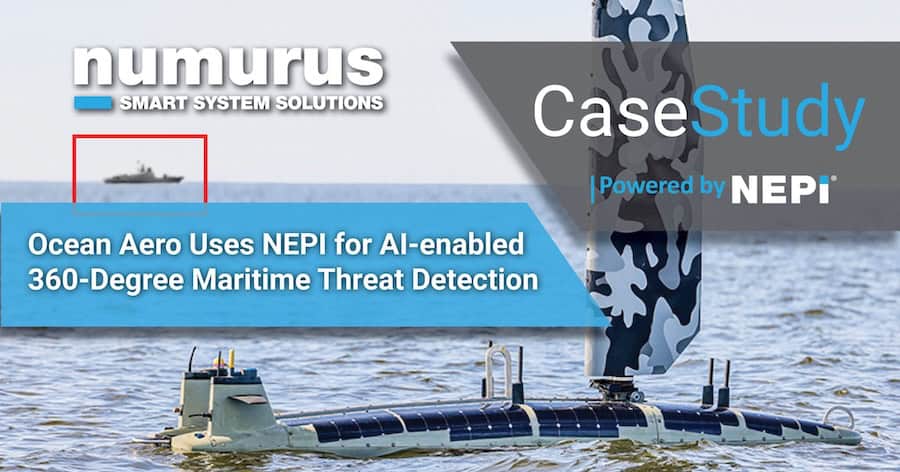
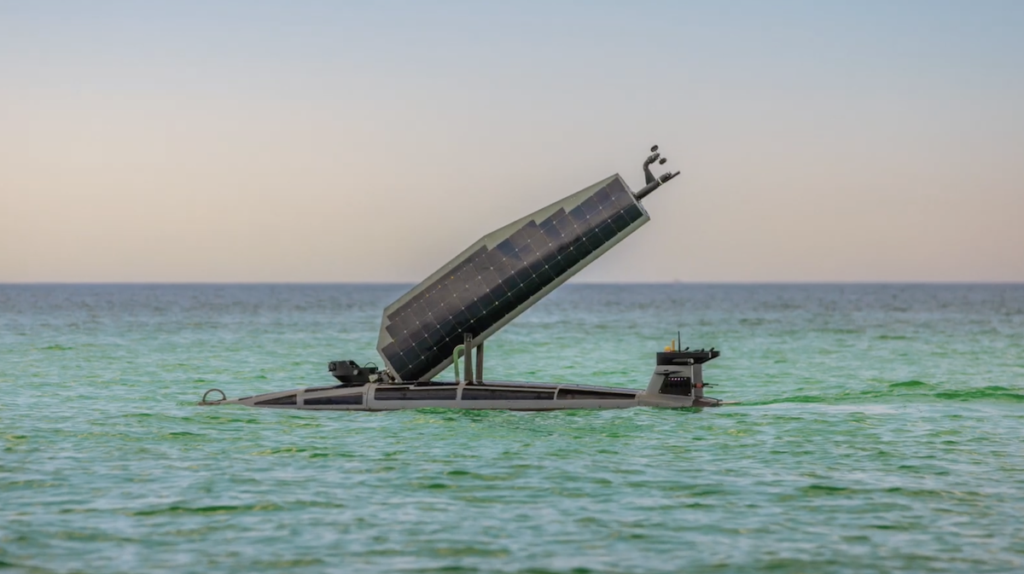
NEPI was utilized by Ocean Aero to equip their TRITON ASVs (autonomous surface vehicles) with 360-degree automated maritime threat detection, with five directional cameras running onboard AI.  NEPI cycles the cameras through AI models, calculates range and bearing on a target, stops the vessel to collect high-res data, and streams results to remote operations in real time.

ROVs

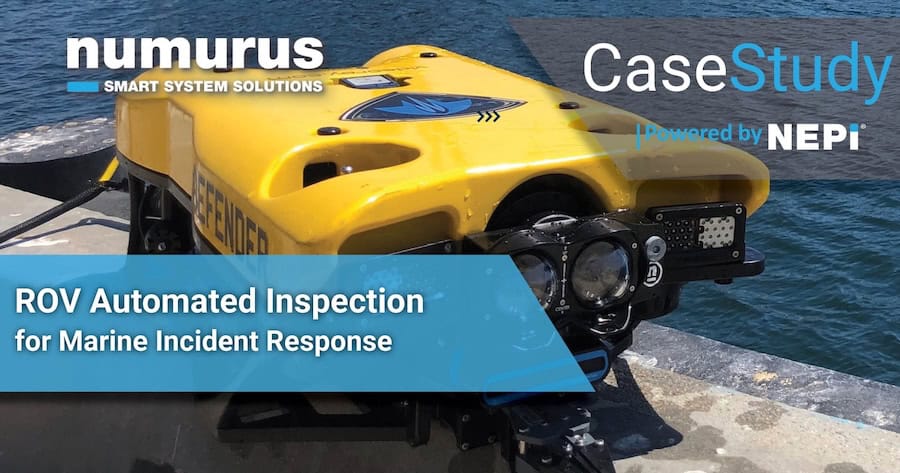
VideoRay added AI-driven inspection automation to their Mission Specialist Defender ROV control system, using NEPI in conjunction with SeeByte AI detection models. The onboard AI detects and identifies targets such as lost cargo containers, auto-collects high-res 3D data, and distributes it to remote engineering teams worldwide in real time.

UAVs

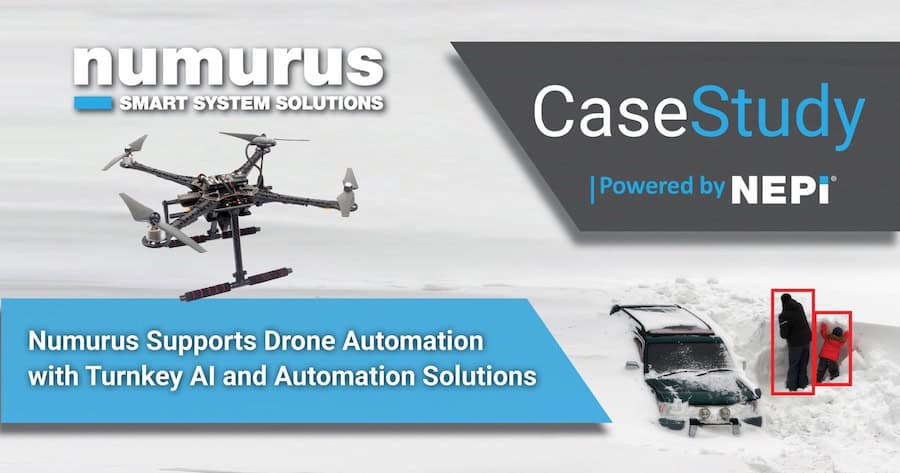
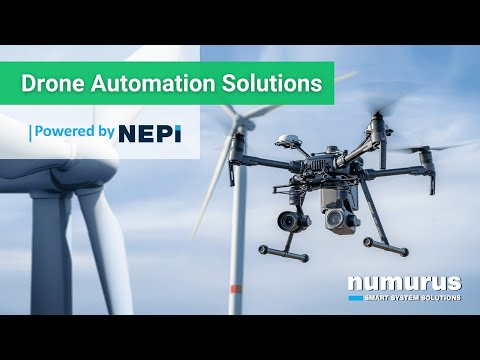
NEPI was used as the basis for an AI-based automation and remote monitoring system for search and rescue drones in a student capstone project at Lane Community College. This demonstrates the value of NEPI in educational settings and for developers without deep software engineering backgrounds.

Autonomous research & other platforms

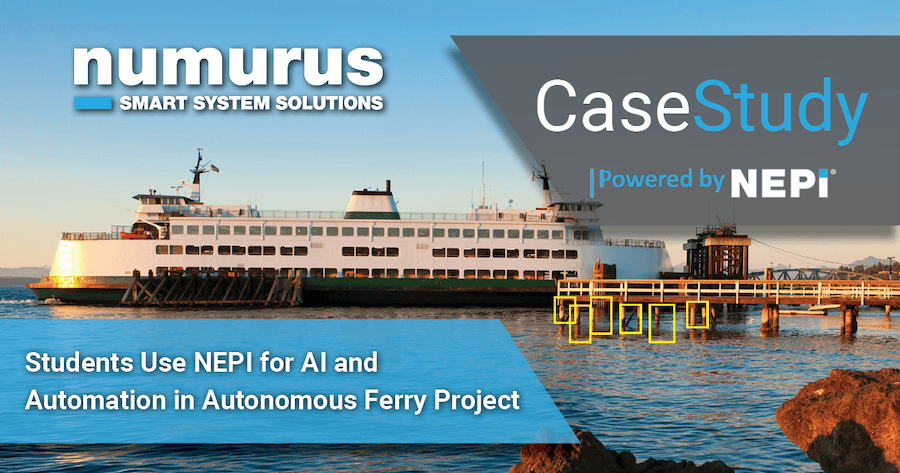
A research team at University of Washington Tacoma used NEPI as the foundation for an AI-driven multi-sensor monitoring and detection platform for their autonomous ferry project. This use case highlights how NEPI can be used wherever teams need to collect synchronized smart data and automate systems without building infrastructure first.

UGVs

NEPI’s platform-agnostic driver framework also supports control systems for UGVs and ground robotics platforms.

Articles

Latest
Windows for Robots

Nepi by Numurus examines how accessible software platforms are helping unlock the full potential of edge AI, making robotics and automation easier to deploy and scale

Jun 12, 2026
Hardware-Agnostic Edge AI Software Platform for Drones, Robotics & Smart Systems

NEPI by Numurus enables teams to integrate sensors and hardware and run AI algorithms and models on edge computing devices, without needing to build a stack from scratch

May 28, 2026

Videos

Regional Offices & Locations
NEPI by Numurus United States of America Seattle, WA Contact Website
Advancing Unmanned Systems Through Strategic Collaboration UST works with major OEMs to foster collaboration and increase engagement with SMEs, to accelerate innovation and drive unmanned systems capabilities forward.