UAV Propulsion Tech works with its fuel cell systems partner, H3 Dynamics, to support hydrogen fuel cell integration for Unmanned Aerial Vehicles (UAVs) where endurance is a key design consideration. Read more >>
Hydrogen fuel cells can sustain electric flight for several hours, making the technology relevant to inspection, surveillance, and long-range BVLOS operations where lithium battery endurance may be a limiting factor.
Selecting a fuel cell system, however, involves more than matching nominal output to an aircraft’s power requirements. UAV developers also need to consider transient peak loads, specific power and system weight, hydrogen storage, fuel purity, startup characteristics, thermal behavior, and the support available during integration. These factors can influence aircraft weight, payload capacity, operational logistics, and whether the propulsion system meets the intended mission profile.
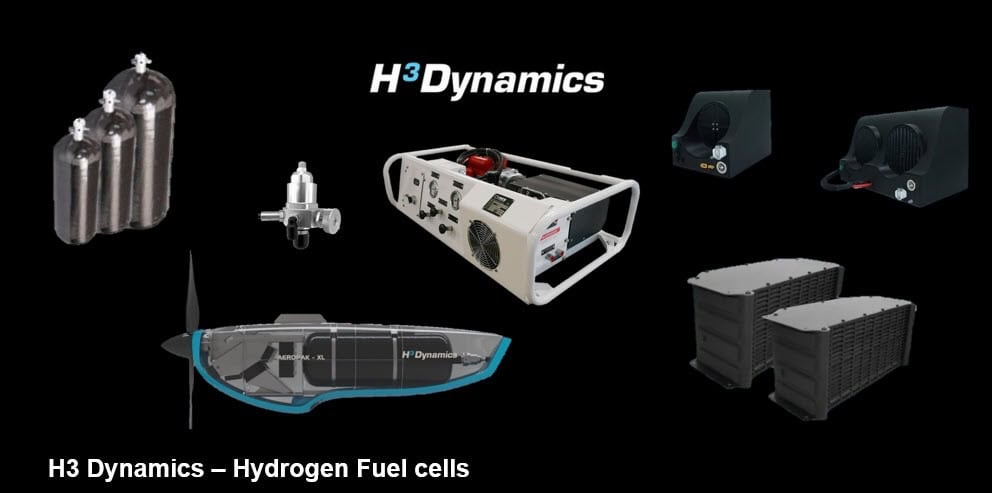
H3 Dynamics’ AEROSTAK range starts at 300 W nominal, with systems extending to 2,000 W for larger multirotor, fixed-wing, and VTOL platforms. The systems use a Lithium Polymer (LiPo) hybrid architecture to accommodate transient peak loads, while hydrogen storage options and the H2FIELD-1 mobile refilling station address different operational requirements. The range also provides RS-232 communication for real-time monitoring of voltage, current, power, and temperature.
In the full article, 6 Things to Know Before Sourcing Fuel Cells, UAV Propulsion Tech examines six key factors in UAV fuel cell selection, including power sizing, specific power, hydrogen storage, purity requirements, startup and thermal characteristics, and manufacturer integration support. The feature considers how each can influence platform design and field operations, helping engineering, programme, and procurement teams assess systems against aircraft and mission requirements.