

The economics of counter-uncrewed aerial systems (cUAS) are placing greater emphasis on how interceptor aircraft are designed, equipped, and sourced. UAV Propulsion Tech examines the component requirements of kinetic cUAS platforms, highlighting how propulsion, flight control, actuation, and supporting technologies must be selected according to the operational and economic demands of each mission.
The increasing availability of relatively inexpensive threats, including Shahed-type drones, presents a challenge for air defense systems. Although high-value defensive systems may be capable of defeating these aircraft, repeatedly deploying expensive interceptors against low-cost targets can create an unfavorable cost relationship.
Lower-cost kinetic cUAS platforms offer an alternative approach, but their effectiveness depends on more than the ability to intercept a target. Reliability, component availability, integration complexity, and scalability must also be considered when determining whether a system is suitable for its intended application.
Rather than optimizing individual components independently, developers must evaluate how each subsystem contributes to the performance, cost, and reliability of the complete aircraft.
Matching cUAS Component Architecture to Mission Requirements
Kinetic cUAS platforms can have substantially different engineering requirements depending on their intended operating characteristics.
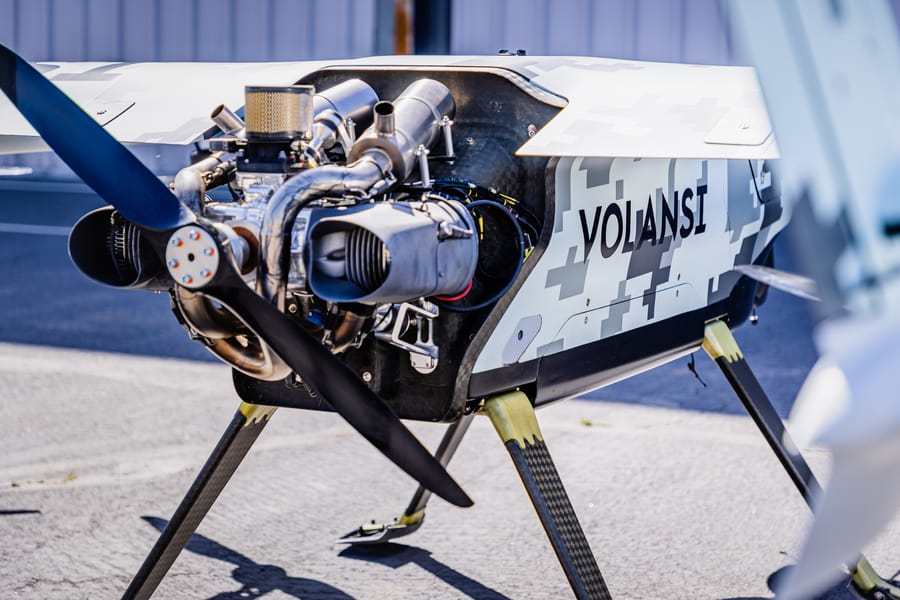
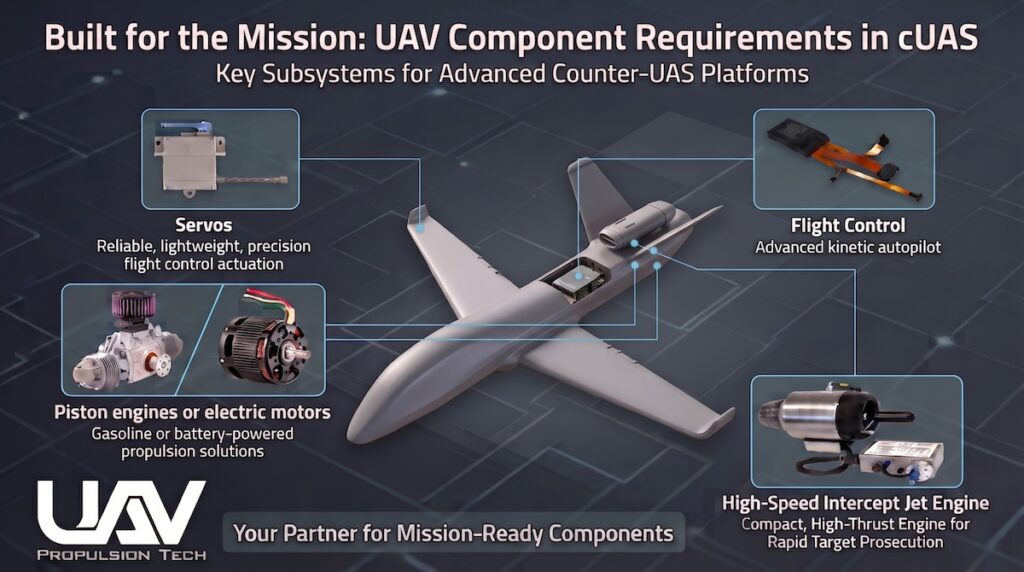
A high-speed interceptor may require turbine propulsion, while a smaller platform may be better suited to an electric motor and propeller combination. These differences influence not only propulsion selection but also aircraft mass, power requirements, flight-control architecture, and mechanical integration.
The engineering challenge is to identify components that provide the required performance without introducing unnecessary expense or complexity.
A component with a higher individual specification is not necessarily the most appropriate choice if its integration requirements compromise other aspects of the aircraft.
This systems-level approach is particularly relevant to lower-cost and single-use platforms, where component expenditure must be balanced against dependable operation.
Integrating Flight Control with cUAS Mission Systems
Flight-control systems are fundamental to autonomous and highly automated unmanned aircraft, but kinetic cUAS applications place requirements on these systems that extend beyond conventional flight stabilization.
An autopilot must function within an architecture that connects navigation, sensing, communications, and mechanical actuation. Its suitability therefore depends on compatibility with the aircraft’s wider systems and operational requirements.
Embention’s Autopilot LM provides an example of a flight-control system developed specifically for loitering-munition applications.
The system combines flight control and computer vision capabilities to support autonomous operation, target tracking, and navigation in Global Navigation Satellite System (GNSS)-denied environments.
Embention also identifies failsafe routines, sensor integration, payload activation, and data management among the functions supported within its system architecture.
For cUAS developers, these capabilities demonstrate the importance of evaluating an autopilot in the context of the complete platform.
Mission functionality, environmental operating conditions, integration requirements, and reliability must be assessed together rather than treating flight-control hardware as a standalone avionics component.
Actuation Reliability and the Aircraft Control Chain
The performance of a flight-control system also depends on the mechanical components responsible for executing its commands.
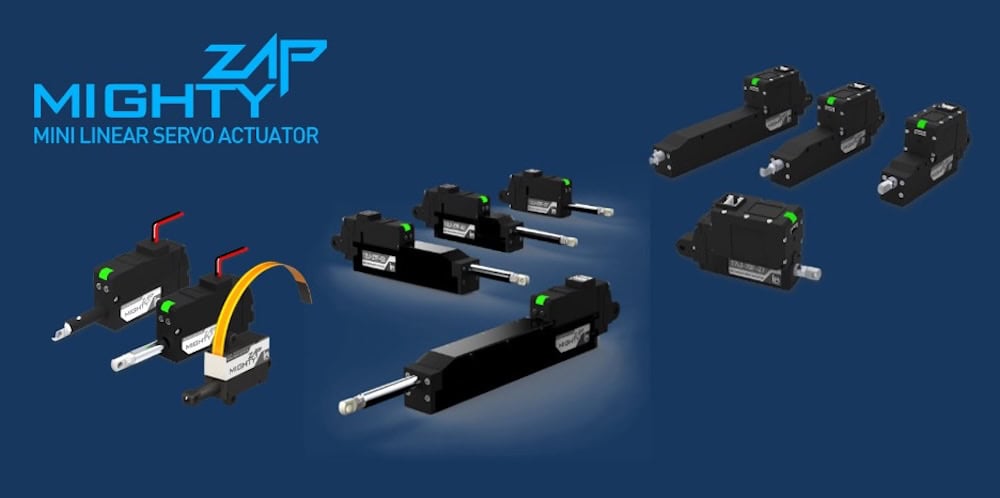
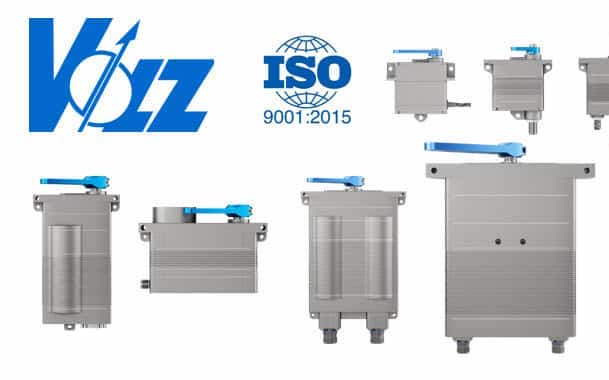
Servos and actuators convert control instructions into physical movement of an aircraft’s control surfaces. Their reliability directly affects the consistency of the aircraft’s flight behavior.
In single-use cUAS platforms, component cost remains an important consideration, but purchase price alone does not determine overall suitability.
Environmental performance, mechanical consistency, reliability, and compatibility with the wider aircraft architecture can influence whether a platform is available and capable of performing its intended mission.
Even a capable autopilot cannot compensate for unreliable mechanical actuation.
The relationship between flight-control hardware, servos, control surfaces, electrical power, and airframe design must therefore be considered during the initial stages of development.
Establishing a compatible control chain helps ensure that individual subsystems can perform their intended functions consistently.
Turbine Propulsion for High-Speed UAV Applications
High-speed cUAS architectures can require propulsion characteristics that differ substantially from those of smaller electric aircraft.
Turbine propulsion provides an alternative combination of thrust, acceleration, and power where higher-speed performance is a central requirement.
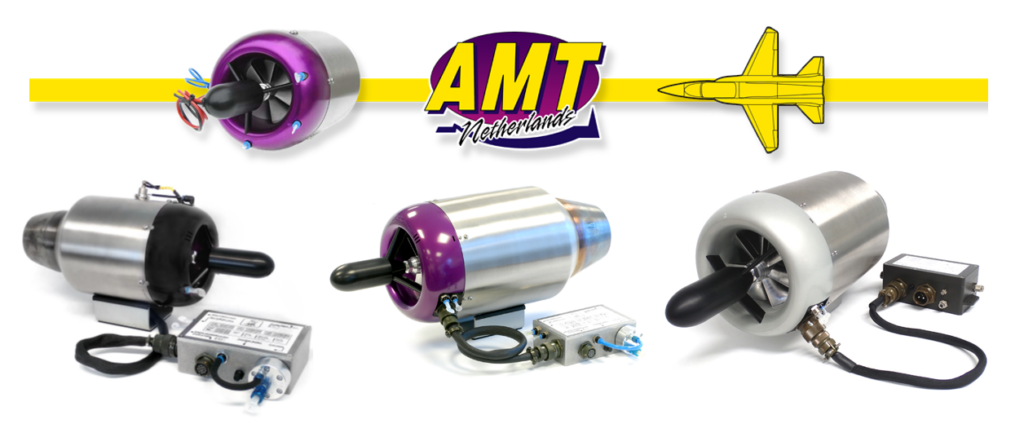
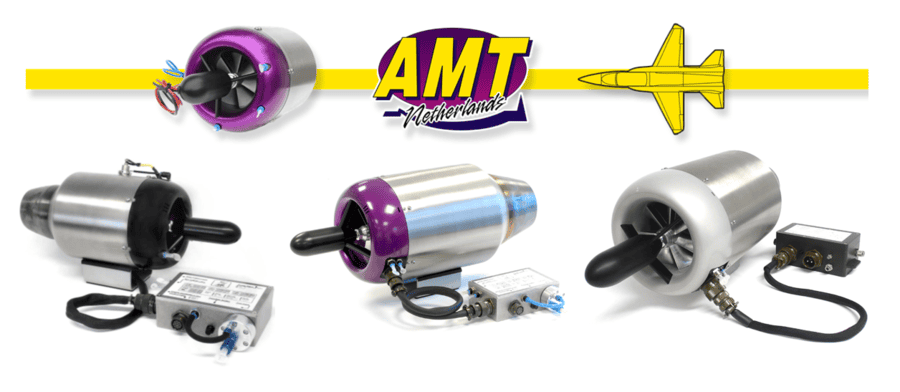
Advanced Micro Turbines (AMT) manufactures UAV turbine systems that UAV Propulsion Tech identifies for high-speed target-drone applications.
The AMT turbine range covers thrust ratings from 230 N to 1,569 N. UAV Propulsion Tech also describes these engines as having high thrust-to-weight ratios, low fuel consumption, and rapid acceleration characteristics.
However, selecting a turbine involves more than identifying the engine with the greatest available thrust.
Engine weight, fuel requirements, thermal considerations, and integration characteristics all influence the design and operation of the complete aircraft.
A turbine suitable for one unmanned platform may not match the requirements of another, even when both applications involve high-speed flight.
Propulsion selection must therefore account for the intended aircraft architecture and mission rather than relying exclusively on individual engine specifications.
Electric Motors and Carbon-Fiber Propellers for Smaller cUAS Platforms
Smaller kinetic cUAS aircraft can present a different set of propulsion requirements, particularly where platform dimensions, electrical power availability, and mission characteristics favor an electric configuration.
In these applications, motor and propeller selection must be approached as an integrated engineering decision.
UAV Propulsion Tech’s component portfolio includes electric propulsion technologies from Plettenberg and carbon-fiber propellers from Mejzlik.
Plettenberg supplies commercial off-the-shelf (COTS), modified off-the-shelf, and fully customized motor solutions. Its product portfolio also includes electronic speed controllers (ESCs) and starter-generator systems.
Mejzlik provides COTS and custom carbon-fiber propellers, supported by design and testing capabilities intended to address specific UAV requirements.
The compatibility of these components is an important factor in the performance of an electric propulsion architecture.
Motors, ESCs, propellers, power sources, and airframes operate as interconnected elements. Selecting one component according to its individual performance specification without considering the others can introduce compromises elsewhere in the platform.
Consequently, propulsion-system assessment must extend beyond the motor or propeller alone to include their interaction with the aircraft’s electrical and mechanical systems.
Balancing Component Reliability, Cost, and Customization
Achieving a lower-cost kinetic cUAS architecture does not necessarily require selecting the least expensive available components.
Instead, development involves identifying an appropriate balance between acquisition cost, reliability, performance consistency, integration requirements, and availability.
This is particularly relevant to propulsion systems, autopilots, servos, and power electronics, where individual component performance can affect the operation of the wider aircraft.
UAV Propulsion Tech’s sourcing portfolio includes both COTS and customized Unmanned Aerial Vehicle (UAV) technologies, providing manufacturers with options for different stages of platform development.
Established components may be appropriate where their specifications already satisfy the application, while modifications or fully customized solutions may be considered where standard hardware does not meet the requirement.
Plettenberg follows a comparable approach to motor development, with projects able to progress from COTS or modified off-the-shelf products toward fully customized systems as technical requirements become more clearly defined.
Such flexibility can be relevant to emerging cUAS programs, particularly when aircraft specifications and integration requirements change during development.
The central consideration is whether a component provides the necessary capability within the cost and reliability constraints of the overall system.
Evaluating the Complete Propulsion Ecosystem
Propulsion architecture encompasses more than the engine or electric motor responsible for generating thrust.
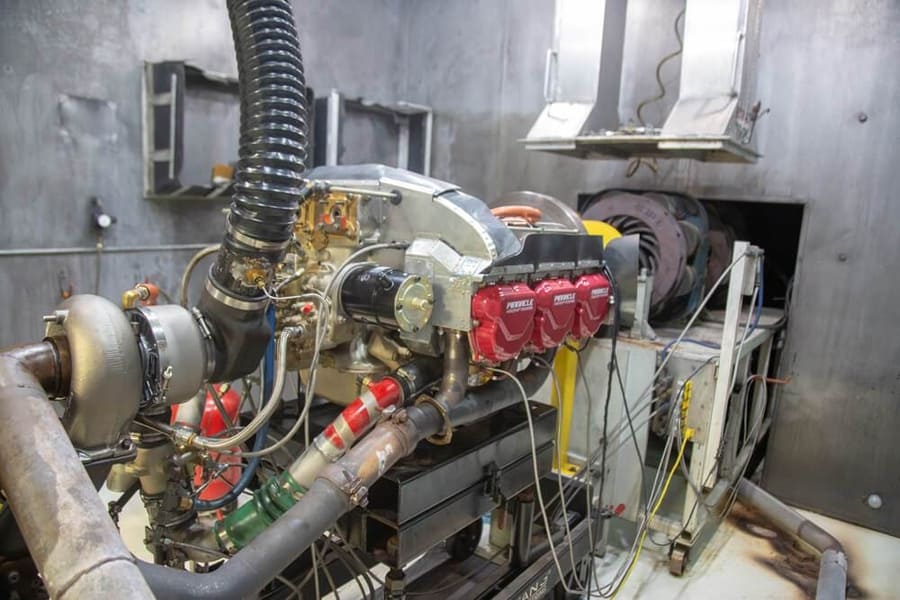
Depending on the application, the complete propulsion ecosystem can include the power source, generator, engine management, mounting arrangements, propeller, and associated systems.
Each element contributes to the characteristics of the aircraft, and decisions concerning one subsystem can affect several others.
Available power, aircraft mass, endurance, thermal requirements, packaging, and integration all depend partly on the propulsion configuration.
These factors can subsequently influence airframe development and avionics architecture.
For that reason, propulsion requirements should be established early in the aircraft design process rather than addressed after other major structural and electronic systems have already been defined.
This approach allows developers to assess the compatibility of propulsion components with the wider platform before committing to a particular configuration.
Component Sourcing and the Development of Scalable cUAS Platforms
As kinetic cUAS systems become more widely developed and deployed, sourcing appropriate components will remain an important part of aircraft engineering.
Developers require access to propulsion, flight-control, actuation, sensing, and supporting technologies that can operate together within a defined aircraft architecture.
They must also account for the practical implications of supplier selection, including component availability, integration compatibility, and the potential need for modified or customized hardware.
UAV Propulsion Tech brings together propulsion systems, motors, propellers, autopilots, servos, and other UAV technologies from specialized manufacturers.
This sourcing approach allows developers to consider components in relation to platform-specific requirements rather than evaluating individual hardware items independently.
For high-speed kinetic systems, turbine characteristics may be a significant factor in propulsion selection. Smaller electric platforms may instead require careful matching of motors, ESCs, power sources, and carbon-fiber propellers.
Flight-control and actuation requirements must be assessed alongside these propulsion decisions to establish a compatible aircraft architecture.
The development of affordable kinetic cUAS platforms consequently depends on more than interceptor performance alone. Component reliability, cost, availability, and integration must also be addressed to support systems that are practical to manufacture, deploy, and scale.
A mission-driven approach to component selection provides a framework for balancing these requirements across different cUAS aircraft configurations.
Read Built for the Mission: UAV Component Requirements in cUAS on the UAV Propulsion Tech website.