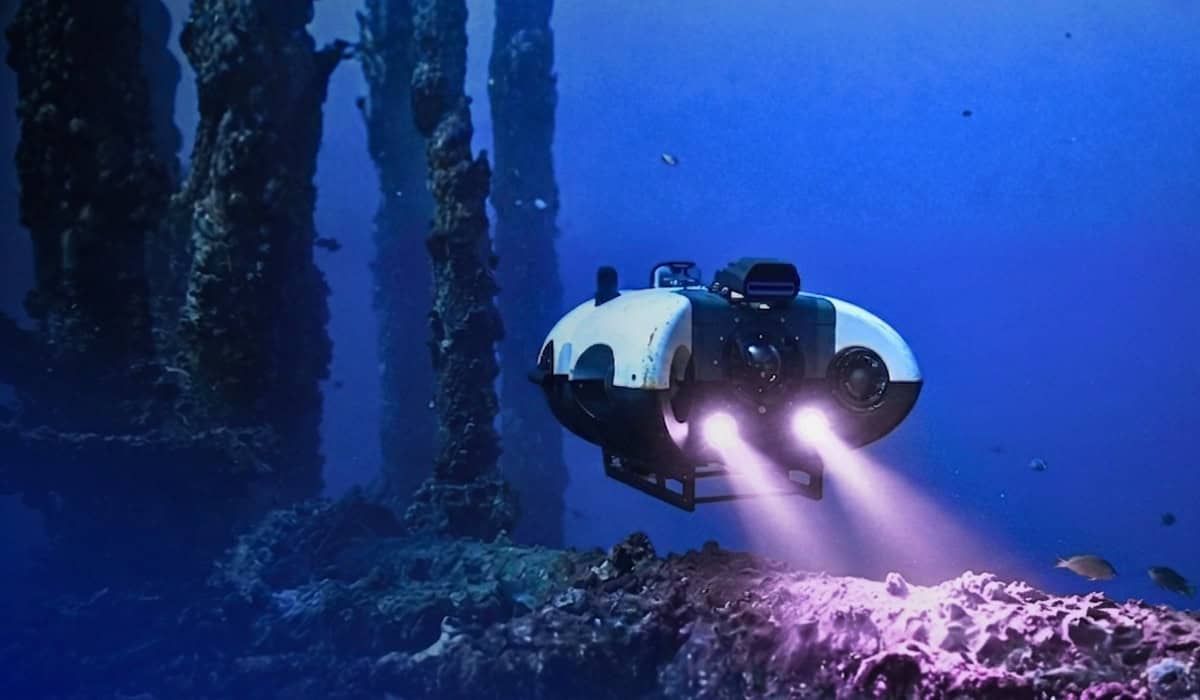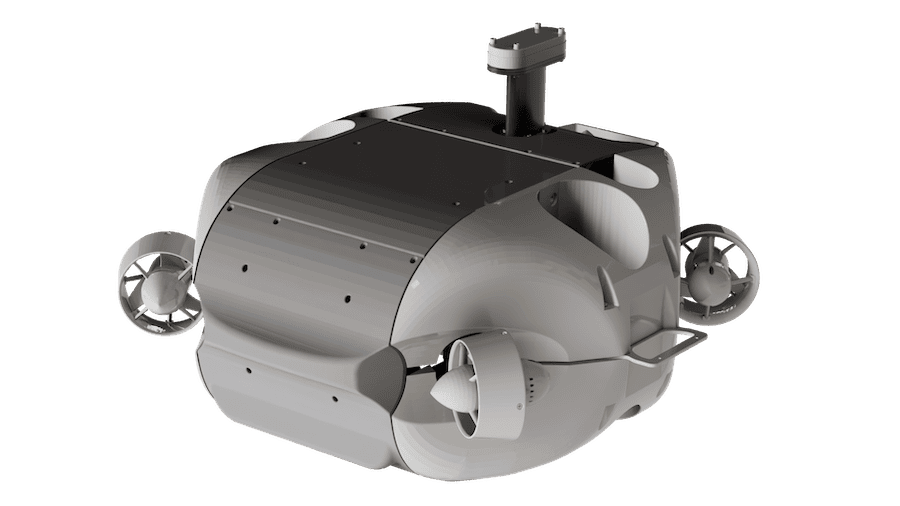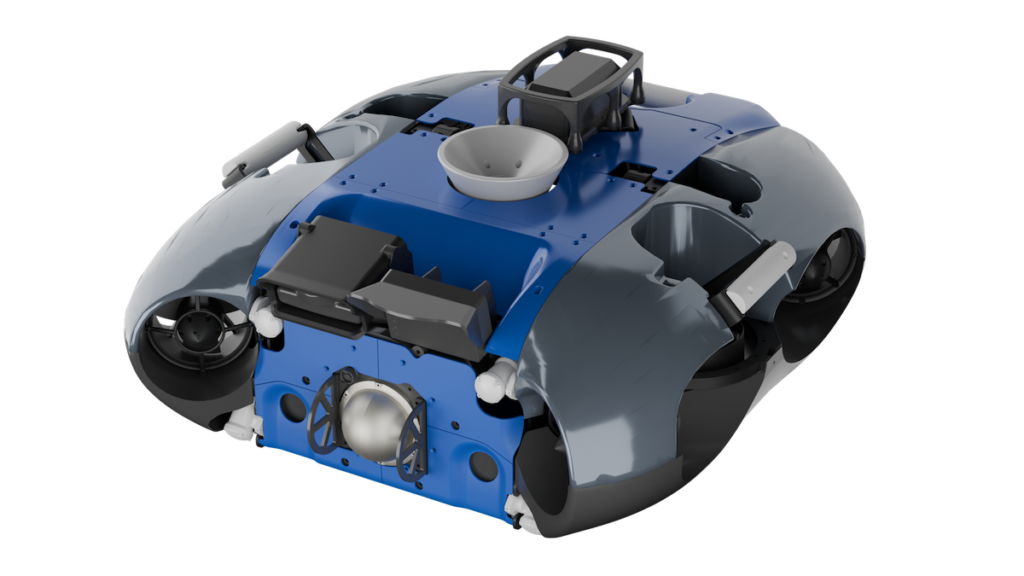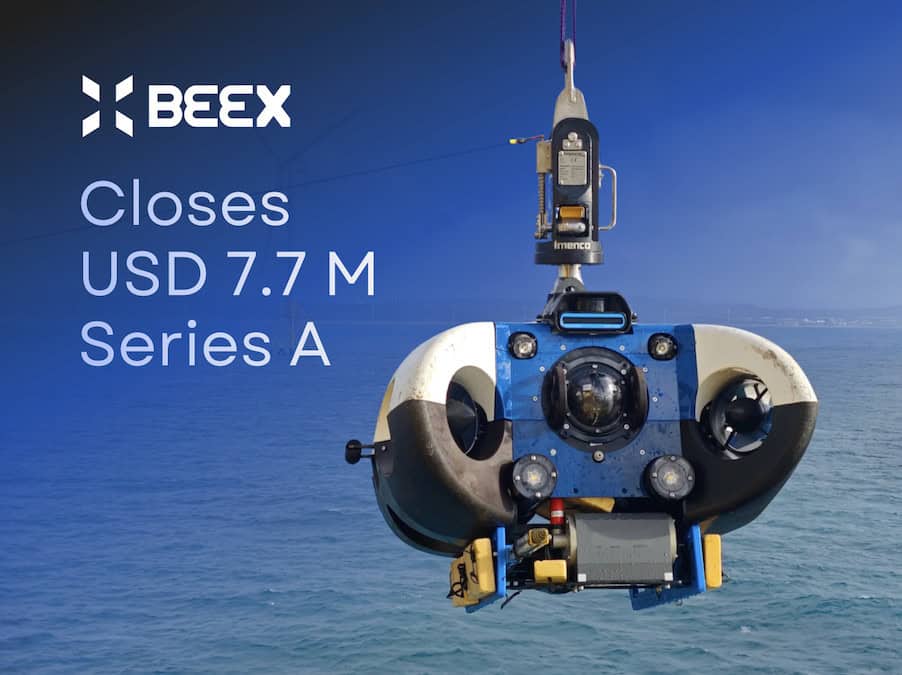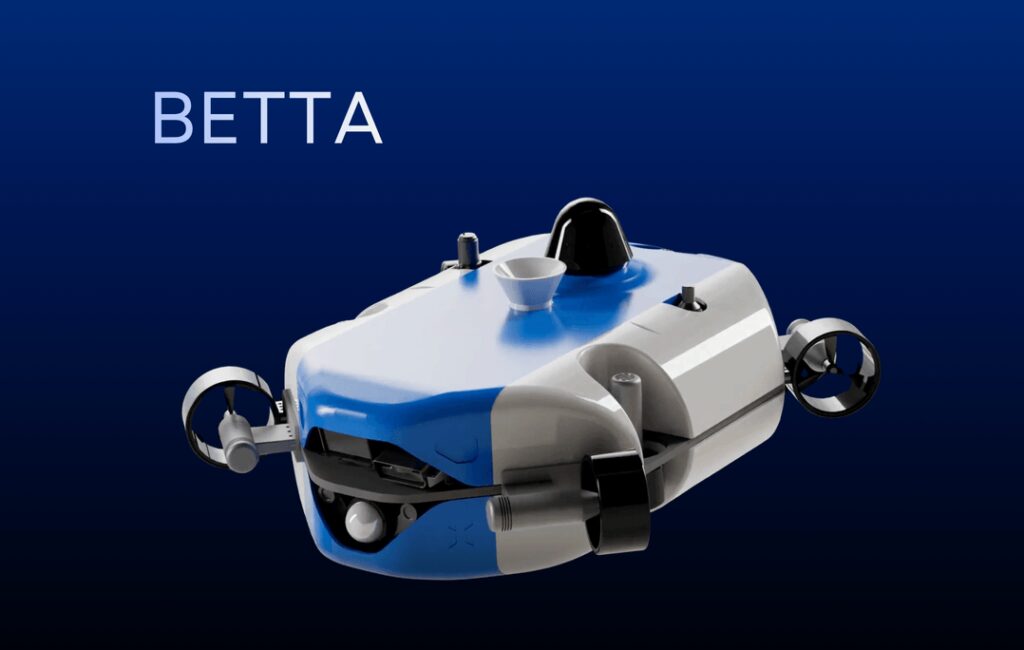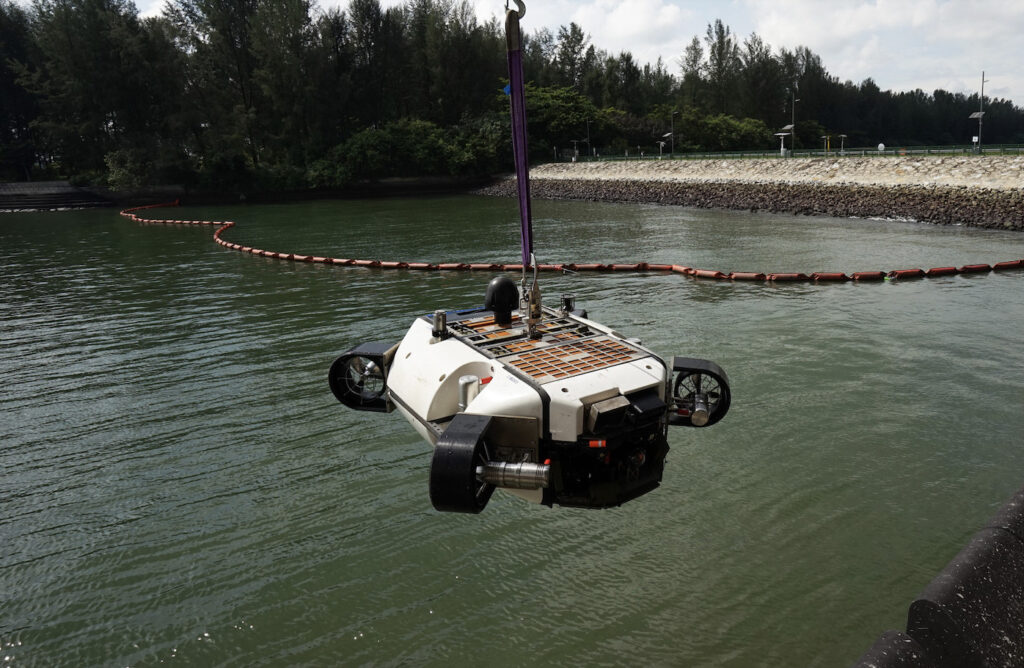

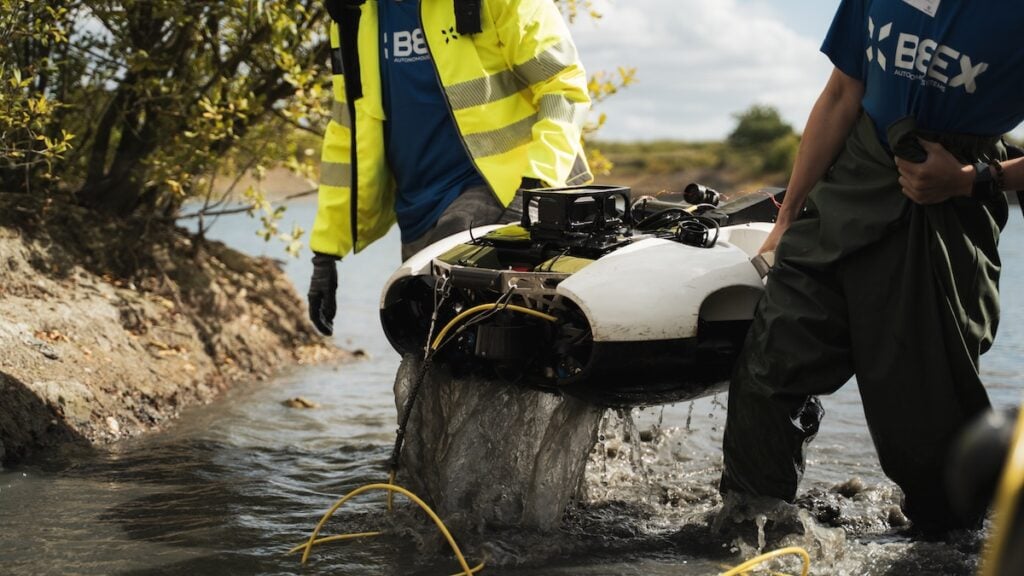
BeeX details how its new ALPHA Autonomous Underwater Vehicle (AUV) demonstrated neutralization capabilities within a wider Mine Countermeasures (MCM) workflow in the UK, combining integrated sensing, precise positioning and remote firing technology.
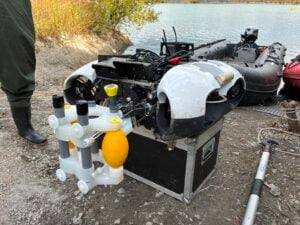
Held on 17 September 2026 and hosted by Copper Turtle, the demonstration brought together technologies from BeeX, Alford Technologies, ELWAVE and Blueprint Subsea. The closed-door MCM concept of operations involved the UK Ministry of Defence, industry and academia.
The single-day event demonstrated BeeX’s neutralization killchain to representatives from the UK Navy, industry and academia. Working with Alford Technologies’ Remote EOD Delivery System (REDS) neutralizers and Blueprint Subsea’s through-water acoustic firing technology, ALPHA performed neutralization sequences against two targets: a moored mine and a floating steel plate.
Demonstrating an Integrated Mine Neutralization Workflow
The demonstration focused on ALPHA’s neutralization capabilities within the broader Detect, Classify, Identify and Neutralize (DCIN) workflow, using the platform to integrate complementary underwater technologies.
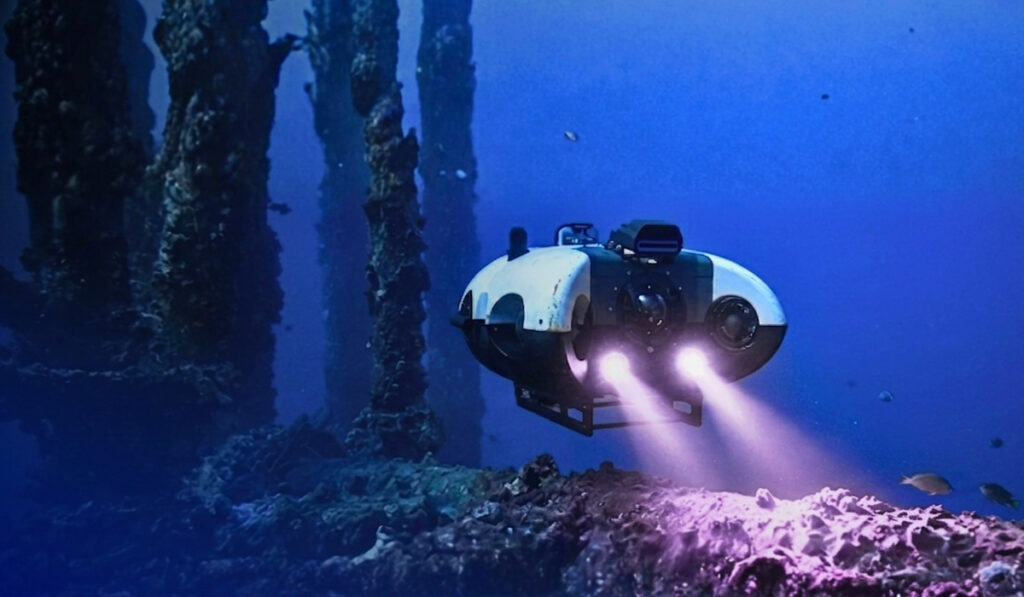
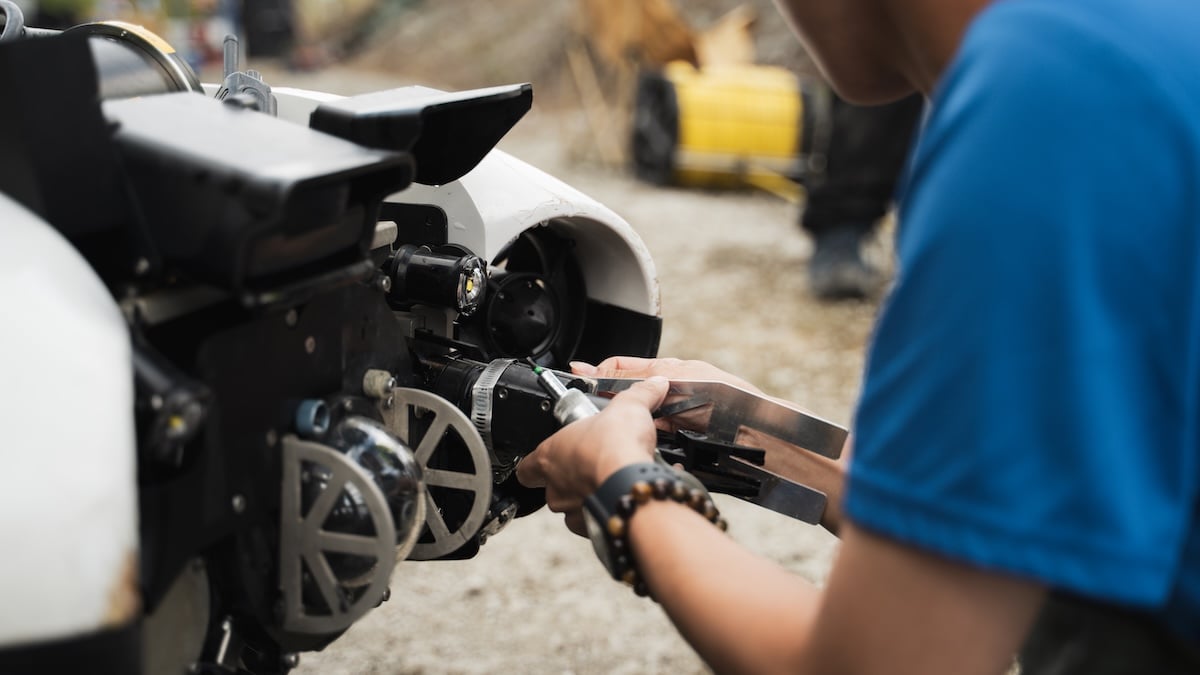
Operating semi-autonomously through a laptop interface, ALPHA conducted approach and close-proximity hovering tasks, demonstrating its ability to navigate safely towards targets and supporting target investigation and identification through integrated sonar and visual sensing. Its positioning accuracy and stability allowed the platform to approach and maintain its position near targets for closer inspection, rather than simply passing over them.
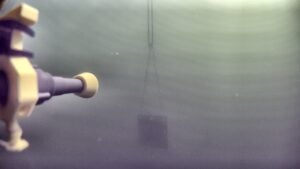
The neutralization phase used ALPHA’s stable hovering capability to position and affix Alford Technologies’ neutralizers, confirm charge readiness, retreat and fire. The demonstration involved a moored mine and, to increase the difficulty of the placement task, a steel plate suspended from a buoy rather than a target resting on the seabed.
Despite the plate rotating unpredictably, ALPHA accurately positioned the neutralizer on the plate, demonstrating how its stable hovering capability supports precise placement and ease of operator control. Following neutralization, sonar and visual sensing were used to conduct a battle damage assessment and confirm the neutralized targets.
The demonstration also illustrated the platform’s software-led flexibility. BeeX’s engineering team in Singapore remotely accessed and modified the mission capability via Starlink, showing how the system can be configured and optimized from anywhere in the world.
For navies pursuing fully autonomous MCM operations, Starlink connectivity will also enable firing commands to be issued remotely from anywhere in the world, potentially reducing the need for personnel to be physically present at the scene and their exposure to risk.
Maximizing Integrated Sensing Through Platform Stability
Sensor performance can vary depending on the vehicle carrying the technology, as movement can introduce noise into sensor data and make detection more difficult. ALPHA minimizes this movement to support consistent sensor performance, and is one of the most stable vehicles in its class.
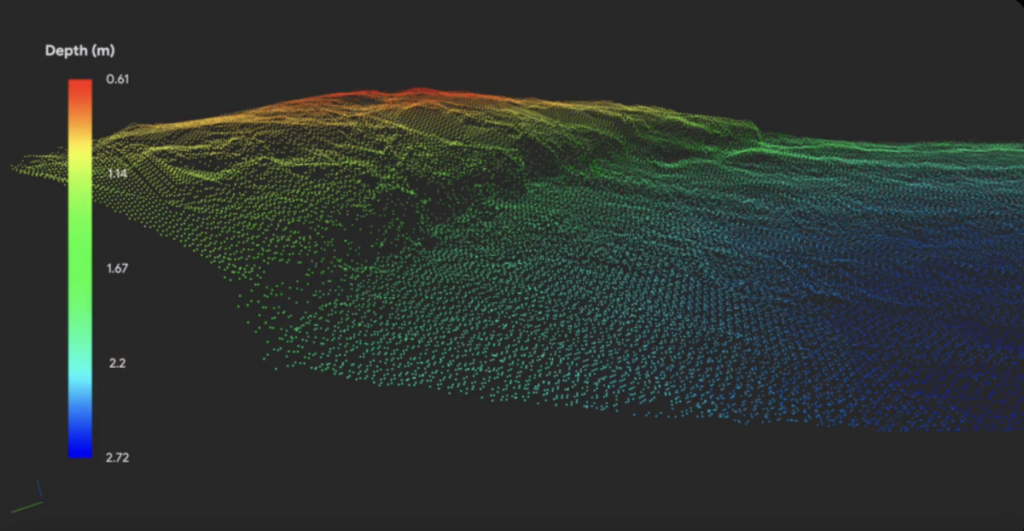
ELWAVE’s EPULSE electric sensing technology featured in the demonstration for rapid Mine-Like Object (MLO) clearance. The system provides target information independently of water visibility and turbidity, is unaffected by sound velocity profile variations, and exhibits resilience to electromagnetic interference. It supports sensing across diverse seabed terrain, including sensing of exposed, buried and partially buried objects.
For the neutralization phase, Alford Technologies demonstrated its REDS, which is operational at 950 meters and provides effectors for high- and low-order effects against maritime explosive ordnance threats. REDS demonstrated Blueprint Subsea’s through-water fire set for remote acoustic detonation, with the event also including the successful detonation of an Alford magnetic charge.
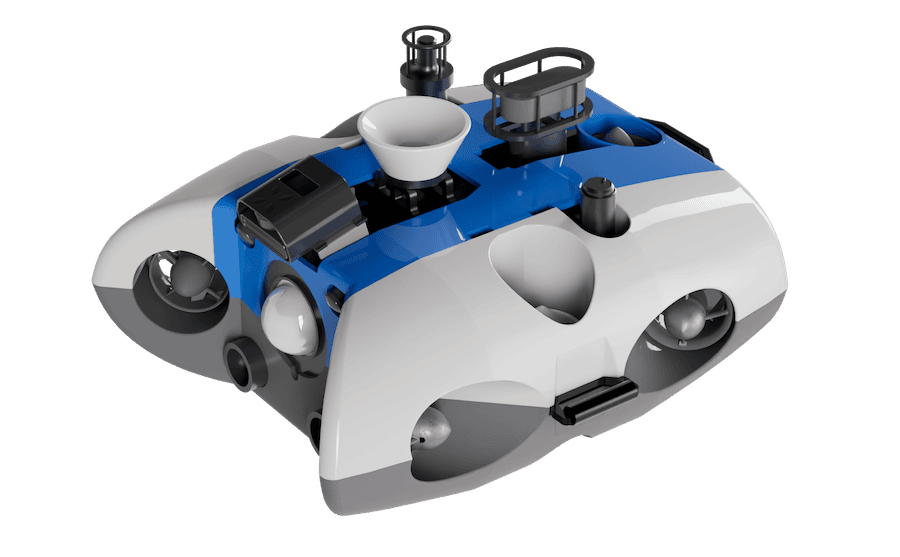
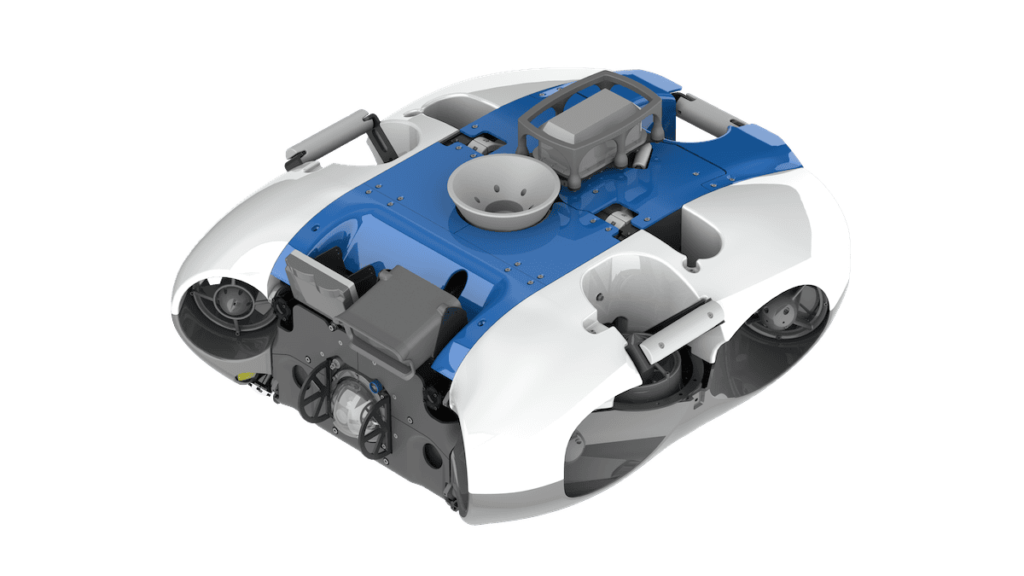
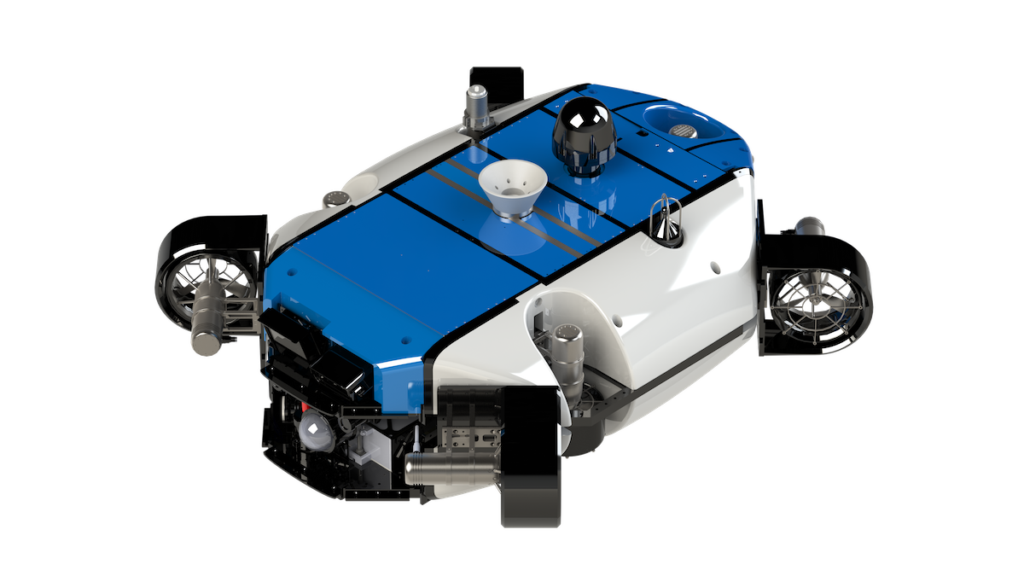
Together, the technologies illustrated ALPHA’s modular architecture, bringing sensing, target investigation and neutralization capabilities together to support an end-to-end underwater mission.
Supporting Naval MCM Operations with Reduced Operator Burden
ALPHA is designed to integrate with naval fleets to support MCM operations in contested chokepoints and shipping routes disrupted by underwater mines. Its autonomous capabilities and intuitive, easy-to-operate design aim to reduce operator burden, helping navies reopen waterways quickly and reliably.
The platform delivers stable, high-fidelity operations in strong currents, maintaining positional accuracy and sensor performance without the need for external control. Its untethered operating mode offers the ability to deploy multiple units, increasing capture area and further shortening the killchain.
ALPHA also enables the integration of specialized sensors and equipment as operational requirements evolve. Deployable from Autonomous Surface Vessels (ASVs), the platform can support persistent, scalable subsea activity without reliance on crewed platforms.
Extending ALPHA to More Autonomous Underwater Operations
Additional applications beyond MCM include Critical Underwater Infrastructure (CUI), anti-submarine warfare sensing and tracking, harbor protection, persistent surveillance, cable and pipeline detection and inspection, and offshore energy.
Visit the BeeX website to learn more about ALPHA and its autonomous underwater capabilities.