



Showcase your capabilities
If you design, build or supply Unmanned Helicopters, create a profile to showcase your capabilities and connect with visitors who have an active requirement for your solutions.





Helicopter drones, also known as unmanned helicopters, bring the best of rotary-wing technology to unmanned aviation. Unlike fixed-wing UAVs that require runways or multirotor drones with limited endurance, helicopter drones combine vertical takeoff and landing (VTOL), precise hovering, and long-endurance capabilities—making them indispensable for complex missions in military, commercial, and industrial sectors. Whether conducting reconnaissance in high-risk zones, delivering supplies to remote locations, or performing critical infrastructure inspections, these advanced UAVs offer unmatched maneuverability, payload capacity, and operational flexibility.
Read the Technology Overview
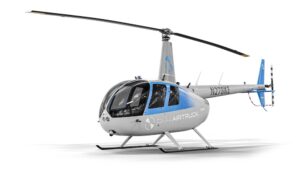
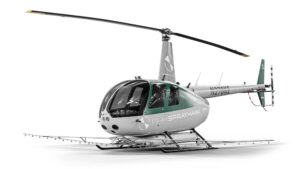
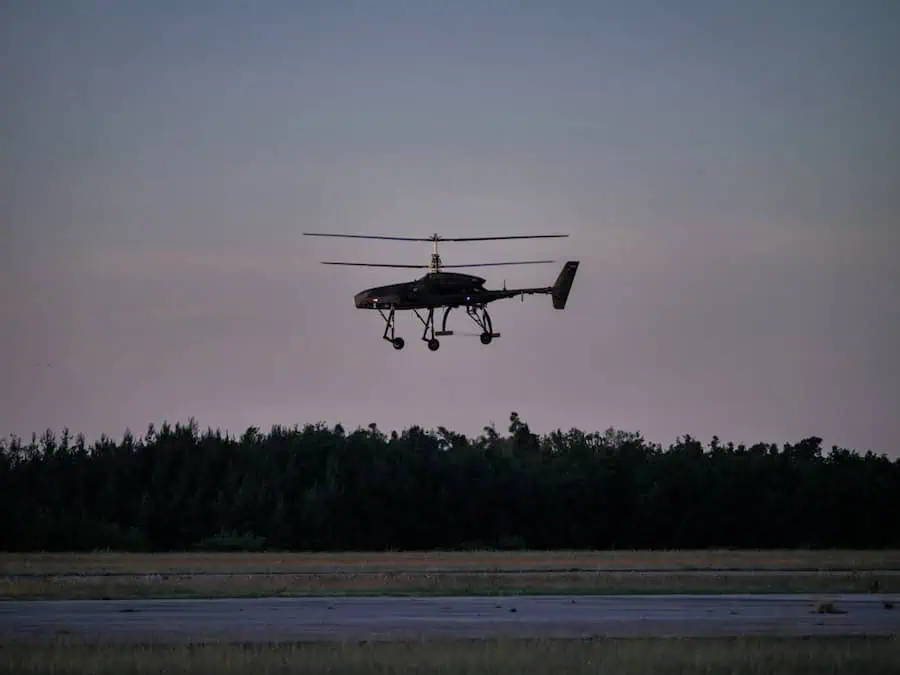
Integrated VTOL UAS: From Nano Platforms to Heavy-Lift Autonomous Rotorcraft

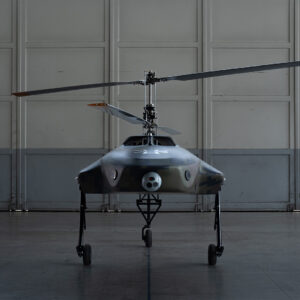
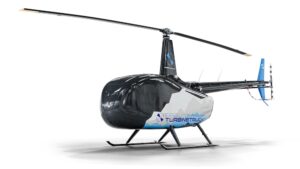
Dual-Use Unmanned Aircraft for Logistics, Medical Transport, ISR & Tactical Support
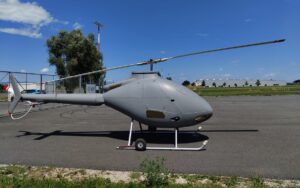
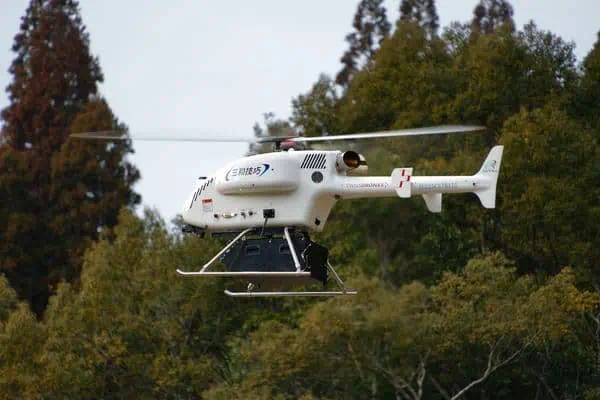
Long-Endurance & Heavy-Lift Autonomous Helicopter UAS Platform for Civilian & Military Applications

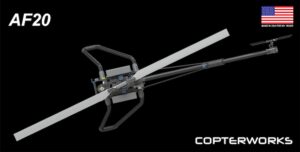
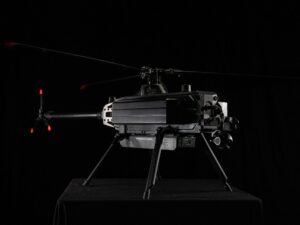
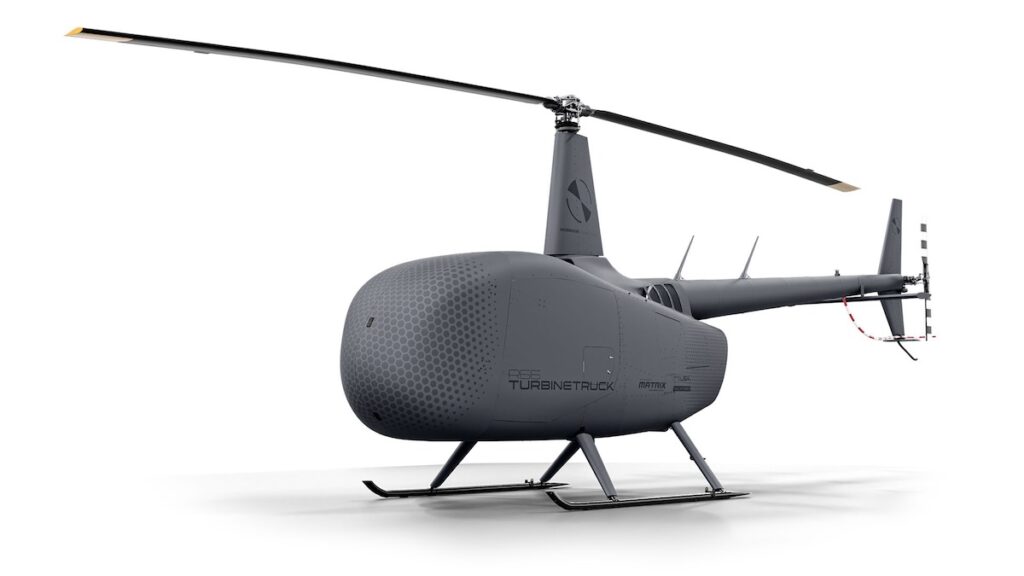
Cutting-Edge USA-Made Helicopter & Multirotor UAVs for Demanding Industrial Applications

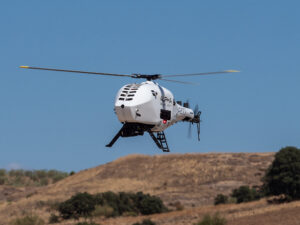
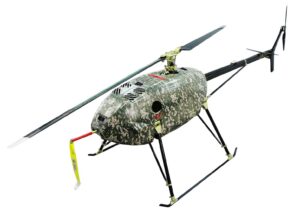
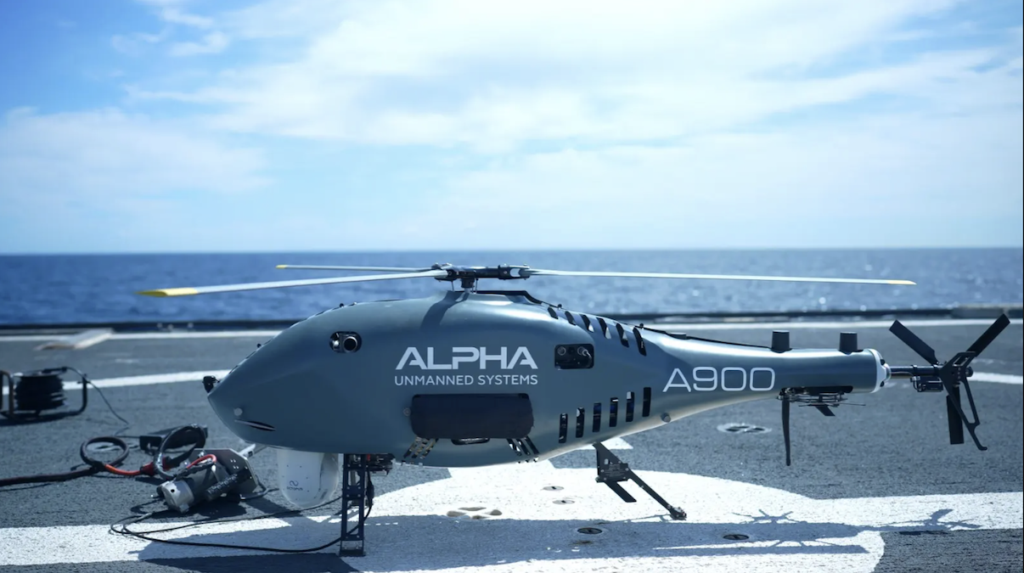
Helicopter UAVs: Rotary Wing Drones for Maritime, Naval & Security Operations | UAS GCS

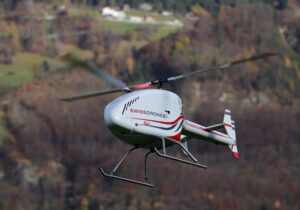
Long-Range Autonomous Helicopter Drone for Inspections, Surveillance, Search & Rescue, and Monitoring

If you design, build or supply Unmanned Helicopters, create a profile to showcase your capabilities and connect with visitors who have an active requirement for your solutions.

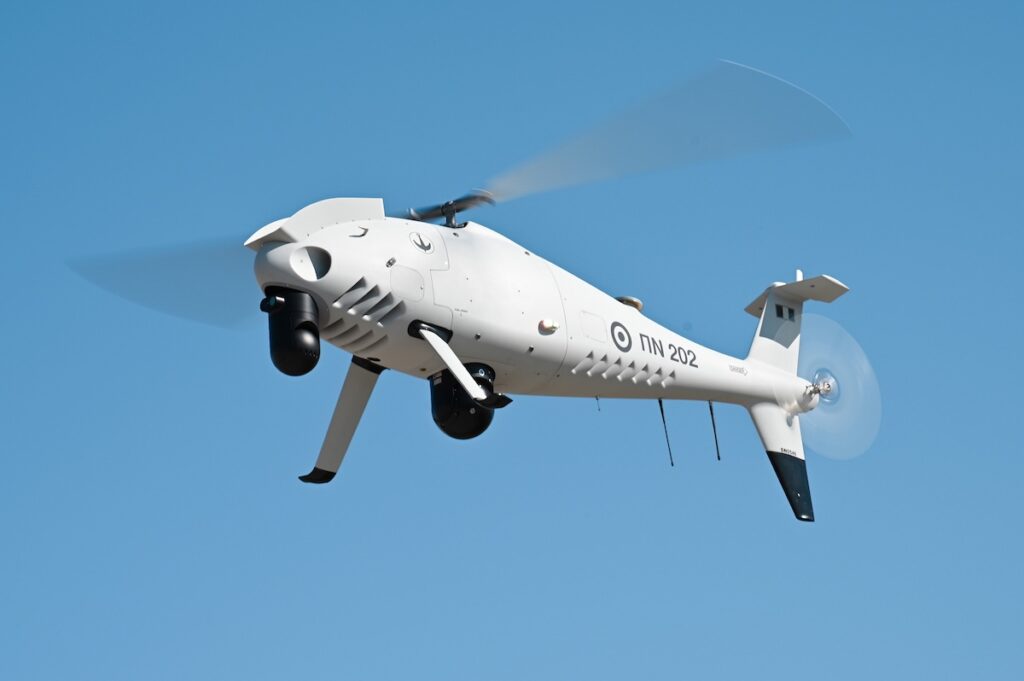
Helicopter drones are unmanned aircraft that operate on the same flight principles as manned helicopters, utilizing spinning rotors to generate lift and thrust. The predominant rotor configuration features a single main rotor complemented by a tail rotor to counteract torque. Alternative designs, such as tandem rotor and tilt rotor UAVs, also exist, employing rotors mounted on rotating engine pods that adjust angles to facilitate vertical lift or forward flight.
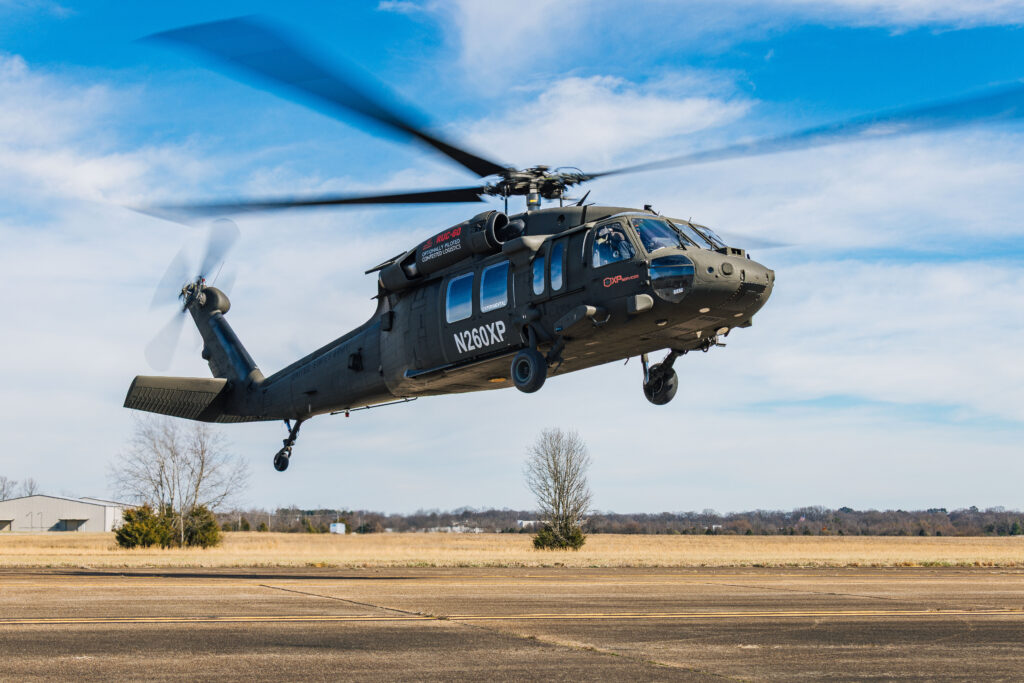
These drones can be purpose-built or adapted from existing manned platforms. Some models offer the versatility to switch between piloted and unmanned operations, earning the designation of Optionally Piloted Vehicles (OPVs). This adaptability allows for a broader range of missions and operational flexibility.

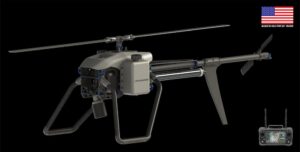
Shadow S3 Unmanned Helicopter by ZIYAN Tech
The propulsion mechanisms of helicopter drones vary based on their size and intended use:
Each propulsion type has tradeoffs in terms of endurance, efficiency, and operational flexibility, making them suitable for different applications across military, commercial, and industrial sectors.
In the commercial sector, helicopter drones have carved out essential roles across various industries:
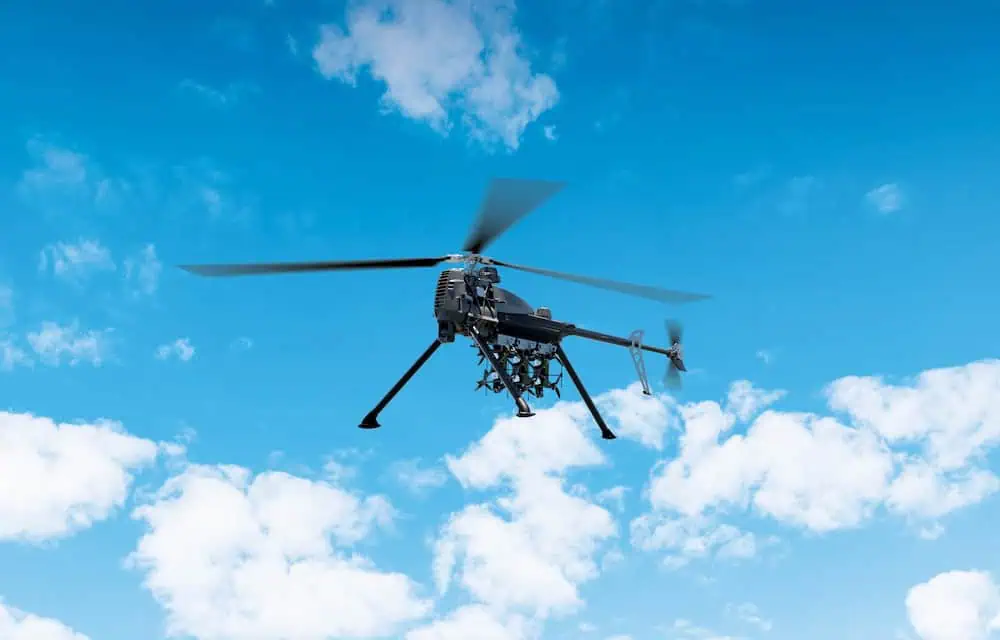
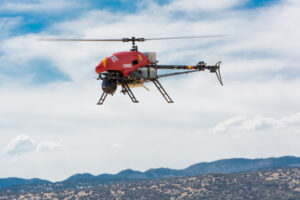
Rotron Aerospace’s Talon DT-150 electric helicopter UAS
Helicopter drones have become indispensable assets in modern military operations:
Helicopter drones offer VTOL capability, precise hovering, and maneuverability in tight spaces, making them ideal for urban operations, surveillance, and cargo delivery. However, they have shorter endurance and require more maintenance due to complex rotor systems.
Fixed-wing drones provide longer flight times, higher speeds, and greater efficiency, making them better suited for large-area mapping, reconnaissance, and long-range missions. They require runways or launch systems and cannot hover.
The choice depends on mission needs: helicopter drones for precision tasks, fixed-wing drones for endurance. Hybrid VTOL drones are emerging, combining both advantages.
Helicopter drones use a single main rotor and tail rotor, providing greater endurance, higher speeds, and heavier payload capacity than multirotor drones, particularly in heavy-lift unmanned helicopters designed for demanding cargo transport applications. They are ideal for longer missions and military applications.
Multirotor drones, with four or more rotors, excel in stability, precise hovering, and ease of use, making them preferable for aerial photography, inspections, and short-range operations. However, they have shorter flight times and lower payload capacity.
Helicopter drones suit demanding, long-range tasks, while multirotor drones are best for quick, agile, and close-quarters operations. The choice depends on endurance, maneuverability, and payload needs.

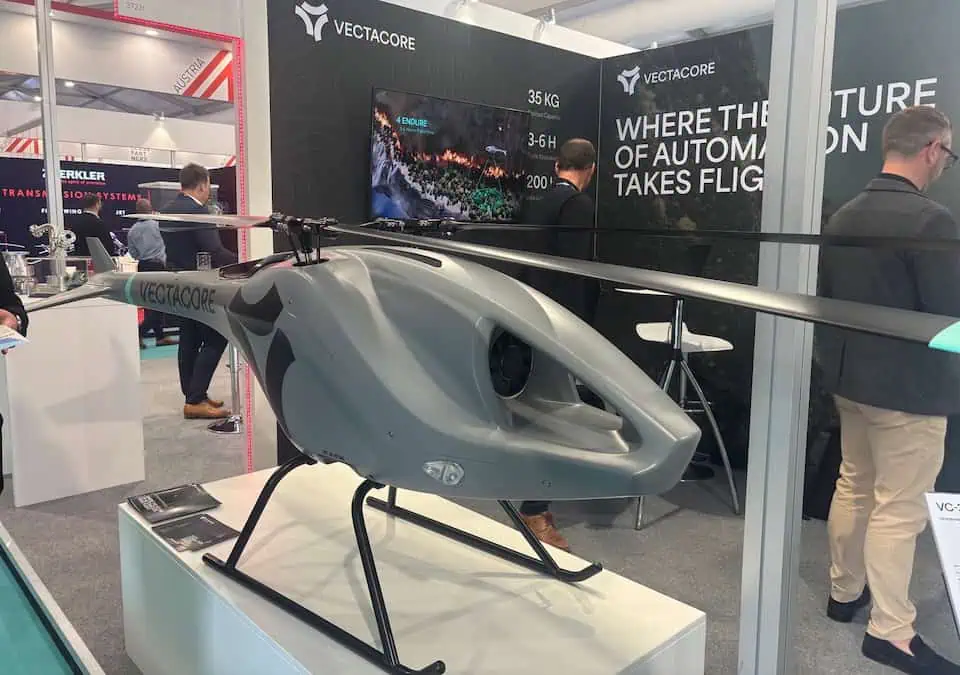
LIZARD 1000 Heavy-lift helicopter UAV by Sabrobotix
Recent developments have propelled helicopter drone capabilities:
Despite their numerous advantages, helicopter drones face challenges:
The trajectory of helicopter drone technology points toward increased autonomy, efficiency, and broader operational capabilities. Ongoing research and innovation aim to overcome current limitations, paving the way for more sophisticated and reliable UAV systems.

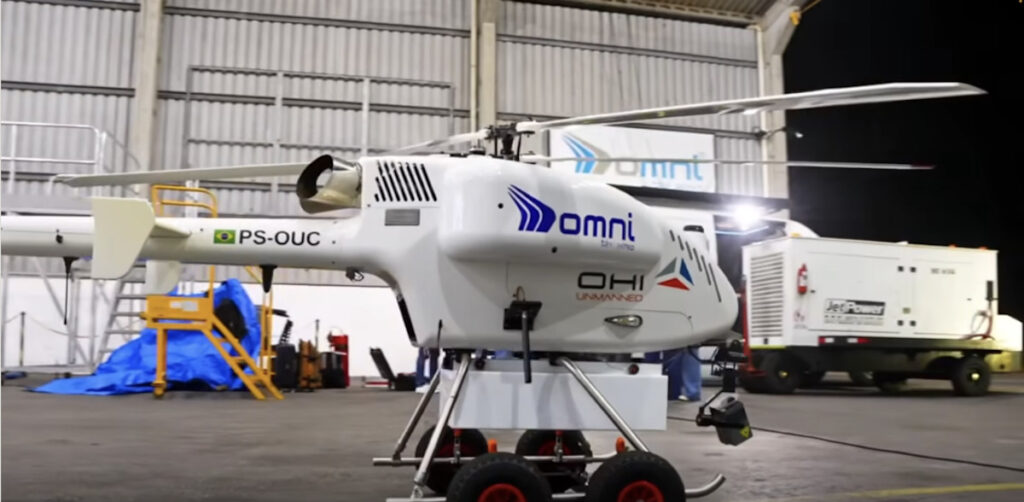
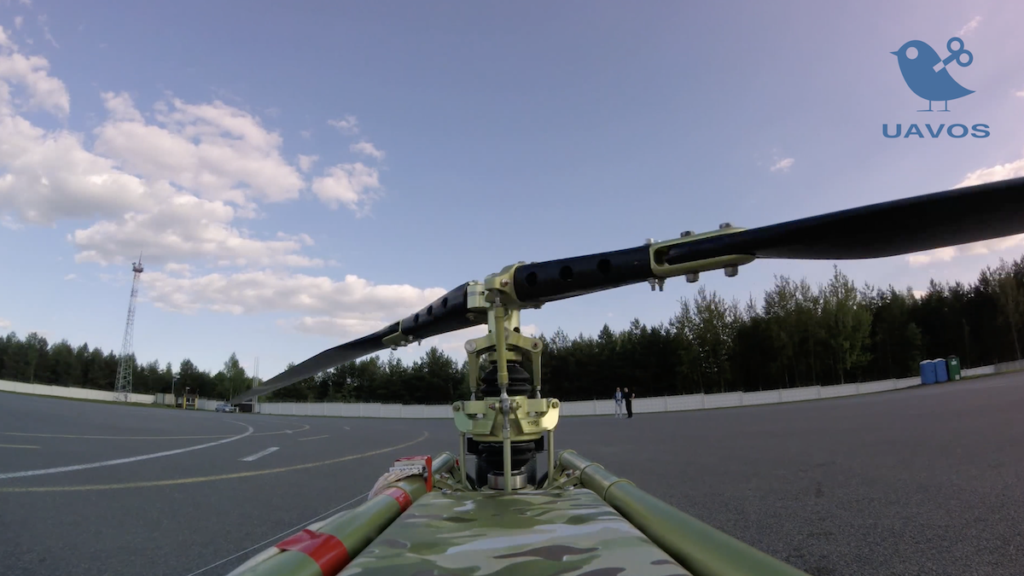
UVH-170 Helicopter Drone by UAVOS Inc.
AI-driven swarm technology – Advances in artificial intelligence and machine learning are enabling cooperative drone swarms, where multiple helicopter drones work together autonomously. This capability is particularly valuable for military operations, disaster response, and large-scale infrastructure inspections.
As these advancements continue to evolve, helicopter drones will become more autonomous, efficient, and capable, expanding their role across industries and redefining the possibilities of unmanned aviation.
Helicopter drones are unmanned aircraft that operate on the same flight principles as manned helicopters, using spinning rotors to generate lift and thrust. The most common rotor configuration uses a single main rotor, plus a tail rotor that provides counter-torque. Tandem rotor and tiltrotor helicopter UAVs also exist, featuring rotors mounted on rotating engine pods that change angle to provide vertical lift or forward flight.
Single rotor drones may be designed from the ground up or converted from existing manned platforms. The latter may feature the option to switch between piloted or unmanned flight, and in this case may be referred to as Optionally Piloted Vehicles (OPVs).
Due to the size of most rotary wing UAVs, they are typically powered by gasoline or diesel engines. Batteries have a lower energy density than conventional fuels, and the weight of batteries required to provide long flight times would be prohibitive. Micro-sized and nano helicopter UAVs, designed to be carried by a single operator and typically used for short-duration military and battlefield reconnaissance missions, do exist and are battery-powered.
Fuel cell-based propulsion systems, which convert chemical energy from fuel (typically hydrogen) into useful electrical energy, are also being tested on unmanned platforms. Fuel cells for have a number of advantages, such as clean emissions and a higher energy density than batteries.
Helicopter drones can carry a wide variety of payloads, including daytime and IR cameras, environmental sensors, LiDAR scanning systems and radio relay equipment, as well as missiles and other offensive capabilities. They are employed for a broad range of missions across many industries and sectors. Applications include:
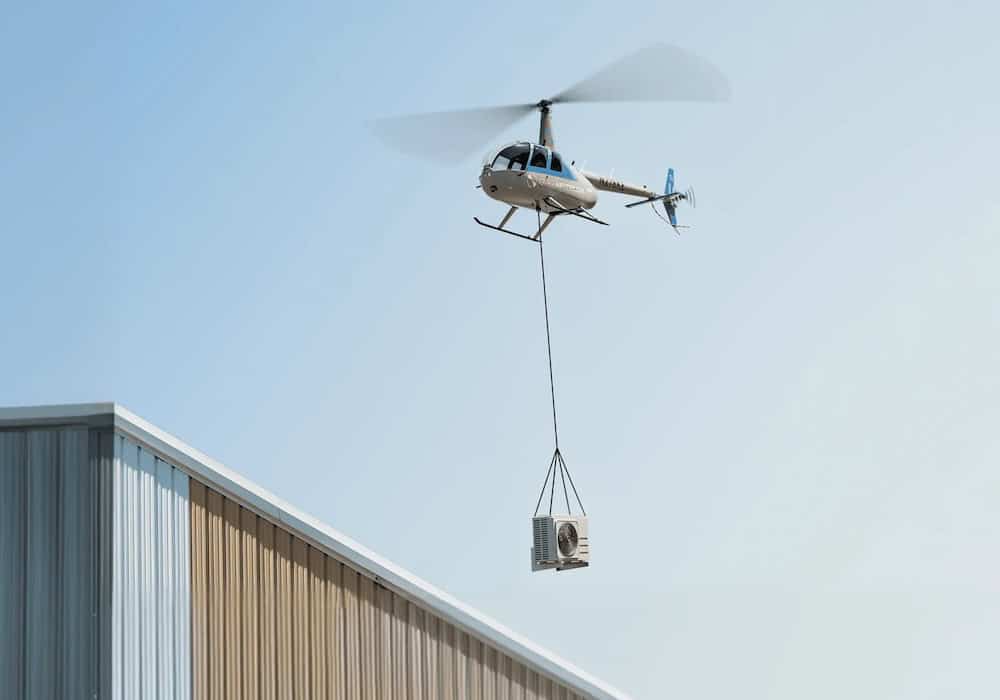
Single rotor drones can carry larger payloads and fuel amounts than multirotor UAVs and smaller fixed-wing drones, and thus have greater flight endurance. They are also more efficient at higher speeds.
Due to the VTOL capability of UAS helicopters, they can operate in a wider range of ground conditions than fixed-wing aircraft, which require a certain amount of space to take off and land. This often makes VTOL rotary wing UAVs preferable for maritime operations, inspection and surveillance.
Rotary wing drone designs tend to be more complex than fixed wing counterparts, which can lead to increased maintenance requirements.


 Searching Companies & Products



 Subscribe to the Weekly eBrief
The latest engineering and technical developments straight to your inbox - join thousands of engineers who receive it.
Subscribe to the Weekly eBrief
The latest engineering and technical developments straight to your inbox - join thousands of engineers who receive it.