


Discover World-Leading Unmanned and Autonomous Technologies
Discover cutting-edge solutions from leading global suppliers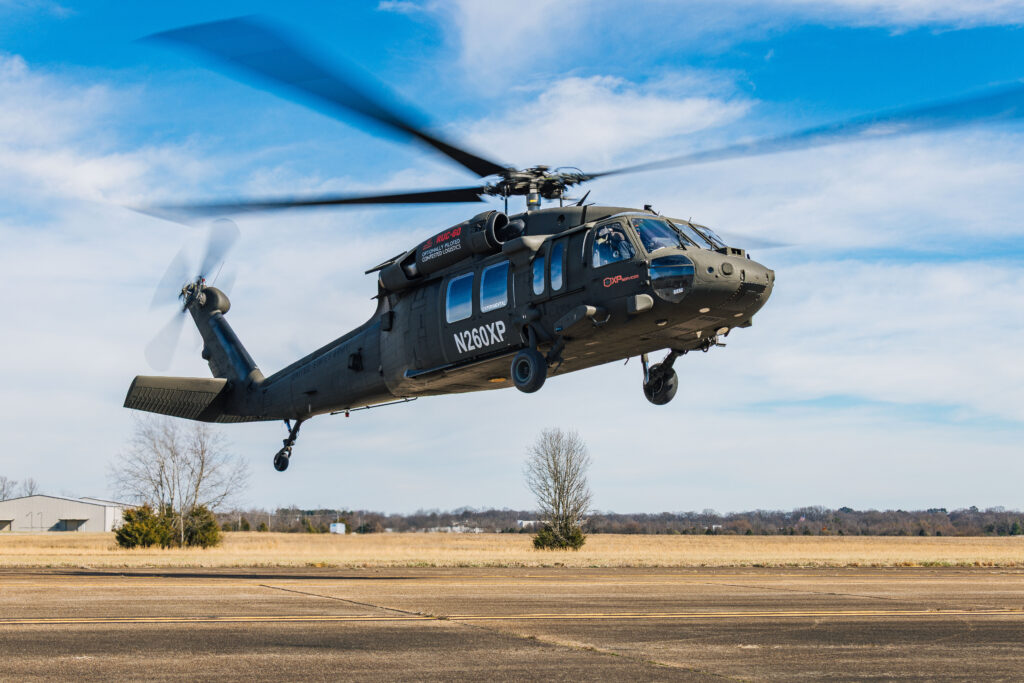
Near Earth Autonomy has been selected by Naval Air Systems Command to lead the Medium Aerial Resupply Vehicle – Expeditionary Logistics (MARV-EL) Increment 2 program to develop autonomous logistics aircraft for the U.S. Marine Corps.
The award, issued through an Other Transaction Agreement under the Naval Aviation Systems Consortium, tasks Near Earth with leading a collaborative team including Bell Textron, Moog Inc., and XP Services. The resulting Uncrewed 505 aerial logistics aircraft integrates Near Earth’s Captain autonomy architecture with the Bell 505 platform and Moog’s Genesys avionics to create a system capable of tactical-edge drone resupply in contested environments.
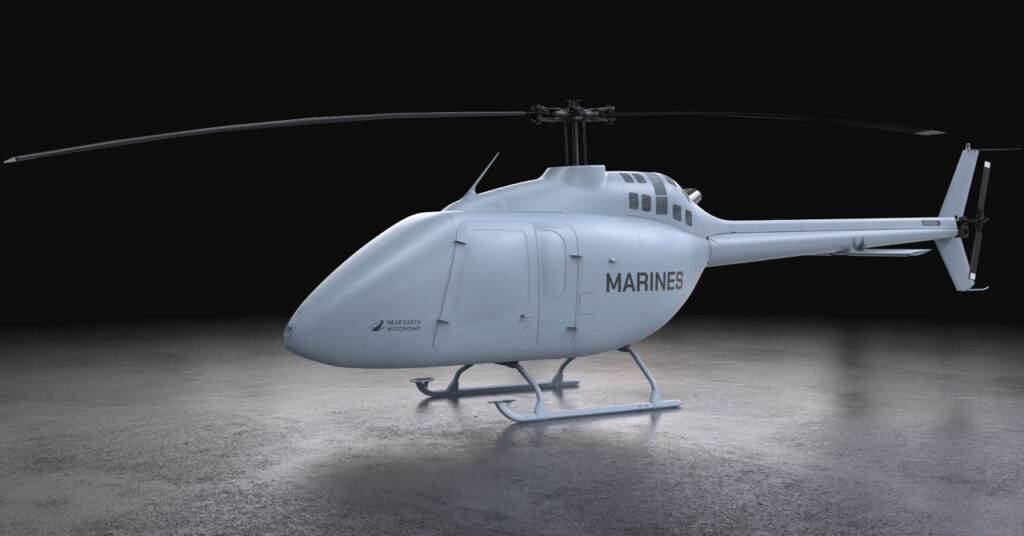
This initiative addresses the logistics demands of Distributed Maritime Operations and Expeditionary Advanced Base Operations, where dispersing forces increases sustainment requirements while heightening risks for crewed helicopter teams. The MARV-EL program focuses on creating a risk-worthy, cargo-moving UAV asset that can operate during high-tempo 24/7 operations where crewed aircraft may be constrained by force-availability limits or vulnerability.
“The program is to develop an uncrewed aerial logistics aircraft for where the risk and need are highest,” said Lyle Chamberlain, CTO of Near Earth. “We are combining our Captain autonomy architecture with a proven Bell 505 platform to move cargo without putting Marines in harm’s way. To be as intuitive as possible, we are designing the aircraft around existing Marine Corps workflows. Operators will be able to request, dispatch, and manage missions through familiar command-and-control pathways, including MAGTAB and MANGL integration. At the same time, cargo can be loaded with standard pallet jacks and forklifts. This approach reduces infrastructure burden and helps make autonomous resupply practical for expeditionary operations.”
Chamberlain noted that the program builds on lessons learned from the Tactical Resupply Unmanned Aircraft System and Aerial Logistics Connector programs, utilizing the same shared autonomy framework applied to the Army’s RUC-60 optionally piloted Black Hawk helicopters. The Captain autonomy architecture itself is a safety-critical, risk-aware, MOSA-based framework designed for autonomous takeoff, en route navigation, obstacle avoidance, and GPS-denied navigation.
“Our approach optimizes for fast, efficient progress on a mature, OEM-supported aircraft, rather than slowly reinventing the wheel with a new vehicle,” said Samuel Dinnar, Chief Strategy Officer at Near Earth. “Each of our collaborators brings a great deal to the table. Bell Textron provides the proven Bell 505 platform, the technical data, and the airworthiness foundation needed for derivative military configurations. Moog delivers the certified flight control system that connects autonomy to the aircraft with high-integrity flight control. XP Services provides the modification, integration, maintenance, and experimental flight-test support needed to progress through every step of development.”
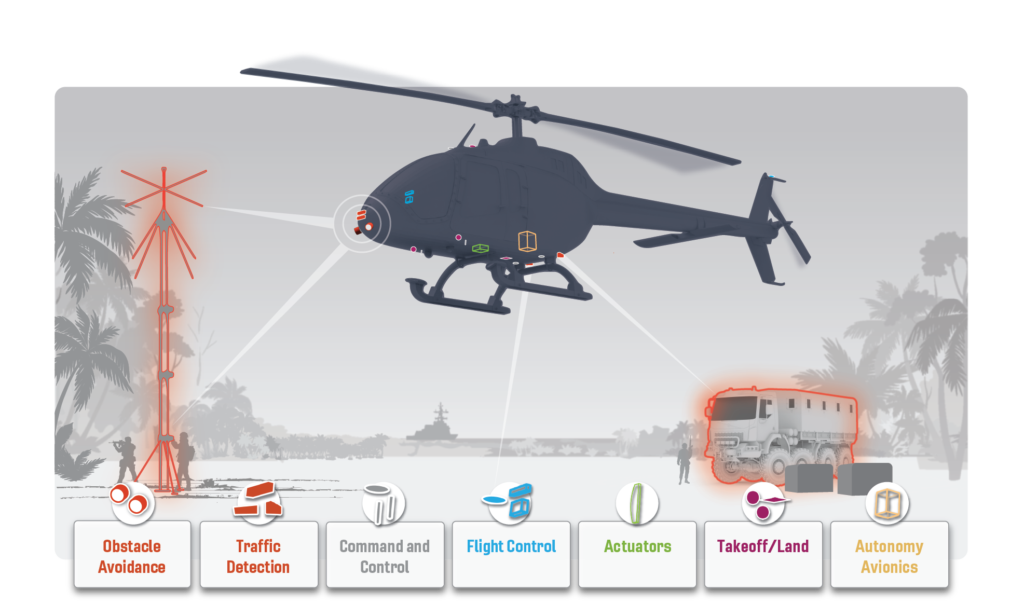
The contract specifies an aerial logistics capability meeting threshold requirements for a 1,300-pound payload at a 100-nautical-mile combat radius. The proposed Bell 505 configuration is designed to exceed these objectives by providing greater payload capacity, accommodation for a full Joint Modular Intermodal Container, and efficient transportability that allows two aircraft to fit inside a C-130 with minimal disassembly.
“The Bell 505 provides a proven, OEM-supported platform that is well suited for rapid adaptation to new mission requirements,” said Jason Hurst, SVP of Engineering, Bell. “By combining that aircraft maturity with Near Earth’s autonomy and integration expertise, this program has a strong foundation for delivering an effective autonomous logistics capability for the Marine Corps.”
“Moog is proud to bring our innovative design capabilities in autopilots, avionics, and flight-control hardware to a program focused on autonomous logistics for the Marine Corps,” said Sharmila Durairaj, General Manager, Moog Avionics. “By combining our flight-control technology with Near Earth’s autonomy into the Bell 505 platform, this team has a proven path to delivering a practical autonomous aerial logistics capability for contested operations.”
“Our collaboration and flight-test approach show that we have the right team to deliver an autonomous aircraft to support the Marine Corps’ requirement to operate in a contested logistics environment,” said Ken Pfleger, Program Manager of XP Services. “The XP Services team has performed hundreds of aircraft conversions since its beginning in 2008. We have the resources to support these aircraft modifications and installations at the rate and standard customers will demand.”
Near Earth brings over 13 years of innovation and experience from more than 10,000 flights across 140 airframes to the project. Over the next 36 months, the team will perform integration and flight testing to progress the system from early demonstrations to full mission capability, informing future operational procedures for autonomous aerial logistics.