Conformal coating masking is the critical precision process that ensures the long-term reliability of unmanned system electronics by protecting sensitive interfaces during coating application. This selective process uses advanced tapes, liquid maskants, and die-cut boots to prevent ingress into connectors, RF paths, and ventilation systems, guaranteeing electrical integrity and field-serviceability on UAV, UGV, and UUV circuit boards.
This guide profiles leading global suppliers of conformal coating masking materials and services engineered for the unique challenges of high-reliability, harsh-environment unmanned platforms.
If you design, build or supply Conformal Coating Masking Materials, create a profile to showcase your capabilities and connect with visitors who have an active requirement for your solutions.
Printed circuit board (PCB) assemblies destined for unmanned platforms, whether high-altitude UAVs, ground robots, or deep-sea UUVs, are inevitably exposed to extremely demanding conditions.
Conformal coating remains the primary defense for these critical electronics, yet its effectiveness hinges on precise, selective application. That precision is achieved through high-quality conformal coating masking materials and robust process control. For engineers working within the unmanned systems sector, effective conformal coating masking is not just a secondary process; it is a critical enabler of long-term mission reliability.
Why Masking Precision is Essential for Mission-Critical PCBs
The purpose of masking is fundamentally simple: to preserve the electrical conductivity, mechanical function, and serviceability of sensitive components that cannot tolerate coating coverage. Interfaces like connectors, test pads, gold fingers, and mechanical assemblies must remain pristine. Contamination in these zones, even a thin film of cured polymer, can introduce catastrophic failure modes:
Electrical Intermittency: Coating ingress into connectors increases mating force requirements or, worse, creates intermittent, high-resistance connections.
Impaired Serviceability: Masking failure on test points prevents in-field diagnostics or repair access, compromising mission readiness.
Rework Costs: Inadequate masking forces costly and time-consuming rework, which compromises overall system throughput and reliability metrics.
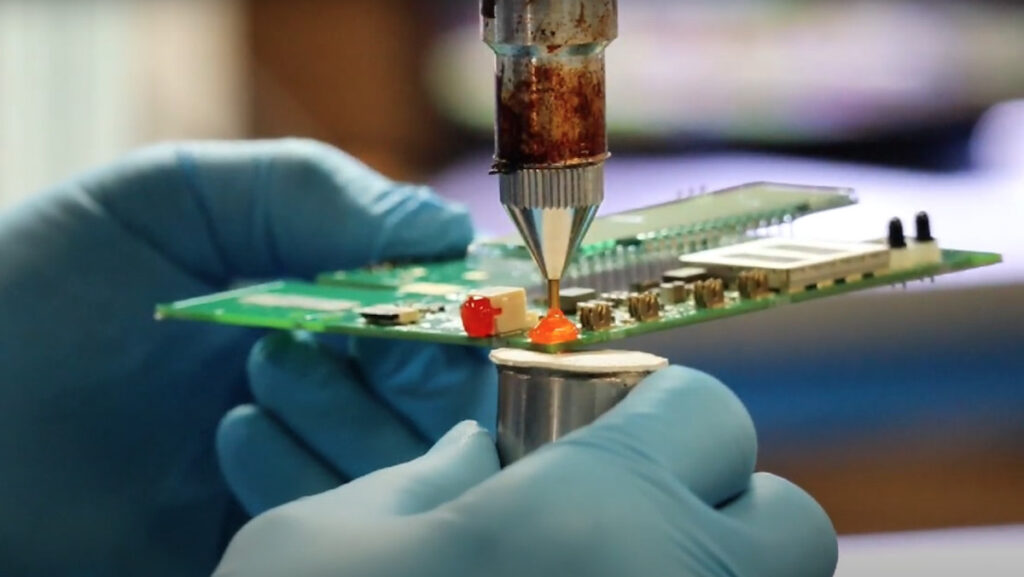
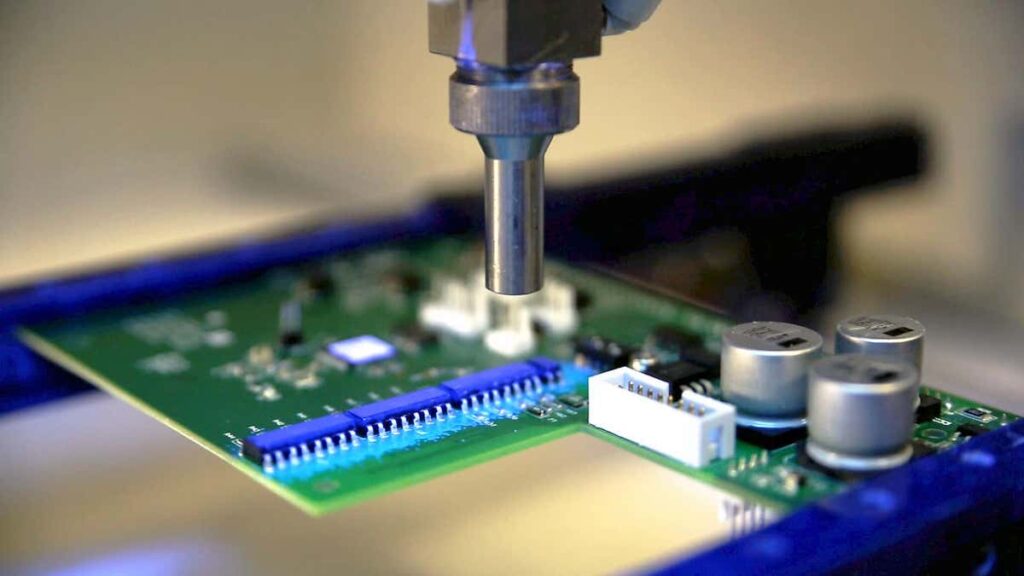
SpeedMask® PCB conformal coating maskant by DYMAX.
For autonomous platforms that must operate for extended durations without human maintenance, such as long-endurance UAVs or deep-sea Autonomous Underwater Vehicles (AUVs), pcb maskants and conformal masking directly determine mission success.
Environmental Drivers and Conformal Coating Types
Environmental stressors are the primary drivers shaping coating and masking decisions. Maskants for aerospace applications face rapid thermal cycling and low-pressure environments, while marine systems deal with salt fog, condensation, and chemical exposure.
Common Coating Chemistries in Unmanned Platforms
The choice of coating chemistry dictates the required properties of the masking material.
Coating Type
Primary Benefit for Unmanned Systems
Masking Difficulty
Acrylic (AR)
Ease of application, reworkability, good moisture resistance. Used in general UAV avionics.
Moderate; requires good edge definition.
Silicone (SR)
Excellent thermal stability and flexibility, ideal for vibration-heavy UGV motor controls.
Moderate to High; can be prone to wicking if viscosity is low.
Polyurethane (UR)
Superior resistance to fuels, lubricants, and solvents; critical for engine-adjacent or UUV electronics.
High; demands aggressive adhesion due to chemical resistance.
Unmatched barrier protection and conformality (vapor-deposited). Used extensively in aerospace conformal coating.
Extreme; requires specialized boots and precision alignment due to coating ingress risk.
The most critical masking challenge is often the Parylene masking process. Because Parylene is a vapor-deposited polymer, it coats every exposed surface with complete uniformity. While this is its strength, it is also its weakness: Parylene ingress into a connector’s mating area will destroy the electrical interface. Engineers must employ custom pcb conformal coatings and highly specialized masking solutions, such as pre-molded boots or non-depositing connector types, to protect these interfaces absolutely.
Coating Process Constraints that Influence Masking Decisions
The physical application and curing process directly influence the selection of conformal coating masking materials.
Application Method
Whether using spray, dip, brush, or robotic dispense, the chosen method impacts material requirements. Spray processes require high edge adhesion and blowout resistance from tapes. Conversely, dip coating requires a complete, watertight seal around protected areas to prevent total coating coverage due to capillary action or wicking.
Cure Method
Cure method dictates the thermal and chemical stability requirements for the maskant:
Thermal Cure: Requires tapes and liquid maskants that can maintain adhesion and integrity at elevated temperatures (e.g., 100°C to 150°C) without leaving adhesive residue or shrinking.
UV Cure: The maskant must be opaque to prevent the UV light from curing the coating underneath the mask. Critically, if the maskant is not removed promptly, the UV energy can sometimes cause the maskant material itself (especially some latex types) to become brittle, making clean removal extremely difficult.
Masking Solutions: Tapes, Dots, and Liquid Maskants
The engineering solution for selective coating relies on a diverse range of maskant materials, each suited to specific geometries, volumes, and coating types.
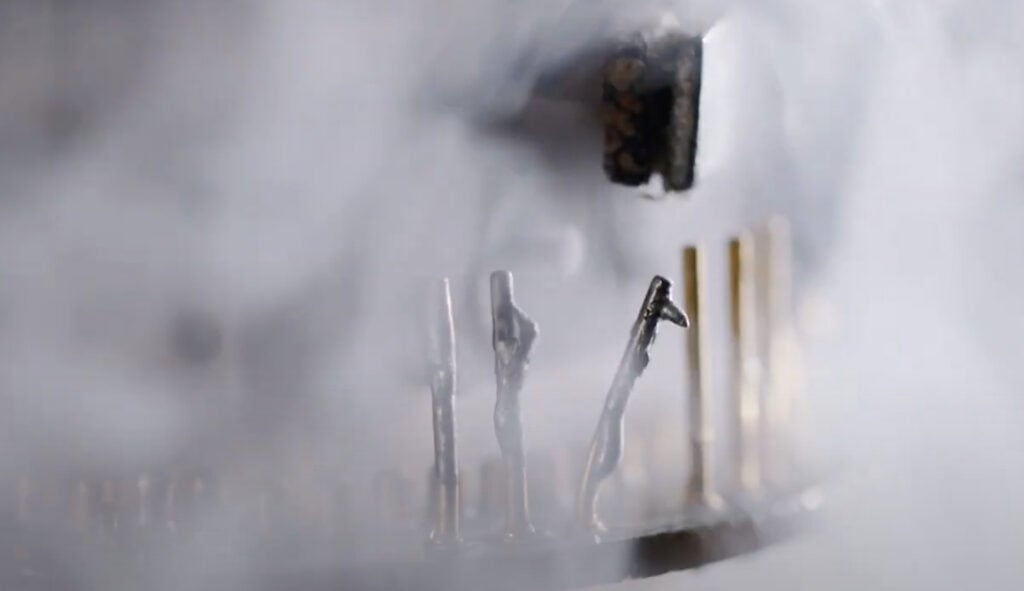
Conformal coating masking solutions by HZO.
Masking Tapes and Dots
Polyimide Tapes (Kapton): These films are the industry standard for high-temperature processes, offering excellent solvent resistance and dimensional stability during thermal cures.
PET and Crepe Tapes: Often lower-cost, PET (Polyester) films provide clean, straight edges for linear masking, while crepe tapes offer better conformability for curved surfaces.
Die-Cut Shapes: PCB masking dots and custom-cut shapes ensure consistency for high-volume production. They are ideal for repeatable masking of test pads, alignment holes, and circular connector footprints, and they integrate well with automated pick-and-place systems.
Liquid Maskants
Liquid maskants are essential for protecting complex, non-planar geometries where tapes cannot form an adequate seal, such as component leads, irregular cavities, or tightly packed areas.
Peelable Latex and UV-Curable: Peelable maskants allow for easy, single-piece removal. UV-curable variants offer rapid processing, as they cure almost instantly upon UV exposure, dramatically speeding up production time compared to air-drying liquid masks.
Silicone-Based Temporary Masks: These provide superior high-temperature and chemical resistance, necessary for use with aggressive coatings like polyurethanes.
Solvent vs. Water-Based: Solvent-based options typically offer stronger adhesion and faster air-drying but require careful consideration regarding interaction with component plastics. Water-based masks reduce FOD risks and are safer for operators.
Specialized Masking for Unmanned System Challenges
The most advanced unmanned systems present unique masking difficulties that require bespoke solutions:
UUV/USV Saltwater and Pressure Systems: Marine electronics exposed to saltwater require heavy, chemically resistant coatings. Masking must prevent intrusion into the critical sealing interfaces, but also into pressure vents or hydrophobic membranes essential for pressure equalization within sealed non-oil-filled enclosures. Coating ingress here causes total system failure.
Counter-UAS & EW RF Systems: Radio Frequency (RF) components are intolerant of coating materials. Masking must provide absolute protection to sensitive RF paths, tuned cavities, filters, and high-frequency connectors, preventing any wicking that could shift impedance or alter signal integrity.
High-Density Fine-Pitch Components: The rise of high-density payloads and autonomy electronics means PCBs are packed with fine-pitch devices (QFNs, BGAs). Coating bridging between leads is a real risk. This requires the use of specialized conformal coating masking boots or ultra-precision micro die-cuts that maintain electrical isolation and signal fidelity.
Effective conformal coating masking demands a systematic, risk-based approach. By aligning the chosen maskant materials with the specific coating chemistry, process constraints, and harsh operational environment of the unmanned system, engineering teams can ensure maximum long-term reliability for their critical electronic assemblies.
Dymax shares insights into low-outgassing adhesives, minimizing ionic contamination, and light-curable materials, highlighting their role in ensuring reliability and production precision for aerospace, satellite, and defense electronics in vacuum and high-altitude environments
Dymax to showcase TPO-free adhesives and coatings alongside advanced curing equipment to address PCB reliability challenges at SMTA International 2025, Illinois
Dymax’s new 9773 UV/Visible light-curing adhesive offers low outgassing, high reliability, and sustainability for ruggedizing and protecting PCBs in space applications
HZO explains how it generates budgetary quotes for Parylene coatings by evaluating component dimensions, masking needs, production volume, manufacturing location, and operating environment
Virginia Hogan, Business Development Sr. Manager for Aerospace & Energy at Dymax, explains how Dymax 9771 conformal coating meets reliability, compliance, and processing needs in advanced unmanned aerospace and defense systems
HZO highlights the role of protective coatings like Parylene in delivering long-term operational value for sensitive electronic components across a wide range of industries
SCS outlines updates on conformal coatings and tin whiskers, looking into the origin of tin whiskers, how to mitigate their adverse consequences with conformal coatings, and more
Discover how HZO’s advanced Parylene coating process protects electronic components, and explore its precise application methods, rigorous quality control, and flexible integration options for high-reliability industries
Apr 11, 2025
Advancing Unmanned Systems Through Strategic CollaborationUST works with major OEMs to foster collaboration and increase engagement with SMEs, to accelerate innovation and drive unmanned systems capabilities forward.