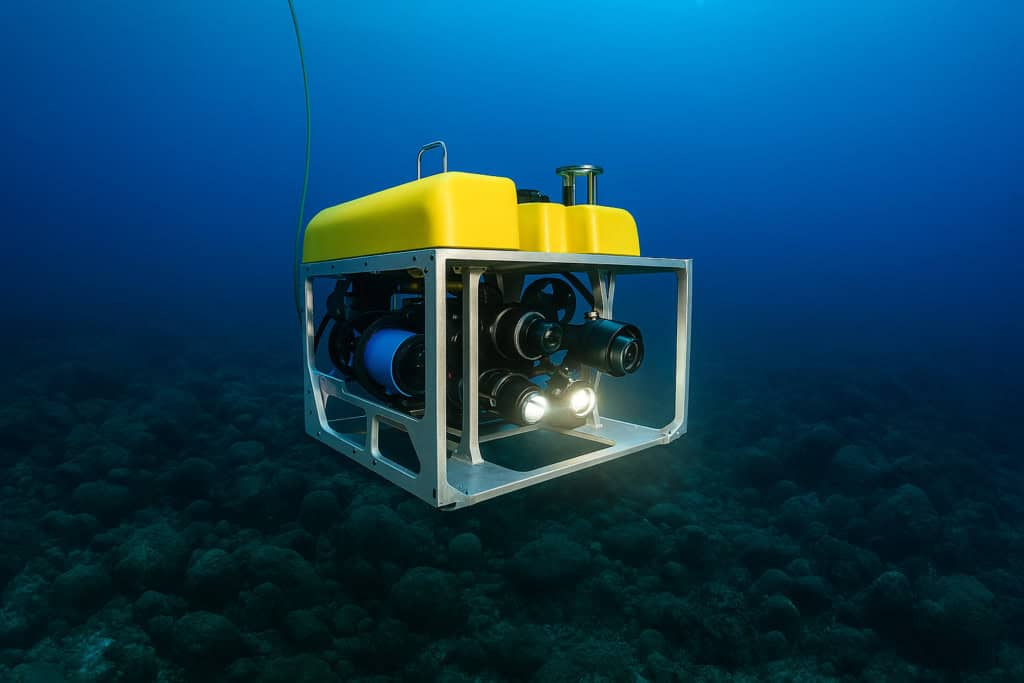
Knight Optical has highlighted the evolving capabilities of autonomous underwater vehicles (AUVs) and the critical role that laser modules play in supporting underwater tasks.
These advanced subsea vehicles are increasingly deployed for deep-water applications, relying on lasers to perform intricate mapping, ranging, alignment, and structural inspection tasks. However, operating beneath the surface presents severe optical obstacles, as water acts as a hostile environment where beam divergence, turbidity, and high pressure drastically degrade performance compared to above-surface applications. Despite these conditions, laser-based technology allows AUVs to achieve high precision in sensing, measuring, and navigating where other alternative technologies fail. In inspection scenarios, these systems monitor pipelines and infrastructure to detect structural integrity threats such as corrosion, damage, and free spans. For mapping, laser scanning and LiDAR systems generate complex 3D point clouds to model seabed terrain, while also aiding docking alignment, Remotely Operated Vehicle (ROV) guidance, and obstacle avoidance in areas lacking GPS access.
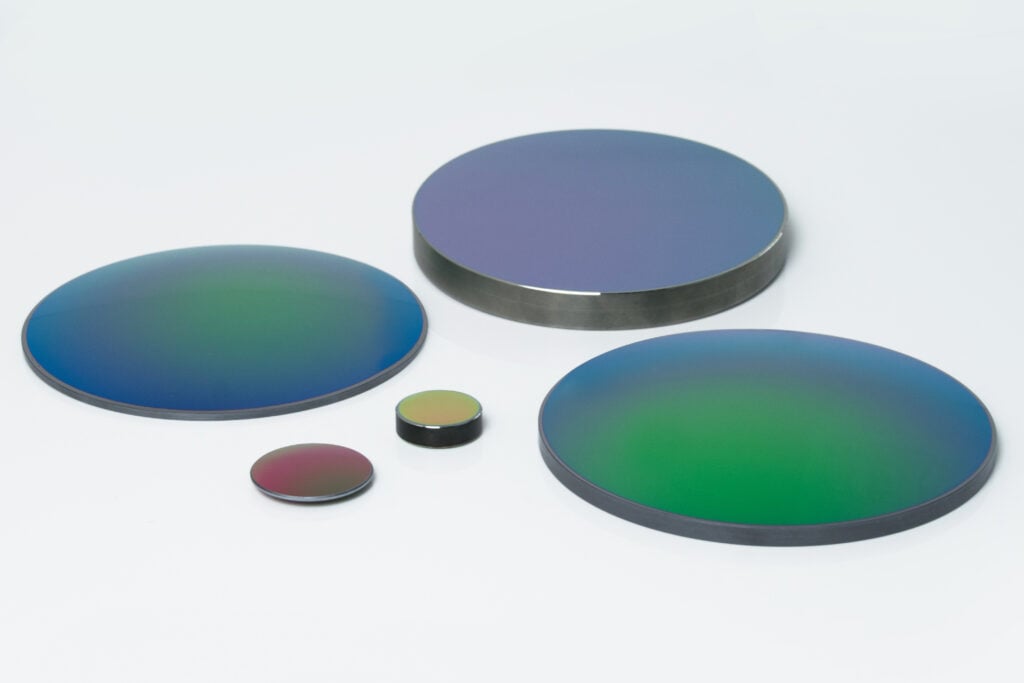
The company has explained that water inherently works against laser performance through several distinct mechanisms. Refraction at the water interface alters beam geometry, which directly compromises pointing accuracy, targeting, and measurement precision by introducing wavefront distortion. Furthermore, turbidity caused by sediment, marine particles, and algae scatters the beam in multiple directions, reducing both the operational travel distance and the sharpness of returned readings. Wavelength selection is also vital due to varying absorption rates; red bands absorb rapidly, whereas green and blue wavelengths penetrate the furthest into the depths. When a standard, diverging beam encounters these turbid conditions, it becomes highly dispersed and loses energy, placing the entire optical assembly under immense strain.
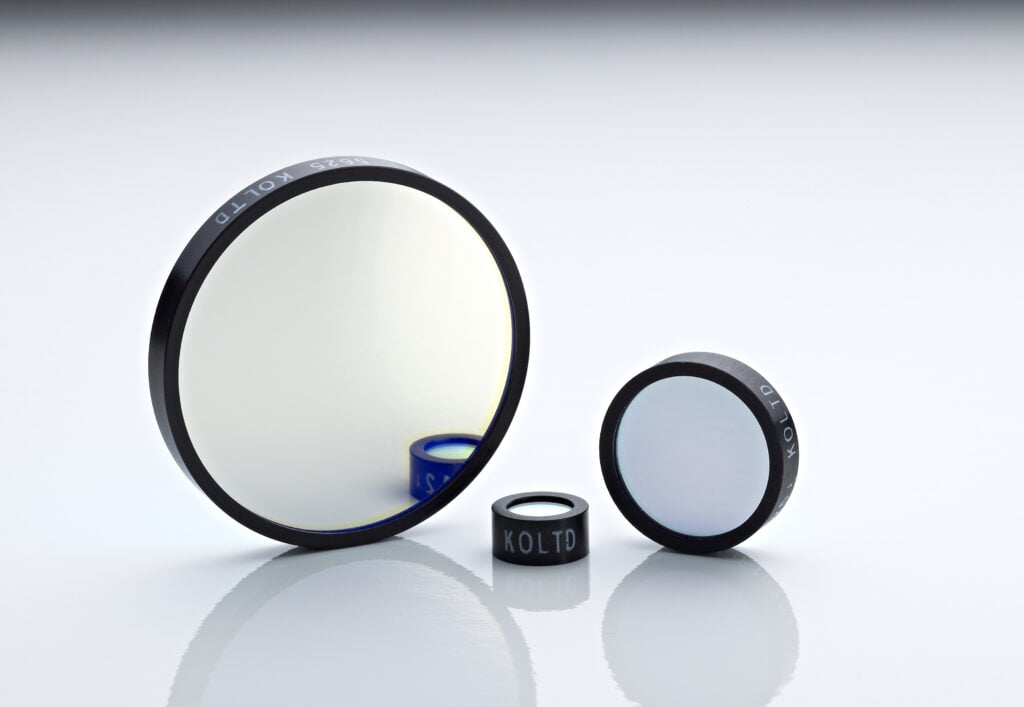
To mitigate these severe environmental issues, laser beam expanders provide necessary optical control by delivering collimated beams. These components assist subsea systems in two specific ways: they reduce divergence by keeping the laser beam tighter for longer to extend operational range, and they control illumination profiles to ensure light hits targets evenly for cleaner, more reliable return signals. The company maintains that optical quality upstream directly defines overall system capability downstream.
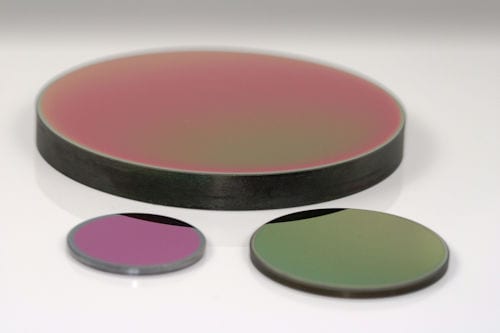
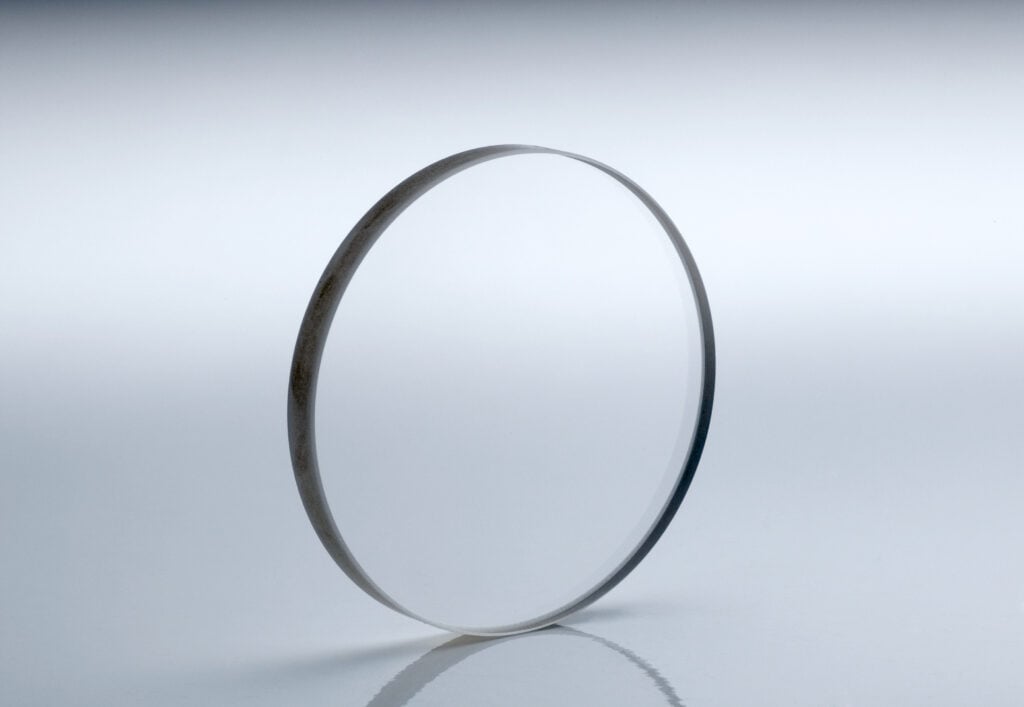
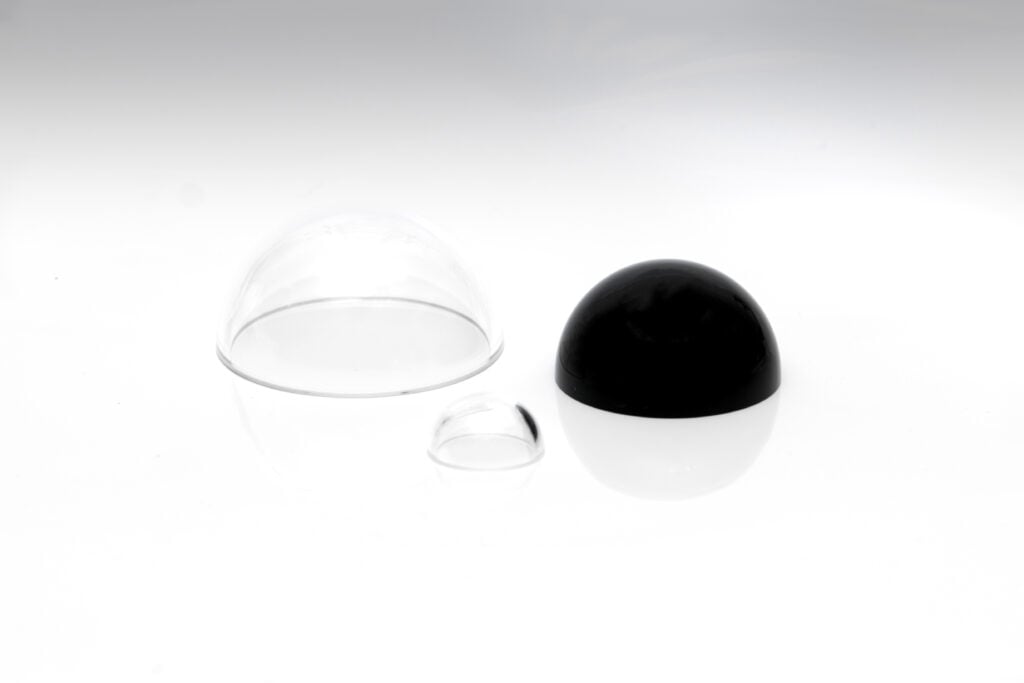
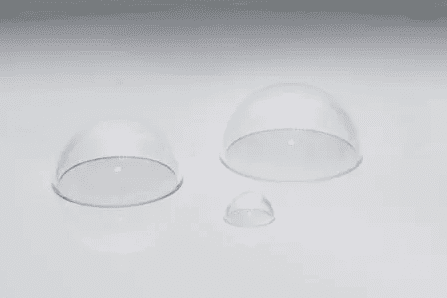
Physical durability is equally critical, as deep-sea optics and their housings must survive intense pressure cycles, extreme temperature shifts, saltwater deterioration, and biofouling. Knight Optical has identified the most suitable substrate material choices for these demanding conditions. Sapphire is frequently selected for viewports and windows due to its extreme hardness and resistance to scratches, abrasion, and pressure. N-BK7 (or equivalent) substrates serve as a common choice for applications where the high cost of sapphire components is not justified. Lastly, acrylic is lightweight and typically utilized for optical domes requiring wide-angle coverage, though it remains less durable than alternative materials.