Discover World-Leading Unmanned and Autonomous Technologies
Discover cutting-edge solutions from leading global suppliers
Dymax is a developer of UV light-curing conformal coatings and maskants for electronics and optical assemblies used within unmanned systems, satellites, aerospace avionics, and defense hardware.
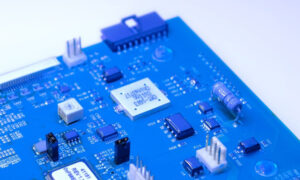
Dymax 9771 Low Outgassing Conformal Coating.
In this exclusive Q&A, UST sat down with Virgina Hogan, Business Development Sr. Manager, Aerospace & Energy, Global, to discuss what engineers need to know about low-outgassing adhesives and minimizing ionic contamination, their critical role in ensuring reliability in vacuum and high-altitude environments, and how MAPTIS-listed materials help meet stringent aerospace and defense standards.
Why does outgassing matter in aerospace, satellite, and defense electronics?
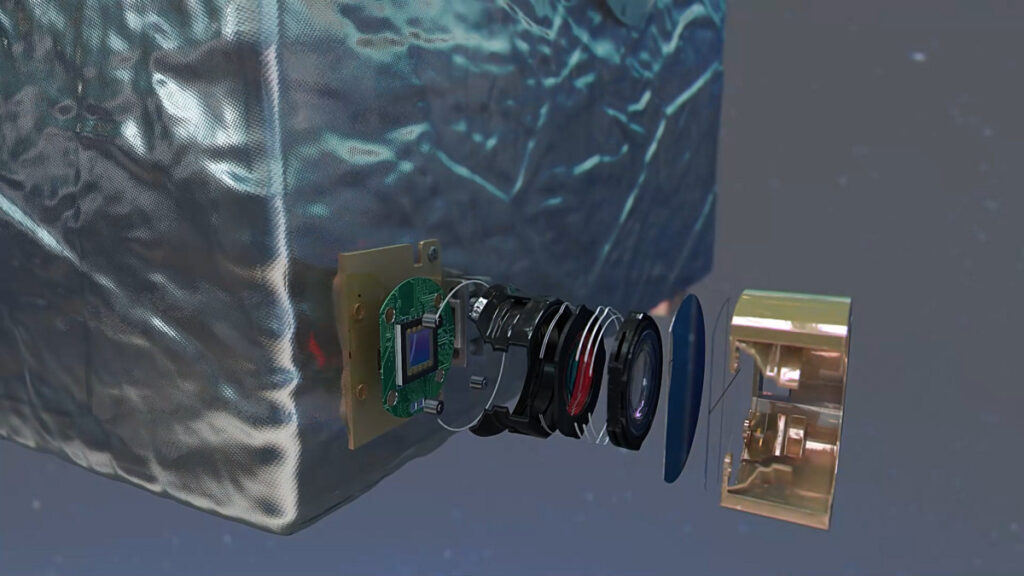
In vacuum environments, materials can release trapped gases and volatile compounds, which may then condense on optics, sensors, or PCB surfaces, potentially degrading performance or causing signal drift.
To address this, NASA’s ASTM E595 standard sets strict limits for Total Mass Loss (TML ≤ 1.00%) and Collected Volatile Condensable Materials (CVCM ≤ 0.10%). Adhesives that comply with these limits play a critical role in maintaining long-term reliability for spacecraft, high-altitude platforms, and defense electronics.
What does it mean when an adhesive is MAPTIS-listed or meets NASA ASTM E595?
NASA’s Materials and Processes Technical Information System (MAPTIS) provides verified outgassing data for materials tested to ASTM E595. Being listed in MAPTIS allows engineers to quickly confirm a material’s suitability for vacuum or low-pressure environments. For example, Dymax 9773 is listed under MAPTIS Code 09907, with documented TML and CVCM results demonstrating compliance.
Why is low ionic contamination just as important as low outgassing?
Ionic residues, such as chlorides and alkali metals, can lead to corrosion and dendritic growth on PCB conducts or solder joints. In mission-critical systems, even small amounts of contamination can increase the risk of leakage currents or electrical shorts.
Adhesives that meet low-ionic standards, such as MIL-STD-883 Method 5011, help preserve insulation resistance and prevent corrosion-related failures in avionics, satellite electronics, and defense systems.
How do light-curable adhesives help reduce production risk for aerospace electronics?
Light-curable materials enable rapid, on-demand curing, helping prevent component shift and minimizing rework. High-viscosity formulations, such as Dymax 9773, provide strong slump resistance, staying in place even on vertical surfaces for up to 72 hours. This allows for precise dispensing around BGAs, CSPs, and other fine-pitch components. For applications like ruggedization, staking, or underfill alternatives, light-curable adhesives support both tight process control and high production throughput.
What criteria should engineers use when qualifying an adhesive for space applications?
 Engineers should ensure that a material meets ASTM E595 requirements, is listed in NASA MAPTIS with verified test data, and complies with low-ionic-content standards such as MIL-STD-883 Method 5011. Additional factors to consider include viscosity, curing method, and mechanical performance, depending on the assembly process, whether staking, encapsulation, or underfilling.
Where can engineers find materials qualified for low-outgassing aerospace applications?
MAPTIS-listed materials like Dymax 9773 and 9771 offer verified outgassing and ionic-cleanliness performance. They are commonly used to ruggedize, stake, encapsulate, and protect electronics in space systems, high-altitude unmanned platforms, and defense-grade hardware.
Thank you for your time. It has been a pleasure speaking with Dymax, and we look forward to following the continued advancements and wider adoption of adhesives in aerospace, satellite, and defense electronics applications.