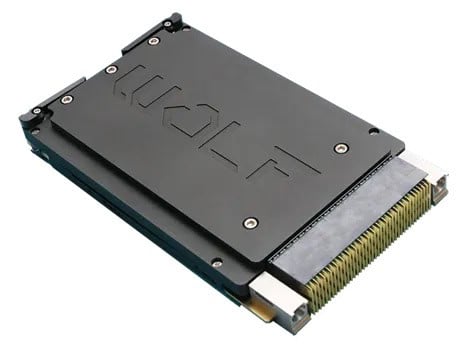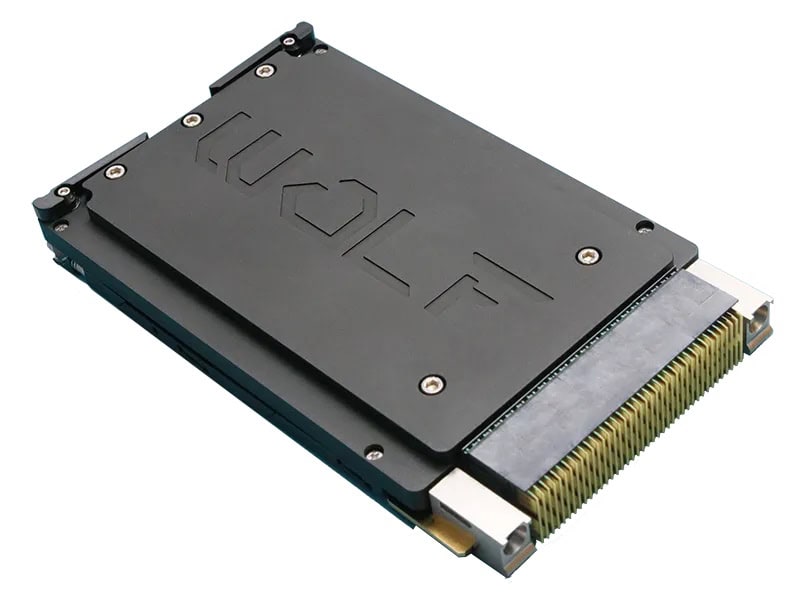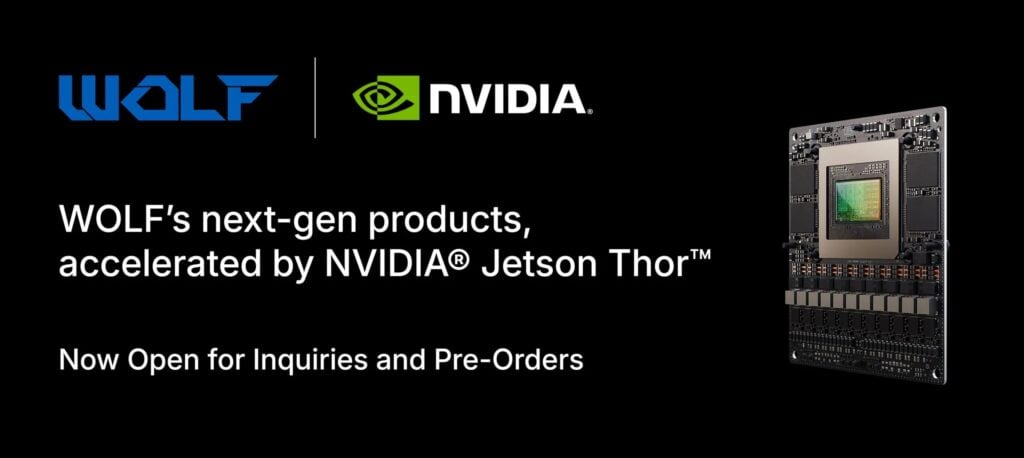
WOLF Advanced Technology has announced the continued development of its rugged embedded computing roadmap following NVIDIA’s introduction of the Jetson T3000 and T2000 modules.
The hardware milestone expands the NVIDIA Jetson Thor family by bringing the NVIDIA Blackwell architecture to a broader range of intelligent machines. Announced by NVIDIA on July 15, these scalable AI computing options deliver advanced performance in increasingly compact, power-efficient deployments for robotics, autonomous systems, and industrial automation.
As demand for real-time AI inference at the edge grows across aerospace, public safety, industrial automation, and robotics, WOLF is evaluating these advancements as part of its strategy to deliver rugged embedded computing platforms, including Small Form Factor systems like VNX+. These systems help customers deploy sophisticated AI capabilities in challenging operating environments where reliability is critical.
Austin Lindquist, Director of Innovation at WOLF, said, “The evolution of NVIDIA’s edge AI portfolio reflects a continuing trend in the embedded compute industry: delivering greater AI capability in increasingly compact, power-efficient platforms. As our customers continue pushing the limits of what’s possible at the edge, WOLF remains focused on advancing rugged embedded computing solutions that are ready to support the next generation of AI technologies.”
The expansion reflects an industry-wide transition toward capable edge platforms that execute complex AI models locally rather than relying solely on cloud infrastructure, enabling lower latency, faster decision-making, and improved operational resilience. WOLF’s long-standing integration of NVIDIA technologies into rugged systems supports customers developing applications such as autonomous vehicles, robotics, AI-powered vision systems, industrial automation, and machine learning inference.
NVIDIA expects the Jetson T3000 and T2000 modules to become available starting in Q1 2027. WOLF will continue evaluating the technology to support future edge compute requirements.