ParaZero Technologies examines how the growing use of low-cost FPV strike drones is changing counter-UAS responsibilities for personnel operating at the tactical edge. Read more >>
As drones increasingly threaten dismounted troops, command posts and fuel vehicles, regular infantry are being trained to detect, track and engage drones when dedicated counter-drone systems are unavailable, saturated or positioned elsewhere.
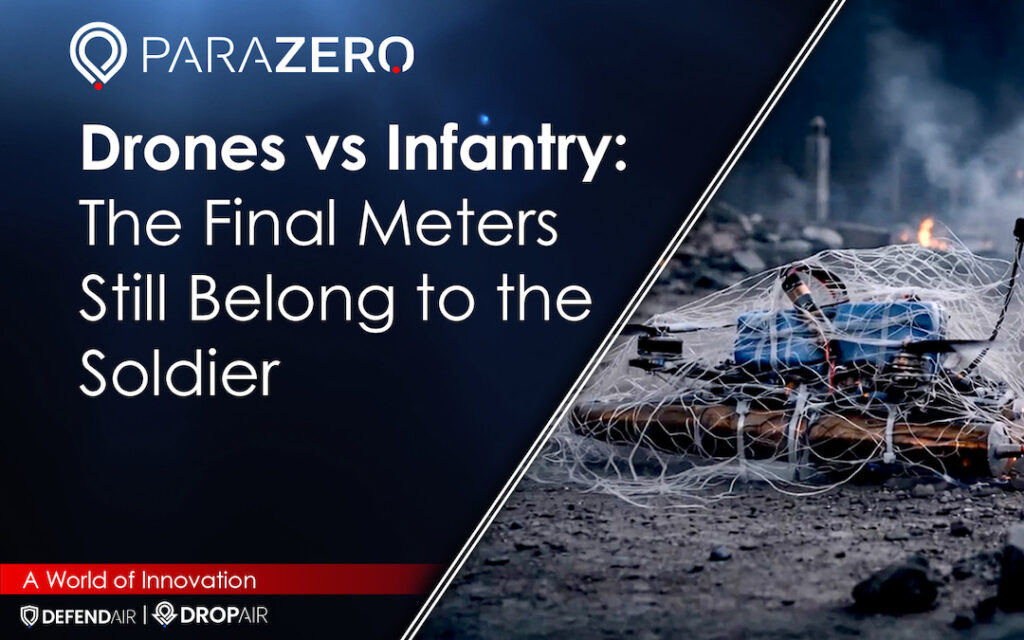
The article focuses on the final layer of protection, particularly engagements occurring within approximately 100 meters. At these distances, defenders may have only seconds to respond, while upstream defensive layers may already have failed or may not be suitable for close-range use. Jamming may be ineffective against fiber-optic-controlled drones, while missile interceptors may be inappropriate when a target is operating close to friendly personnel.
ParaZero presents its DefendAir Personal Net Launcher as a close-range option for this final defensive layer. The handheld, non-explosive system deploys a 4 m x 4 m net and is designed for situations where jamming is ineffective or missile interception is unsuitable. During a trial the launcher intercepted every drone presented during testing, including fast multirotors approaching at speeds of up to 120 km/h. Where an intercepted aircraft does not detonate, its recovery can also preserve hardware for subsequent forensic and intelligence examination.
Read the full article, “Drones vs. Infantry: The Final Meters Still Belong to the Soldier,” to explore how ParaZero’s handheld capability fits within a broader layered counter-UAS approach, alongside fixed turret and interceptor-drone configurations, and how regular infantry are being trained to detect, track and engage drones in increasingly demanding scenarios.