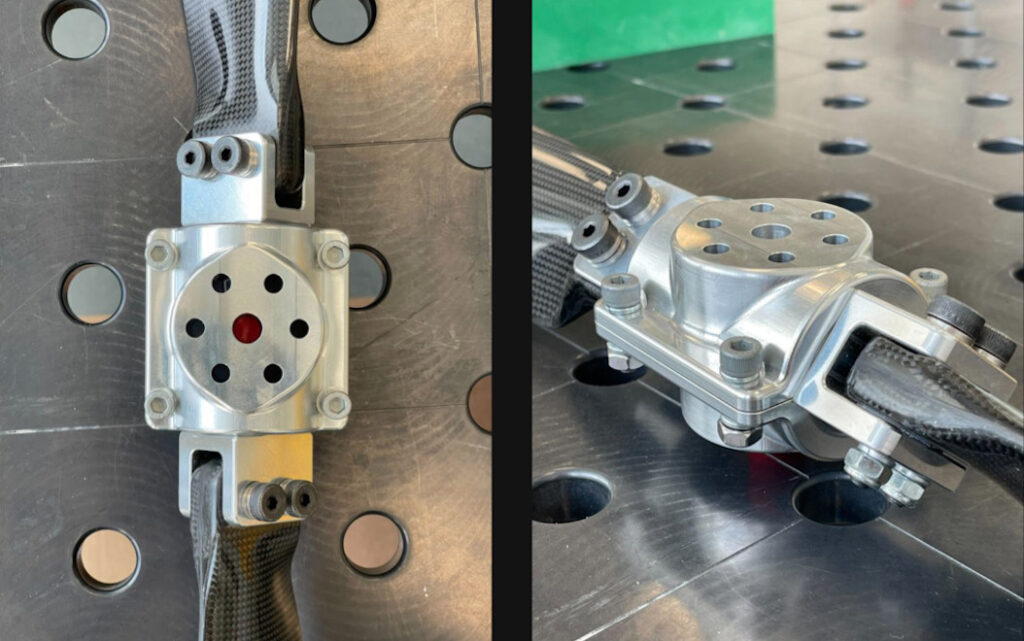
Mejzlik Propellers explains how On-Ground Adjustable (OGA) propellers can help Unmanned Aerial Vehicle (UAV) developers determine an optimal propulsion configuration before series production. Read more >>
UAV platform development requires a balance between weight, power, and aerodynamics. Although most parameters can be calculated during the design phase, the airframe’s actual aerodynamic drag often remains an estimate until the first flight, making the selection of a standard fixed-pitch propeller difficult and the results uncertain. A pitch setting that is too high can lead to motor overheating, while one that is too low can cause the motor to over-rev, quickly draining the battery or wasting fuel. This uncertainty can also affect development timelines, as unexpected performance during a test flight may halt progress while the team looks for a different propeller.
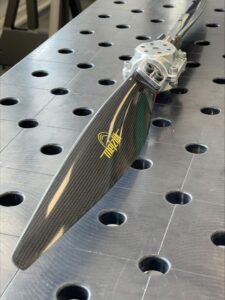
The Mejzlik OGA system is intended for development and prototyping, using a high-grade aluminum hub that allows the blade angle to be adjusted manually while the aircraft is on the ground and the engine is off. Adjustments can be made directly at the airfield between test flights, beginning with a conservative pitch to protect the motor before gradually increasing the pitch to determine the propulsion system’s maximum performance without risking damage from overheating.
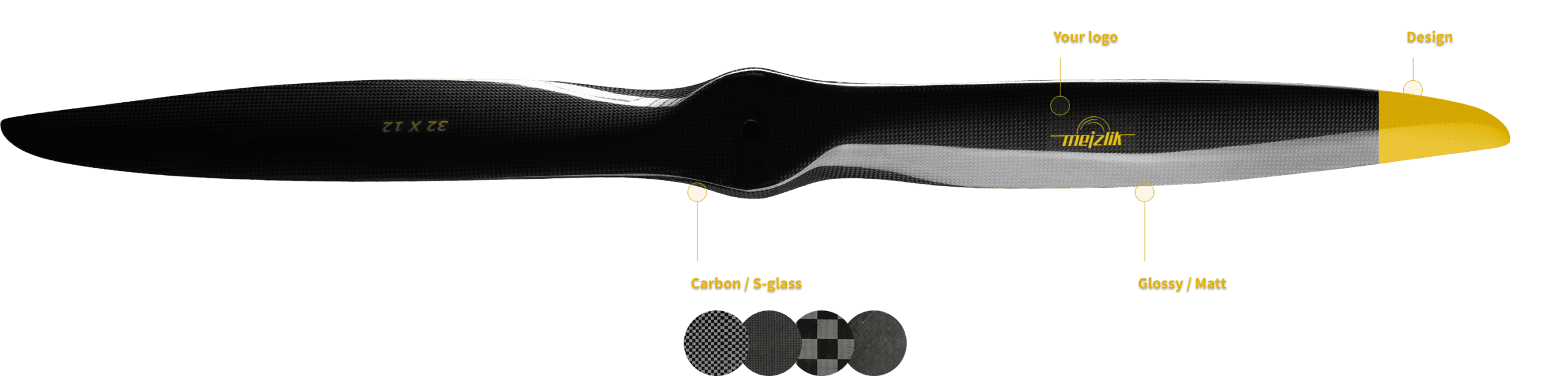
Although the aluminum hub makes the testing propeller heavier than the final version, its structural stiffness keeps the blades in their precise position under high loads. The blades have the same shape as those used for the final fixed-pitch propellers, enabling the performance demonstrated during testing to be carried into series production. The blades have passed overspin testing, while the hubs have undergone centrifugal load testing.
Flight testing with the adjustable system allows developers to observe how small changes in blade angle affect aircraft behavior and efficiency under real flight conditions. Small blade-angle adjustments can then be made between test flights to monitor changes in climb rate and cruise efficiency. Testing can identify the exact point at which any further increase or decrease in blade angle results in reduced performance. This final setting can then be used to accurately calculate the platform’s actual aerodynamic drag and finalize the propulsion requirements based on how the drone actually moves through the air rather than theoretical estimates.
Once the preferred configuration has been confirmed, the adjustable aluminum hub is no longer required for series production. Mejzlik Propellers transfers the proven blade design into a simplified fixed-pitch version while retaining the same blade shape used during testing. The aerodynamic behavior remains the same, while the final propeller provides the weight-saving benefits of a dedicated series configuration. The resulting carbon-fiber fixed-pitch propeller is lighter, tougher, balanced, and optimized for a single, specific operating point.
Read ‘On-Ground Adjustable Propellers – Finding the Optimal Propulsion Setup Before Series Production’ for more information.