Strategic Robotic Systems (SRS) highlights how hybrid underwater vehicles are changing Mine Countermeasure (MCM) operations by reducing the need for divers to enter the water during the highest-risk phases of a mission. Read more >>
Traditional mine neutralization can require personnel to approach live ordnance at close range while operating under pressure, with restricted visibility, limited underwater communication, and exposure to hazards including decompression sickness, nitrogen narcosis, barotrauma, entanglement, fatigue, and human error. Defense organizations have therefore sought unmanned underwater systems capable of removing personnel from these dangerous stages while retaining the flexibility required for complex MCM tasks.
In MCM operations, Unmanned Underwater Vehicles (UUVs) have typically fallen into two categories. Remotely Operated vehicles (ROVs) provide tethered, operator-controlled precision but can be constrained by range, mobility, and tether management, while Autonomous Underwater Vehicles (AUVs) can efficiently cover larger areas but lack the real-time precision needed for ordnance neutralization.
Hybrid underwater vehicles combine these operating approaches within one platform, allowing a vehicle to conduct autonomous search patterns using side-scan and forward-looking sonar before transitioning to tethered ROV control for close inspection, precise positioning, and disruptor deployment. This enables the threat to be approached and neutralized without requiring a diver to enter the water during those stages.
Hybrid MCM Operations with FUSION
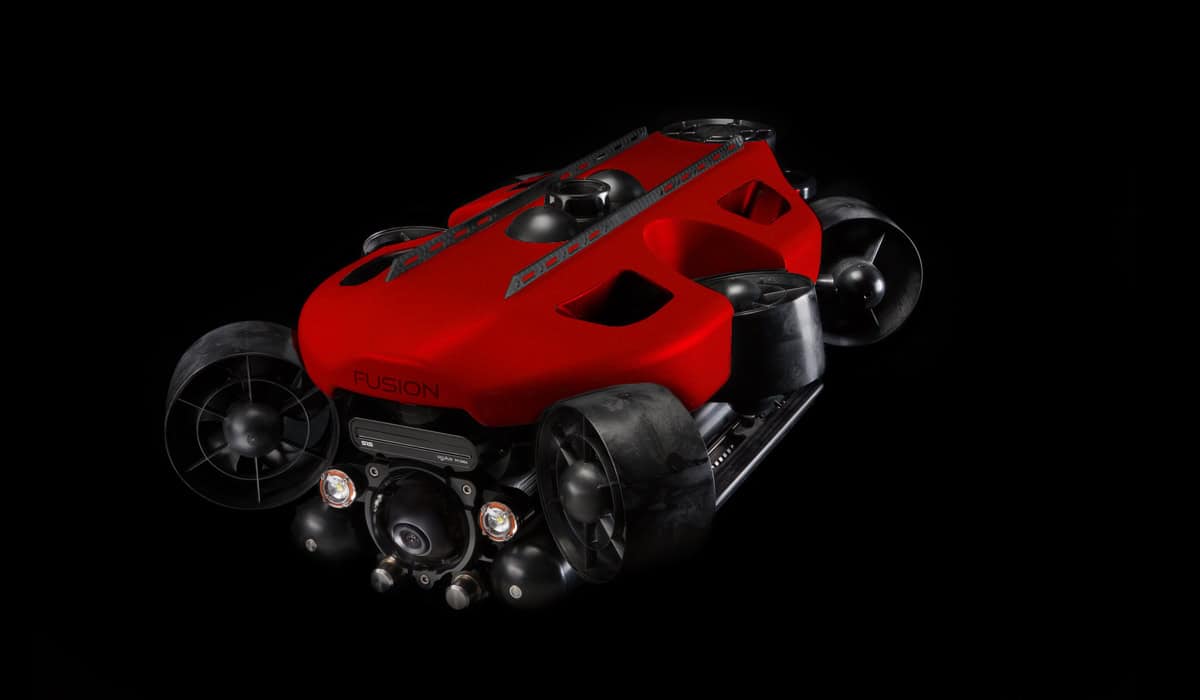
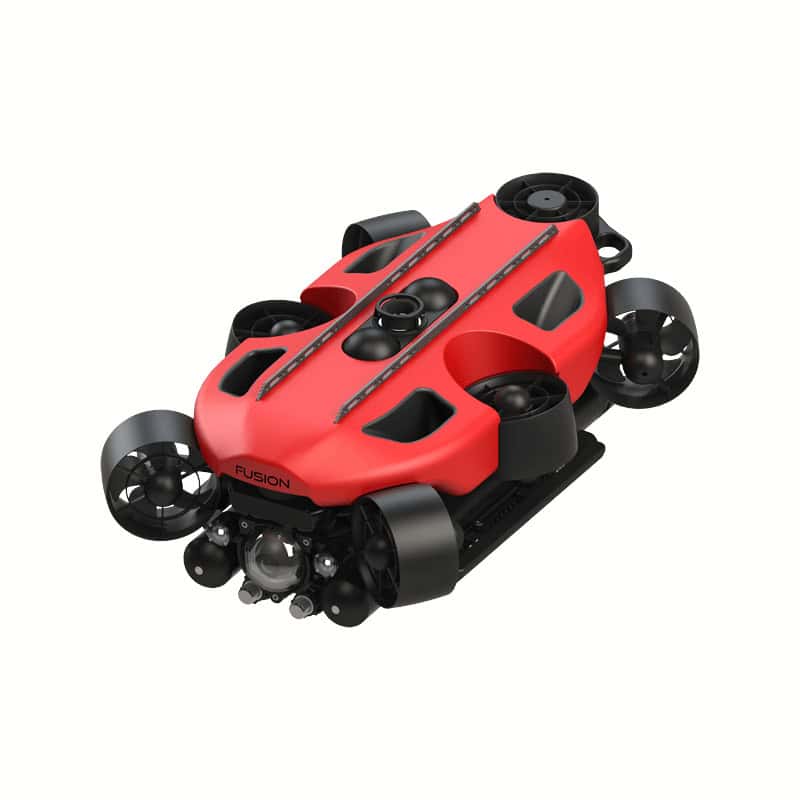
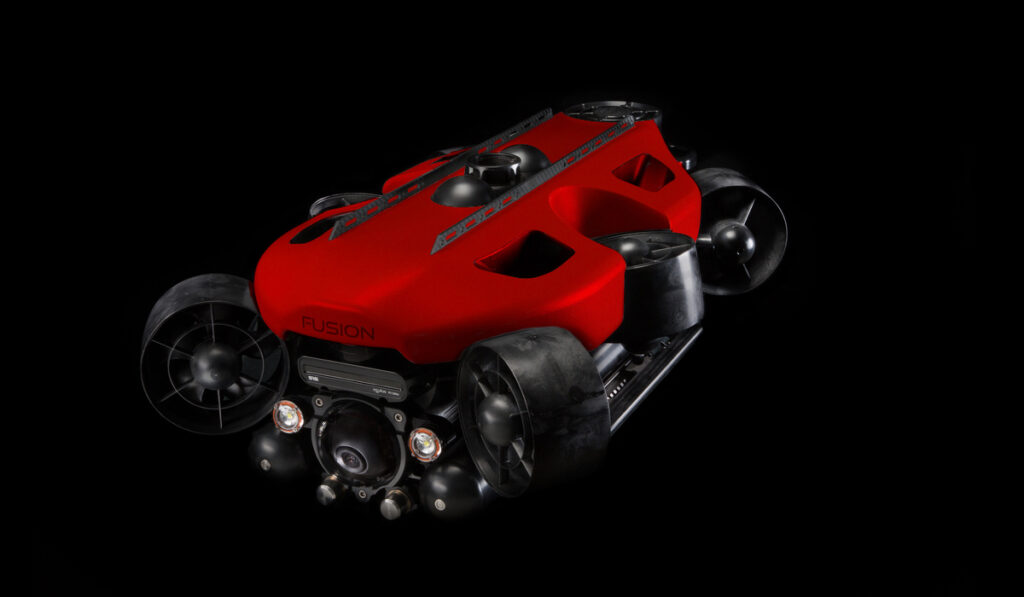
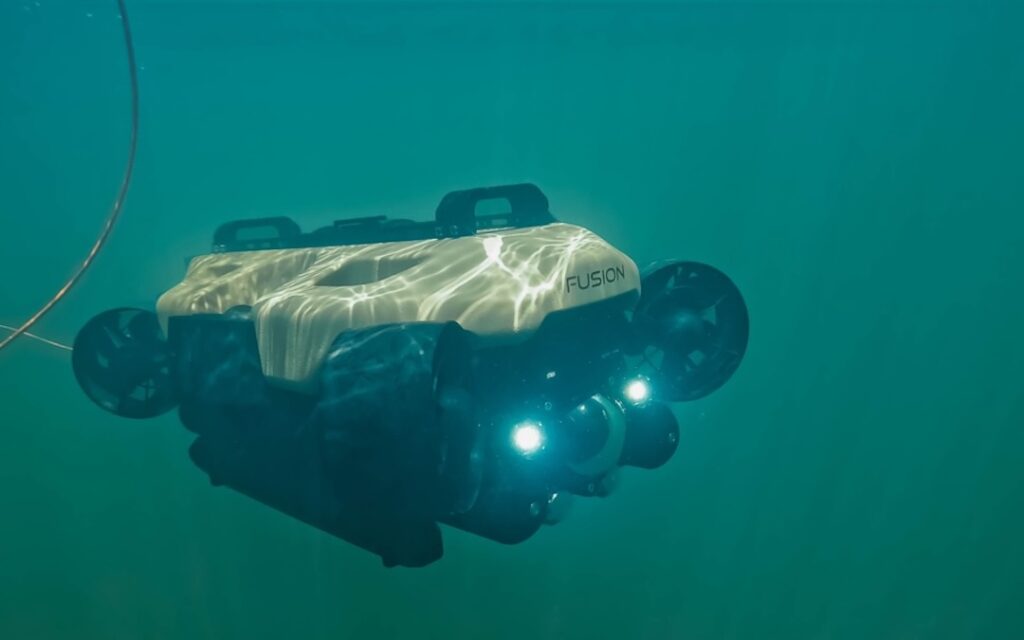
SRS designed its FUSION system specifically around this workflow. The vehicle integrates a Zero Point TiTAN EOD disruptor, 4K camera, forward-looking multi-beam sonar, side-scan sonar, Doppler Velocity Log (DVL), and Attitude and Heading Reference System (AHRS), providing the equipment required to locate, identify, and neutralize an underwater mine while keeping personnel out of the water. FUSION also has an expeditionary form factor that allows deployment from a small vessel and is compact enough to be checked as baggage, supporting rapid movement to operational areas without the need for a large support footprint.
Hybrid underwater vehicles do not remove the requirement for trained EOD and MCM divers. Divers continue to provide the judgment, dexterity, and adaptability needed for tasks in complex and unstructured underwater environments. Instead, systems such as FUSION reduce the need for divers to perform the initial approach, close-in inspection, and neutralization of a live threat, where the risk is highest.
As battery endurance, acoustic communication, and autonomy improve, the operational envelope of hybrid vehicles can continue to expand, while divers remain focused on missions that specifically require human intervention.
Read ‘How Hybrid Underwater Vehicles Are Replacing Divers in Mine Countermeasures’ for more information.