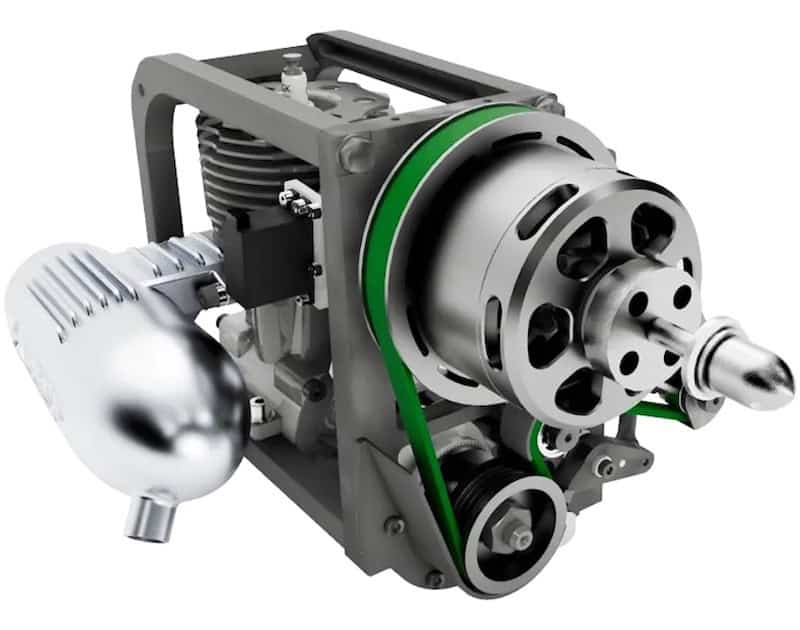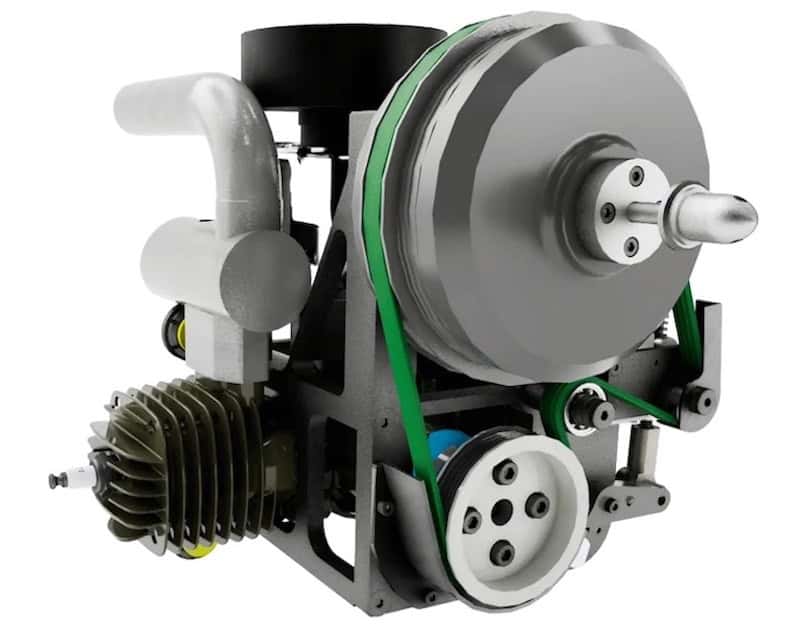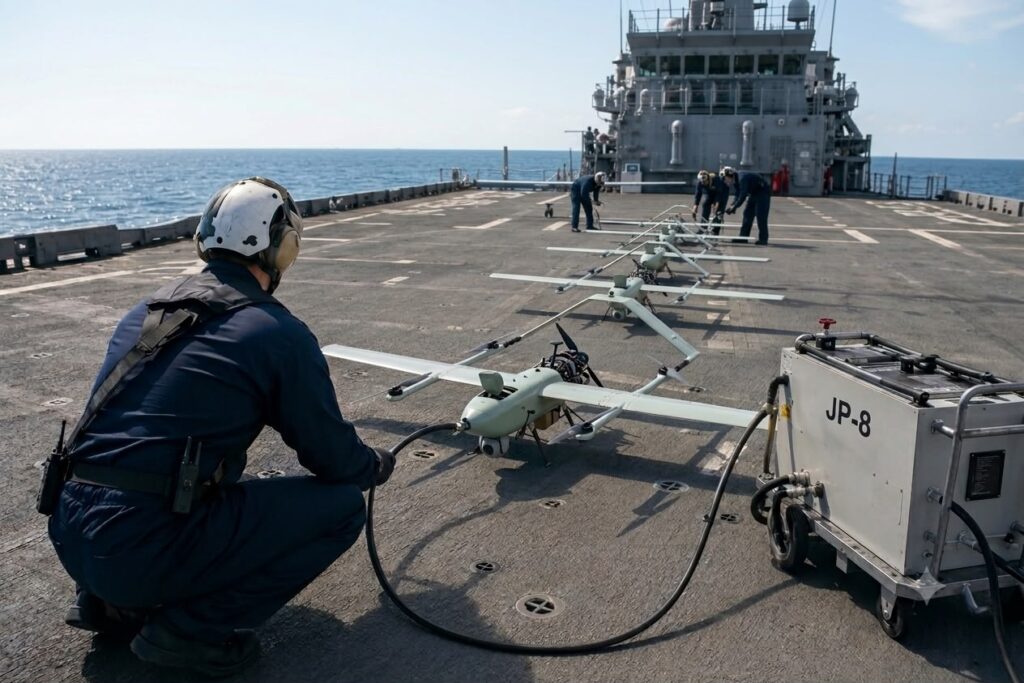
Lowental Hybrid is developing heavy fuel capability for tactical UAV propulsion through its Native Parallel Hybrid™ architecture, combining high-RPM operation with integrated thermal management to support reliable use of fuels such as JP-8 and Jet A-1.
Heavy fuel compatibility allows tactical UAVs to operate within established military fuel infrastructure while offering lower flammability and useful storage characteristics. For compact hybrid propulsion systems, however, it introduces challenges involving ignition, combustion stability, cold starting, and in-flight restart.
Addressing Heavy Fuel Challenges
Heavy fuel has lower volatility than gasoline, making ignition more difficult, particularly at low temperatures where atomization and vaporization are less effective. This presents an additional challenge for hybrid UAVs that intentionally shut down their Internal Combustion Engine (ICE) during flight to reduce acoustic signature or optimize energy management.
The engine must subsequently restart reliably, including following prolonged exposure to cold conditions at altitude.
Heavy fuel can also be more susceptible to abnormal combustion, including detonation or knock, under certain operating conditions. Managing this behavior is important for maintaining efficiency and long-term engine reliability.
Developing Reliable Heavy Fuel Operation
Lowental Hybrid began its heavy fuel development in response to defense customer requirements for compatibility with existing military fuel supplies.
Feasibility testing demonstrated successful operation after transitioning from gasoline to heavy fuel. The LH propulsion architecture’s high-RPM operating regime minimizes detonation risk, while high engine cranking speeds contribute to consistently high start success rates.
Testing has also compared gasoline and heavy fuel performance, including specific fuel consumption (SFC), to characterize efficiency across the operating envelope.
To support reliable in-flight ICE starting, Lowental Hybrid developed an integrated thermal management solution. The low thermal mass of the small ICEs used in LH series propulsion systems means relatively little energy is required to reach optimal ignition temperature, enabling fully automatic engine restart in less than two minutes.
Development continues with dedicated knock detection equipment being used to analyze combustion, map the operating envelope, and validate long-term reliability.
For tactical UAVs, successful heavy fuel integration requires more than demonstrating operation on JP-8 or Jet A-1. Combustion, thermal management, electrical power, and engine operation must work together to maintain the performance and reliability required throughout the mission.
Read Heavy Fuel for Tactical UAVs: Why It Is More Difficult Than It Looks.