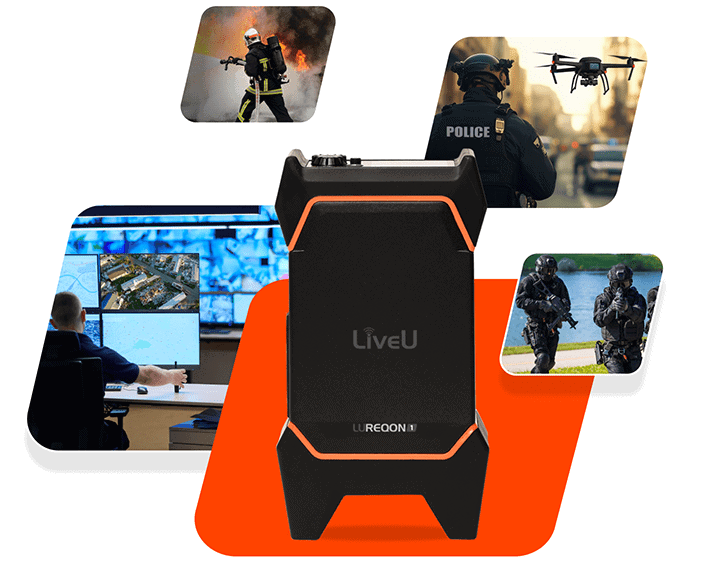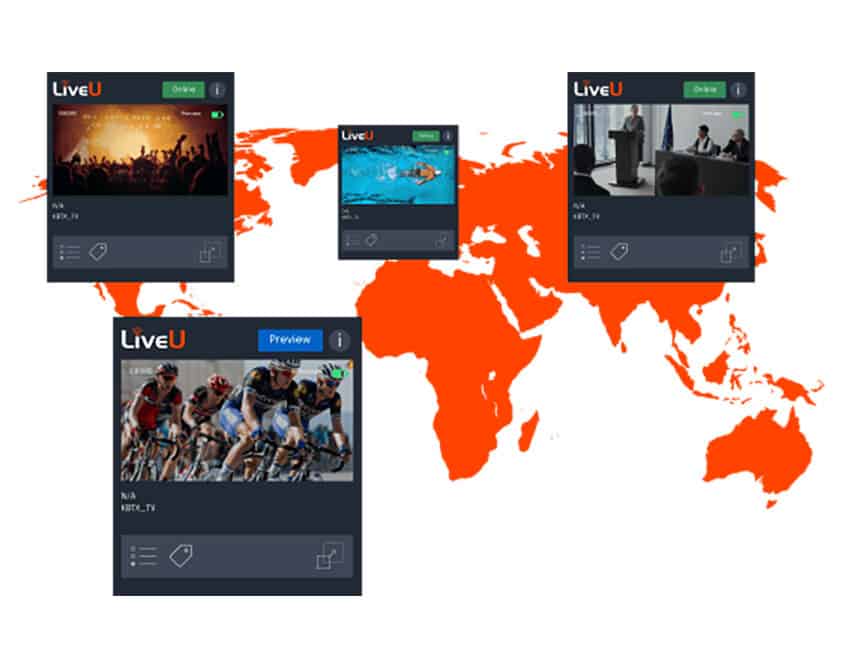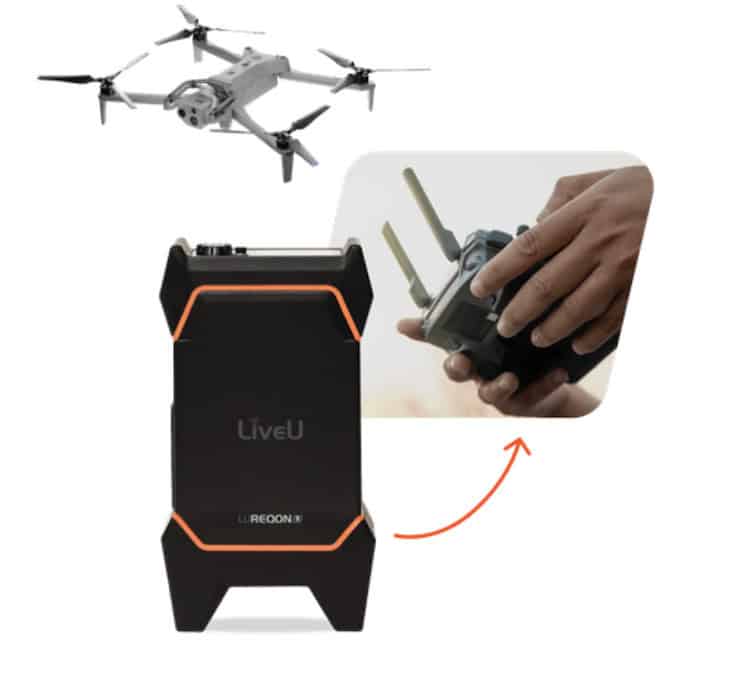
Kansas City Fire Department’s Special Operations team has expanded its Drone as First Responder (DFR) capability while preparing for the operational demands of the FIFA World Cup 2026, using LiveU IP bonded connectivity and recurring field training to support live video connectivity across changing network conditions.
The program combines drone docks, multiple aircraft platforms and trained pilots, with connectivity requirements spanning planned major events and day-to-day emergency response.
Preparing DFR Operations for the FIFA World Cup 2026
Over the past 12 to 18 months, Kansas City Fire Department (KCFD) has developed a rapidly expanding DFR program alongside an increasing schedule of major events in Kansas City, Missouri.
KCFD’s work with LiveU initially arose from an urgent requirement to deliver live drone video to the NFL within days. The relationship subsequently developed into recurring hands-on training focused on resilient field connectivity, including preparations for larger-scale deployments associated with the FIFA World Cup 2026.
In early 2026, Kansas City committed to operating DFR as part of its core operating posture for the tournament. This left only weeks to complete procurement and testing with the department’s drone dock network before a June 9 go-live deadline.
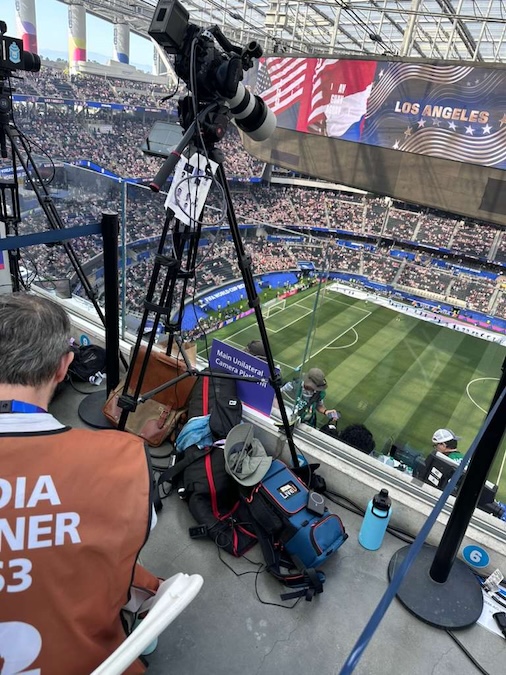
Once operational, the system needed to support 20 days of Fan Fest and six matches, including a quarterfinal and a knockout-round game. At the same time, KCFD was supporting federal counter-drone operations and maintaining its normal emergency response workload across a 318-square-mile district.
Crowd sizes varied considerably, ranging from several hundred people to more than 90,000 in a day. Maintaining video connectivity as network conditions changed throughout these periods was therefore a central operational concern.
“Connectivity is everything. If you don’t have it, you don’t have anything. Moving data is moving information, and information is power.”
– Tyler Grosser, Fire Captain, Kansas City Fire Department Special Operations.
Building Resiliency into the Connectivity Workflow
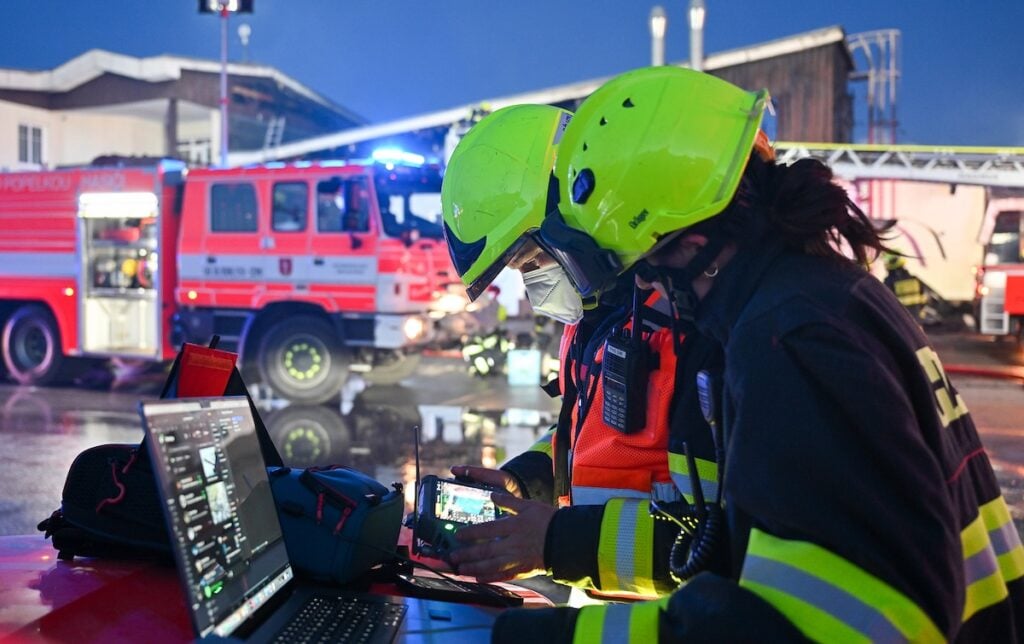
Rather than addressing connectivity only after deployments began, KCFD incorporated LiveU field units and on-site training from LiveU advisors into pilot training ahead of the tournament.
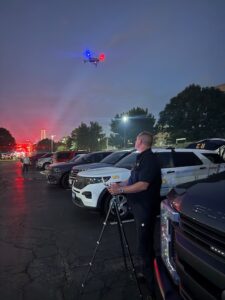
The preparation was tested during one of the tournament’s highest-profile matches, when cellular congestion created connectivity challenges. The on-site team identified the risk in real time and established a stable link to increase resiliency, combining a LiveU unit with additional cellular and satellite paths.
The broader approach to resilient connectivity also supported KCFD’s counter-drone work for federal partners and other Special Operations activities.
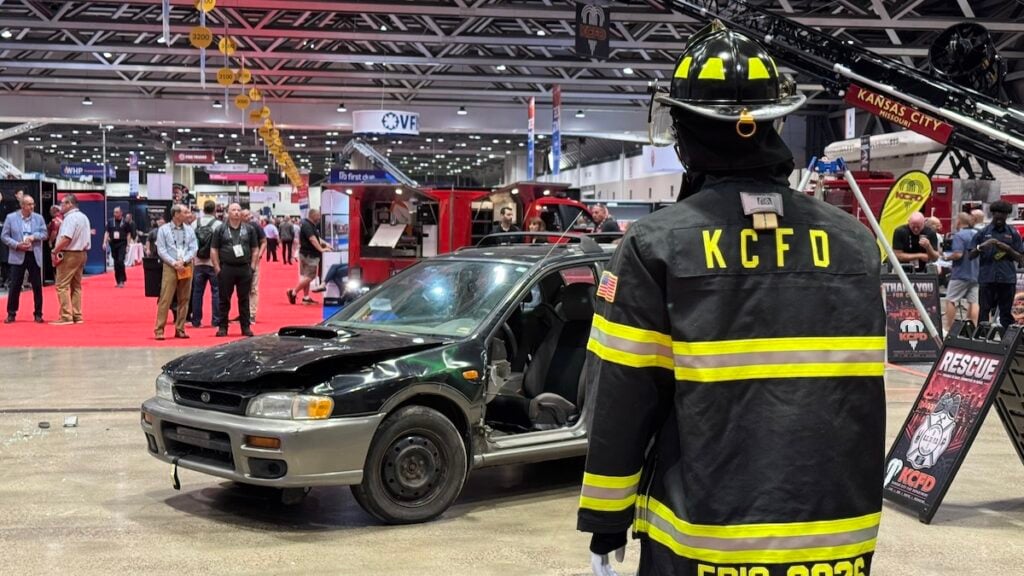
The team applied its broader operational approach during an emergency search in which a missing child was located in approximately 45 minutes, as well as during a live Special Operations demonstration at the Fire-Rescue International Conference. The demonstration was assembled and rehearsed in approximately 48 hours.
Operating Drones Within an All-Hazards Agency
The DFR program operates within a fire department responsible for a considerably broader range of missions. KCFD is an all-hazards agency covering fire suppression, technical and water rescue, emergency medical services and hazardous materials response throughout Kansas City.
The department operates 35 fire stations organized into seven battalions and has approximately 1,200 uniformed firefighters. It responds to around 145,000 calls annually.
Its fleet includes 34 pumpers, 12 trucks, three heavy-rescue units and one hazmat company, while two aircraft rescue firefighting (ARF) locations support aviation-related response requirements. Its operating area encompasses environments ranging from the rural-urban interface and heavy industrial corridors to a dense downtown area containing high-rise buildings.
Against this operational backdrop, KCFD has developed its DFR and counter-drone procedures for use at major events as well as routine response operations.
During the FIFA World Cup 2026 games, tactics developed by the team in real time were shared with other host cities and federal partners undertaking the same mission nationally. This provided other agencies with an early reference for a coordinated DFR and counter-drone operating posture at a major event.
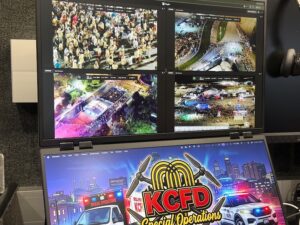
Tyler Grosser, Kansas City Fire Department Special Operations, added, “The things we were doing and the things we were implementing, in real-time, were being transmitted out by those agencies to the rest of the host cities. We did a fair amount of setting the stage for everybody.”
Training for Changing Mission Requirements
KCFD’s approach is based on maintaining multiple operational options rather than relying on a single piece of equipment or connectivity path.
Different missions introduce different crowds, environments and potential points of failure. The Special Operations team therefore maintains a range of tools and connectivity paths that can be adapted as conditions change.
Preparation takes place before operational deployments through ongoing “blue-sky” training. During these periods, personnel rehearse equipment use, workflows and potential failure scenarios during calm conditions, before an operational incident puts them to the test.
Regular training with LiveU’s public safety team forms part of this preparation.
Benjamin Schloegel, Battalion Chief, Kansas City Fire Department Special Operations, commented, “It’s the ability to think through things, pivot, and have the depth of tools. There’s not one solution. It doesn’t exist.”
Scaling to 24/7 Drone Operations
KCFD’s Special Operations team now operates 12 drone docks and 29 drone platforms, supported by 25 trained pilots.
The DFR mission is staffed around the clock, with two operators on duty at all times.
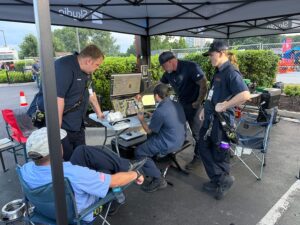
During the FIFA World Cup 2026, the program supported six matches in addition to 20 days of Fan Fest operations.
The department has continued its training activity beyond the tournament. During the summer, KCFD hosted 15 agencies for the first DRONERESPONDERS USAR training conference.
KCFD also continues to train alongside LiveU while developing the next phase of its operations, including ongoing airspace and counter-drone support for NFL games at Arrowhead Stadium.
Preparing for Planned and Unplanned Incidents
KCFD’s experience developing its DFR capability has placed emphasis on operational fundamentals rather than identifying a particular drone or hardware configuration as the answer to every mission.
For agencies establishing similar programs, Grosser’s focus is on preparing personnel for both scheduled deployments and incidents that occur without warning. Grosser sees the unplanned incident as the scenario most agencies are building toward.
This approach also influences how KCFD prepares for circumstances it has not previously encountered. Instead of developing a single response around one anticipated scenario, training focuses on giving personnel the ability to change their approach when operational conditions differ from those previously rehearsed.
Rather than trying to develop a single solution for every scenario, KCFD’s approach is to train personnel to pivot as operational conditions change, supported by a range of tools and connectivity paths.
To learn more about LiveU’s technology that powers DFR programs like the KCFD program, https://www.liveu.tv/solutions/public-safety/dfr-video-solutions