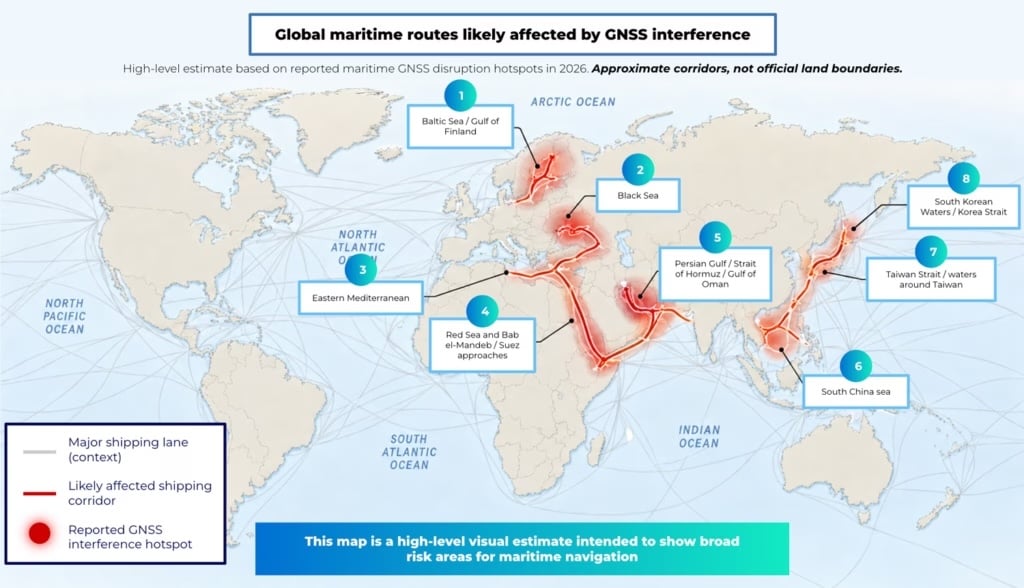
Ground Control is examining a growing challenge for maritime navigation: when GNSS becomes unreliable, how independent are the other sources of position information available on the bridge? Learn more >>
GNSS-derived data can feed multiple onboard systems, meaning apparently separate sources may share the same underlying dependency and potentially propagate unreliable position information during jamming or spoofing.
Established techniques including radar fixes, visual observations, inertial navigation and dead reckoning remain important during GNSS disruption. However, systems such as AIS and other GNSS-fed equipment may continue presenting information even when the underlying position data is unreliable. This raises the question of which references are genuinely independent and how much confidence crews can place in the information presented across bridge systems.
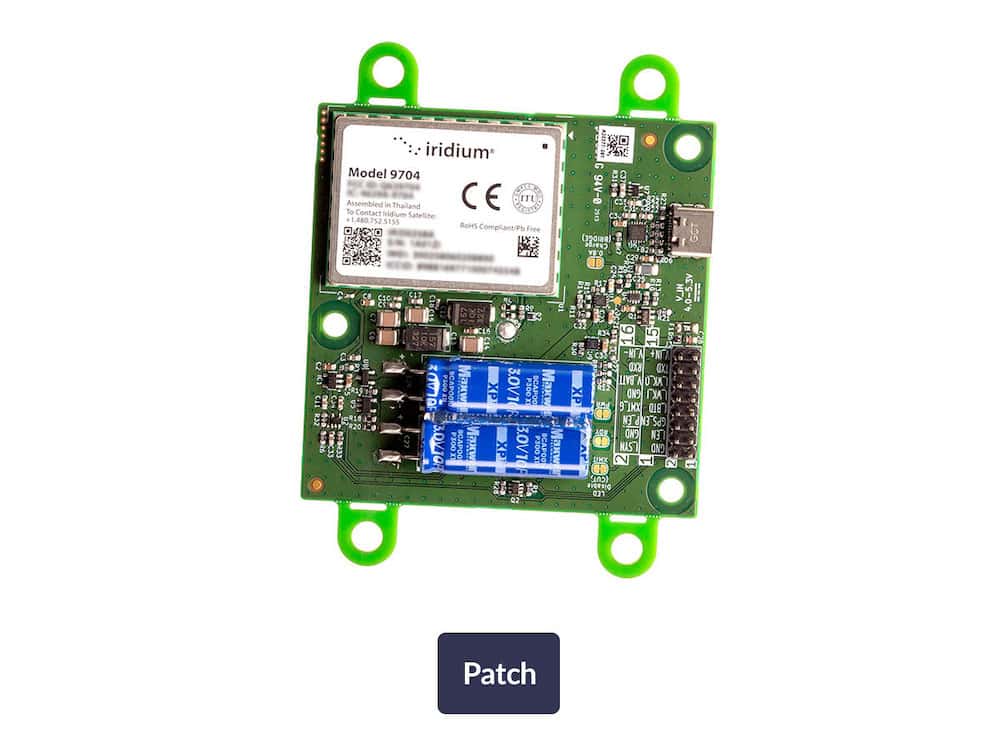
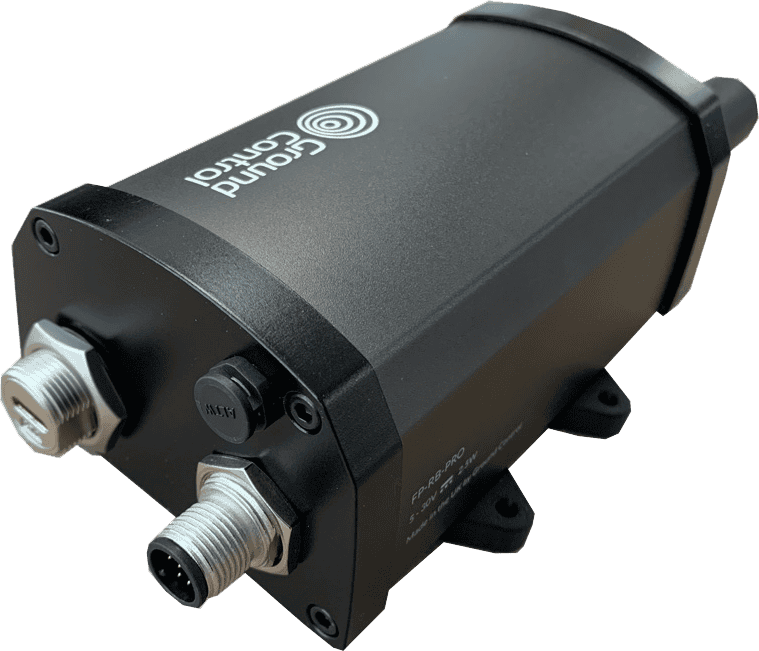
An independent position reference provides another point against which GNSS-derived information can be assessed. Ground Control’s RockFLEET Assured combines conventional GNSS with an independent position derived from Iridium PNT, which uses the Iridium Low Earth Orbit satellite constellation, with a separate constellation, signal and frequency band from conventional GNSS. The system continuously compares the two positions and can raise an alert if GNSS is lost or they diverge beyond configured parameters.
During a 2026 live trial aboard a large passenger vessel in the Baltic Sea, six GNSS jamming or spoofing events were reported. During one of the clearest events, several positioning systems were lost, while Ground Control’s recorded data showed RockFLEET Assured continuing to report an Iridium PNT-derived position until the vessel reached port and conventional GNSS returned. The trial provides an example of how an independently derived position reference can behave during real GNSS interference.