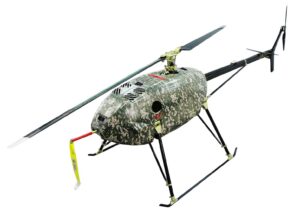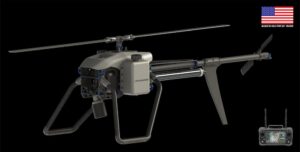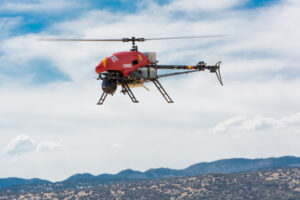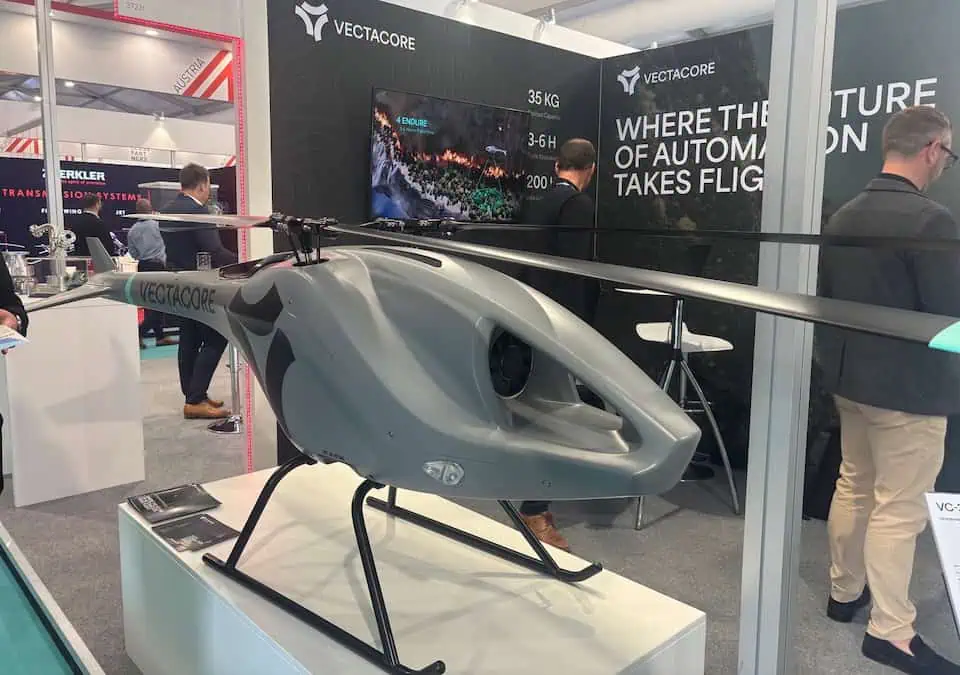




Suppliers: Unmanned Helicopters

Robinson Unmanned

Integrated VTOL UAS: From Nano Platforms to Heavy-Lift Autonomous Rotorcraft

AVILUS

Dual-Use Unmanned Aircraft for Logistics, Medical Transport, ISR & Tactical Support

Sabrobotix

Long-Range, Heavy-Payload Helicopter UAV Platforms

Rotron Aerospace

High-Performance VTOL UAVs, UAS Propulsion Systems & Rotary Engines

ZIYAN Tech

Electric Unmanned Helicopters & Supporting Unmanned Aircraft Equipment

UAVOS Inc.

VTOL and Fixed Wing UAVs, Autopilots, GCS, Components and Payloads for UAS

Roze Mobility

Long-Endurance & Heavy-Lift Autonomous Helicopter UAS Platform for Civilian & Military Applications

Copterworks

Cutting-Edge USA-Made Helicopter & Multirotor UAVs for Demanding Industrial Applications

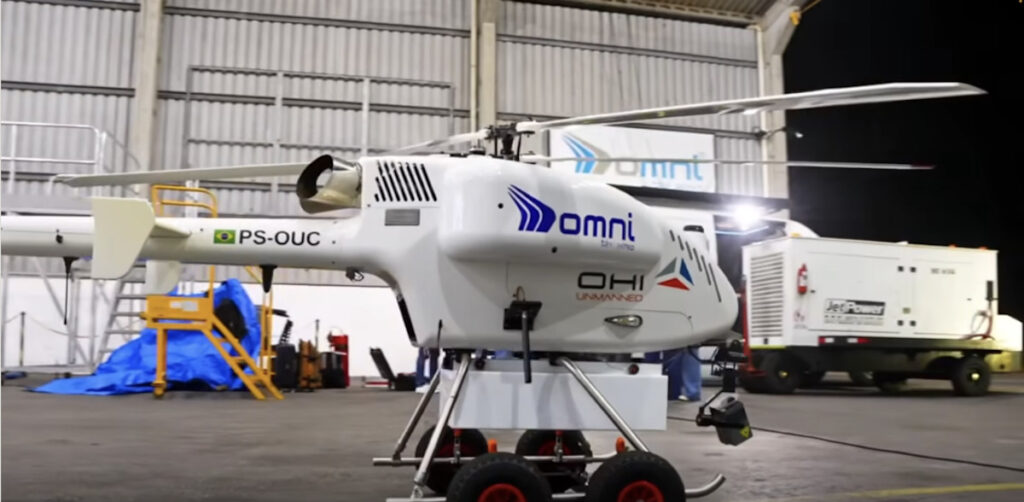
Alpha Unmanned Systems

Helicopter UAVs: Rotary Wing Drones for Maritime, Naval & Security Operations | UAS GCS

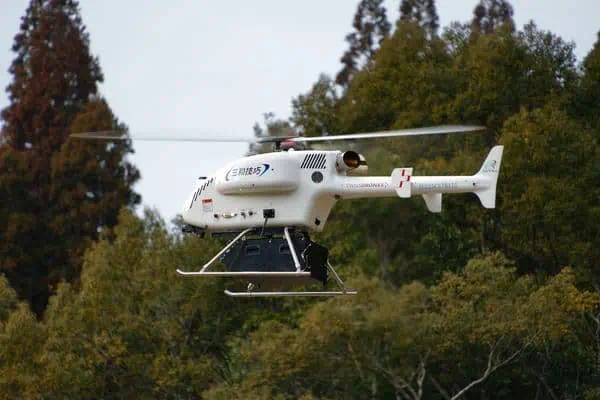
SwissDrones

Long-Range Autonomous Helicopter Drone for Inspections, Surveillance, Search & Rescue, and Monitoring

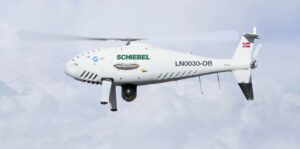
Schiebel Group

VTOL UAS for Civil and Military Applications

Showcase your capabilities

If you design, build or supply Unmanned Helicopters, create a profile to showcase your capabilities and connect with visitors who have an active requirement for your solutions.

Create Supplier Profile

Products

19 Cutting-edge Solutions
Add your solutions
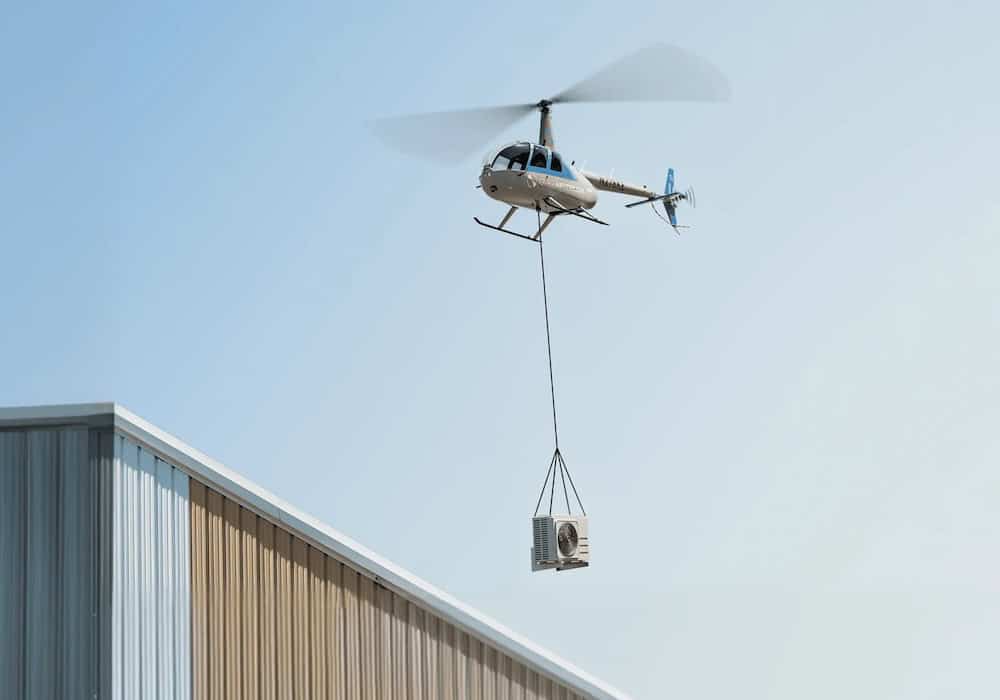
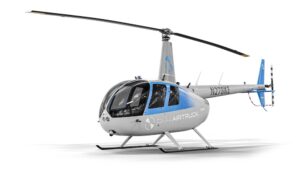
R44 AIRTRUCK

Gas-powered heavy-lift unmanned helicopter for autonomous logistics & cargo transport

Gas-powered heavy-lift unmanned helicopter for autonomous logistics & cargo transport
... from Robinson Unmanned, developed to enable scalable autonomous logistics in high-risk and...
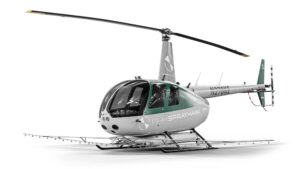
R44 SPRAYHAWK

Gas-powered unmanned helicopter for precision aerial crop monitoring & spraying

Gas-powered unmanned helicopter for precision aerial crop monitoring & spraying
... from Robinson Unmanned, developed for precision aerial application across agricultural...
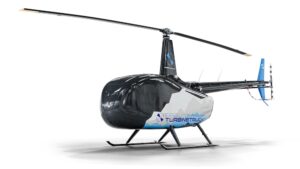
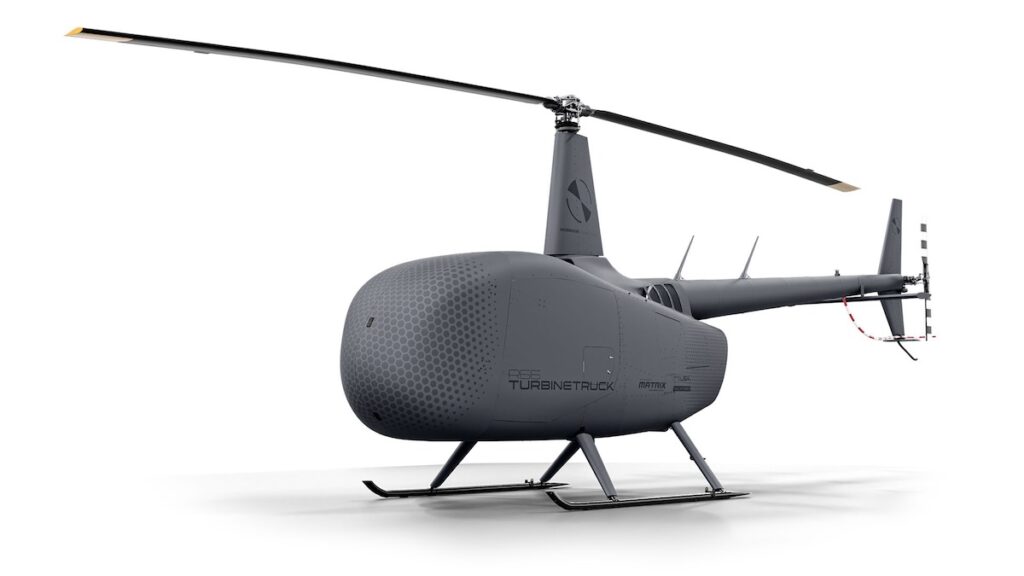
R66 TURBINETRUCK

Turbine-powered unmanned cargo helicopter for logistics & resupply

Turbine-powered unmanned cargo helicopter for logistics & resupply
... from Robinson Unmanned, engineered for dependable logistics and resupply in environments where...
Wespe

Tactical multi-role helicopter UAV for resupply, medical evacuation & close air support

Tactical multi-role helicopter UAV for resupply, medical evacuation & close air support
... multi-mission unmanned helicopter that provides a high degree of operational flexibility over both...
LIZARD 800 UAV

Long-range unmanned helicopter with up to 74 minutes of flight time

Long-range unmanned helicopter with up to 74 minutes of flight time
...is an advanced unmanned helicopter platform that has been optimized for range and endurance, making...
LIZARD 1000 UAV

Heavy-lift helicopter UAV with up to 20 kg payload capacity

Heavy-lift helicopter UAV with up to 20 kg payload capacity
...is an advanced unmanned helicopter platform that has been designed as a heavy-lift platform,...
F15 Unmanned Helicopter

Long-endurance electric helicopter UAV with triple payload capability

Long-endurance electric helicopter UAV with triple payload capability
The F15 is a next-generation electric VTOL UAV with a flight endurance of up to 100 minutes, making ...
Blowfish A4 Unmanned Helicopter

Multi-Mission Heavy Payload Helicopter UAV

Multi-Mission Heavy Payload Helicopter UAV
...fully electric unmanned helicopter that is ideal for undertaking a wide variety of complex missions...
Grey Whale G1

Heavy-lift cargo delivery helicopter UAV

Heavy-lift cargo delivery helicopter UAV
The Grey Whale G1 is a cargo delivery UAV specifically designed to solve the problem of accessing di...
Shadow S3 Unmanned Helicopter

Portable long-endurance helicopter UAV

Portable long-endurance helicopter UAV
...ext-generation unmanned helicopter featuring a revolutionary streamlined design with ducted tail...
UVH-25EL Unmanned Helicopter

Industrial grade VTOL UAV for surveillance and monitoring

Industrial grade VTOL UAV for surveillance and monitoring
...grade electric unmanned helicopter with rechargeable Li-Ion batteries and a 5kg payload capacity. It...
UVH-170 Unmanned Helicopter

Drone helicopter with 4-stroke gasoline engine

Drone helicopter with 4-stroke gasoline engine
...engine-powered unmanned helicopter specially designed with improved engine cooling for reliable...
SH917 Unmanned Helicopter

Autonomous helicopter UAV platform for civilian & military applications

Autonomous helicopter UAV platform for civilian & military applications
...tonomy-capable helicopter UAV (unmanned aerial vehicle) platform that offers up to 8 hours of flight...
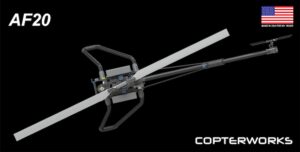
AF20 Helicopter Drone

Electric unmanned helicopter airframe with 25 lb payload capacity

Electric unmanned helicopter airframe with 25 lb payload capacity
...atile electric unmanned helicopter offering drone operators a quiet and clean-running option for...
AF40 Helicopter Drone

Gasoline-powered helicopter UAV with three engine options

Gasoline-powered helicopter UAV with three engine options
...able workhorse unmanned helicopter designed for cost-effective operation and to require as little...
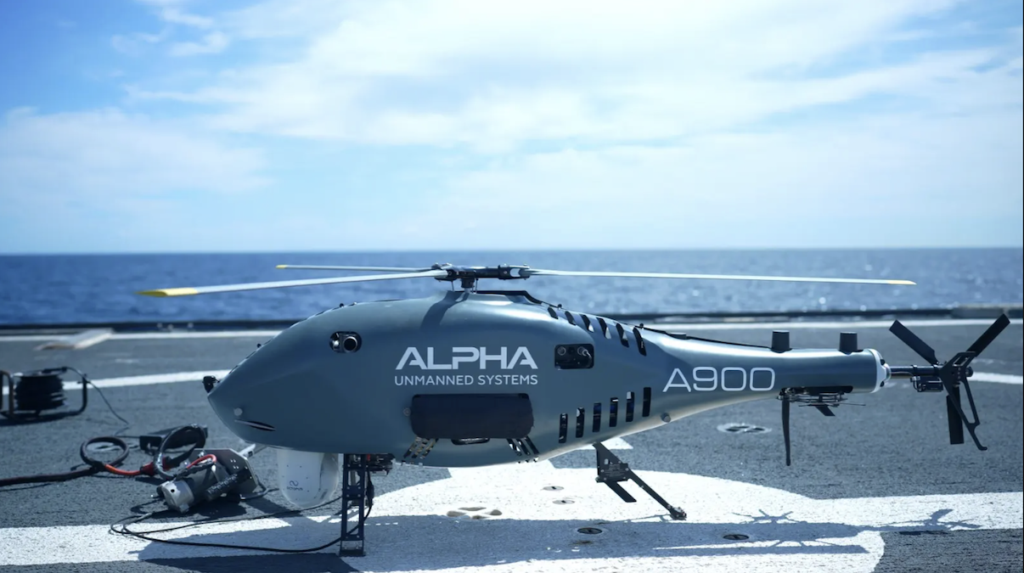
Alpha A900 Helicopter UAV

STANAG-compliant for maritime ISR Missions and Border Control

STANAG-compliant for maritime ISR Missions and Border Control
The A900 can be used for many missions, from ISR and border control to infrastructure inspections, c...
Alpha 800 UAV Helicopter

Versatile small unmanned helicopter for ISTAR and Civilian missions

Versatile small unmanned helicopter for ISTAR and Civilian missions
...soline-powered helicopter UAV. The Alpha 800 is a reliable and versatile platform that has much...
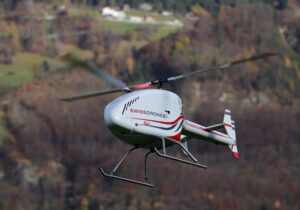
SDO 50 Helicopter UAV

Versatile long-range autonomous helicopter drone

Versatile long-range autonomous helicopter drone
...ate-of-the-art unmanned helicopter with a flight endurance of over 3 hours and the ability to...
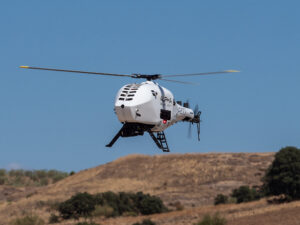
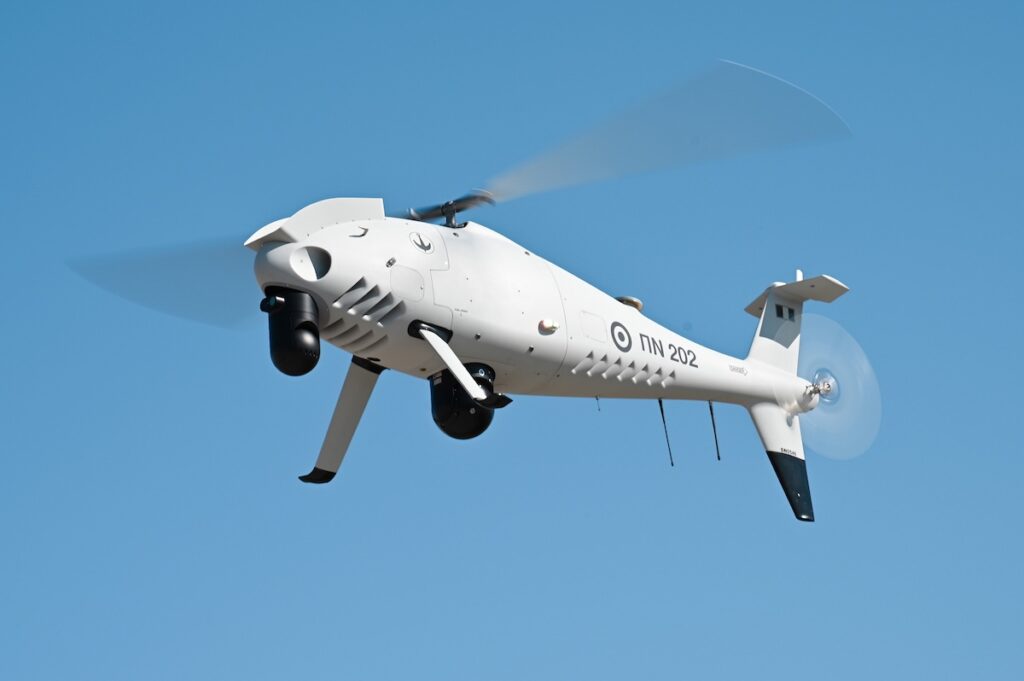
CAMCOPTER S-100 VTOL UAS

VTOL UAS for Civil and Military Applications

VTOL UAS for Civil and Military Applications
The Schiebel CAMCOPTER® S-100 is a high-performance VTOL UAS that is capable of operating day or n...

Unmanned Helicopters & Helicopter Drones

Caroline Rees

Updated:

What Are Unmanned Helicopters?

Helicopter drones are unmanned aircraft that operate on the same flight principles as manned helicopters, utilizing spinning rotors to generate lift and thrust. The predominant rotor configuration features a single main rotor complemented by a tail rotor to counteract torque. Alternative designs, such as tandem rotor and tilt rotor UAVs, also exist, employing rotors mounted on rotating engine pods that adjust angles to facilitate vertical lift or forward flight.

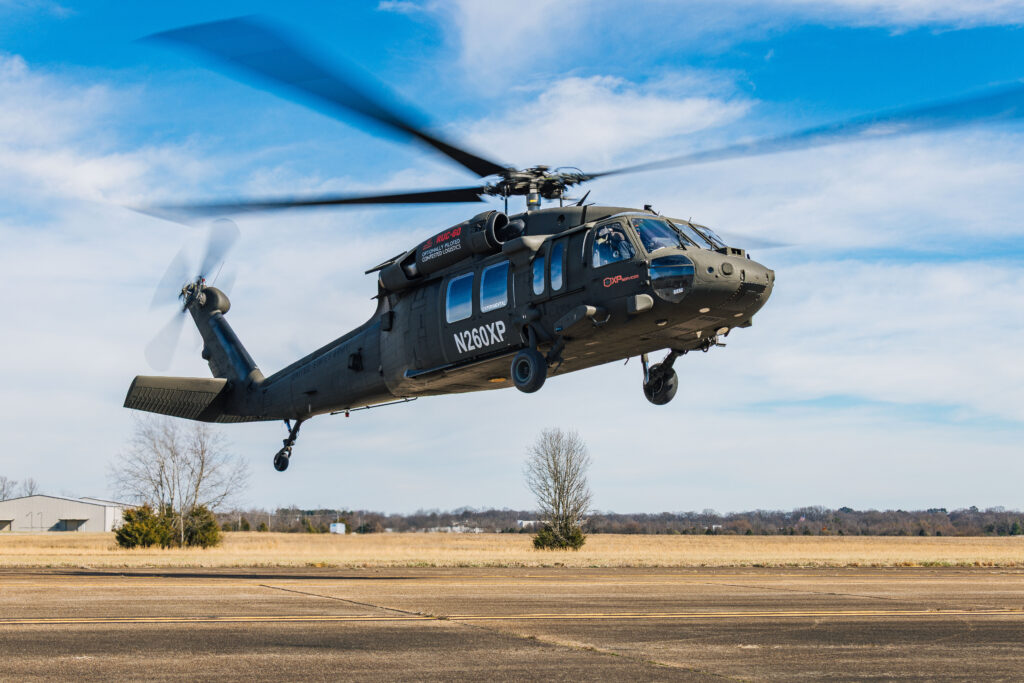
These drones can be purpose-built or adapted from existing manned platforms. Some models offer the versatility to switch between piloted and unmanned operations, earning the designation of Optionally Piloted Vehicles (OPVs). This adaptability allows for a broader range of missions and operational flexibility.

Helicopter Drone Propulsion Systems

Unmanned Helicopter by ZIYAN Tech

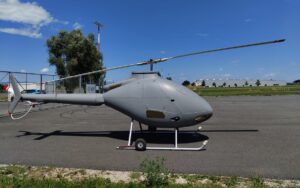
Shadow S3 Unmanned Helicopter by ZIYAN Tech

The propulsion mechanisms of helicopter drones vary based on their size and intended use:

  • Gasoline or diesel engines: Medium to large rotary-wing UAVs typically utilize internal combustion engines due to their higher energy density compared to batteries, allowing for extended flight durations and heavier payload capacities.
  • Electric motors: Smaller helicopter drones, including micro and nano UAVs, often rely on electric motors powered by lithium-ion or lithium-polymer batteries. While these provide a quieter operation and lower maintenance, their flight endurance is limited compared to fuel-powered alternatives.
  • Fuel cell systems: Some advanced unmanned helicopters incorporate hydrogen fuel cells, which generate electricity through a chemical reaction. Fuel cells offer a higher energy density than batteries, producing fewer emissions than combustion engines while providing longer endurance than purely electric designs.
  • Solar power: Some experimental and specialized helicopter drones incorporate solar panels to extend flight time by harnessing renewable energy. While not yet widely used due to the power demands of rotary-wing aircraft, solar-assisted UAVs may play a role in long endurance missions, especially for lightweight designs.

Each propulsion type has tradeoffs in terms of endurance, efficiency, and operational flexibility, making them suitable for different applications across military, commercial, and industrial sectors.

Commercial Applications for Unmanned Helicopters

In the commercial sector, helicopter drones have carved out essential roles across various industries:
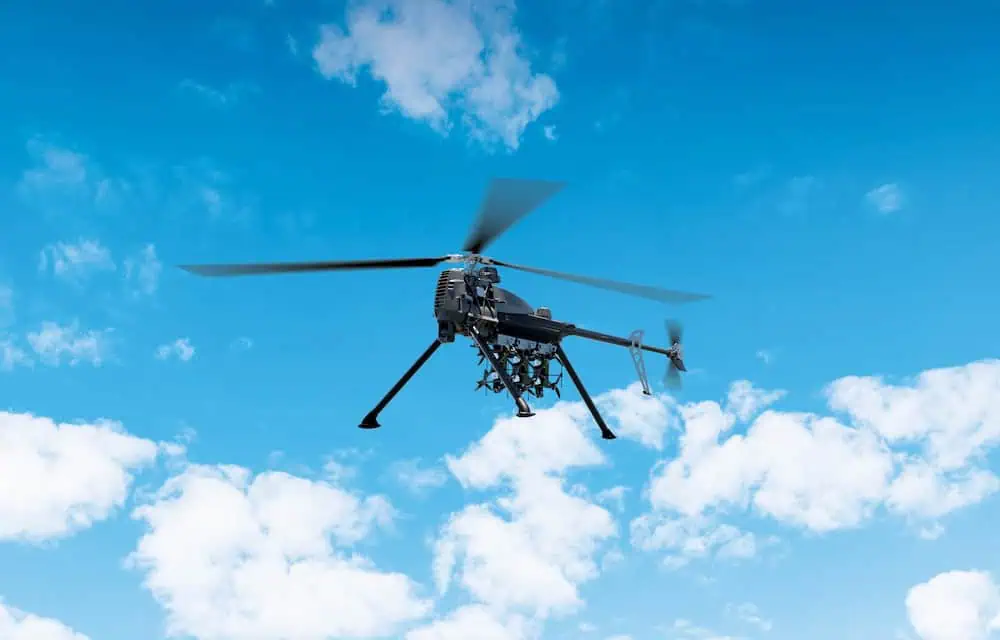
  • Precision agriculture: Equipped with multispectral sensors, UAVs monitor crop health, optimize irrigation, and manage pests, leading to increased yields and resource efficiency.
  • Infrastructure inspection: Drones facilitate the inspection of power lines, wind turbines, and pipelines, offering a safer and more cost-effective alternative to manual inspections.
  • Emergency response: In disaster-stricken areas, UAVs assess damage, deliver medical supplies, and assist in search and rescue operations, providing rapid situational awareness to first responders.
  • Maritime operations: Used for offshore inspections, ship-based reconnaissance, and cargo delivery.
  • Environmental monitoring: Ideal for tasks such as wildlife tracking, forest fire monitoring, and atmospheric data collection.
  • Construction and surveying: Used in large-scale surveying, site monitoring, and asset management.

Military and Defense Applications for Unmanned Helicopters

Talon DT-150 electric helicopter UAS

Rotron Aerospace’s Talon DT-150 electric helicopter UAS

Helicopter drones have become indispensable assets in modern military operations:

  • Intelligence, surveillance, and reconnaissance (ISR): UAVs conduct persistent surveillance, monitor enemy movements, and gather critical intelligence without risking human lives.
  • Tactical resupply: Autonomous helicopters transport supplies to frontline units, ensuring timely delivery of ammunition, food, and medical supplies, thereby enhancing operational sustainability.
  • Search and rescue: In hostile or inaccessible environments, UAVs locate and extract injured personnel, significantly improving survival rates.

Unmanned Helicopters Comparison with Other Drone Types

Helicopter Drones vs Fixed-Wing Drones

Helicopter drones offer VTOL capability, precise hovering, and maneuverability in tight spaces, making them ideal for urban operations, surveillance, and cargo delivery. However, they have shorter endurance and require more maintenance due to complex rotor systems.

Fixed-wing drones provide longer flight times, higher speeds, and greater efficiency, making them better suited for large-area mapping, reconnaissance, and long-range missions. They require runways or launch systems and cannot hover.

The choice depends on mission needs: helicopter drones for precision tasks, fixed-wing drones for endurance. Hybrid VTOL drones are emerging, combining both advantages.

Helicopter Drones vs Multirotor Drones

Helicopter drones use a single main rotor and tail rotor, providing greater endurance, higher speeds, and heavier payload capacity than multirotor drones, particularly in heavy-lift unmanned helicopters designed for demanding cargo transport applications. They are ideal for longer missions and military applications.

Multirotor drones, with four or more rotors, excel in stability, precise hovering, and ease of use, making them preferable for aerial photography, inspections, and short-range operations. However, they have shorter flight times and lower payload capacity.

Helicopter drones suit demanding, long-range tasks, while multirotor drones are best for quick, agile, and close-quarters operations. The choice depends on endurance, maneuverability, and payload needs.

Technological Advancements

LIZARD 1000 heavy-lift helicopter UAV

LIZARD 1000 Heavy-lift helicopter UAV by Sabrobotix

Recent developments have propelled helicopter drone capabilities:

  • Autonomous flight systems: Advancements in artificial intelligence and machine learning enable UAVs to perform complex tasks autonomously, such as obstacle avoidance and dynamic mission planning.
  • Enhanced payload capacities: Innovations in materials and design have increased payload capacities, allowing drones to carry heavier and more diverse equipment, from high resolution sensors to delivery packages.
  • Extended flight endurance: Improvements in propulsion and energy storage technologies have led to longer flight times, expanding the operational range and mission duration of helicopter drones.

Challenges and Considerations

Despite their numerous advantages, helicopter drones face challenges:

  • Airspace integration: Safely integrating UAVs into crowded airspaces requires robust traffic management systems and clear communication protocols with manned aircraft.
  • Security concerns: The potential misuse of drones for malicious purposes necessitates the development of counter-UAS technologies and regulatory measures to mitigate threats.
  • Public perception and privacy: Addressing public concerns about privacy invasion and noise pollution is crucial for the widespread acceptance of drone technology.

Future Prospects for Helicopter Drones

The trajectory of helicopter drone technology points toward increased autonomy, efficiency, and broader operational capabilities. Ongoing research and innovation aim to overcome current limitations, paving the way for more sophisticated and reliable UAV systems.

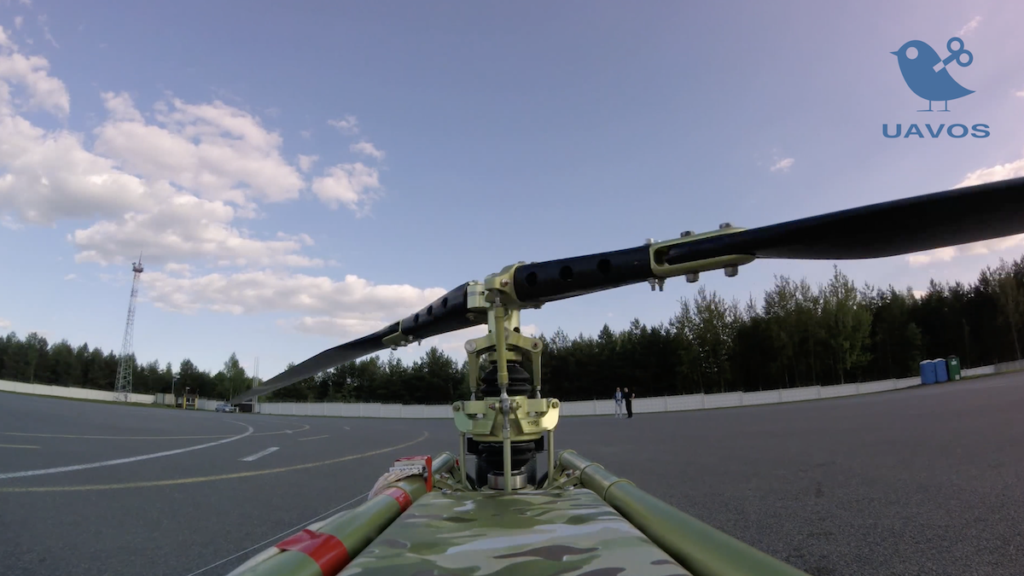
  • Helicopter Drone by UAVOS Inc.

    UVH-170 Helicopter Drone by UAVOS Inc.

    AI-driven swarm technology – Advances in artificial intelligence and machine learning are enabling cooperative drone swarms, where multiple helicopter drones work together autonomously. This capability is particularly valuable for military operations, disaster response, and large-scale infrastructure inspections.

  • Enhanced rotor efficiency – Innovations in blade aerodynamics, lightweight composite materials, and adaptive rotor designs are improving fuel efficiency and endurance. Future helicopter drones may feature morphing rotor blades that adjust shape mid-flight for optimal performance.
  • Hybrid power systems – The integration of electric motors with fuel-based propulsion is emerging as a game-changer, combining the silent operation of electric power with the extended range of combustion engines or hydrogen fuel cells. These hybrid systems will allow for longer flight durations and greater mission flexibility.
  • Quantum computing and navigation – While still in its early stages, quantum computing holds the potential to revolutionize UAV navigation, encryption, and real-time data processing. Quantum-enhanced GPS alternatives could allow helicopter drones to navigate with extreme precision in GPS-denied environments, such as urban canyons or conflict zones.

As these advancements continue to evolve, helicopter drones will become more autonomous, efficient, and capable, expanding their role across industries and redefining the possibilities of unmanned aviation.

UAV Helicopter & Single Rotor Drones

What is an Unmanned Helicopter?

Helicopter drones are unmanned aircraft that operate on the same flight principles as manned helicopters, using spinning rotors to generate lift and thrust. The most common rotor configuration uses a single main rotor, plus a tail rotor that provides counter-torque. Tandem rotor and tiltrotor helicopter UAVs also exist, featuring rotors mounted on rotating engine pods that change angle to provide vertical lift or forward flight.

Single rotor drones may be designed from the ground up or converted from existing manned platforms. The latter may feature the option to switch between piloted or unmanned flight, and in this case may be referred to as Optionally Piloted Vehicles (OPVs).

Propulsion

Due to the size of most rotary wing UAVs, they are typically powered by gasoline or diesel engines. Batteries have a lower energy density than conventional fuels, and the weight of batteries required to provide long flight times would be prohibitive. Micro-sized and nano helicopter UAVs, designed to be carried by a single operator and typically used for short-duration military and battlefield reconnaissance missions, do exist and are battery-powered.

Fuel cell-based propulsion systems, which convert chemical energy from fuel (typically hydrogen) into useful electrical energy, are also being tested on unmanned platforms. Fuel cells for have a number of advantages, such as clean emissions and a higher energy density than batteries.

Payloads and Applications

Helicopter drones can carry a wide variety of payloads, including daytime and IR cameras, environmental sensors, LiDAR scanning systems and radio relay equipment, as well as missiles and other offensive capabilities. They are employed for a broad range of missions across many industries and sectors. Applications include:

  • Military and defense
  • ISR (Intelligence, surveillance and reconnaissance)
  • Battlefield fire support
  • Search and rescue
  • Security and law enforcement
  • Mapping and surveying
  • Precision agriculture
  • Industrial inspection

UAV Helicopters vs Fixed-Wing Drones

Single rotor drones can carry larger payloads and fuel amounts than multirotor UAVs and smaller fixed-wing drones, and thus have greater flight endurance. They are also more efficient at higher speeds.

Due to the VTOL capability of UAS helicopters, they can operate in a wider range of ground conditions than fixed-wing aircraft, which require a certain amount of space to take off and land. This often makes VTOL rotary wing UAVs preferable for maritime operations, inspection and surveillance.

Rotary wing drone designs tend to be more complex than fixed wing counterparts, which can lead to increased maintenance requirements.


Related Articles

SwissDrones SDO 50 Demonstrates Disaster Response & Logistics Potential in Japan

SwissDrones’ SDO 50 unmanned helicopter is advancing operations in Japan through maiden flights, cargo demonstrations, and disaster-response exercises alongside Sanwa Giko and regional partners

Jun 03, 2026
Autonomous UAV & Manned Helicopter Interoperability Validated at Sea

Alpha Unmanned validates real-time data transmission from its autonomous helicopter to a crewed Airbus cockpit during naval exercises

May 26, 2026
Robinson Unmanned Supports U.S. Marine Corps MARV-EL Program with Sikorsky

Sikorsky and Robinson Unmanned are advancing autonomous aerial logistics capabilities for the U.S. Marine Corps through the MARV-EL Increment 2 R66 TURBINETRUCK program under a $15.5 million contract awarded to Sikorsky

May 12, 2026
Partners Selected to Prototype Autonomous Logistics Aircraft

Naval Air Systems Command has awarded the MARV-EL Increment 2 program to a team led by Near Earth Autonomy to develop uncrewed aerial resupply systems for high-risk contested environments

May 05, 2026
UAVOS Delivers Advanced Carbon Rotor Blades for DARPA Heavy Lift Challenge

UAVOS is supplying high-performance rotor blades to U.S. startups engineering unmanned helicopters capable of carrying four times their own weight for the DARPA Heavy Lift Challenge

Apr 28, 2026
Schiebel Completes UAS Acceptance Tests & Delivery Milestones

Following acceptance tests at Kotroni Helicopter Base, the Hellenic Navy is set to deploy new CAMCOPTER S-100 unmanned systems to enhance maritime security and search and rescue capabilities

Apr 28, 2026
Unmanned Helicopter Validates Dynamic Offshore Delivery & Moving Vessel Logistics

The Grey Whale G1 has successfully demonstrated the technical feasibility of maritime logistics by completing a 16 km beyond-visual-line-of-sight transport mission to a moving target in the Zhoushan maritime area

Apr 28, 2026
Robinson Unveils Collaborative Autonomous R66 TURBINETRUCK Cargo Helicopter

Robinson Unmanned and Sikorsky introduce the autonomous R66 TURBINETRUCK, integrating MATRIX autonomy into a modular cargo platform designed for cost-effective, flexible operations across defense, disaster relief, and remote logistics missions

Apr 21, 2026
Advancing Aerial Intelligence & Sustainability via Autonomous Rotorcraft

SwissDrones has engineered high-endurance autonomous systems to replace crewed helicopters, significantly reducing carbon emissions and operational costs while enhancing safety and data precision for critical infrastructure inspections and long-range public safety missions

Apr 20, 2026