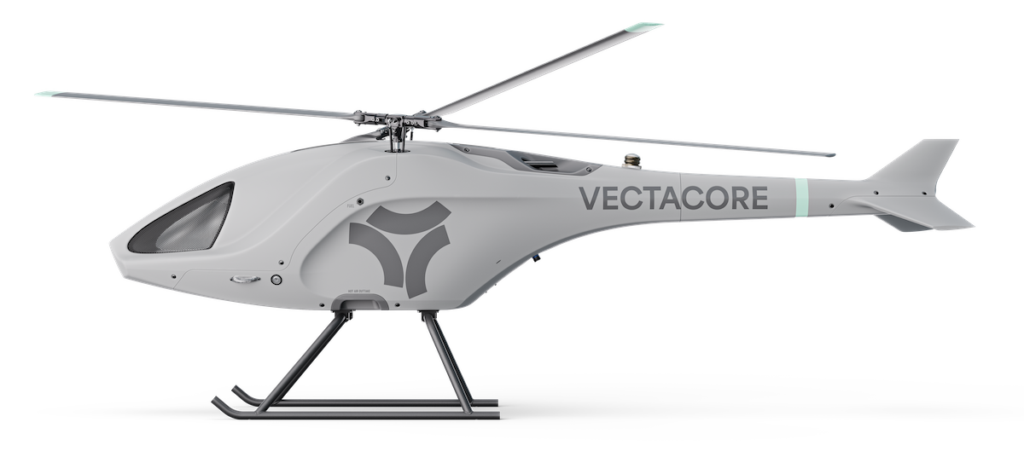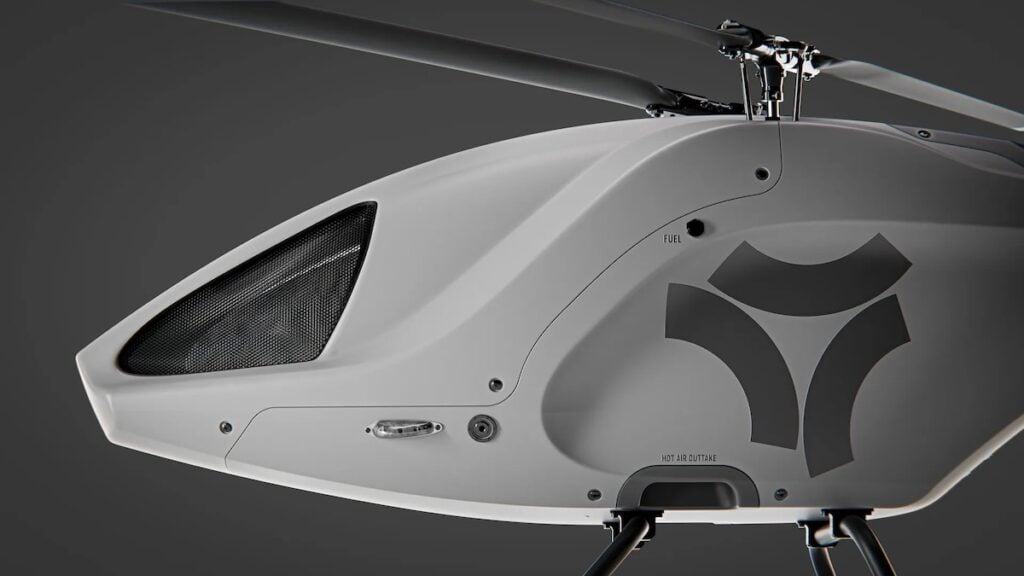



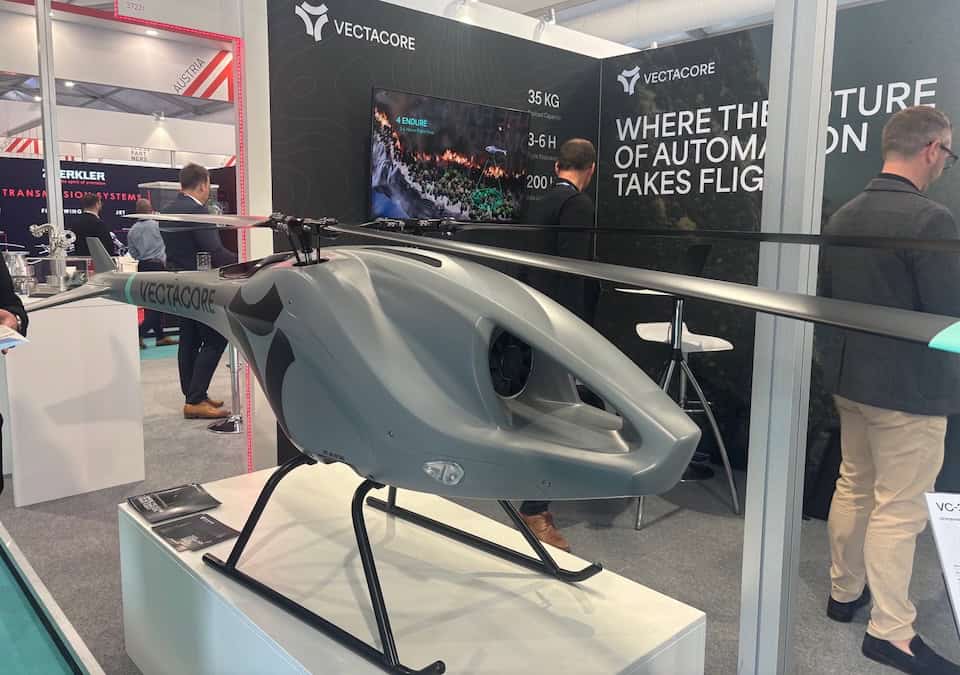
VectaCore Group is preparing to transition its VC-35G unmanned helicopter into serial production, with the Austrian company highlighting the platform’s development progress and intended commercial applications at Farnborough International Airshow 2026.
Speaking with Unmanned Systems Technology at the show, VectaCore Group Managing Director Alexander Turek outlined the aircraft’s petrol-powered configuration, Flettner double-rotor system, and intended applications in offshore cargo delivery and wildfire response.
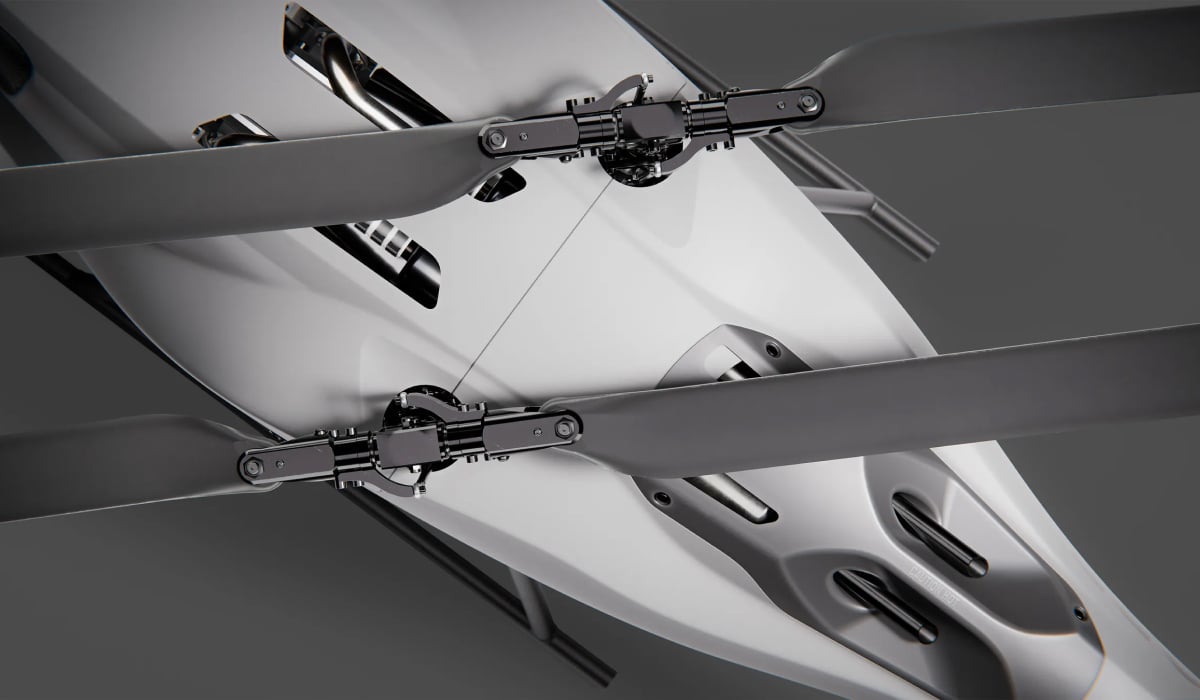
Central to the VC-35G’s design are its petrol-powered boxer engine and Flettner double-rotor configuration, which VectaCore believes provides advantages for endurance and stability in challenging operating environments. Turek explained, “There is a boxer engine inside, so we use a petrol engine, and we have a Flettner double-rotor system. Especially when it comes to wind gusts, the Flettner system is more stable than a normal helicopter, I would say.”
The aircraft can carry payloads of up to 35 kg. Turek stated that endurance is approximately two to three hours, increasing to as much as six hours with additional fuel tanks.
VectaCore’s decision to use petrol propulsion rather than battery technology is driven by the endurance requirements of its target missions. Turek stated, “A lot of competitors are focusing on battery technology. We are clearly focusing on petrol because of the endurance. With an electric engine you could not do the offshore cargo mission, for example.”
VectaCore is initially focusing on two main civil applications for the VC-35G: offshore cargo delivery and wildfire response. Outlining the first application, Turek said the aircraft is intended to transport payloads to infrastructure including offshore wind turbines and platforms. He also highlighted the potential cost advantages of using an unmanned aircraft instead of a crewed helicopter for suitable offshore cargo missions.
The second application is wildfire response, where the VC-35G could provide aerial observation to monitor the location and movement of a fire. Describing how its payload capacity could expand that role, Turek also raised the possibility of carrying and releasing water payloads, saying, “We can really have eyes in the air and observe the fire and where it is going. With the payload, we could also carry something like water bombs and drop them.”
VectaCore is now preparing the VC-35G for serial production. Setting out the company’s planned timeline, Turek said its serialization work is expected to be completed by the end of Q3 2026. “We have a large group behind us that knows how to serialize products. We expect to be finished with the serialization part by the end of Q3 this year, and then we are good to go into serial production,” he added.