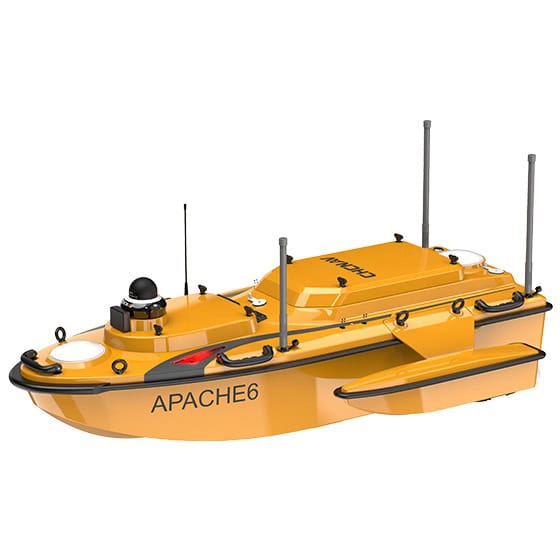
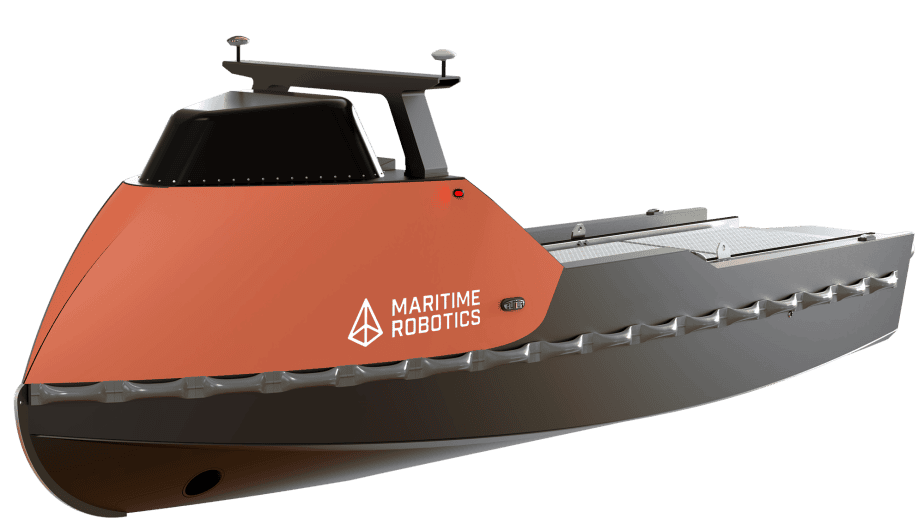
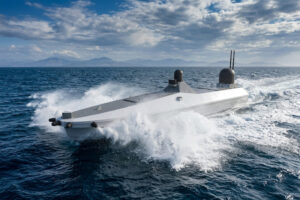
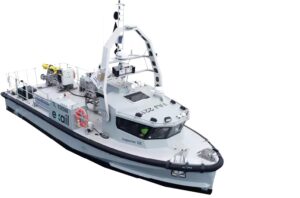
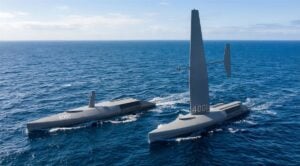
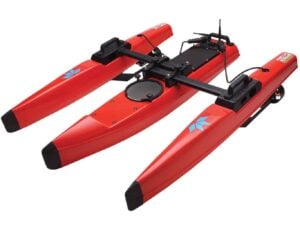
Finden Sie Unternehmen und Lieferanten von unbemannten Oberflächenfahrzeugen (USV), USV-Booten und unbemannten Seefahrzeugen für hydrografische Vermessungen, ozeanografische Forschung und andere militärische Anwendungen.
Wenn Sie entwerfen, bauen oder liefern Unbemannte Oberflächenfahrzeuge (USV), Erstellen Sie ein Profil, um Ihre Kompetenzen zu präsentieren und mit Besuchern in Kontakt zu treten, die einen konkreten Bedarf an Ihren Lösungen haben.
Compare selected Unmanned Surface Vehicles (USVs) for survey, monitoring, security, and naval operations. This table brings together manufacturer-published specifications to compare vessel dimensions, payload capacity, speed, endurance, and integration requirements.
Specifications are manufacturer-reported and may vary by model or configuration.
Make / model
Dimensions (m)
Draft (m)
Weight / displacement (kg)
Payload capacity (kg)
Top speed (kn)
Endurance / range
Power / drive
Control modes
Communications
IP rating
ASELSAN MARLIN ASW 100
15 × 3.85 (L × W)
Unknown
21,000
≥4,000
≥35
72 h
2 × 600 hp diesel
Autonomous / remote
Satellite / RF LOS / 4G LTE
Unknown
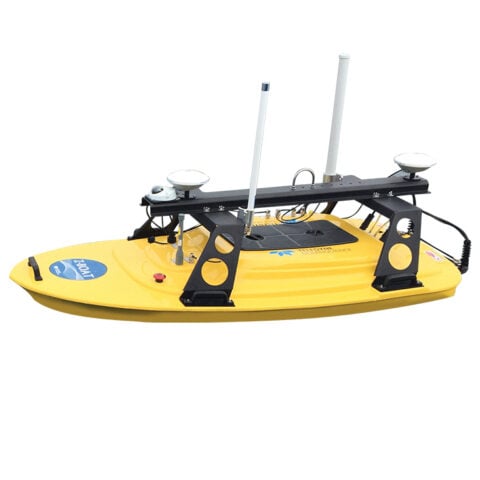
Teledyne Marine Z-Boat 1800-RP
1.8 × 1 × 1.1
Unknown
38 base boat
30
8–10
Up to 4.5 h
Dual brushless 24 V DC outdrives
Remote; Option: waypoint navigation
2.4 GHz control / 5 GHz data / 4G LTE data
IP67
Exail DriX H-8
7.7 × 0.8 (L × W)
2
1,600 displacement
Unknown
14
Up to 240 h
37.5 hp diesel / shaft propeller
Supervised autonomous / remote
Wi-Fi / broadband radio / 4G / Iridium Certus
Unknown
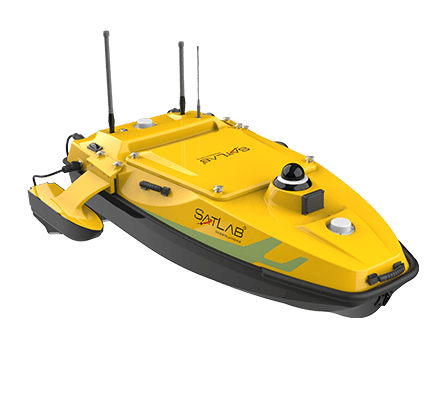
SatLab Geosolutions HydroBoat 1200MB
1.185 × 0.593 × 0.397
Unknown
33 with battery and sensors
Unknown
9.72
12 km per battery at 1.5 m/s
2 × 1,000 W brushless DC
Manual / autopilot / automatic return
2.4 GHz control: 1.3 km / 4G
IP67
Hydronalix Ariel
1.27 × 0.3302 × 0.2032
Unknown
6.35
4.54
20.86 dash
12 h loiter / 19.31 km at low speed
Unknown
Manual / autopilot
Unknown
Unknown
Fincantieri / IDS SAND
16 (L); 8.7 max (H)
Unknown
25,000 full-load displacement
Unknown
30
48 h at 12 kn / 72 h at 8 kn
2 × 588 kW diesel / twin waterjets
Autonomous / remote
Unknown
Unknown
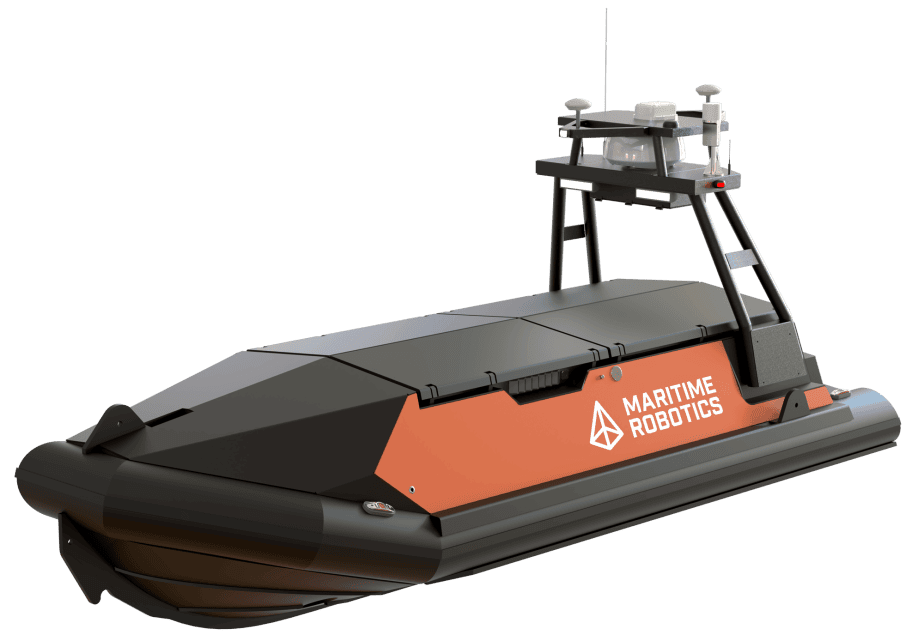
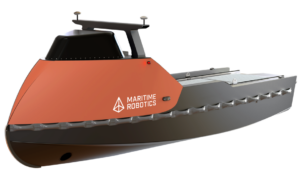
Maritime Robotics Otter
2 × 1.08 × 1.065
0.32
62 dry / 85 with batteries
30
4.5
Up to 20 h at 2 kn
4 lithium-ion batteries / 2 motors
Autonomous / remote
5 GHz MIMO radio / Wi-Fi; Option: MBR / VHF / 4G LTE
Notes: “Unknown” = not confirmed by the manufacturer information used. “Option” = optional configuration; features and figures may depend on configuration.
Unbemannte Oberflächenfahrzeuge (USV)
Übersicht von
Caroline Rees
Aktualisiert:
Unbemannte Oberflächenfahrzeuge (USV)
Unbemannte Oberflächenfahrzeuge (USVs) sind Wasserfahrzeuge, die ohne menschliche Besatzung an der Wasseroberfläche operieren können. Ursprünglich wurden bemannte Boote mit Funksteuerungen nachgerüstet, doch mittlerweile gibt es eine Vielzahl speziell entwickelter unbemannter Oberflächenfahrzeuge. USVs sind vielseitiger als Bojen, aber kostengünstiger als vollständig bemannte Wasserfahrzeuge, weshalb sie für eine Vielzahl von maritimen Anwendungen beliebt sind.
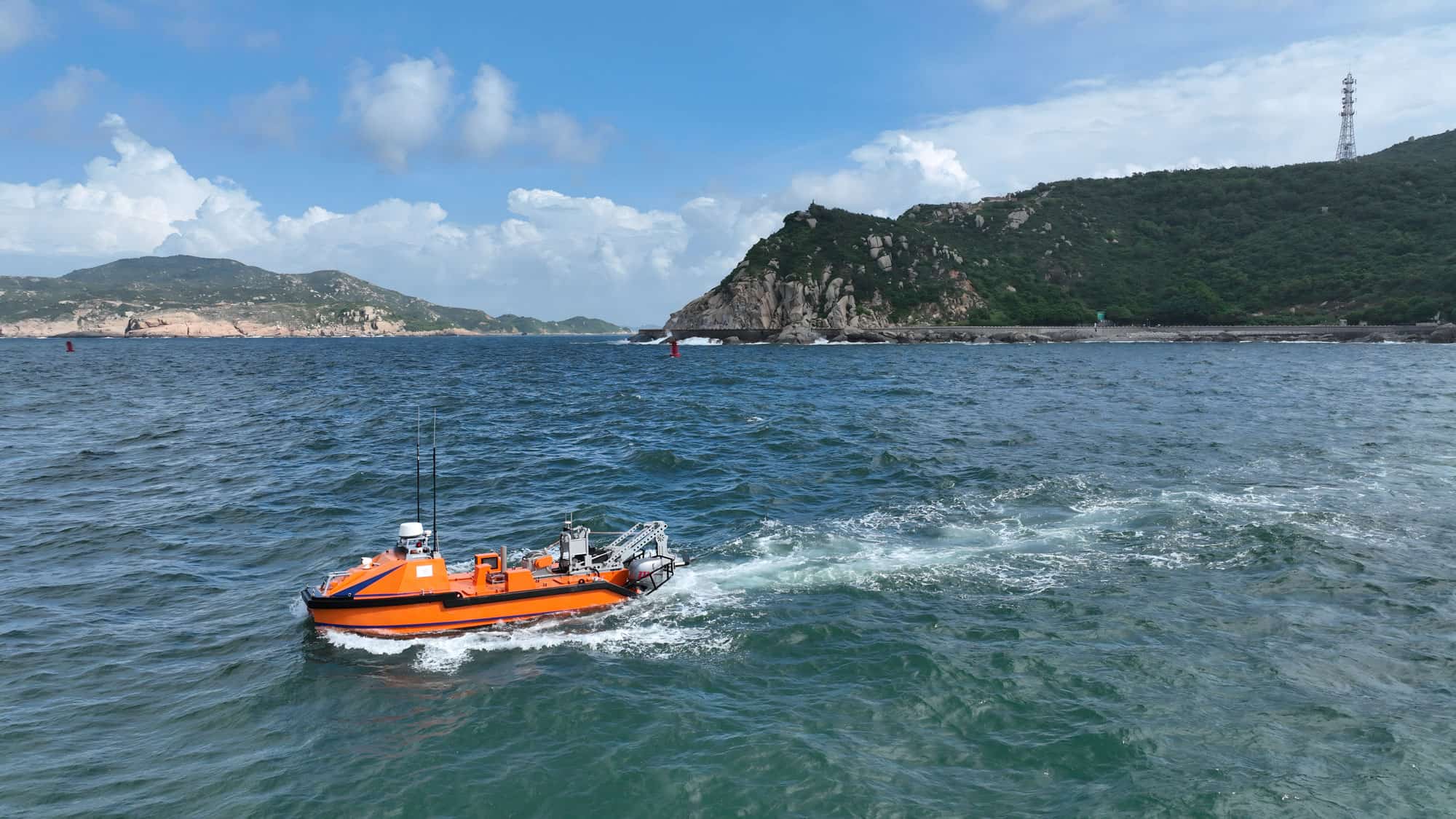
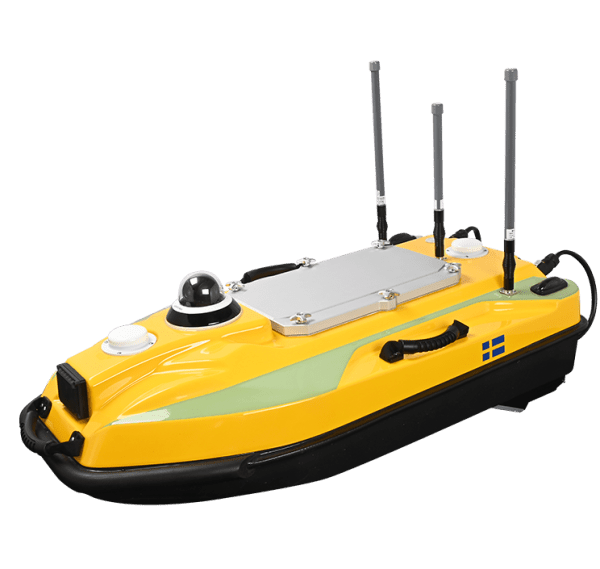
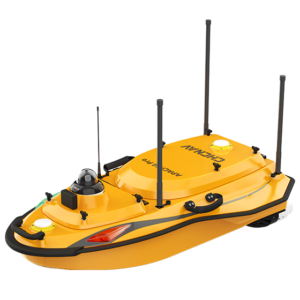
Oceanalpha Unmanned Surface Vehicles
Anwendungen für unbemannte Oberflächenfahrzeuge
USVs können als Teil eines Schwarms miteinander verbunden werden, wobei jedes einzelne Fahrzeug als Knotenpunkt in einem Kommunikations- oder Sensornetzwerk fungiert. Dadurch können sie als Kraftverstärker entweder für Verteidigungsanwendungen wie Minenräumung oder Patrouillen oder zur schnelleren Durchführung wissenschaftlicher Vermessungs- oder Probenahmemissionen eingesetzt werden.
Zu den militärischen Anwendungen für USVs gehören Grenz- und Küstenpatrouillen, Minenräumung, U-Boot-Jagd, ISR, seegestützte Ziele und Offensivfähigkeiten. USVs werden auch in kommerziellen Bereichen wie Ozeanographie und Umweltwissenschaften, Exploration sowie in der Öl- und Gasindustrie eingesetzt.
Sensoren und Nutzlasten für unbemannte Oberflächenfahrzeuge
Da keine Besatzung erforderlich ist, kann ein unbemanntes oder autonomes Oberflächenfahrzeug mit mehr Sensoren und Ausrüstung ausgestattet werden als ein bemanntes Fahrzeug gleicher Größe. Zu dieser Ausrüstung können Sonar, Bildgebungssysteme, Radar, ISR-Systeme, Umweltsensoren und Datenlogger, Waffen-Nutzlasten oder ein kleines unbemanntes Unterwasserfahrzeug (UUV). Die Ausrüstung kann auch hinter dem USV hergezogen werden.
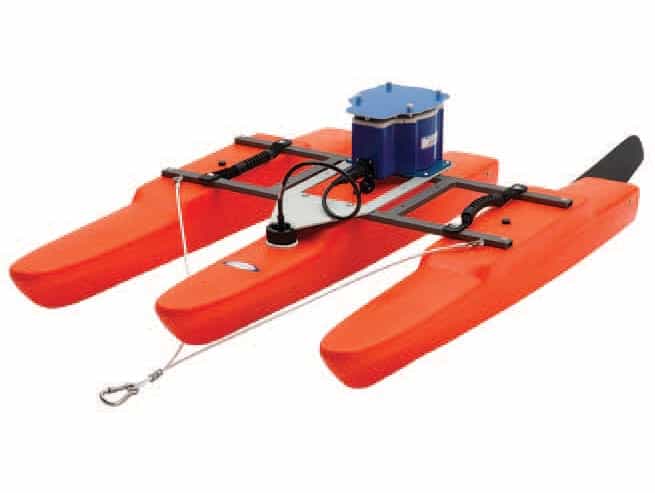
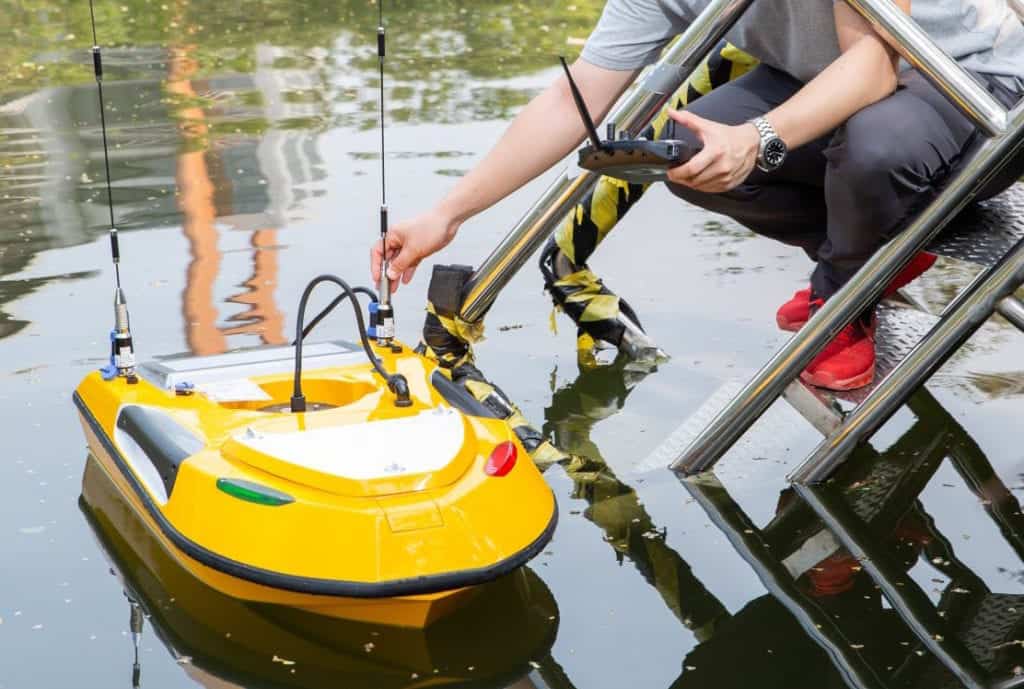
Teledyne Marine Q-Boat 1250 Portable USV
Einsatz und Steuerung von USV-Booten
Unbemannte Oberflächenfahrzeuge können von der Küste oder vom Deck eines größeren Schiffes aus eingesetzt werden und auch zum Einsatz kleinerer UUVs verwendet werden. USVs können von einem menschlichen Bediener ferngesteuert werden und verfügen möglicherweise auch über autonome Funktionen. ASVs (autonome Oberflächenfahrzeuge) können so eingestellt werden, dass sie vorprogrammierte Routen und Wegpunkte intelligent verfolgen. Viele USVs können zwischen vollständiger Autonomie, Halbautonomie oder manueller Steuerung wechseln.
Frequently Asked Questions
What should be considered when comparing USV manufacturers?
USV manufacturers should be compared on their experience with the intended mission, payload integration capabilities, production capacity, and ongoing technical support. The ability to adapt a vessel to specific requirements also matters, including access to interfaces and integration documentation. Proven performance in comparable operating conditions provides a stronger basis for selection than vessel size or company scale alone.
Is a monohull or catamaran better for a USV?
The better hull configuration depends on payload arrangement, operating conditions, and handling requirements. A catamaran can provide useful deck space and stability for sensor installations, while a monohull may suit constraints on vessel width, transport, or launch equipment. Compare complete vessels at their intended operating displacement, since hull type alone does not establish seakeeping, efficiency, or survey performance.
Which specifications matter most when comparing USV endurance?
Endurance figures are most useful when they specify vessel speed, payload power consumption, loading, and operating conditions. A figure measured at low speed with minimal equipment may poorly represent a survey, patrol, or towing mission. Comparisons should account for transit time, time on task, energy reserves, and the additional demand from onboard computing, communications, and sensors.
What limits a USV’s operating range?
Operating range depends on both the vessel’s available energy and the communications coverage required for its mission. A USV may have enough endurance to travel beyond its direct radio link, while alternative connections introduce different coverage, bandwidth, latency, and power requirements. The relevant comparison is whether command, monitoring, and payload data connections remain adequate throughout the intended operating area.
Is a battery-electric or hybrid USV better for longer missions?
A hybrid USV may suit missions requiring more energy than a practical battery installation can supply, while battery-electric vessels can suit operations that prioritize low noise and simpler routine maintenance. The choice depends on vessel size, mission duration, speed, and payload demand. Hybrid configurations also introduce fuel handling, engine servicing, and additional integration requirements.