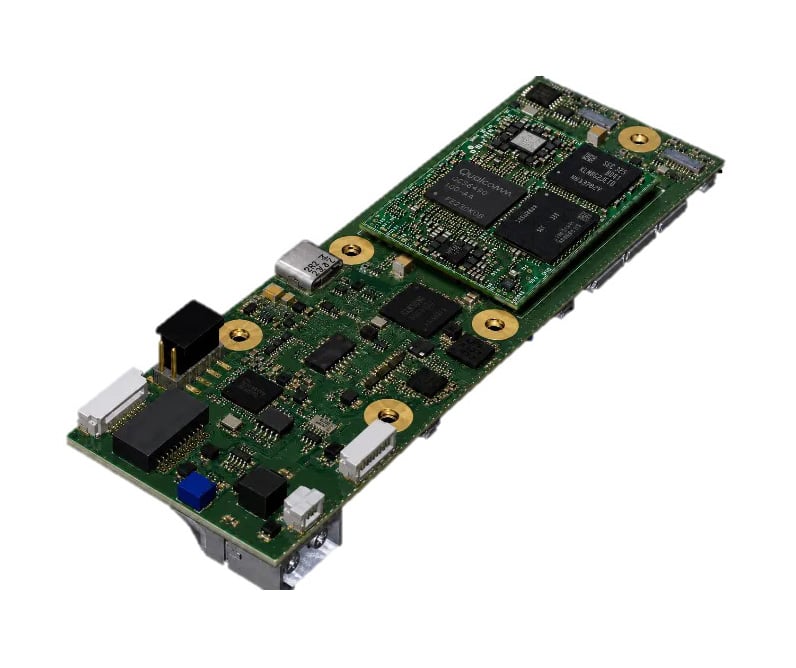




Lantronix and Latent AI have entered a strategic partnership to bring automatic target recognition and persistent onboard tracking to small Group 1 unmanned aircraft systems by pairing compact edge compute hardware with hardware-optimized perception software.
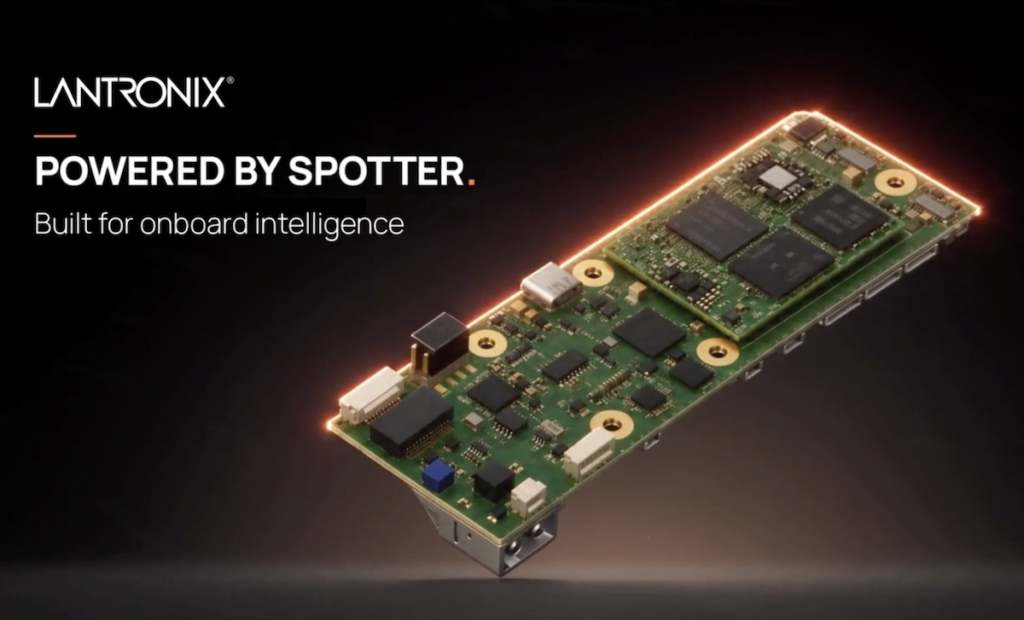
In battlefield environments, small drones often struggle to maintain visual locks when targets move or disappear behind obstacles, largely due to limited onboard processing and unreliable communication links. While basic pixel-lock tracking on low-end boards frequently loses moving targets, more advanced perception models typically exceed the size, weight, power, and cost budgets of small, often attritable aircraft. To bridge this gap, the two companies are integrating Latent AI’s Captus Perception software onto Lantronix’s Spotter robotics platform, creating a packaged solution scheduled for release in the first quarter of 2027 following Spotter’s initial availability in the fourth quarter of 2026.
Once an operator designates a target, the combined system handles detection and tracking directly onboard the aircraft, allowing the drone to reacquire targets that temporarily move out of view or become obscured. The system is designed to maintain a lock even when bandwidth is constrained or the video link drops entirely, feeding tracking data straight into the vehicle’s flight stack to support reconnaissance, surveillance, and terminal guidance where supported.
“Drone makers shouldn’t need a perception team to put real target tracking on a small aircraft,” said Jags Kandasamy, CEO of Latent AI. “Together, Spotter and Captus Perception will give them compute and tracking in one package: detection and tracking that runs onboard a Group 1 aircraft and locks onto whatever target the operator picks.”
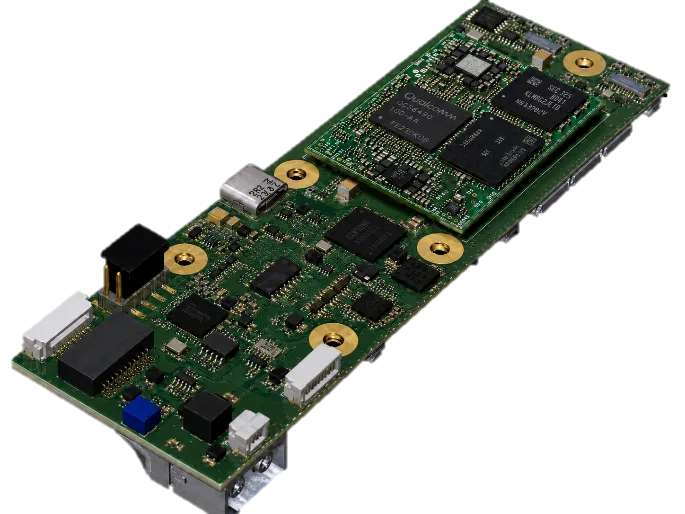
Spotter is built around the Qualcomm Dragonwing QCS6490 processor and delivers up to 12.5 TOPS of AI performance while operating at single-digit watts on a 42 x 120 mm board. By combining AI, vision, flight-grade sensing, and vehicle control on a single platform, the hardware supports PX4, ArduPilot, Betaflight, and MAVLink protocols to pass tracking data directly to flight controllers. To ensure complex perception models run within these tight thermal and power envelopes, Latent AI optimizes its AI pipeline specifically for the target hardware by mapping each processing stage to the appropriate compute engine on the chip.
Developed by Lantronix, a provider of Edge Intelligence and Industrial IoT solutions for unmanned systems, critical infrastructure, and enterprise networks, the Spotter board is both NDAA and TAA compliant and engineered for a lifecycle exceeding 10 years. The hardware also builds on Lantronix compute modules already deployed in Blue UAS-approved drones.
“Spotter gives drone makers the right amount of AI at the right size, power and cost. Latent AI shows what that unlocks on a Group 1 aircraft,” said Saleel Awsare, president and CEO of Lantronix. “Holding a target when it moves, hides or the video link drops is exactly what small drones have been missing. Together, we give customers a mission-ready path to that capability, and we show that Spotter is the platform mission software is built on.”