


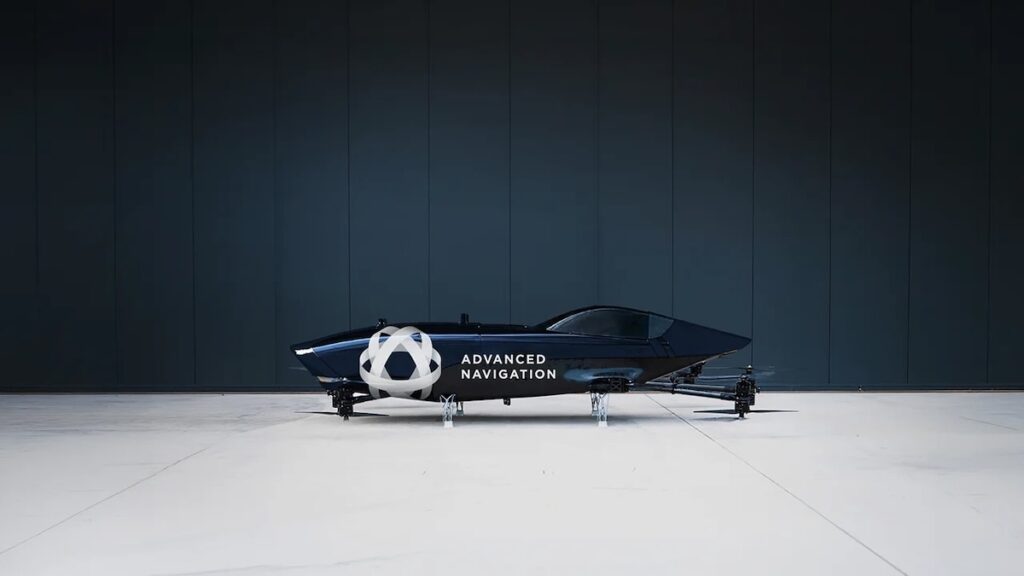
Advanced Navigation has been selected as the Official Navigation Partner of the Airspeeder International Series, described as the world’s first electric flying race car series.
The series features the Airspeeder Mk3, a remotely piloted electric Vertical Take-Off and Landing (eVTOL) multicopter engineered to reach speeds exceeding 120 km/h.
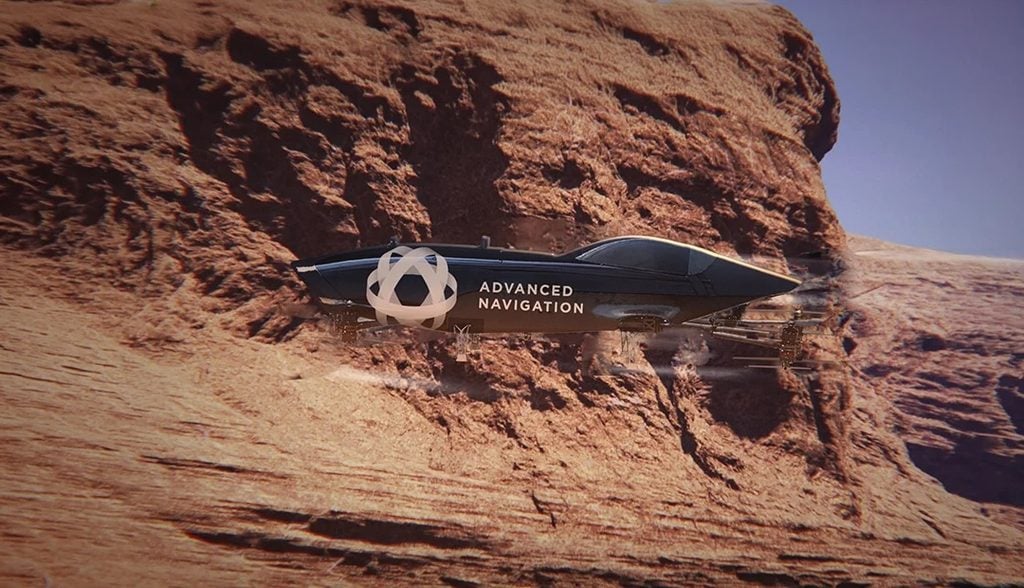
The rapid acceleration, sudden altitude changes and tight maneuvers associated with racing place significant demands on the aircraft’s ability to accurately determine its position, movement and heading.
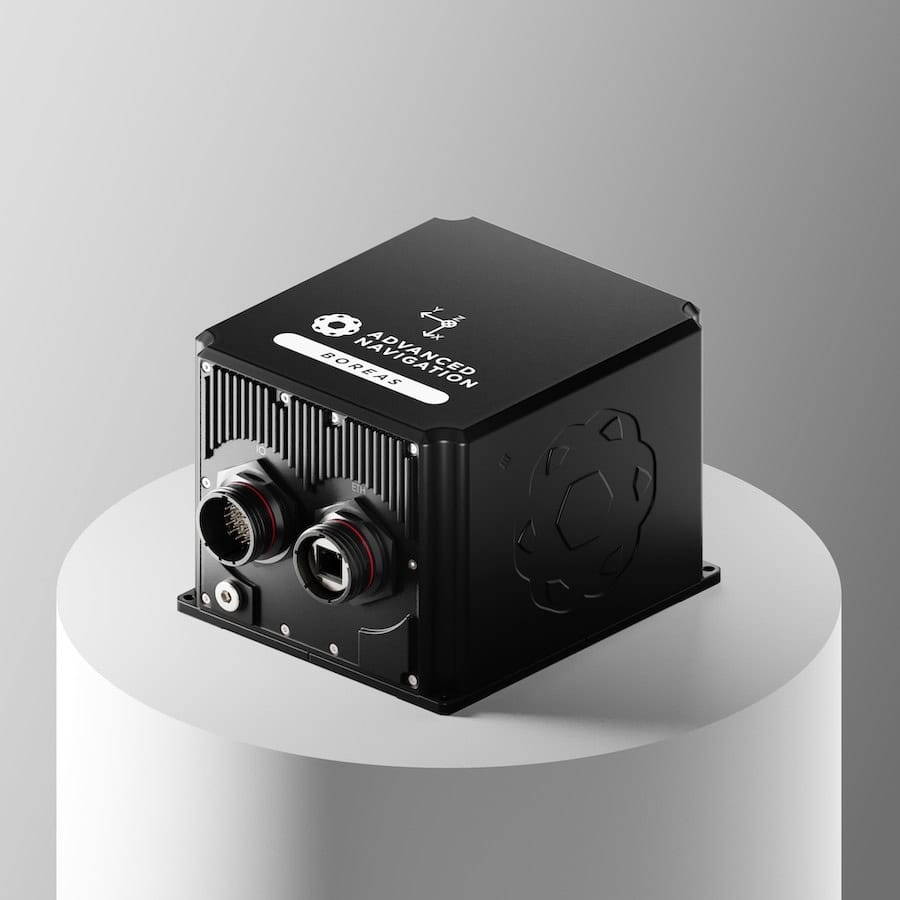
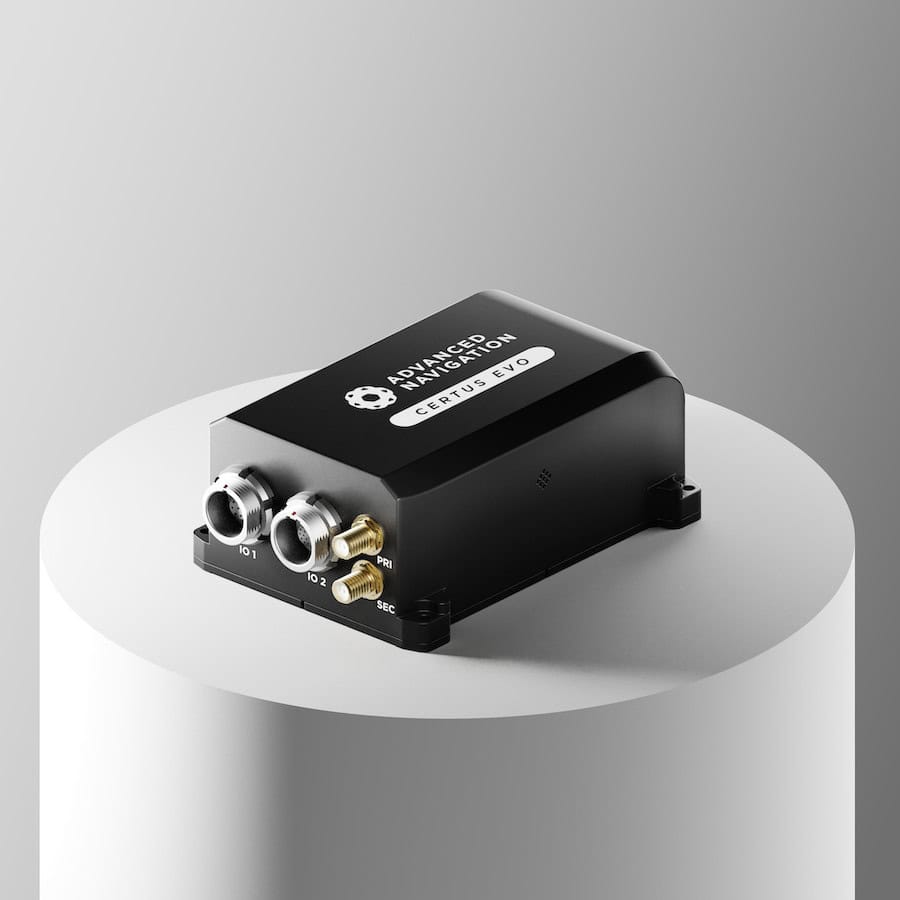
To meet these demands, Advanced Navigation, a developer of navigation and autonomous systems, will equip the Mk3 with high-performance navigation sensors delivering precise, real-time positioning, velocity and orientation data to enable tighter flight control, faster responses to dynamic maneuvers and reliable navigation during close-quarters racing.
The competition will see pilots from around the world race above motorsport circuits, remotely operating the aircraft using Augmented Reality (AR) to navigate digitally mapped racetracks overlaid onto physical landscapes. The series will also feature rapid battery swaps in the pit lane and immersive live broadcasts, with future races planned over snow, oceans, deserts and canyons.
Chris Shaw, CEO and Co-founder of Advanced Navigation, said, “Motorsport has conquered land and sea. The next frontier is the sky. This is one of the most ambitious engineering challenges in modern motorsports, where every gram, every millisecond, and every maneuver matters. We’ve spent years developing navigation technology for harsh and demanding environments. Now we’re bringing that expertise to the next evolution of high-performance racing.”
Built around a lightweight carbon fibre chassis and a 96 kW electric powertrain, the Mk3 features an eight-rotor configuration that enables high-speed hairpin turns and rapid vertical movement.
The collaboration is also intended to enhance the racing experience. Enhanced positioning data will provide pilots and pit crews with greater visibility into aircraft performance, informing split-second decisions and race strategy.
For spectators, real-time 3D tracking, virtual cockpit perspectives and esports-style analytics could enhance the viewing experience.
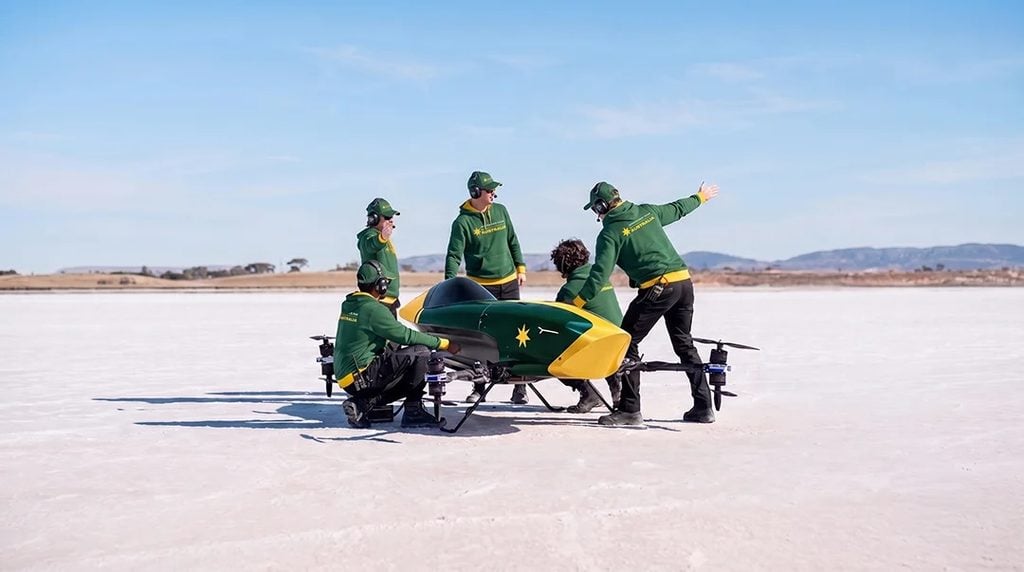
Matt Pearson, CEO and Co-founder of Airspeeder, commented, “Airspeeder exists to push advanced air mobility systems to their limits. At the speeds we’re reaching, there is no margin for error. That’s where Advanced Navigation’s technology gives us a real advantage. Proven in some of the world’s most complex environments, their capability will extend our limits of speed, agility and control, setting new benchmarks for how the Mk3 is raced, how its performance is understood by our engineers, and how the sport will continue to evolve.”
Beyond competition, the joint technology programme will allow engineers to evaluate navigation performance under real-world competitive conditions, refine sensor fusion algorithms and explore how precise positioning data can support flight control and collision avoidance outside of motorsport.
Shaw added, “Airspeeder is creating a flying laboratory for technology uses beyond motorsport. The demands of high-speed electric flight give us an opportunity to demonstrate navigation capabilities that could support everything from high-speed fixed-wing drones and cargo eVTOLs to autonomous helicopters and tiltrotors operating in contested and GPS-denied environments.”
By pushing navigation technology to its limits in competition, the partnership aims to advance capabilities for wider uncrewed and autonomous aircraft applications. The inaugural race is scheduled to take place in Adelaide, Australia, in November 2026, with five pilots representing Australia, the United States, Great Britain, Italy and New Zealand. The second race of the season is scheduled for April 2027.