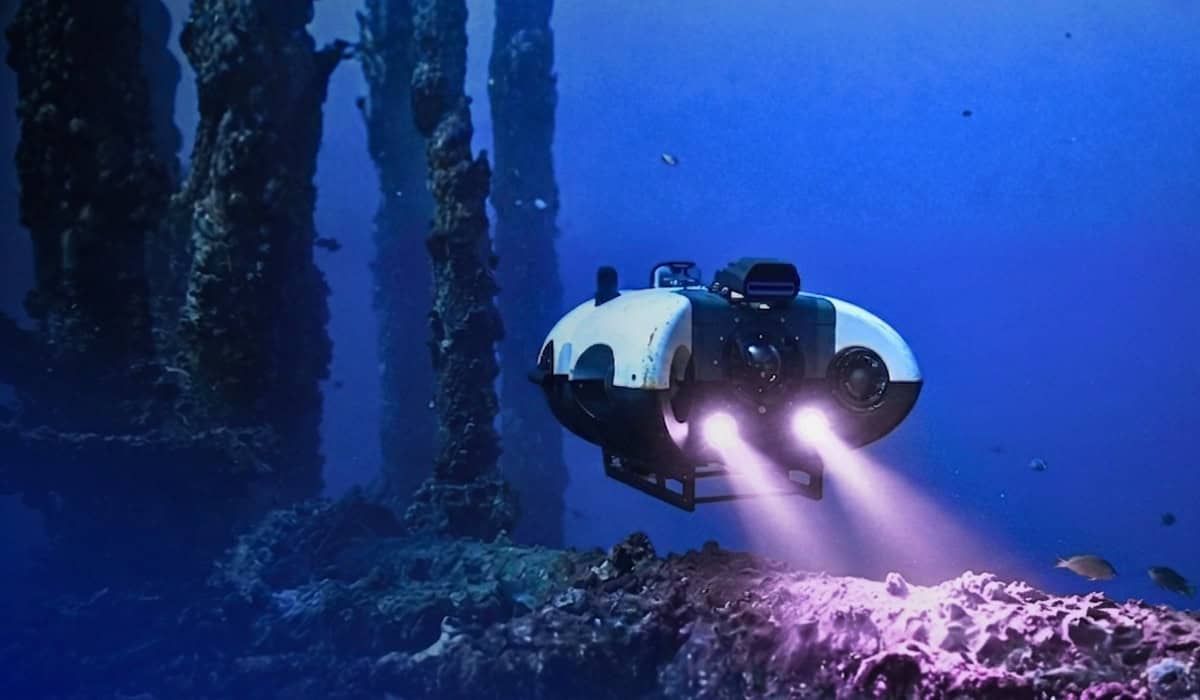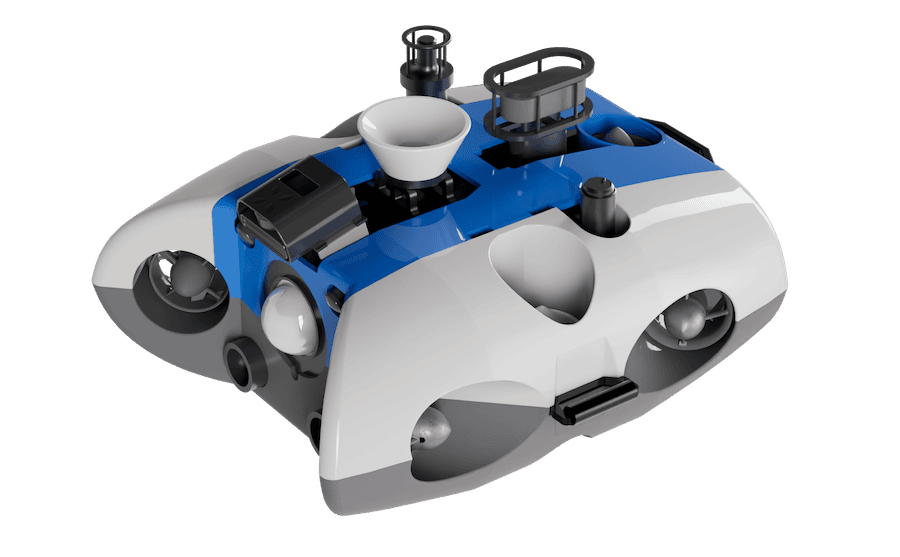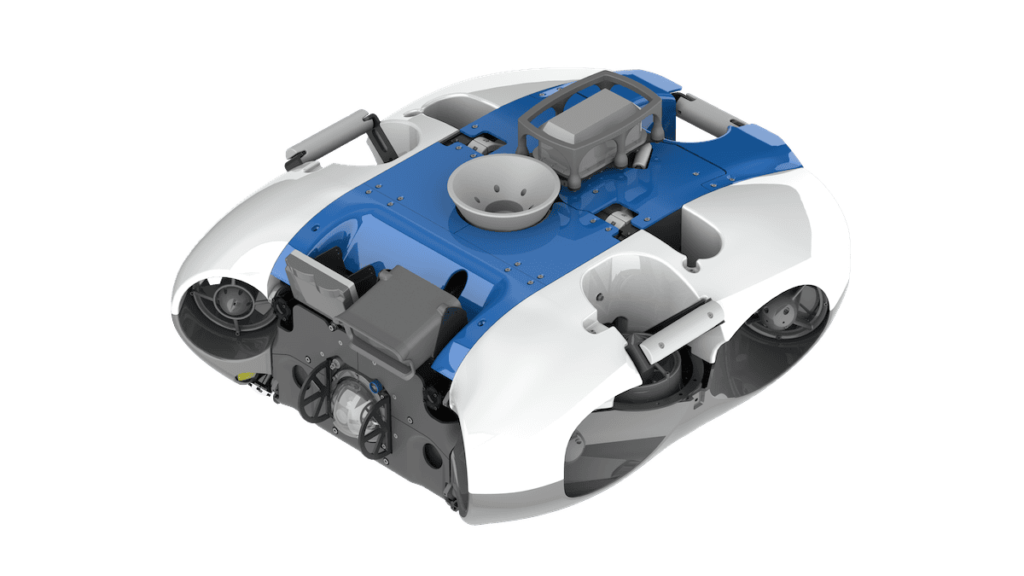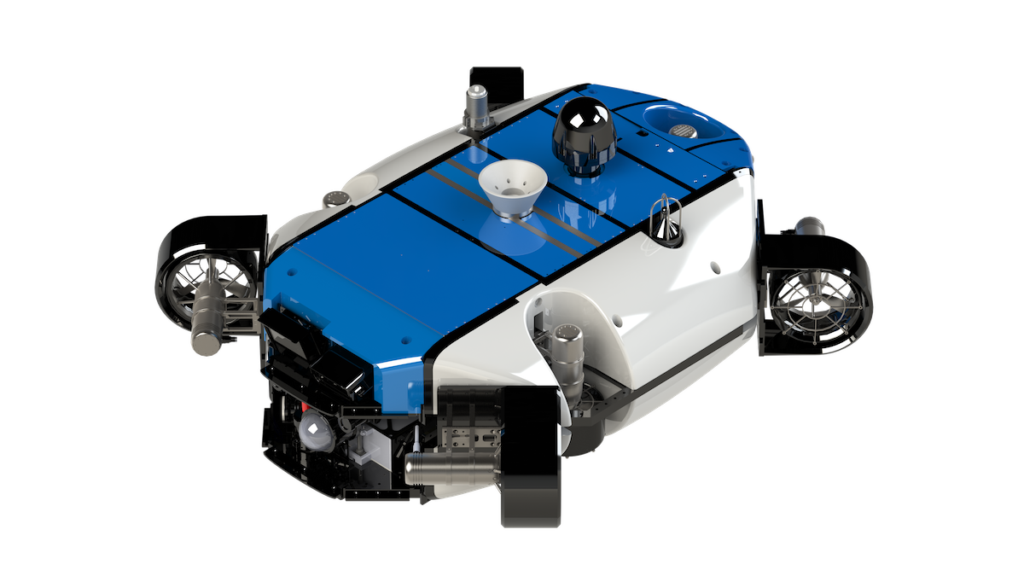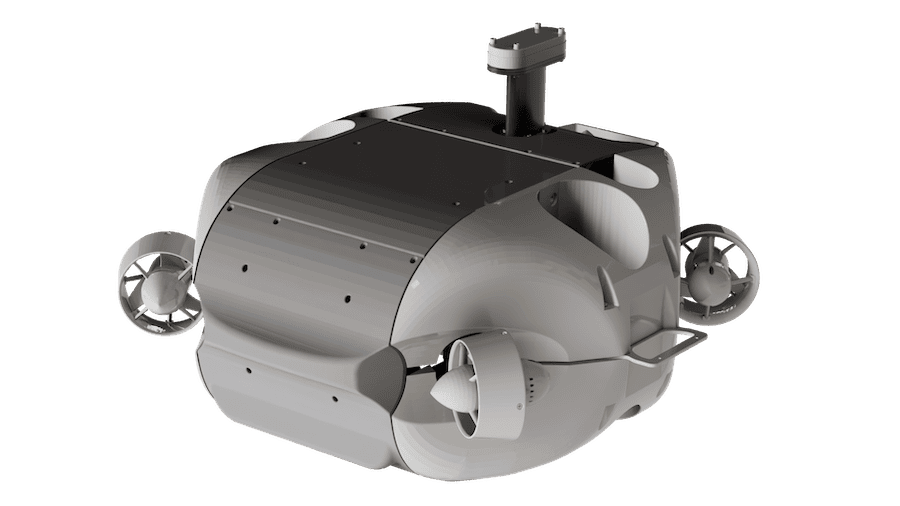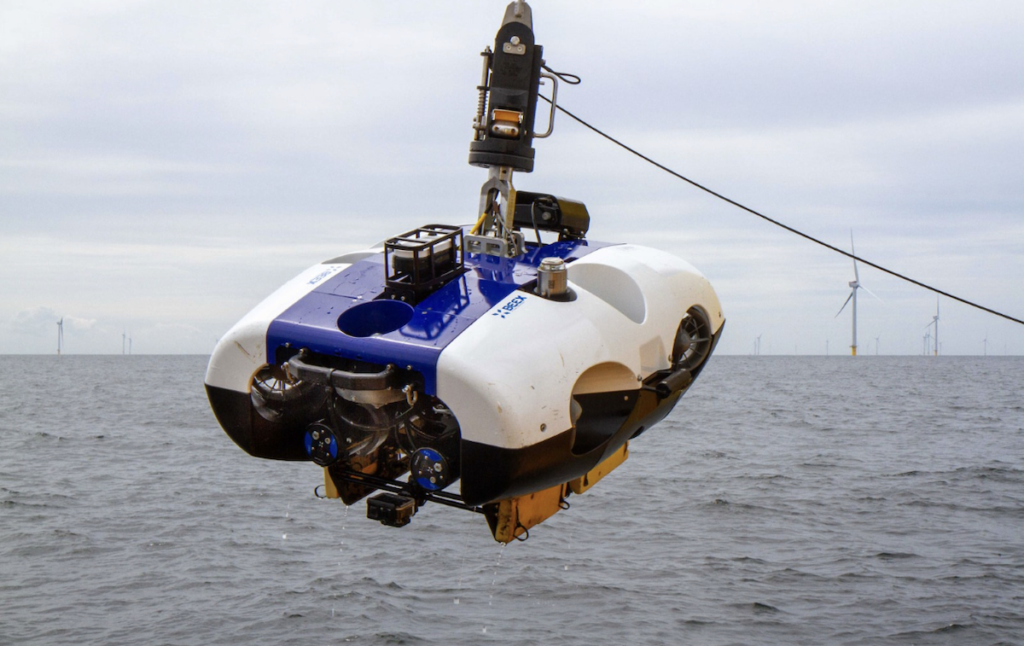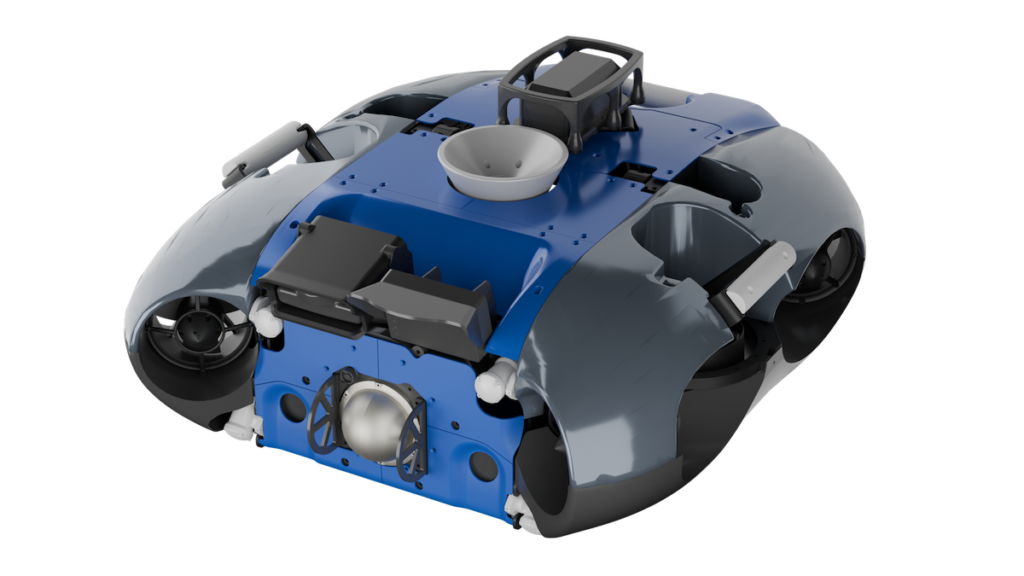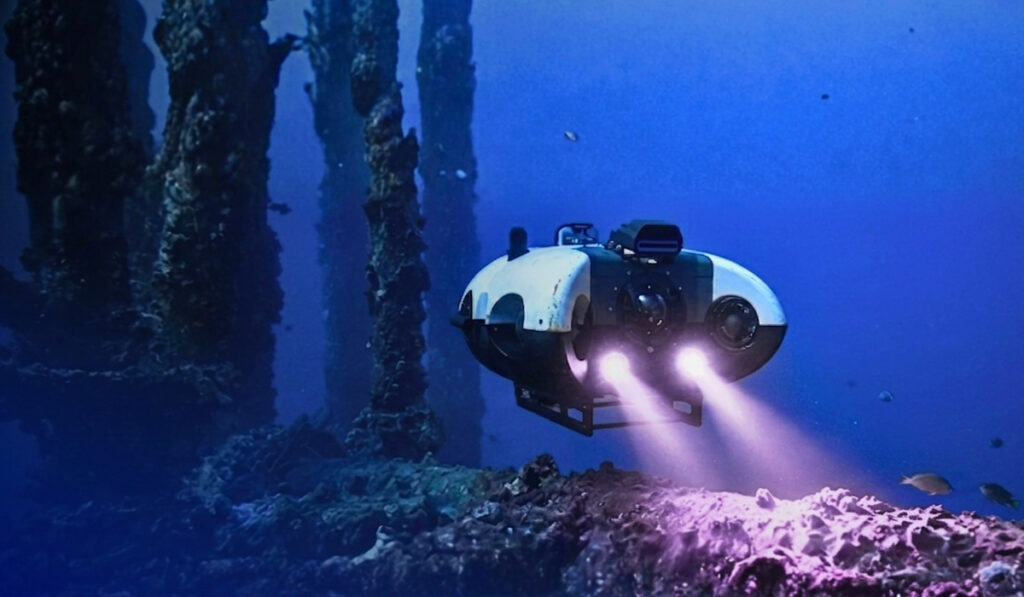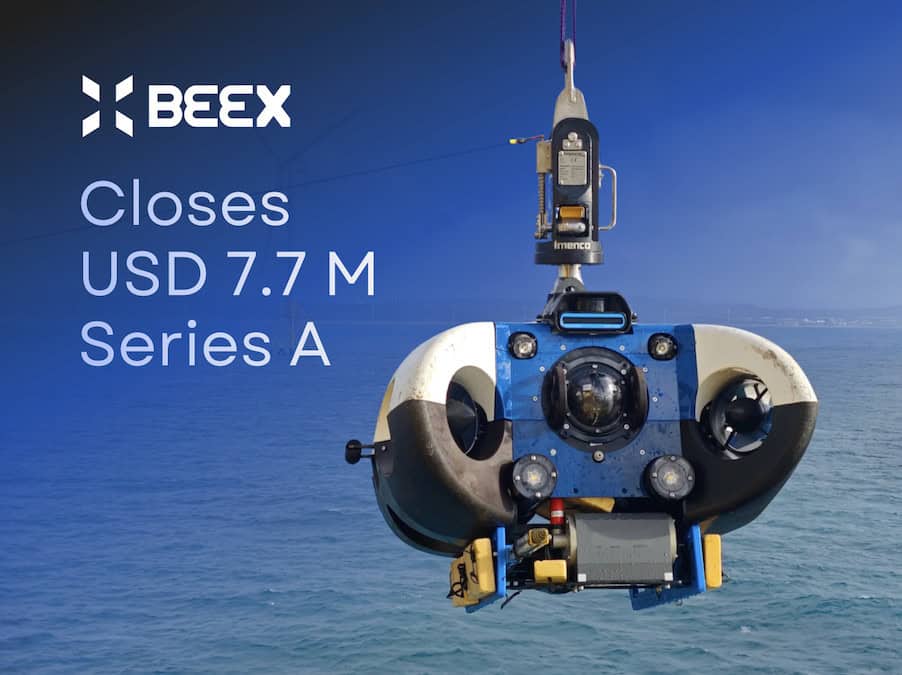



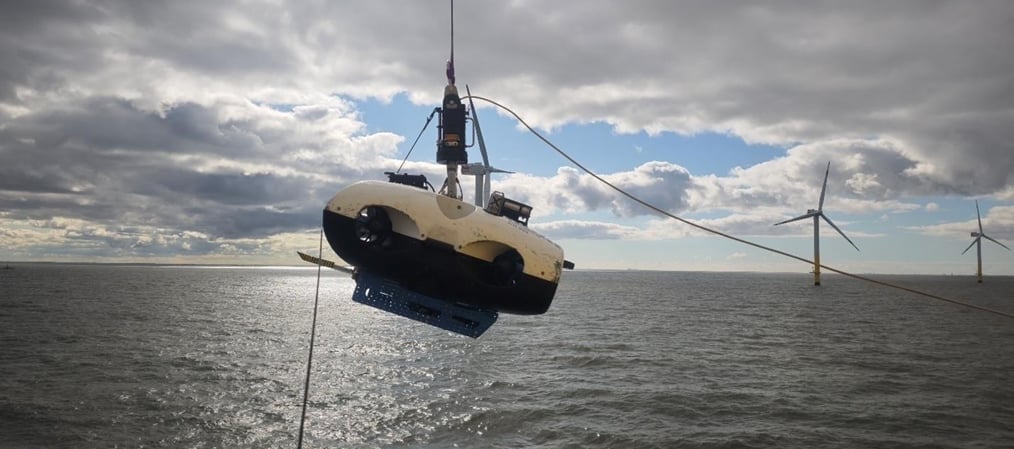
BeeX has completed an autonomous underwater inspection campaign across 18 monopiles in 16 days at an operational offshore wind farm within the twelve-nautical-mile zone of Lower Saxony, Germany.
Conducted between August and September as part of a cyclical maintenance program, the pilot mission was structured to benchmark BeeX’s A.IKANBILIS autonomous drone directly against conventional fuel-powered remotely operated vehicles (ROVs) on a live, in-service asset. Prior to the main campaign, BeeX demonstrated the system’s speed and precision during a one-month trial, leading the wind farm operator to select the platform to assess monopile conditions, corrosion, and cable protection systems.
Unlike traditional ROV operations that depend on large support vessels and sizable offshore teams, the A.IKANBILIS system was deployed by a two-person crew. All required inspection equipment fit onto two pallets and was lowered into the water from each monopile’s transition piece using a 1-ton crane. Operating without a support vessel lowered health, safety, and environment (HSE) risks, generated project cost savings, and reduced carbon emissions by 95 percent compared to conventional fuel-powered ROVs.
Offshore conditions at the site presented strong currents and poor visibility caused by seabed silt from a nearby tributary. While comparable vehicles in the same weight class are typically restricted to currents of up to 1 knot, A.IKANBILIS maintained stability in currents up to 1.8 knots using adaptive station-keeping, reducing collision risks with high-value subsea infrastructure. The drone navigated the low-visibility waters autonomously, combining an integrated sonar map with AI-enhanced video to capture clear footage while streaming a live camera feed to the client throughout the mission.
During the campaign, A.IKANBILIS performed asset maintenance checks aligned with BSH standards to evaluate structural integrity. The vehicle carried out general visual inspections (GVI) of monopile coatings facing north, south, east, and west, alongside visual checks of welding seams and water exchange holes. Below the waterline, it inspected boat landings and Impressed Current Cathodic Protection (ICCP) systems for dents, corrosion, and other damage. The drone also measured marine growth across three depth categories—up to -4 m, up to 15 m, and more than -15 m—and conducted visual checks of cable protection systems at entry and exit points while tracking cable routes up to their burial points.
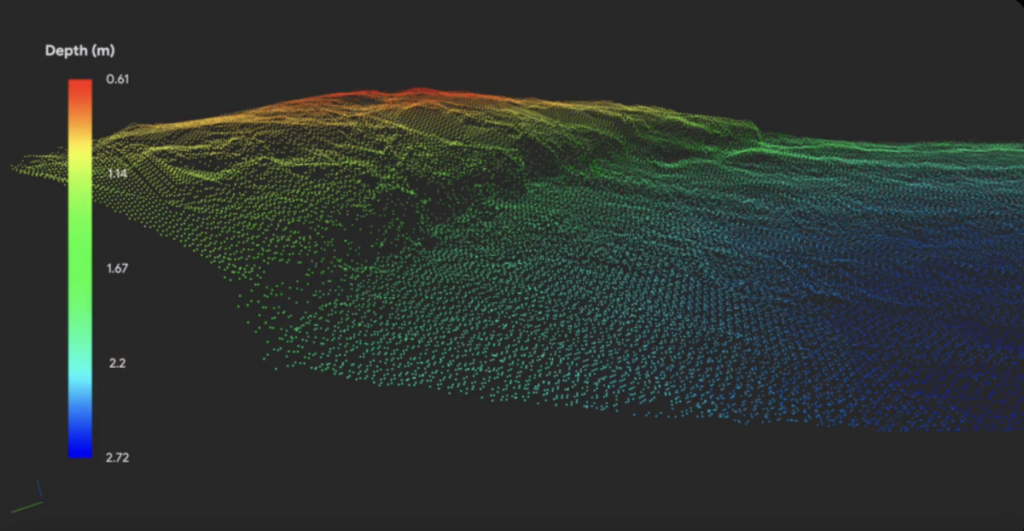
Data from sonar and visual scans measuring depth, altitude, and distance from seabed touchdown was integrated into BeeX’s Sambal portal, providing real-time access to geo-referenced inspection reports. Through the portal, engineers analyzed 2D sonar image mosaics and 3D point cloud visualizations highlighting seabed topography and scour conditions. This rapid reporting turnaround enabled the client to call an immediate meeting and re-inspect critical anomalies. Following the mission, the wind farm operator plans to continue working with BeeX in 2026 and beyond on similar European offshore wind projects.