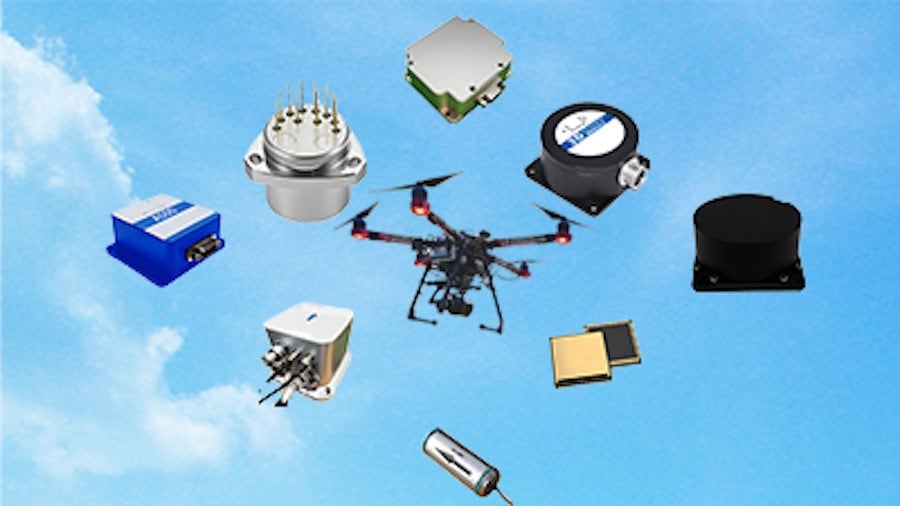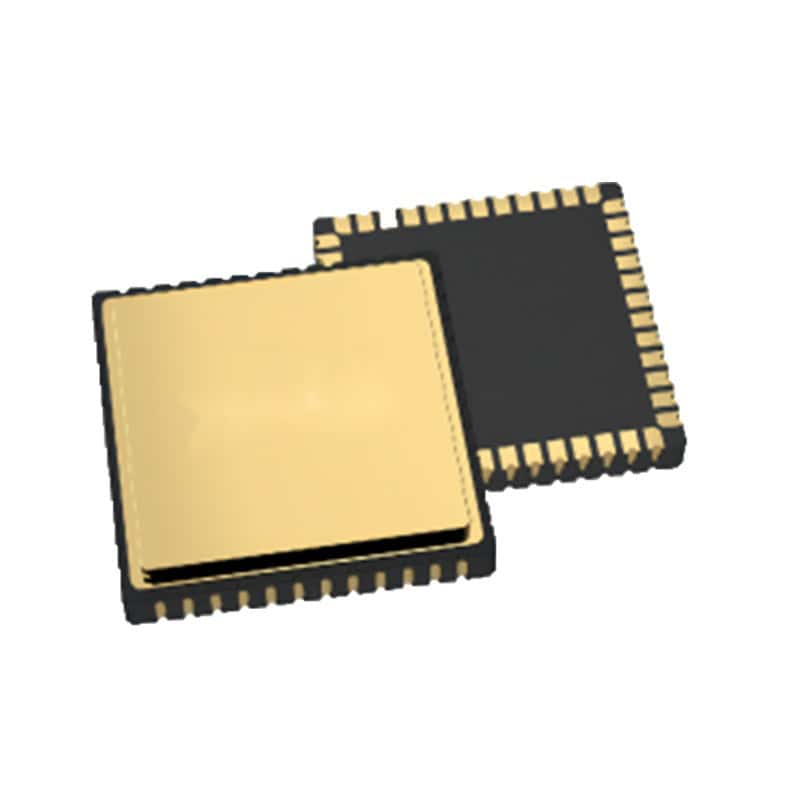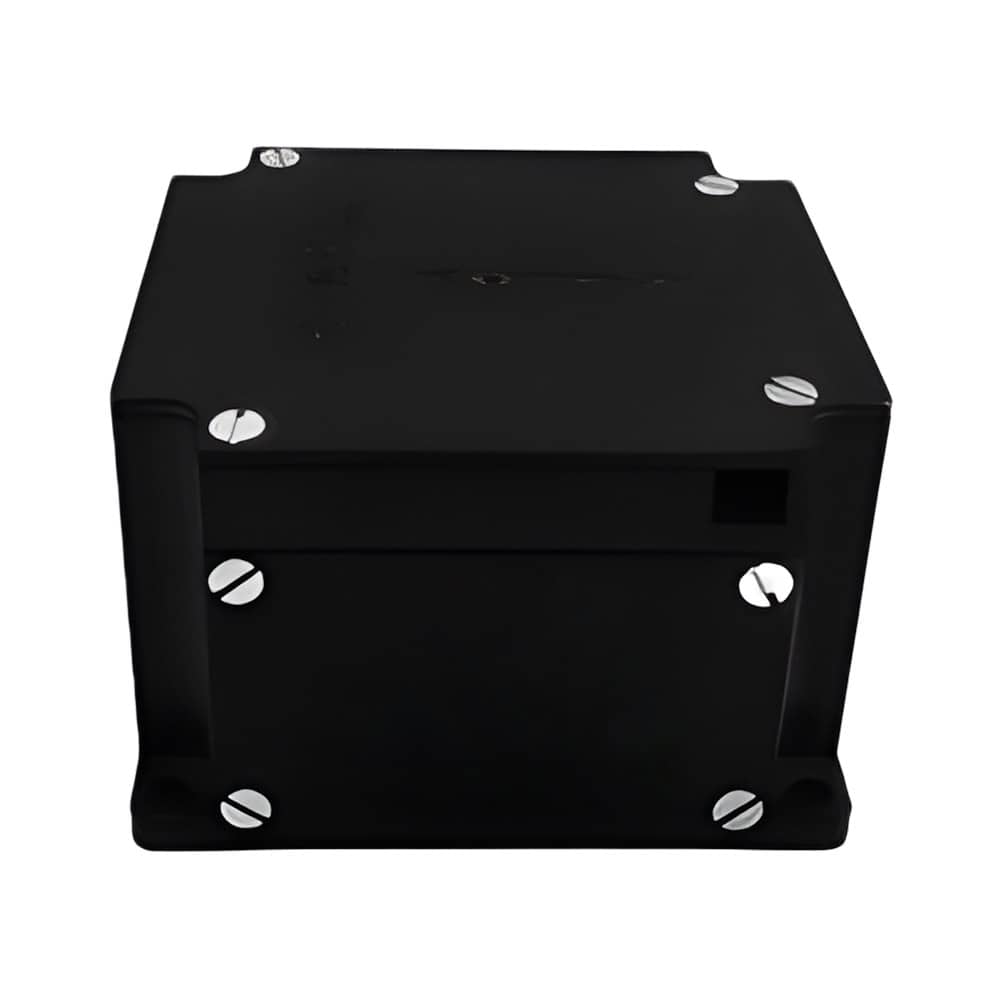



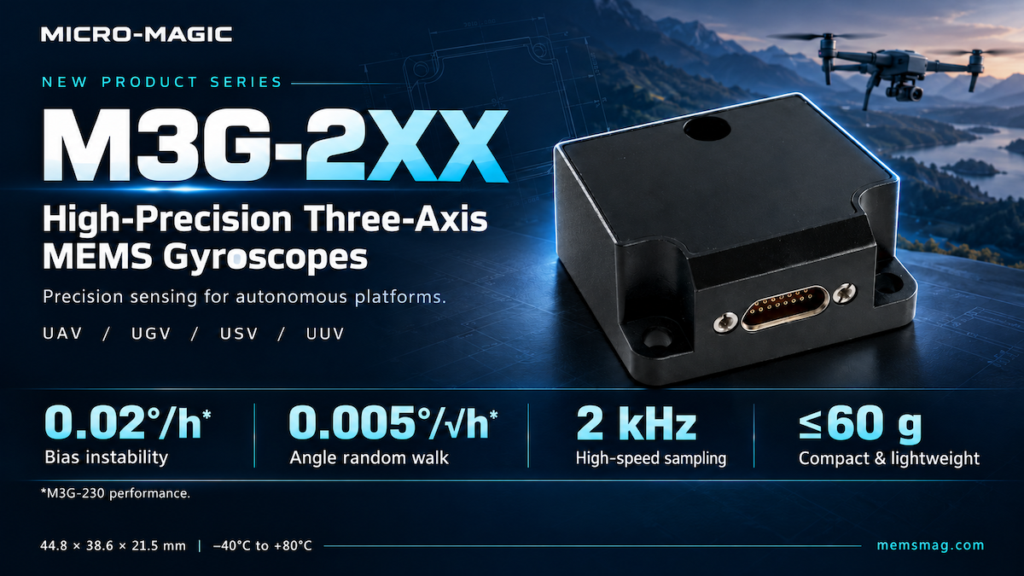
Inertial sensing systems developer Micro-Magic Inc. has launched the M3G-2XX series of high-precision three-axis MEMS gyroscopes, designed to provide a stable and accurate motion-sensing foundation for autonomous unmanned systems operating in complex, high-dynamic environments.
The new series is designed to meet navigation and stabilization-control requirements across Unmanned Aerial Vehicles (UAVs), Unmanned Ground Vehicles (UGVs), Unmanned Surface Vessels (USVs), and Unmanned Underwater Vehicles (UUVs).
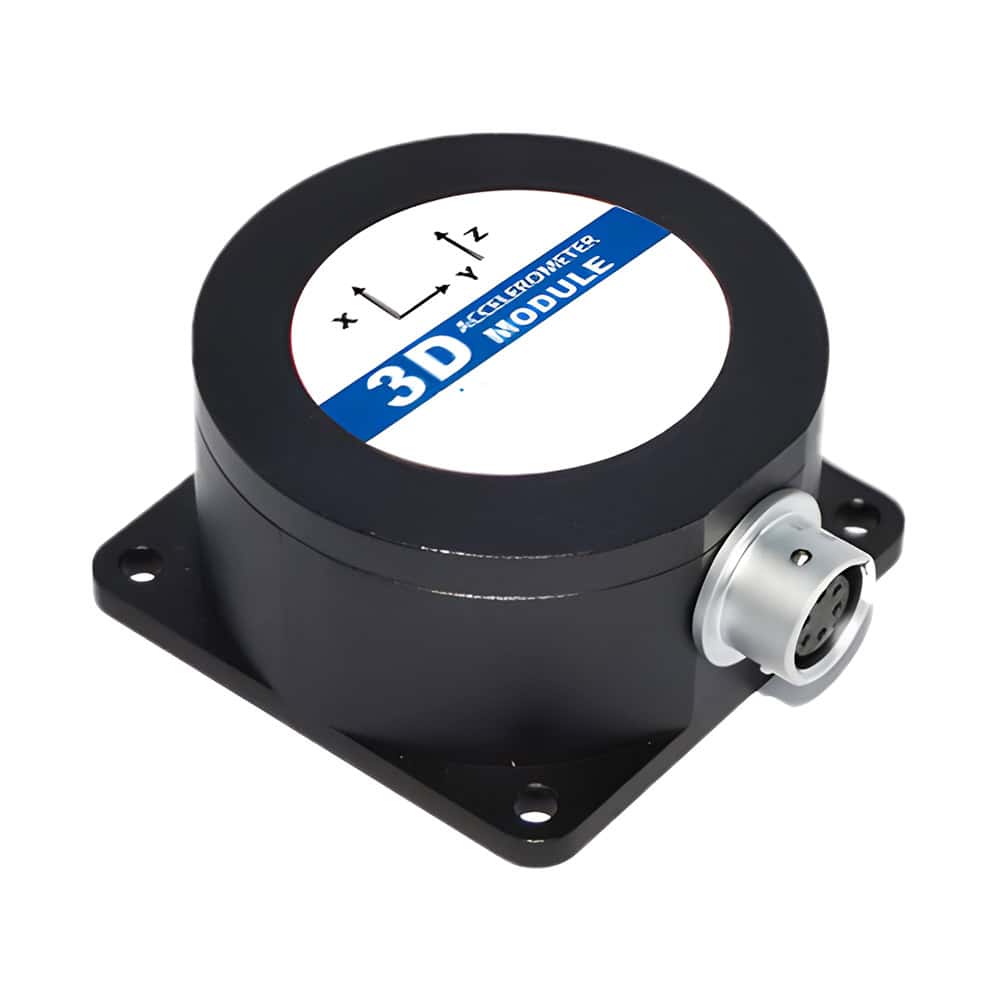
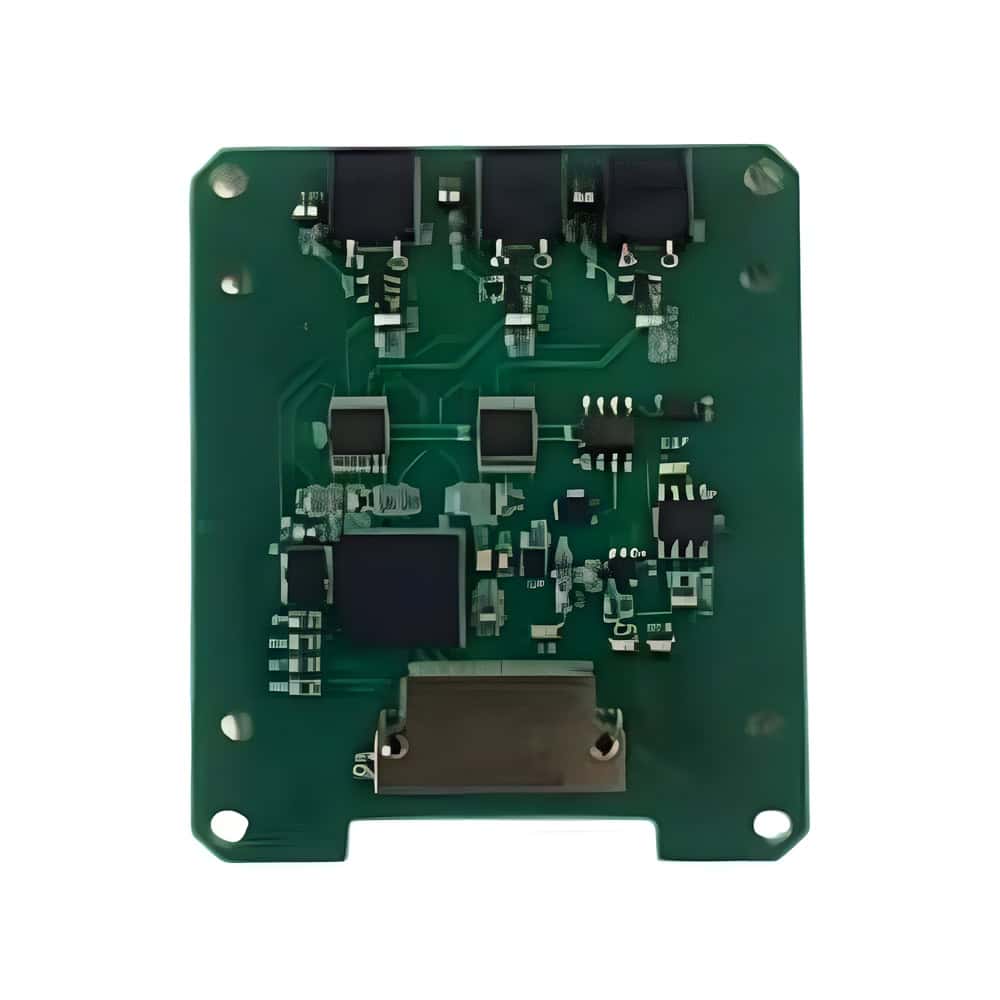
Featuring a plug-and-play design compatible with industry-standard Inertial Measurement Systems (IMUs), all three models have compact aluminum alloy housings measuring 44.8 × 38.6 × 21.5 mm and weighing no more than 60 g. The gyroscopes are designed to resist vibration and shock while maintaining high measurement accuracy across a temperature range of -40°C to +80°C, with some models supporting temperatures up to +85°C.
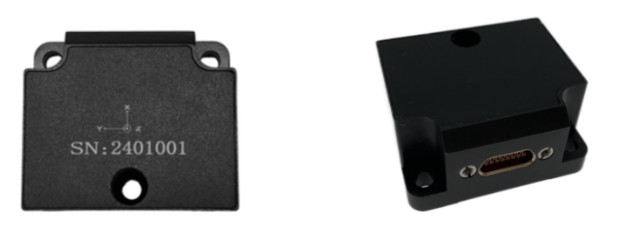
The series consists of three models optimized for different accuracy grades and application scenarios. The M3G-230 offers a bias instability as low as 0.02°/h and an angle random walk as low as 0.005°/√h, making it suitable for long-endurance missions with stringent accuracy requirements.
The M3G-220 offers a balance between accuracy and robustness, with a bias instability of 0.05°/h and an angle random walk of ≤0.01°/√h. For industrial-grade applications, the M3G-210 provides a bias instability of 0.1°/h and a dynamic measurement range of ±500°/s, making it suitable for high-dynamic maneuvering scenarios.
To support integration across different platforms and systems, the gyroscopes offer multiple communication protocol options. Under the XDGYRO-99 protocol, the series supports data update rates of up to 2000 Hz and baud rates of up to 921600 bps, making it suitable for high-dynamic control applications requiring high-frequency angular rate feedback.
All three models feature 2 kHz high-speed sampling, online software upgrade capabilities, built-in self-diagnosis and status reporting, external trigger inputs, and time-synchronization signal outputs.