Strategic Robotic Systems (SRS) outlines what a hybrid Autonomous Underwater Vehicle (AUV)/Remotely Operated Vehicle (ROV) is, how it works, and the mission types that combine autonomous transit with tethered or relay-controlled precision work.
 A hybrid AUV/ROV combines autonomous and remotely operated modes within one underwater platform. It can travel autonomously to an area of interest, then switch to operator-controlled work for close inspection or intervention.
AUV vs. ROV
An AUV operates untethered and follows a pre-programmed mission. It is suited to wide-area surveys, long-duration sweeps and mapping, but does not provide real-time operator control or manipulation.
An ROV is tethered and controlled in real time. It is suited to inspection, intervention and manipulation, but tether length limits range and requires a surface vessel to remain with the vehicle.
A hybrid system combines both operating modes within a single deployment.
How a Hybrid AUV/ROV Works
During autonomous transit, the vehicle follows pre-programmed waypoints using onboard navigation, typically combining Ultra Short Baseline (USBL), Inertial Navigation System (INS) and Doppler Velocity Log(DVL).
At the area of interest, it can transition to tethered or relay-controlled operation, providing live video, precise maneuvering and direct manipulation. A typical mission may involve launch from shore or a surface vessel, autonomous transit, close-range work, and an autonomous or operator-controlled return.
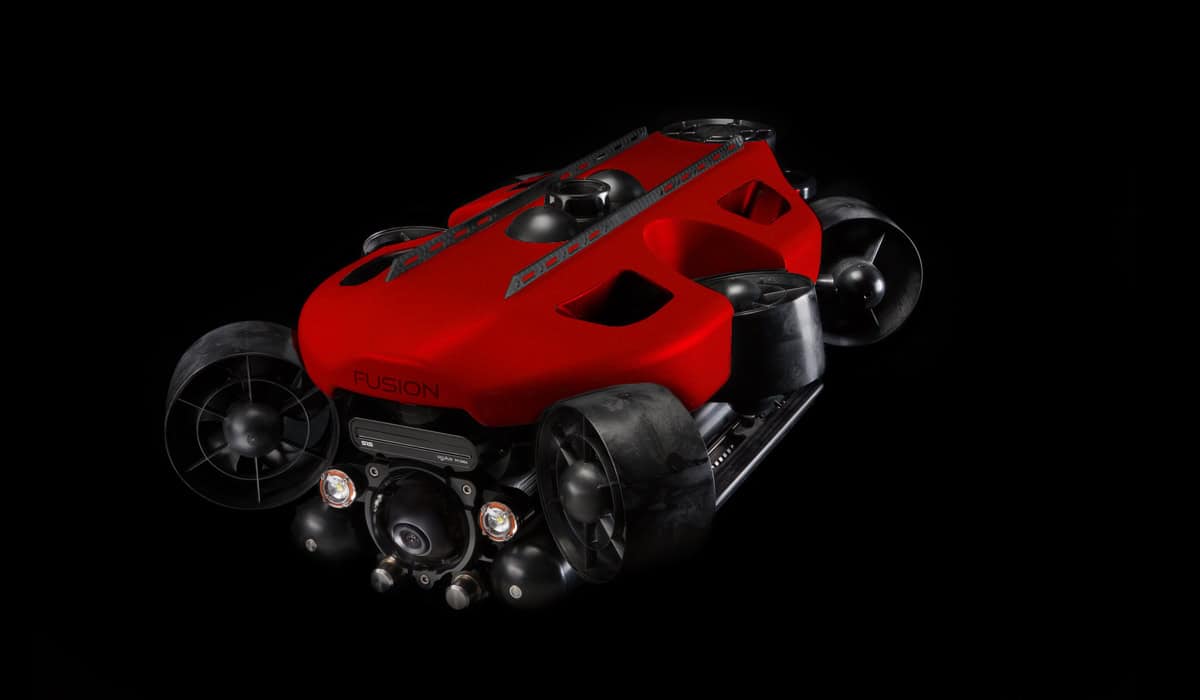
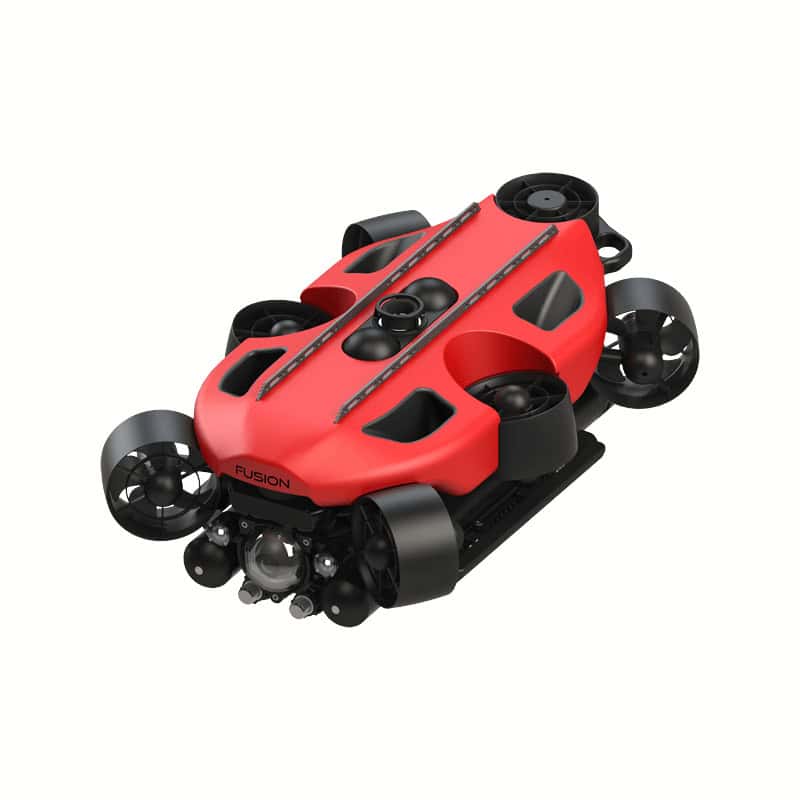
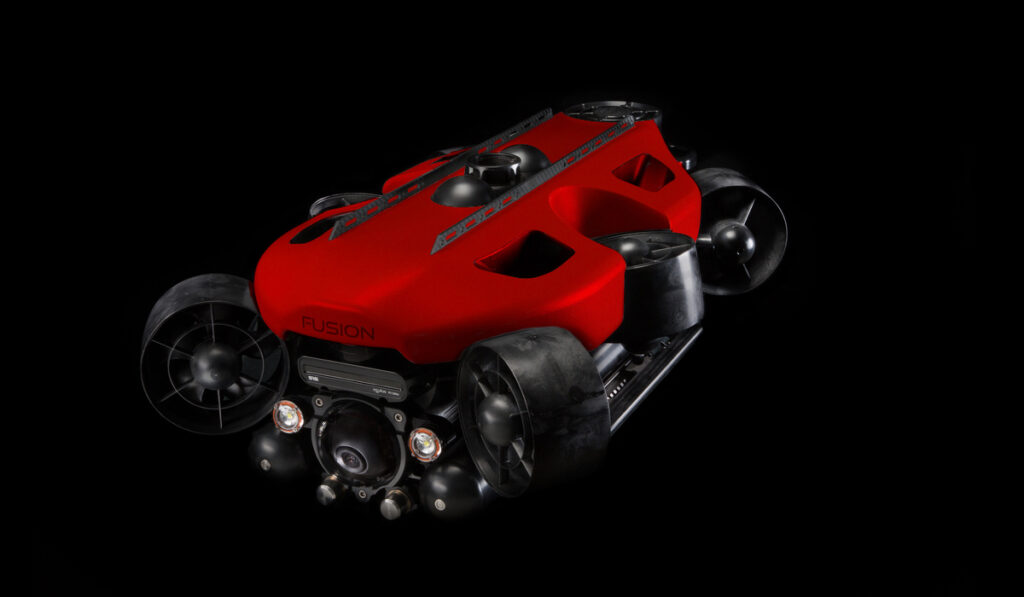
SRS’s FUSION hybrid AUV/ROV is an example of this architecture.
Where Hybrid Systems Are Used
For port security, a hybrid platform can conduct a wide-area sweep before moving to close inspection of identified objects or hull sections.
For mine countermeasures, it can transit autonomously to a suspected minefield, perform an identification pass, then switch to tethered operation for close-look confirmation and neutralization staging.
For pipeline or subsea cable inspection, the vehicle can travel autonomously between inspection points and then transition to precision inspection at each location.
Hybrid AUV/ROV systems address missions that combine extended transit with close operator-controlled work, allowing both phases to be carried out by the same underwater platform.