
Sense Aeronautics’ Solar Panel Inspection (SPI) is an AI-based solution that automatically detects, classifies and geo-locates defects in photovoltaic installations using RGB, thermal, radiometric and electroluminescence imagery.
The system is designed to convert imagery captured by drones or cameras into structured and actionable inspection results, supporting consistent assessment across solar sites with large numbers of panels.
Inspection Challenges in Growing Solar PV Deployments
Solar PV installations are growing in size and number, often comprising thousands of panels. Defects including cracks, hotspots, soiling, PID, delamination, scratches and loose connections reduce energy yield and system lifetime. Manual and semi-automated inspections are slow, costly and inconsistent, while raw drone imagery alone is not actionable without automated defect analysis.
Automated Detection, Classification and Geo-Location
SPI applies AI-based analysis to automatically detect, classify and geo-locate defects in photovoltaic installations. The system processes imagery captured from any compatible drone or camera, allowing operators to use existing platforms and sensors.
The inspection workflow is structured around three stages:
- Capture: Acquisition of RGB, thermal or radiometric imagery from drones or cameras.
- Analyze: Automated detection, classification and geo-location of defects.
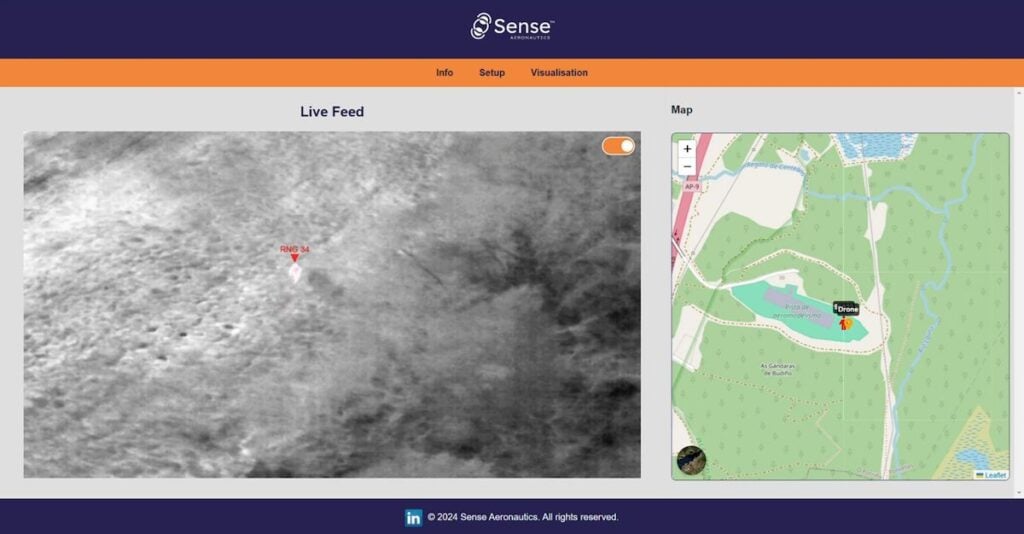
- Report: Generation of structured data outputs, system integrations and human-readable reports.
Operational Benefits
Automated analysis reduces the need for manual image review, lowering inspection effort while reducing time to results. Manual review time can be reduced by more than 80 percent, improving efficiency across inspection workflows.
The system delivers reliable and repeatable results regardless of operating conditions or mission duration. Faster and more accurate detection of major defect types supports timely identification of issues, while scalability allows the solution to support any number of drones, cameras and solar sites. Outputs are designed to be actionable, providing structured data and clear reports for operational use.
Technical Specifications
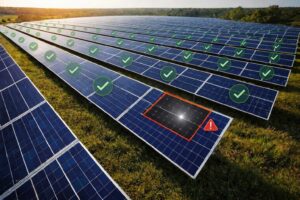
SPI supports RGB, thermal, radiometric and electroluminescence imagery in RAW, JPEG, PNG and TIFF formats. Supported defect types include cracks, hotspots, PID, delamination, scratches and soiling.
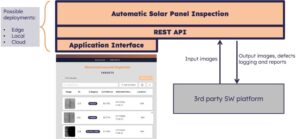
Reporting options include JSON outputs via API, webhooks, and HTML or PDF reports. Deployment is supported in cloud-based, local or edge environments, providing flexibility to align with operational and infrastructure requirements.
Performance Metrics
Under recommended conditions, the system achieves a detection probability greater than 90% for major defect types, with a false alarm rate below 10 percent. Detectable defect size ranges from 10 to 40 pixels, depending on defect type.
Architecture and Integration
The system supports flexible deployment architectures, including cloud, on-premises and edge-based processing. Integration with third-party platforms is enabled through REST APIs, and structured outputs are provided for downstream systems.
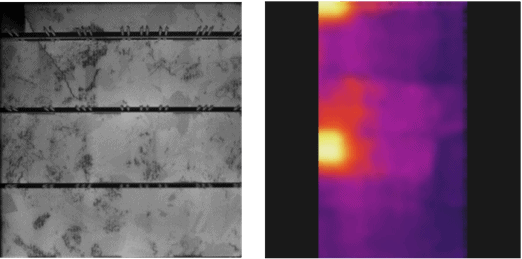
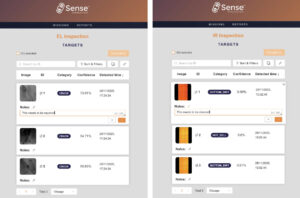
Example reports generated from electroluminescence and infrared imagery demonstrate how inspection results can be presented for review and decision-making.
For more information, visit Sense Aeronautics’ website.