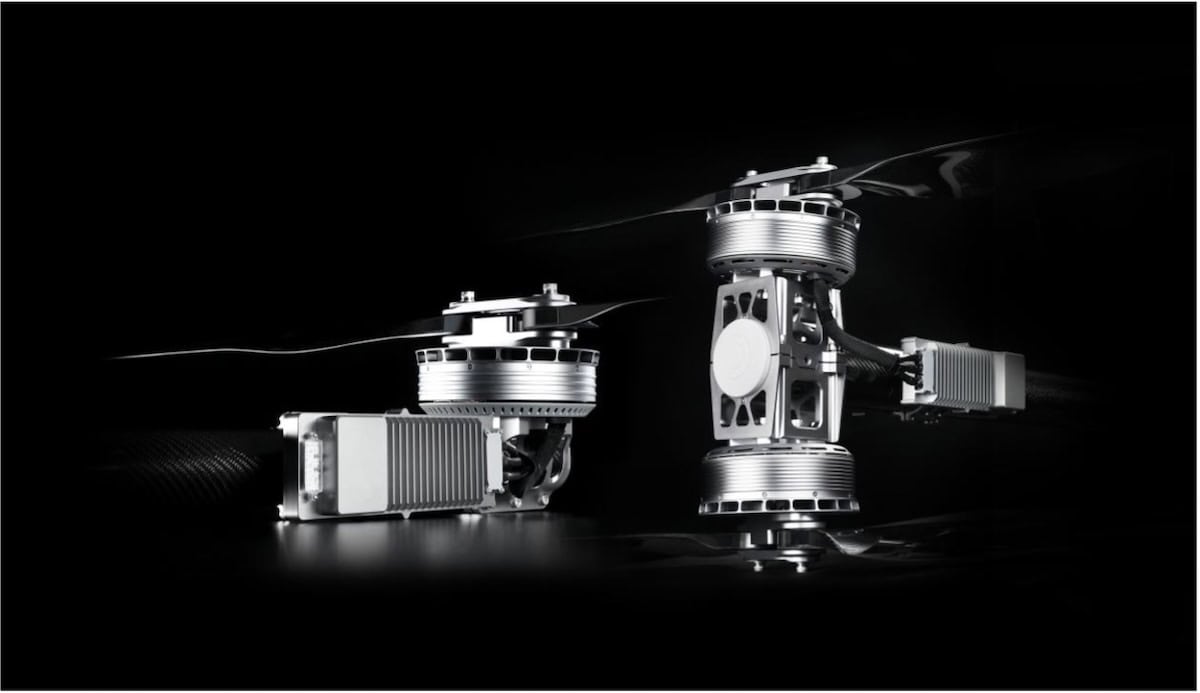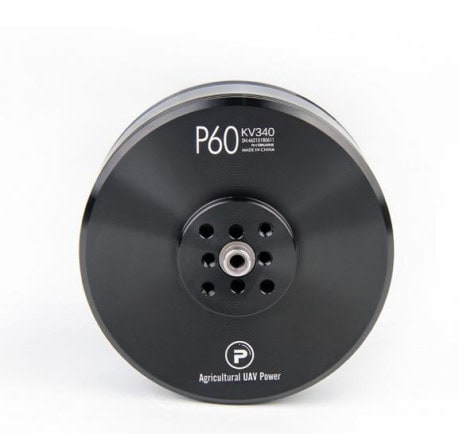

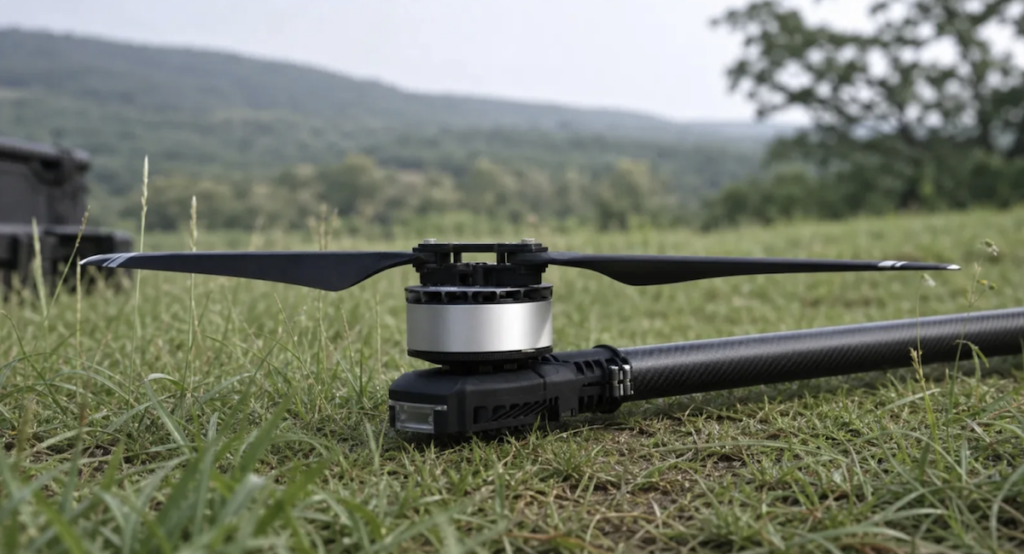
Selecting a propulsion system for an agricultural UAV requires more than identifying a motor capable of producing sufficient thrust. T-MOTOR examines the engineering considerations involved in matching motors, propellers, electronic speed controllers (ESCs), and batteries to support reliable operation under heavy payloads and demanding agricultural field conditions.
Agricultural drones frequently operate in environments characterized by high temperatures, humidity, and exposure to agricultural sprays. These conditions place significant demands on propulsion components, making thrust performance, energy efficiency, thermal management, and reliability important factors in system selection.
An effective propulsion configuration must account for the aircraft’s maximum takeoff weight (MTOW), intended operating conditions, and mission requirements. Evaluating individual components in isolation can overlook the interactions that determine overall propulsion performance.
Evaluating Motor Performance for Agricultural UAVs
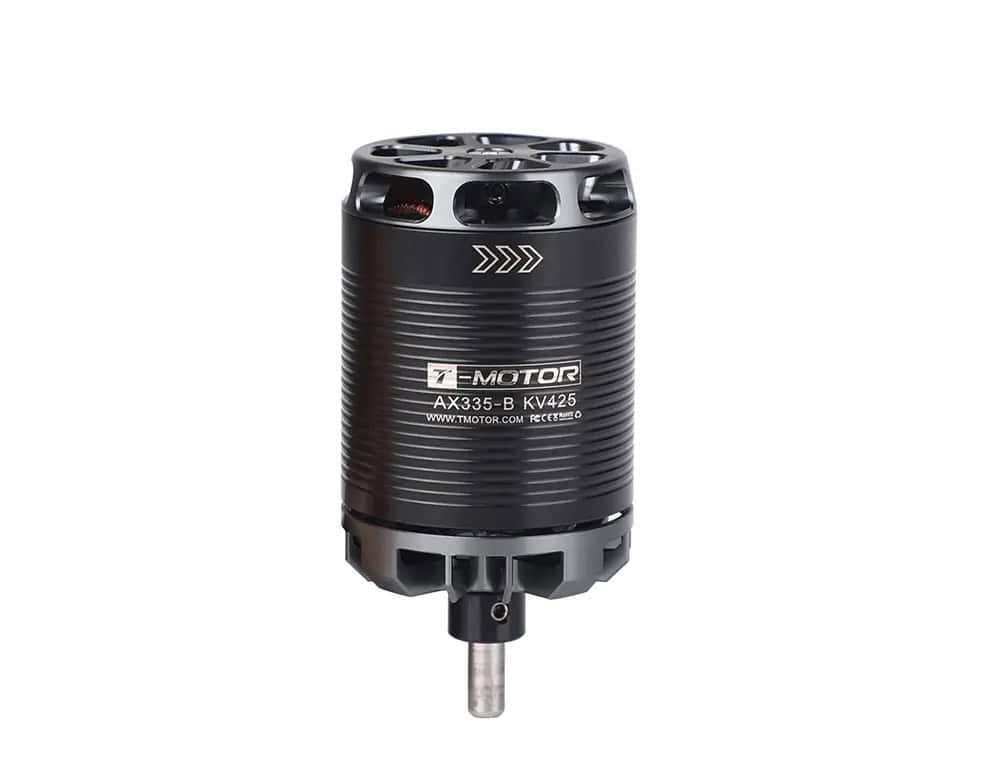
Motor selection begins with an assessment of continuous thrust capability, torque characteristics, operating speed, and thermal performance. Each parameter influences how effectively the motor can support the aircraft’s propulsion requirements.
Rated Thrust and Continuous Operation
Rated thrust is a key consideration when determining whether a motor can sustain the loads encountered during agricultural operations.
Sustained hover thrust should provide the baseline for propulsion system design, while peak thrust capacity should be retained as additional margin for takeoff, climbing, and operation in windy conditions.
Operating close to a motor’s power limits under full payload can reduce the available performance margin. Motor selection should therefore prioritize continuous operating capability rather than relying primarily on maximum thrust figures.
Stator Size and Torque Requirements
Motor stator dimensions directly influence torque characteristics, making stator size an important consideration when selecting propulsion for heavy-lift agricultural UAVs.
Large-diameter propellers require sufficient torque at relatively low rotational speeds. Motor torque characteristics must therefore be matched to the selected propeller and the aircraft’s payload requirements.
KV Rating and Operating Speed
A motor’s KV rating is another factor in determining compatibility between motor voltage, rotational speed, and propeller configuration.
Agricultural UAVs commonly use low-KV motors in conjunction with high-voltage power systems and large propellers. However, KV rating alone does not establish whether a motor is suitable for a particular application.
Final motor selection should be supported by actual motor-propeller test data to establish the performance of the intended configuration.
Thermal Resistance Under Sustained Loads
Thermal performance is particularly important for agricultural UAVs conducting extended flights with heavy payloads.
Motor evaluation should include insulation characteristics, rated operating temperature, and temperature rise during continuous-load operation.
Peak performance specifications alone do not provide a complete indication of a motor’s suitability for prolonged operation in high-temperature environments.
Matching Motors and Propellers for Thrust and Efficiency
Propeller selection directly affects the thrust, power consumption, and airflow characteristics of an agricultural UAV. Achieving suitable propulsion performance requires consideration of propeller diameter, pitch, rotational speed, and compatibility with the selected motor.
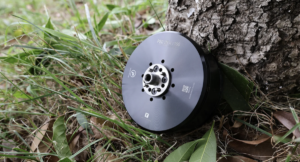
Low-KV Motors and Large-Diameter Propellers
Heavy-lift agricultural UAVs frequently combine low-KV motors with large-diameter propellers to provide high thrust and efficient hovering performance.
However, propulsion efficiency cannot be determined solely from motor KV rating or propeller diameter. The motor and propeller must be assessed together to establish their combined operating characteristics.
Propeller Pitch and Agricultural Spraying
Propeller pitch is another important consideration, particularly for UAVs conducting crop spraying operations.
Together with propeller diameter and rotational speed, pitch influences thrust generation, power requirements, and downwash characteristics.
For spraying applications, propeller pitch should be selected with consideration for the downwash required to achieve canopy penetration.
Increasing propeller pitch also increases the load on the propulsion system and its power consumption. Pitch selection must therefore account for motor capability, propeller dimensions, and the operating conditions encountered in the field.
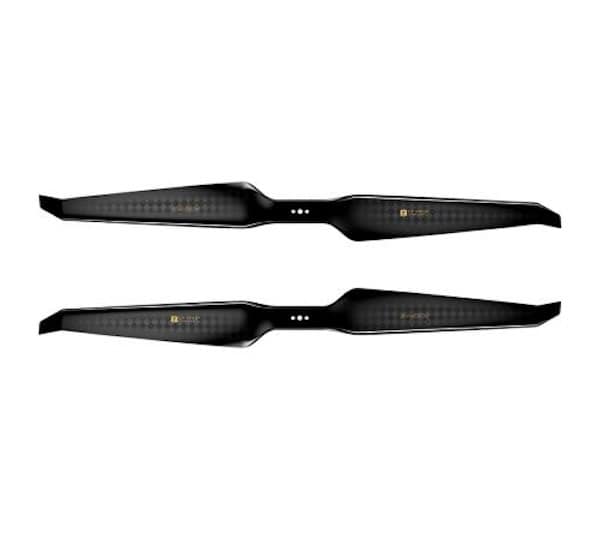
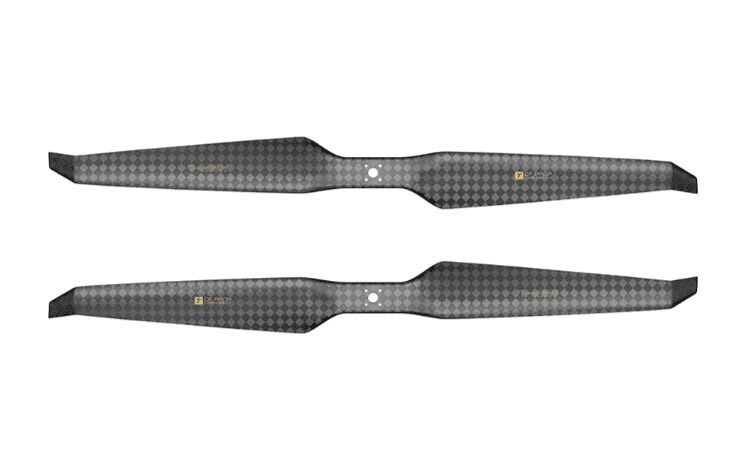
Carbon Fiber Propeller Construction
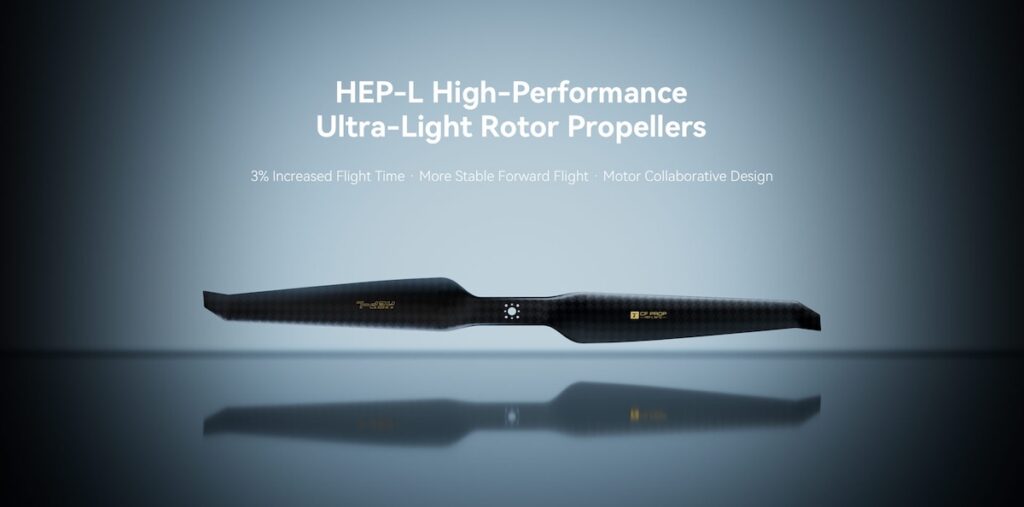
Carbon fiber propellers provide high structural stiffness, supporting stable rotation during operation.
Precision balancing helps reduce vibration, while folding propeller configurations can simplify transportation and servicing.
These characteristics are relevant when evaluating propeller configurations for agricultural UAVs that require regular deployment and maintenance.
Selecting Compatible Electronic Speed Controllers
The electronic speed controller is an integral part of the propulsion system, regulating motor operation and influencing power response, thermal behavior, and system monitoring.
ESC selection must take account of electrical compatibility, current capacity, control characteristics, and communication capabilities.
Voltage Compatibility and Current Margin
An ESC must have rated voltage and continuous current specifications compatible with the requirements of the selected motor.
Additional safety headroom should be incorporated to accommodate operating demands, with particular attention to peak current, ambient temperature, and sustained full-load operation.
Relying solely on an ESC’s burst-current rating may not adequately represent its suitability for prolonged agricultural missions.
FOC Motor Control
FOC provides precise motor control, supporting smoother rotation and quicker response to changing power demands.
When appropriately tuned, FOC can reduce electrical losses and heat generation, contributing to stable propulsion performance during extended agricultural UAV operations.
Correct tuning remains important when integrating the ESC with the selected motor and propeller configuration.
Communication and Real-Time Telemetry
ESC communication and telemetry capabilities provide additional information about propulsion system operation.
Real-time telemetry can transmit current, voltage, temperature, and fault information to the aircraft’s flight controller.
Monitoring these parameters enables anomalies to be identified during heavy-load missions, supporting improved operational reliability.
Integrating Propulsion Components Around Aircraft Requirements
Propulsion system selection for agricultural UAVs requires a coordinated assessment of the complete powertrain rather than focusing exclusively on individual motor thrust specifications.
Motors, propellers, ESCs, and batteries must be matched against the aircraft’s MTOW, mission requirements, and environmental operating conditions.
The resulting configuration must balance continuous thrust capability, propulsion efficiency, temperature management, and long-term reliability.
Validated integrated propulsion systems can reduce the engineering effort associated with component integration, offering advantages for rapid development, large-scale deployment, and customized agricultural UAV projects.
By evaluating electrical, mechanical, and thermal characteristics across the complete propulsion system, developers can make component selections based on the sustained operating demands of agricultural missions rather than isolated peak performance figures.