



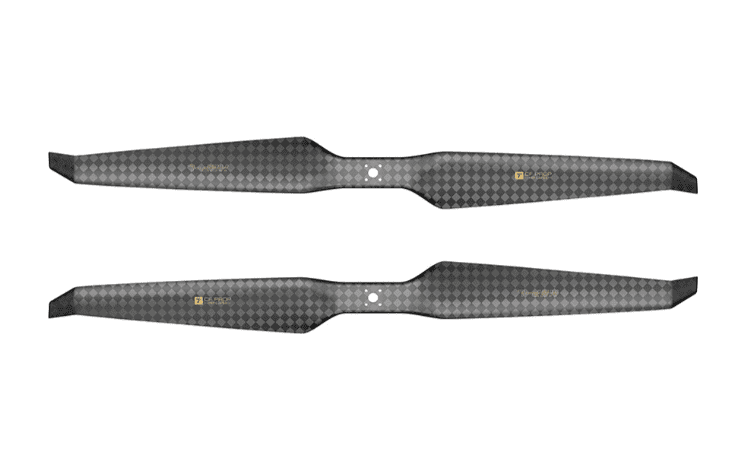
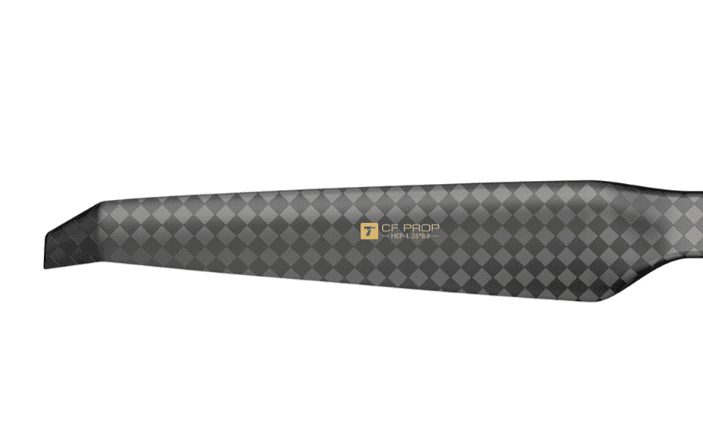
The HEP-L Series from T-MOTOR is a range of high-performance carbon fiber propellers engineered for long-endurance multirotor UAV operations.
Designed specifically for compatibility with T-MOTOR high-efficiency motors, the propellers are optimized to deliver balanced RPM and torque characteristics for improved hover efficiency and stable thrust generation. The HEP-L 26×8.8 variant supports recommended operating speeds of 2380 to 2650 RPM with a thrust range of 2.3 to 3.5 kg, making it suitable for professional unmanned aircraft requiring efficient and reliable propulsion performance.
Constructed using industrial-grade lightweight manufacturing processes, the HEP-L 26×8.8 propeller weighs approximately 53 g while maintaining structural durability for demanding flight environments. Aerodynamic refinements improve hovering efficiency and can extend effective flight endurance by up to 3%, supporting multirotor UAV flight times of approximately 60 to 90 minutes when paired with compatible T-MOTOR efficiency motors.
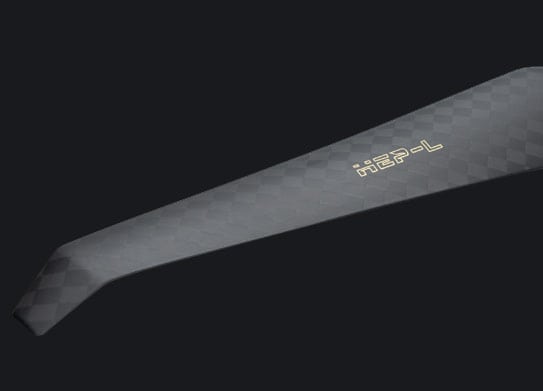
A reinforced high-toughness resin surface and damage-tolerant design help reduce micro-damage propagation and improve operational reliability. Under identical 6J impact conditions, the HEP-L design demonstrates a measured impact depth of 1.93 mm compared to 2.54 mm for NS propellers, providing approximately 24% greater impact resistance.
| Single Propeller Weight | 53g |
| Recommended RPM Range | 2380-2650 RPM |
| Recommended Thrust Range | 2.3-3.5kg |
| Recommended Voltage | 12S |
| Recommended Takeoff Weight for Quadcopter | 15kg |





