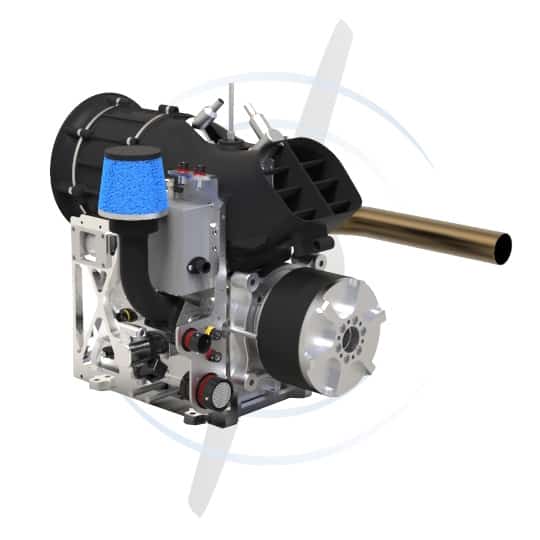
Sky Power International highlights the role of fuel preparation in the efficiency, power density, reliability, and service life of high-performance two-stroke Unmanned Aerial Vehicle (UAV) engines.
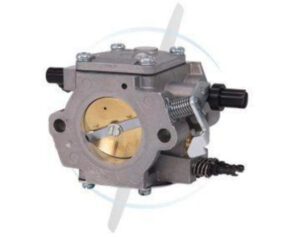
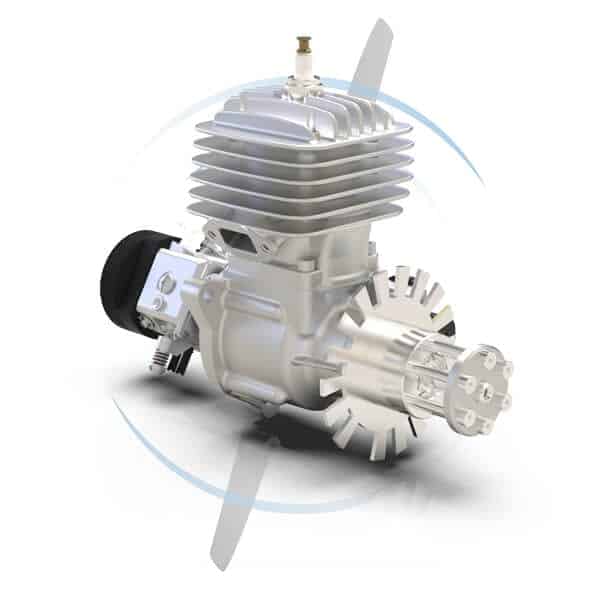
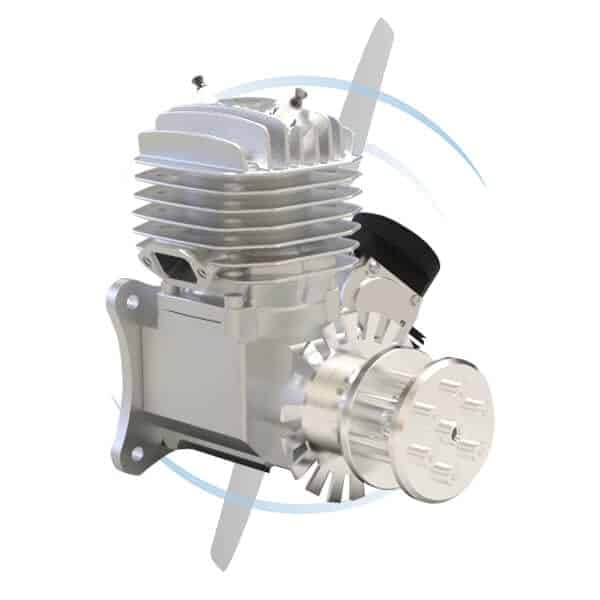
Carburetor used by Sky Power
These engines remain an effective propulsion option for medium- and large-sized UAVs, including long-range platforms, Vertical Take-Off and Landing (VTOL) systems, and military applications, due to their power-to-weight ratio, specific power output, and comparatively simple design.
Alongside displacement, valve timing, and resonance tuning, fuel preparation has a significant influence on combustion stability, specific fuel consumption, load-switching behavior, thermal stress, and ultimately engine service life. Depending on the model series, Sky Power offers both diaphragm carburetor systems and Electronically Controlled Fuel Injection (EFI).
Diaphragm Carburetors for Robust Fuel Preparation
Diaphragm carburetors provide a simple, robust approach to fuel mixture preparation. Unlike conventional float carburetors, they operate independently of engine speed and use a fuel diaphragm to provide the necessary fuel pressure, ensuring reliable fuel supply during high acceleration, negative load changes, or rapidly changing flight attitudes.
Fuel metering is achieved exclusively through fluid-dynamic interactions between the Venturi, vacuum, diaphragm system, and high- and low-speed jets, without the need for sensors or electronic actuators. The absence of electronic control units, sensors, and complex control algorithms also reduces integration effort and eliminates potential failures of these elements that could impair engine function.
Precisely tuned diaphragm carburetors provide direct response, allow rapid load changes, and deliver power across a wide operating range with reproducible performance. However, because fuel metering depends exclusively on pressure conditions within the intake system, the carburetor cannot actively compensate for changes associated with increasing altitude, fluctuating temperatures, varying air densities, or humidity.
Electronic Fuel Injection for Adaptive Mixture Control
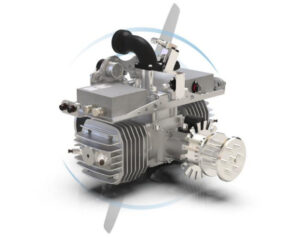
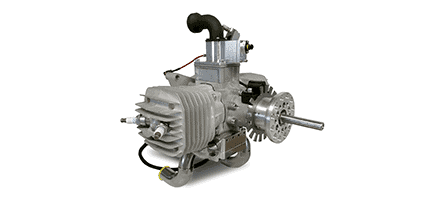
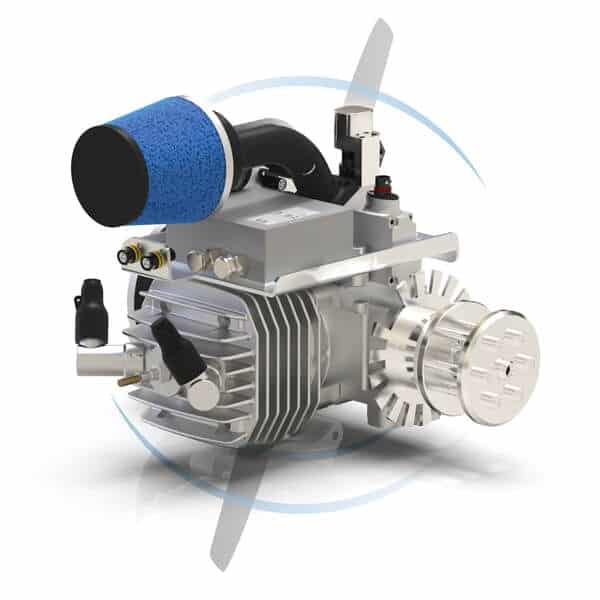
SP-110 FI TS ROS fuel-injected engine
EFI uses a different approach, with an Electronic Control Unit (ECU) calculating the injection quantity from a multidimensional map that is continuously adjusted using sensor signals. These typically include engine speed, throttle position, intake pressure, air temperature, engine temperature, and current operating condition. Based on this data, the required fuel quantity is calculated for each operating point and precisely metered through electrically controlled injectors. This active control allows more precise adjustment of the air-fuel ratio, particularly under partial-load conditions and during dynamic load changes.
The resulting benefits include lower specific fuel consumption, more uniform combustion, fewer misfires, smoother engine operation, lower thermal stress on individual components, and optimized power delivery across the entire RPM range. For Beyond Visual Line of Sight (BVLOS) missions lasting several hours, even small improvements in fuel efficiency can contribute to increased range or allow higher payloads with the same amount of fuel.
EFI also enables automatic compensation for environmental changes that affect air density and the amount of oxygen available, including decreasing air pressure with increasing altitude, high outside temperatures, and changing weather conditions. While a carburetor is tuned for a specific operating range, the ECU automatically compensates for these changes, allowing the resulting air-fuel ratio to remain constant over a significantly wider operating range. This improves the reproducibility of engine performance, particularly for UAVs that climb several thousand meters during a single mission or operate worldwide under varying climatic conditions.
Because all operating parameters are recorded digitally, EFI can also support temperature monitoring, speed limiting, fault diagnosis, operational data logging, and the provision of telemetry data for flight control. These functions can help plan maintenance intervals based on engine condition and enable potential faults to be detected early, particularly in professional and military settings.
Selecting the Fuel Metering System for the Mission
Neither technology is universally superior, and the appropriate choice depends on the platform characteristics, mission profile, and desired system functions. Carburetors are suited to applications prioritizing operational reliability, low system weight, easy integration, robustness, ease of maintenance, a predictable operational profile, and a lower engine price point.
Typical uses include industrial UAVs with defined mission profiles, surveying platforms, and training drones. EFI is particularly relevant to long-range UAVs, high-performance platforms, hybrid propulsion systems, BVLOS operations, and military applications, where precise fuel-air mixture control, automatic altitude compensation, and advanced diagnostic and telemetry functions provide advantages.
Sky Power offers both carburetor-based and electronically controlled fuel injection systems, depending on the model series, allowing UAV manufacturers to tailor the propulsion system to the platform’s aerodynamic characteristics, mission profile, and desired system functions. In either case, the interaction between engine characteristics, fuel preparation, and flight profile is key to realizing the full potential of modern two-stroke propulsion systems.
Read ‘Carburetor or electronic fuel injection? The ideal fuel mixture for high-performance two-stroke UAV engines’ for more information.