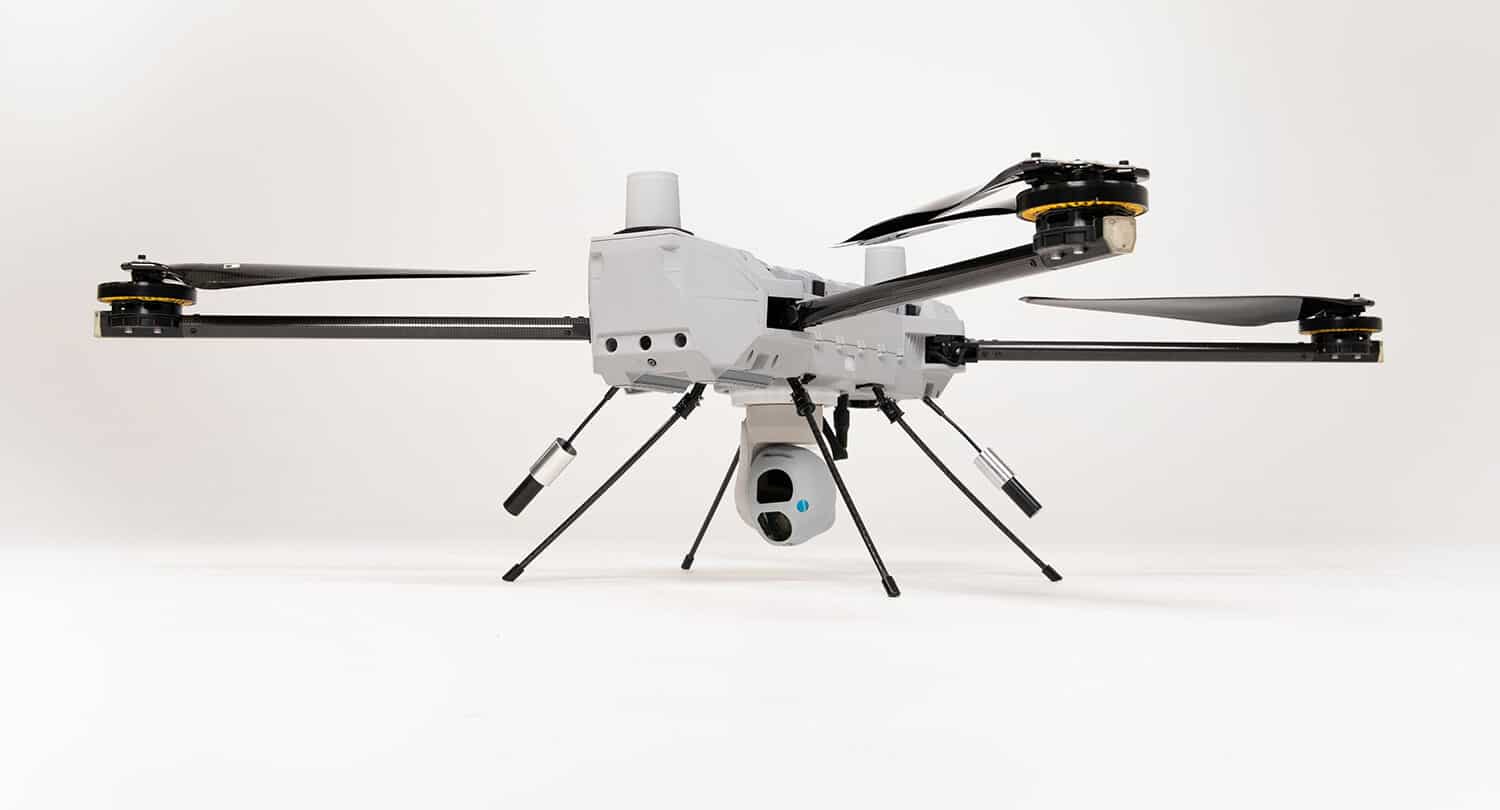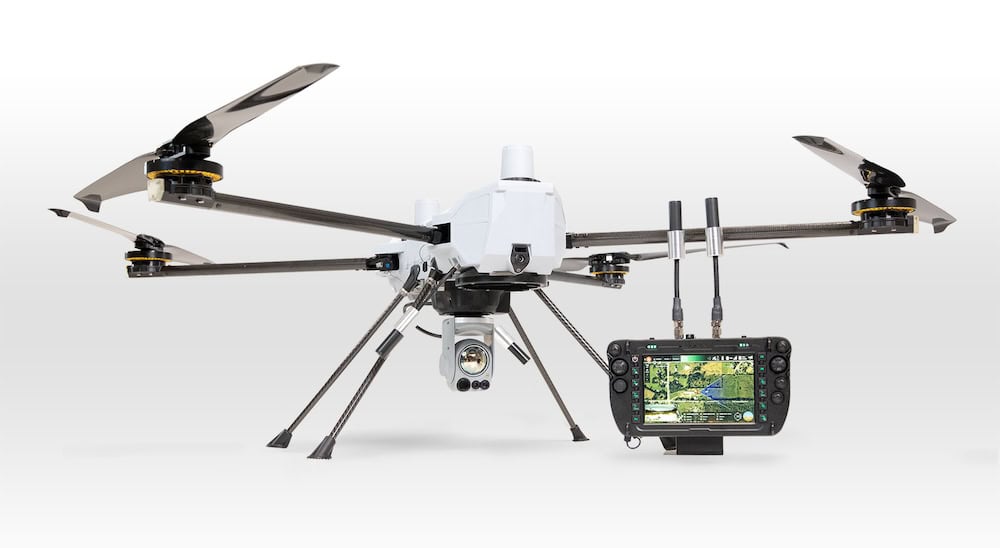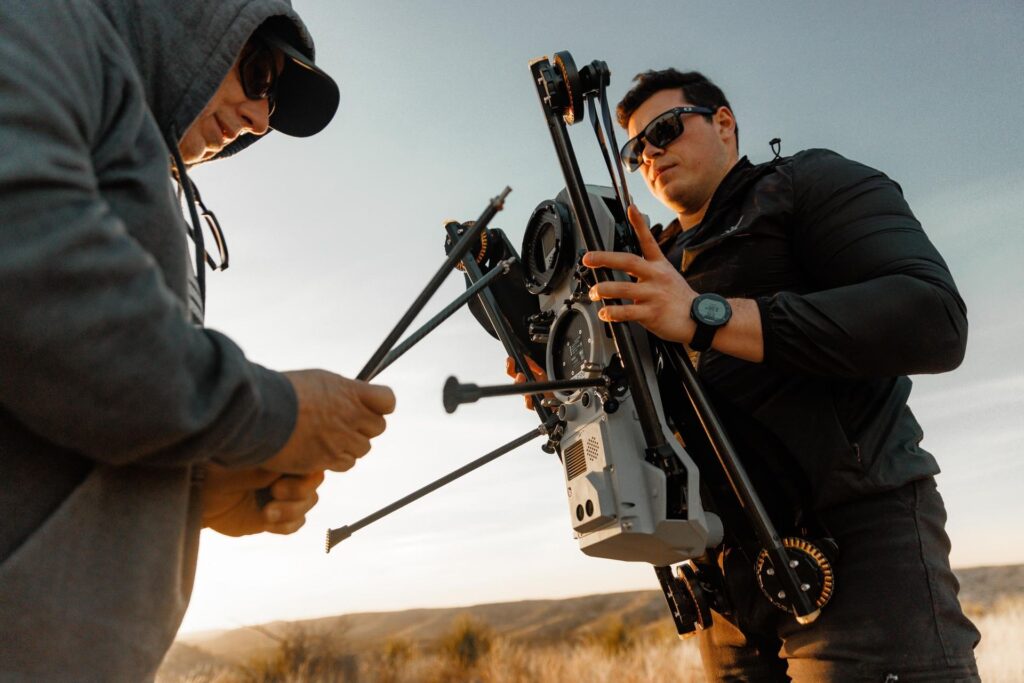
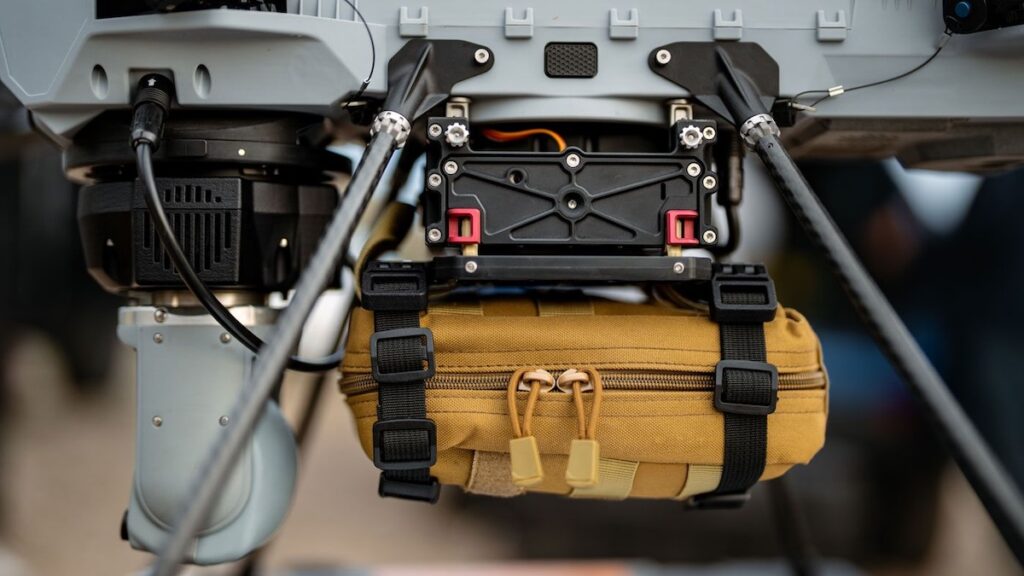
Performance Drone Works (PDW) is highlighting how operators are using its Mechanical Release Device (MRD) to expand the range of missions performed by the C100 unmanned aircraft.
Recent applications have included munition delivery, First Person View (FPV) drone deployment, search-and-rescue equipment and medical resupply.
PDW’s C100 is a modular, multi-mission platform that can accommodate PDW-integrated payloads and sensors as well as customer-developed solutions. The MRD can serve as a mechanical interface between the C100 and payloads weighing up to 8.3 lbs, allowing operators to carry, deploy or release mission-specific equipment without modifying the aircraft or requiring a custom software integration.
Operator-Developed Munition Delivery
During Combined Resolve 26-1 ARES, soldiers from the 101st Airborne Division field-tested an operator-developed munition delivery system mounted to the C100.
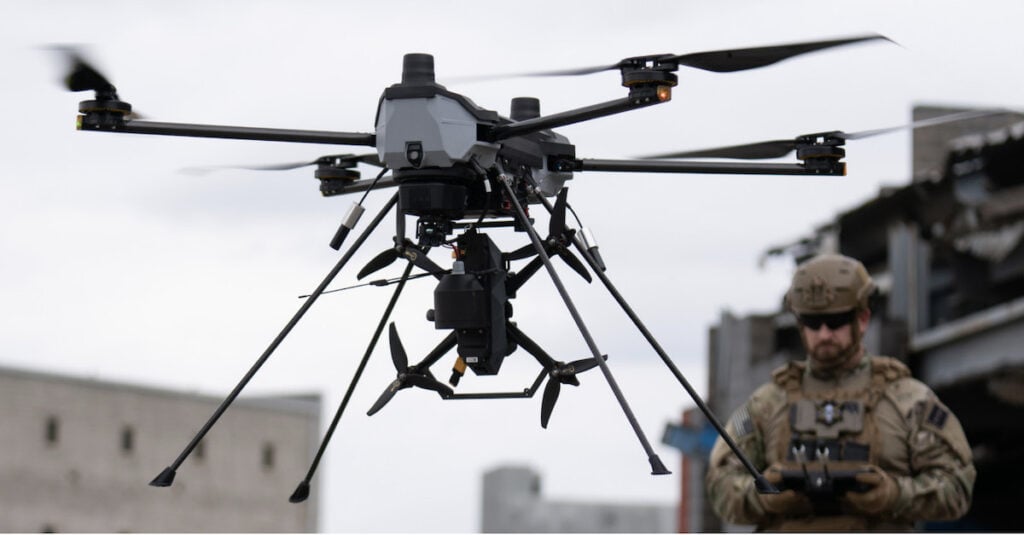
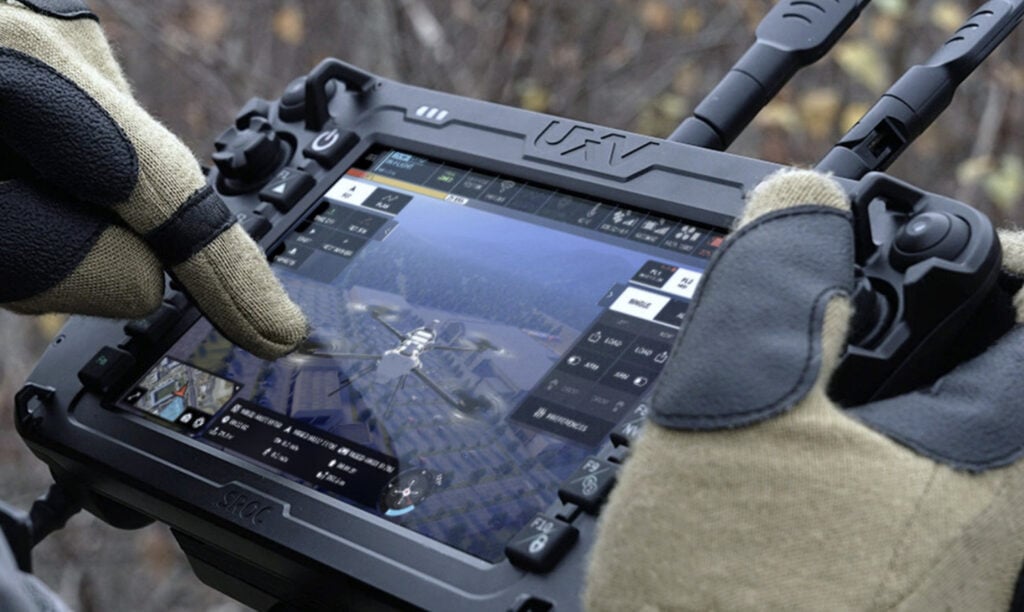
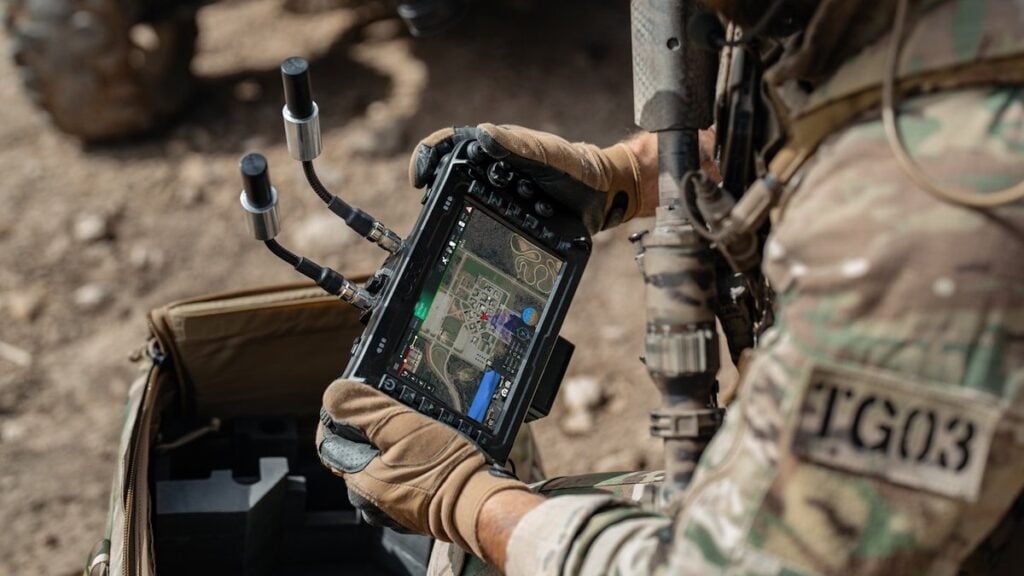
Known as the “Widowmaker,” the 3D-printed device was created by an Army infantryman and designed to connect directly to the MRD. Activating the MRD through the controller mechanically triggers the customer-built assembly, allowing it to release multiple grenades or smoke devices.
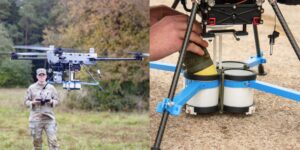
PDW C100 equipped with the “widowmaker” payload assembly attached via MRD. Photo credit: Adrian Greenwood (DVIDS)
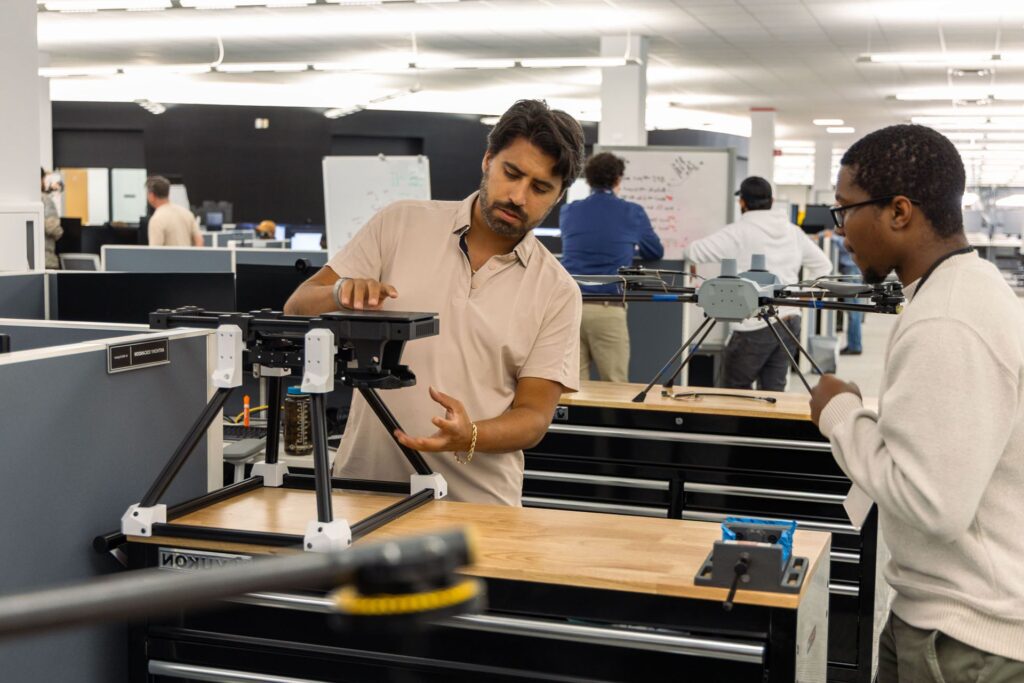
The unit identified an operational need and developed its own attachment, using the MRD as the interface between the assembly and the aircraft without requiring a new software integration.
C100 as an FPV Mothership
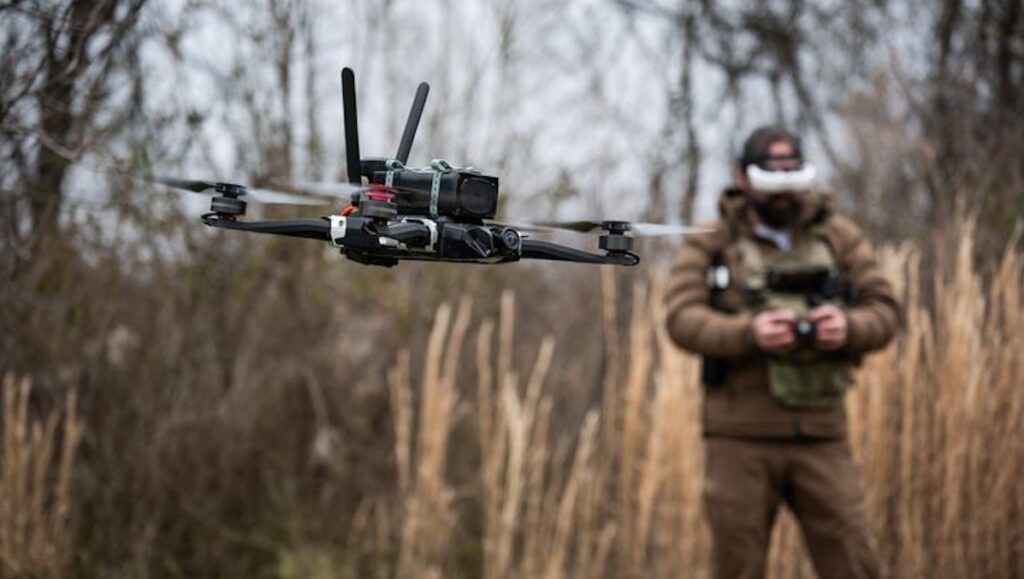
In another customer-developed integration, the Marine Corps Attack Drone Team designed and 3D-printed specialized lugs that allowed an FPV aircraft in its fleet to be carried and released from the C100 using the MRD.
The physical interface allowed the C100 operator to release the FPV aircraft during flight and conduct a simulated strike mission.
By carrying a smaller, more expendable aircraft toward the operating area before release, the concept can, depending on the mission profile, preserve the smaller aircraft’s battery life and reduce the distance it must transit independently.
Search-and-Rescue Equipment Delivery
At Tough Stump Rodeo 2026, the C100 and MRD were demonstrated in a search-and-rescue context by carrying and releasing personal flotation devices and a sensor-enabled medical kit.
The kit contained multiple Rain Technologies sensors intended to help a rescue team positively identify a victim, collect or transmit vital health information and begin assessing the individual’s condition. The medical package and parachute were carried in the C100’s center payload area and released using the MRD.
The configuration provides a means of placing potentially life-supporting or assessment-enabling equipment closer to a person when terrain, water, weather or distance prevents responders from immediately reaching them. The same basic configuration could support the delivery of flotation devices, communications equipment, emergency supplies or other packages selected by a response team.
Remote Medical Resupply
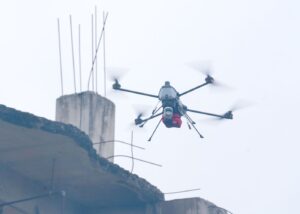
C100 carrying medical supplies to deploy to operators in the field (This image does not depict the customer demonstration described below)
While deployed to an active combat zone, a specialized U.S. Navy team used the C100 and MRD to demonstrate remote medical resupply during tactical combat casualty care (TCCC) training scenarios.
The team adapted the MRD to deliver blood packs using a rope-based system. One MRD release channel extended the line so the package could be lowered for retrieval, while the second detached it completely for a full drop.
Although the proof of concept focused on medical resupply, the underlying approach could also be applied to missions requiring equipment to be lowered, handed off or released remotely.
Adapting C100 Around the Mission
These applications demonstrate how operators can use a common mechanical interface to adapt the C100 around different mission requirements.
Operators can develop attachments for their own payloads, test mission-specific concepts and use the MRD to carry and release selected equipment without requiring a new software integration or modification to the aircraft. This provides a way to expand how existing C100 systems are employed as operational requirements change.