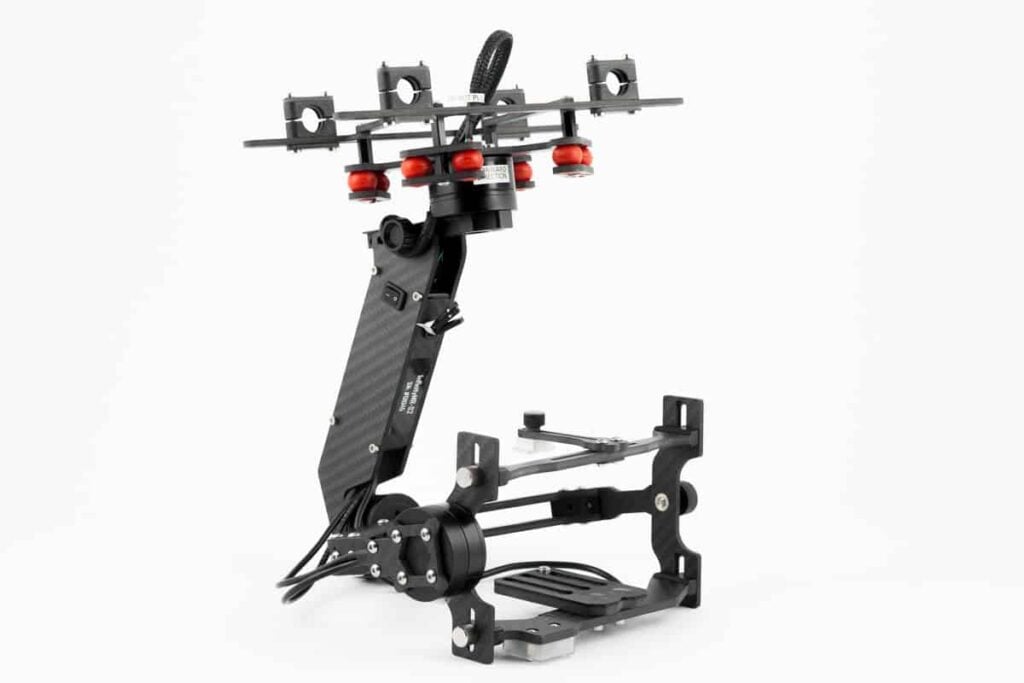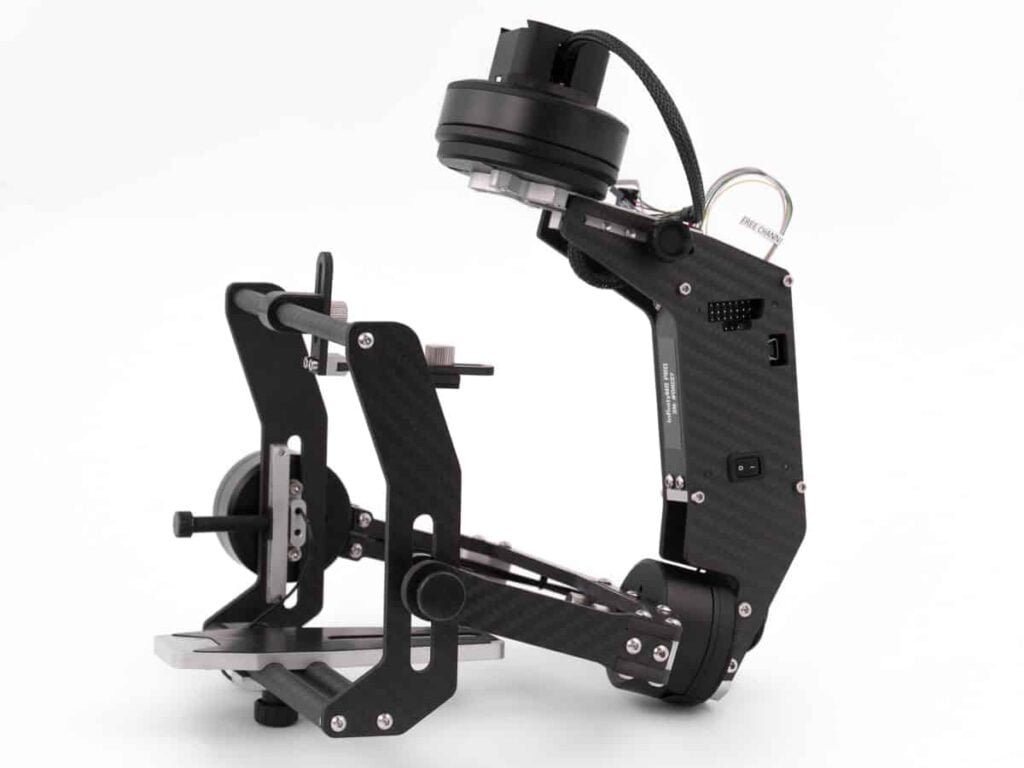




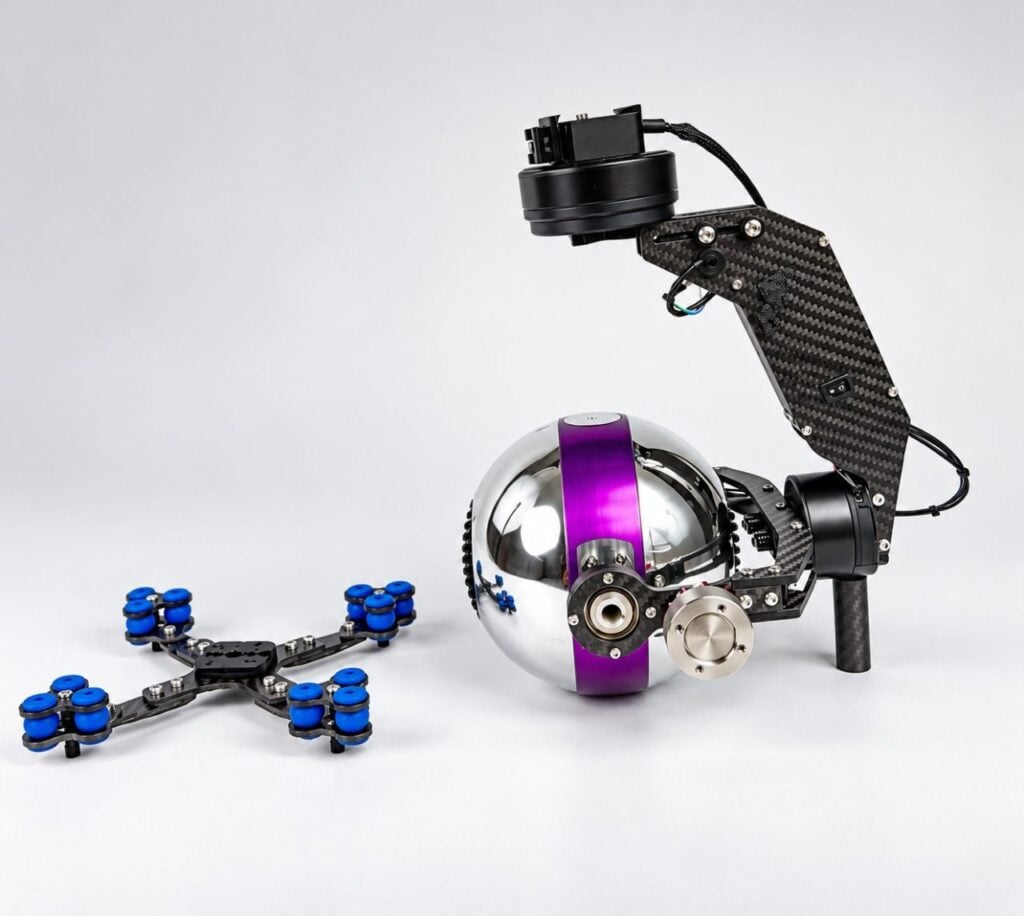
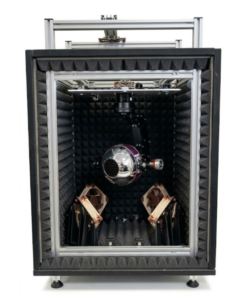
HD Air Studio has developed a customized 3-axis gimbal for SMG Gravity (Silicon Microgravity Ltd) to support the development of its GAIA mobile dynamic gravimetry system.
The gimbal is responsible for maintaining the gravity sensor’s alignment with true vertical as the measurement platform moves, addressing a critical requirement for high-precision gravimetry across ground, airborne, and marine applications.
Maintaining Sensor Alignment for Accurate Gravity Measurements
SMG Gravity’s mobile gravity measurement system aims to achieve an accuracy of 0.1 mGal with a spatial resolution of 100 m, targeting an improvement over current standards in mobile gravimetry.
Achieving this level of precision requires accurate sensor orientation throughout measurement operations. Even minor deviations from true vertical can introduce errors into the gravity readings. A tilt of just 0.026° can produce an error of 0.1 mGal, equivalent to the system’s target measurement accuracy.
Measurements conducted from moving platforms introduce further challenges. In addition to changes in pitch and roll, horizontal accelerations can interfere with vertical gravity measurements, increasing the demands placed on the stabilization system.
To address these requirements, HD Air Studio developed a customized 3-axis gimbal that compensates for platform movement while maintaining the sensor’s vertical alignment.
Luke Withey, Product Manager Mobile Gravity, SMG Gravity, “The gimbal keeps the sensor aligned with true vertical as the platform moves, so that tilt in the system is compensated for to the accuracy we need. HD Air Studio’s expertise and gimbals are an important part of how we are achieving that.”
Gimbal Design Requirements for Dynamic Environments
The gimbal development process was guided by several technical requirements defined by SMG Gravity, reflecting the precision needed for mobile gravity measurements and the operating conditions associated with different deployment platforms.
Accurate pointing and stabilization are central to the system, allowing the sensor to remain vertically aligned during platform movement. The gimbal must also provide sufficient dynamic response to compensate for changes in pitch and roll.
Low-noise operation is another important consideration, as vibrations and unwanted disturbances can affect the gravity signal. Minimizing these effects is necessary to support the system’s measurement objectives.
The mechanical design must also balance compact dimensions and low weight to accommodate integration across different mobile platforms. Low power consumption is similarly required to support operation on ground-based, airborne, and marine systems.
Together, these requirements establish the engineering parameters for a stabilization solution operating in environments where platform motion can influence measurement accuracy.
Integration and Initial Performance of the GAIA System
SMG Gravity’s GAIA mobile dynamic gravimetry system remains under development, with HD Air Studio’s customized gimbal being integrated into the company’s prototypes.
Initial performance has met expectations, enabling SMG Gravity to begin trials and collect actionable measurement data. Further validation is planned as development continues.
The collaboration has also involved adapting the gimbal system to accommodate SMG Gravity’s specific sensor payload and integration requirements.
Luke Withey, Product Manager Mobile Gravity, SMG Gravity, “Just as valuable has been the support from the HD Air Studio team, who have been responsive and flexible in adapting the system to our payload. We look forward to continuing to work with them as we move into further validation.”
The ongoing development and validation of the GAIA system will further assess the integration of the customized stabilization solution within a mobile gravimetry platform intended for operation on land, in the air, and at sea.
Read HD Air Studio Gimbal Supports SMG Gravity’s Mobile Gravity Measurement System.