

Akku Vision explains how lithium-ion cells store and release energy, examining their construction, charging and discharging processes, and the factors that contribute to battery ageing.
Lithium-ion batteries are widely used across modern technology, providing rechargeable energy storage through the movement of lithium-ions between two electrodes. In this detailed overview, Akku Vision examines the internal structure of a lithium- ion cell and explains the chemical processes that enable it to store and release electrical energy.
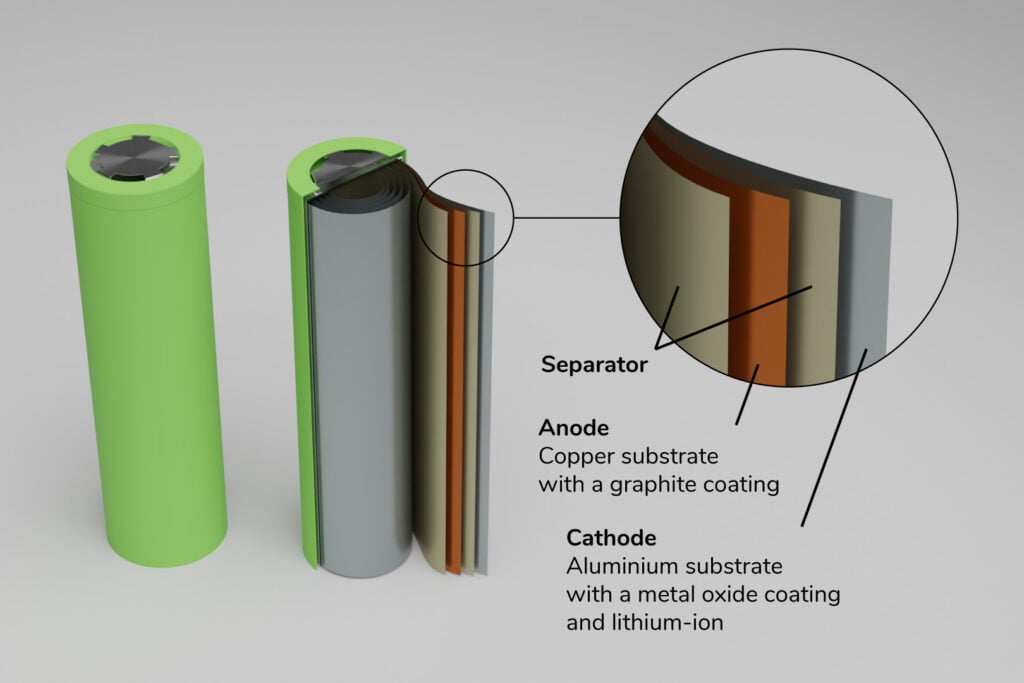
The article looks at the construction of cylindrical NMC cells, including the graphite coated copper anode, lithium metal oxide cathode, separator and electrolyte. It explains how these components work together, with lithium ions moving between the cathode and anode while electrons travel through an external circuit to generate electrical current.
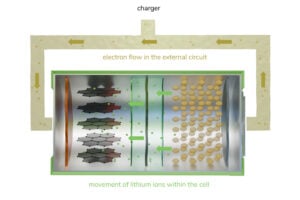
Structure of a cell charging.
Akku Vision also examines what happens during charging, when electrical energy is converted into chemical energy, and discharging, when that stored energy is released to power a connected device.
The article further explores why lithium-ion cells gradually lose capacity. The formation and growth of SEI and CEI layers, changes to electrode materials and increasing internal resistance all contribute to ageing. Operating conditions such as high temperatures, prolonged full charge, deep discharge and high currents can accelerate these processes.
The overview provides insight into the technology behind modern high performance rechargeable batteries and how appropriate operation and storage can help extend cell service life.