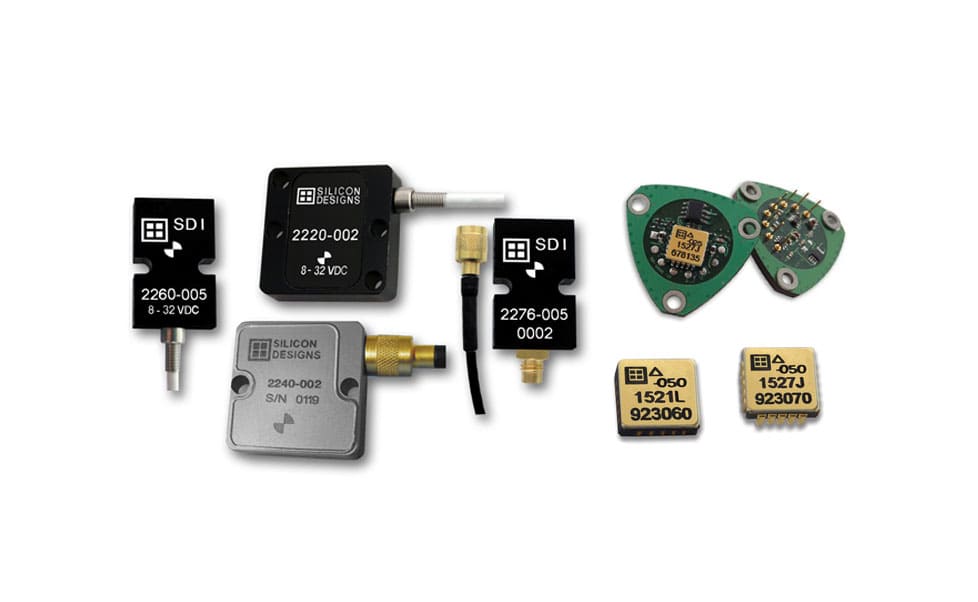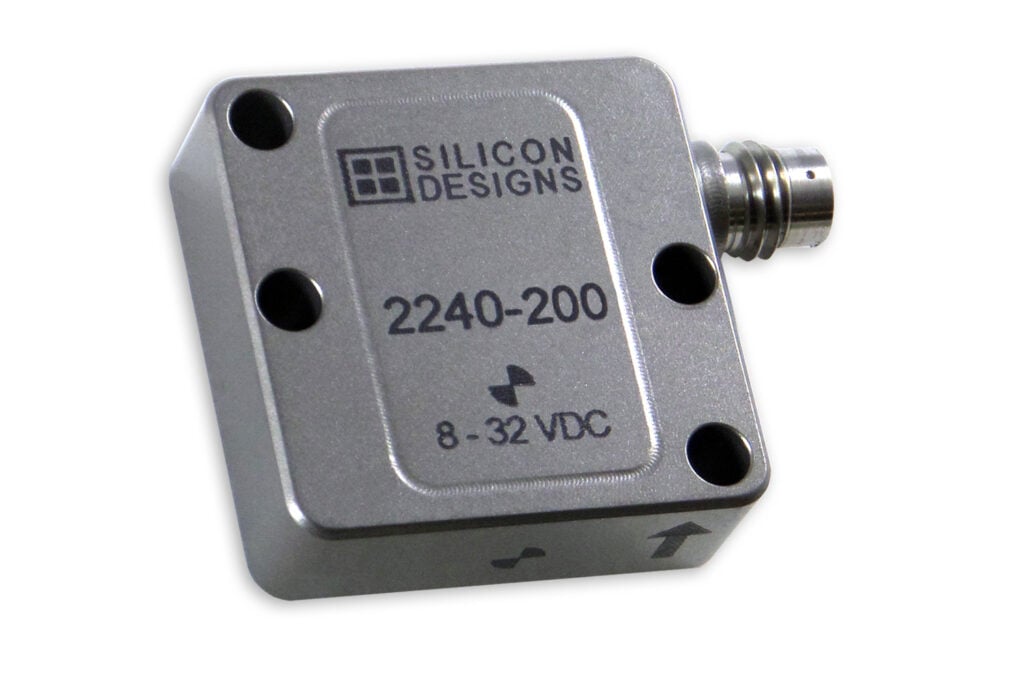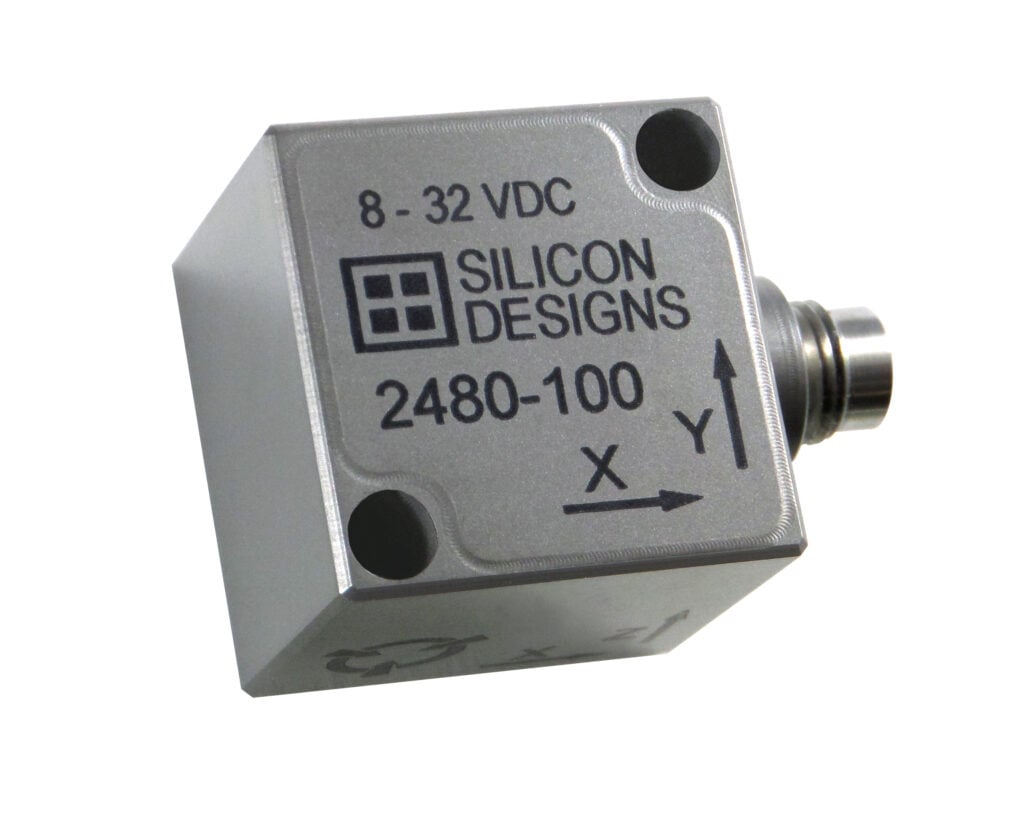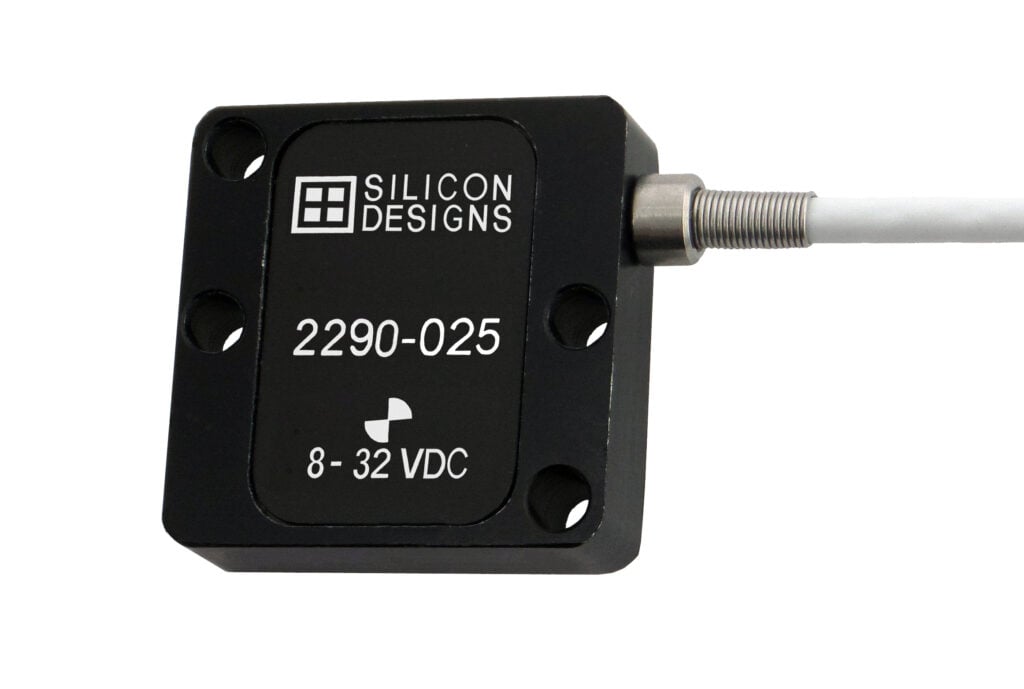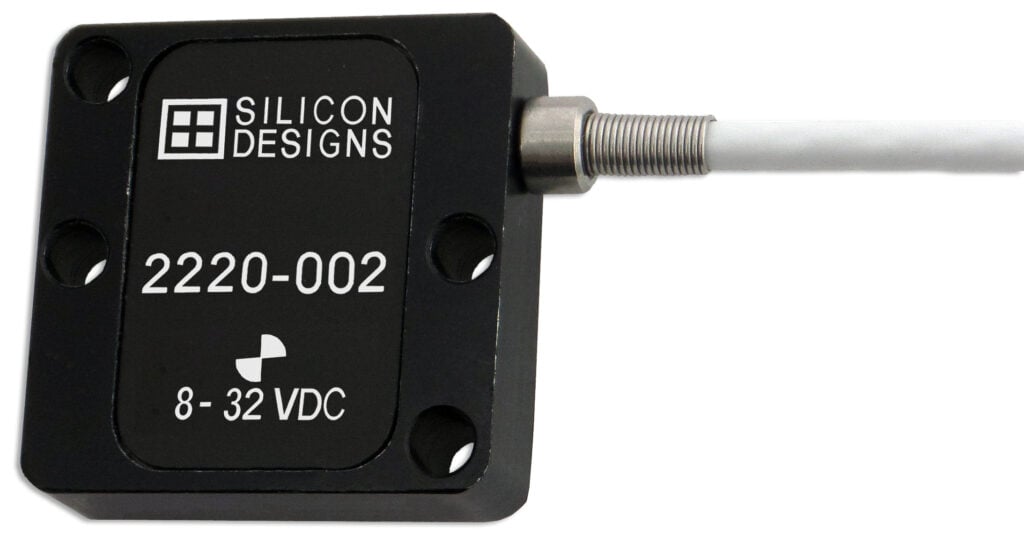
The Model 2290 from Silicon Designs, Inc. (SDI) is a single-axis MEMS DC precision reference accelerometer that offers stable, low-noise performance for measurement, calibration, and performance verification.
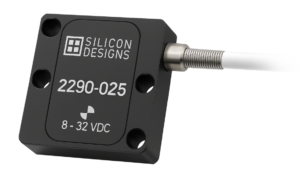
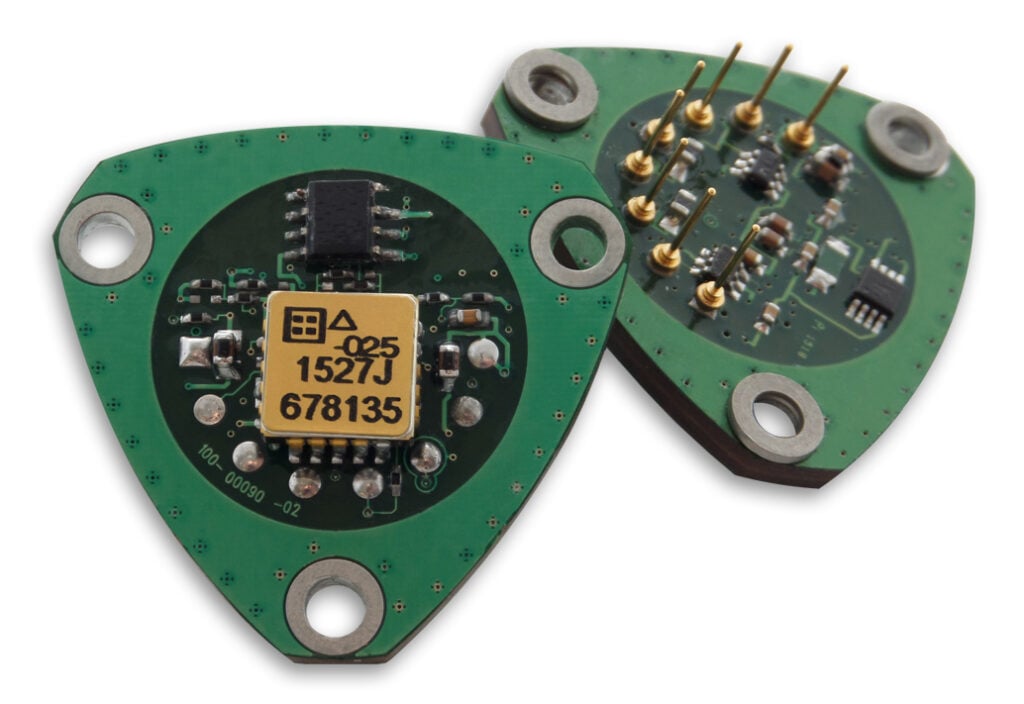
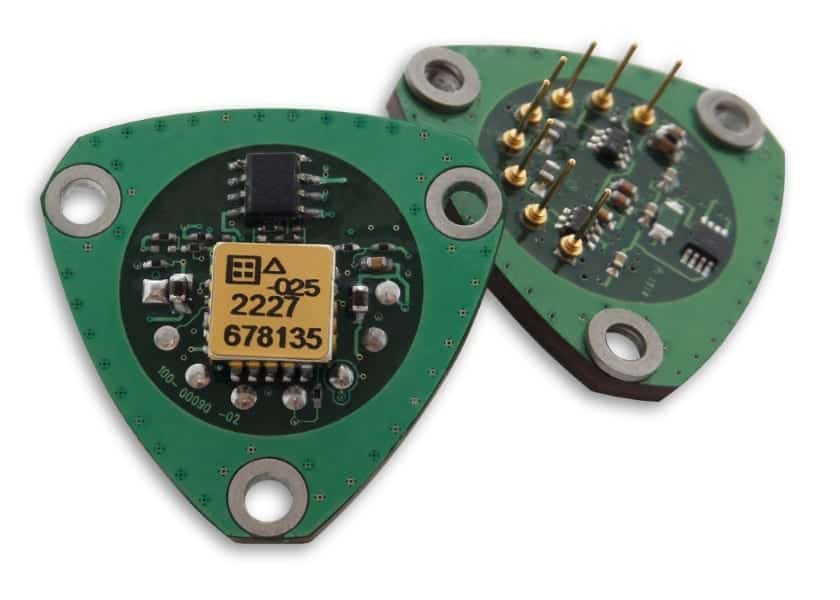
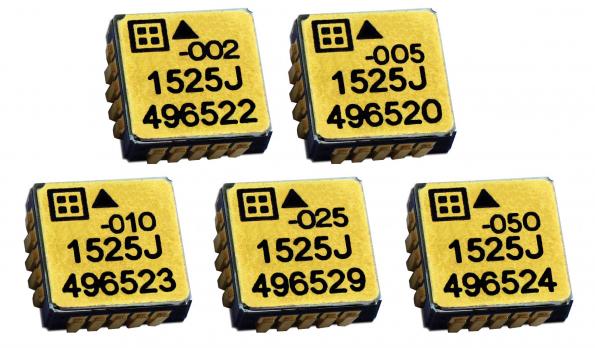
Designed to serve as a reference standard for calibration and performance verification, the 2290 combines SDI’s tactical-grade Model 1527 MEMS chip with proprietary low-noise electronics. The complete assembly is housed within a rugged, one-inch-square anodized aluminum enclosure and includes integrated wiring for straightforward connection to data acquisition equipment.
Stable Performance for Precision Measurement
The Model 2290 is designed to provide consistent output across a wide frequency and temperature range. Its response extends from zero, or DC, up to 1800 Hz, while its operating temperature range spans -55°C to +125°C.
The accelerometer incorporates a factory-calibrated MEMS sensor and built-in temperature compensation. Typical performance values include a bias calibration error of 0.25% of span, a scale factor calibration error of ±0.5%, non-linearity of 0.15% of span over -90% to +90% of span, and cross-axis sensitivity of ±2%.
The Model 2290 features a plug-and-play design with an integrated 10-foot cable and simple four-wire connection, weighs 9 grams excluding its cable, and operates from a +8 to +32 VDC supply.
SDI’s 2290 produces differential analog output voltage pairs, AON and AOP, that vary with acceleration and are centered around a common-mode voltage of approximately 2.5 V. The nominal differential output is 0 VDC at zero acceleration, increasing to ±4 VDC at ±full-scale acceleration, while the output scale factor remains independent of the supply voltage across the +8 to +32 VDC operating range.
DC Measurement & Center of Gravity Applications
With a response extending from zero frequency, the Model 2290 does not require a change in acceleration to provide data and will report 0g in free fall. Its zero-to-medium frequency instrumentation applications include center of gravity acceleration measurements, as well as tilt, seismic, vibration, laboratory, robotics, monitoring, and instrumentation uses.
Each unit is fully calibrated and serialized for traceability, and is REACH and RoHS compliant, classified under ECCN 7A994, and does not require ITAR controls.