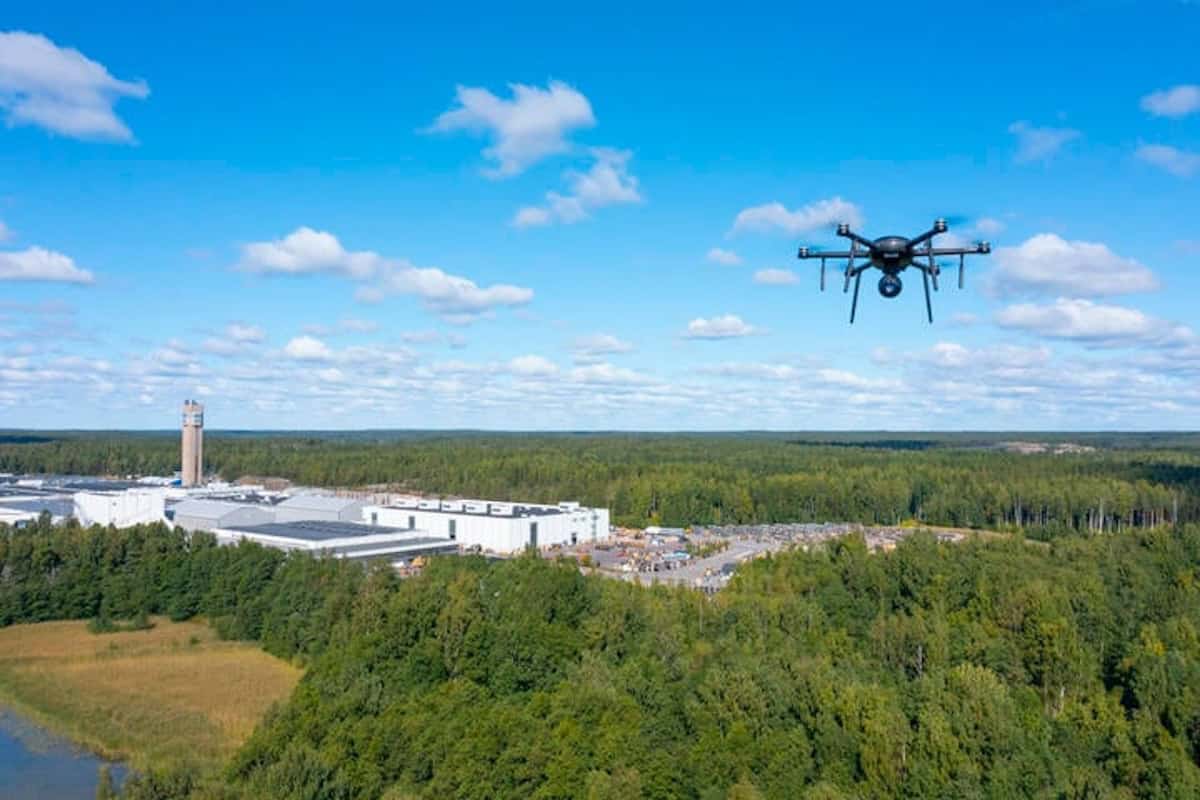



Drone as First Responder (DFR) programs are gaining momentum as public safety agencies seek live aerial intelligence before officers and emergency crews arrive at an incident.
In discussion with UST, Nasir Ali, Nokia Global Head of Sales and Pre-Sales for Devices, Device Applications and Drones, highlighted the operational, regulatory and commercial factors shaping DFR adoption in the US and internationally.
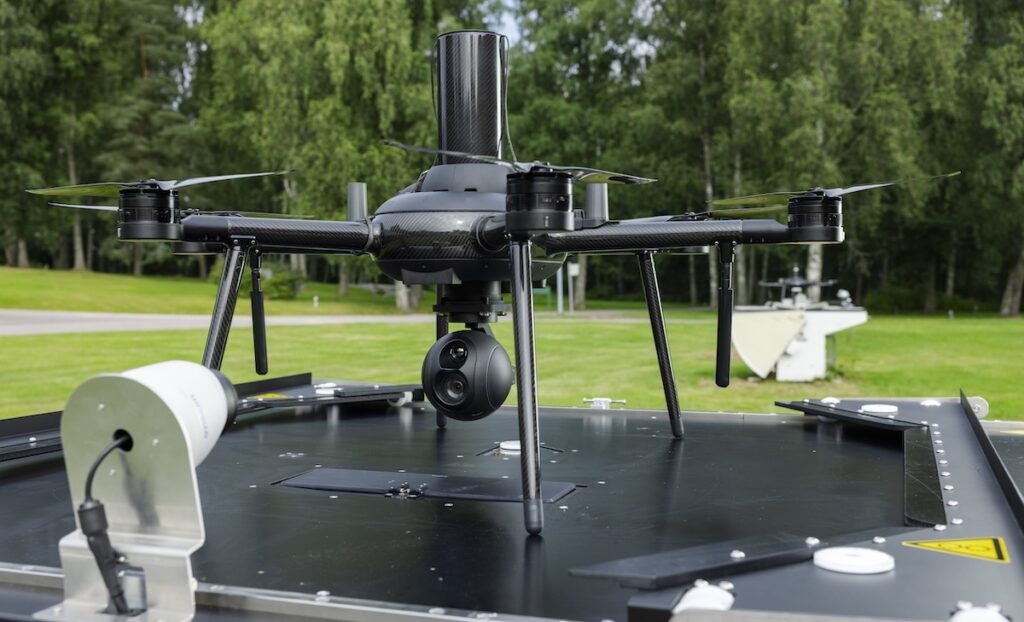
Unlike traditional public safety drone use, DFR typically relies on aircraft positioned in automated docking stations and connected to computer-aided dispatch systems, remote pilots and command centers. Following an eligible emergency call, a drone can be launched remotely to provide optical or thermal imagery, helping responders verify information, identify hazards and determine what resources are required before reaching the scene.
Once launched, the aircraft can stream live imagery into a command center and to personnel approaching the incident, with the mission subsequently logged and the data retained or deleted according to agency policy.
US Deployment and Regulatory Drivers
Ali emphasized that the aircraft is only one part of an effective program. Agencies also need trained and certified remote pilots, airspace permissions, approved operating procedures, defined launch criteria, weather limits, secure communications, maintenance processes and clear policies covering cybersecurity, data retention and public transparency.
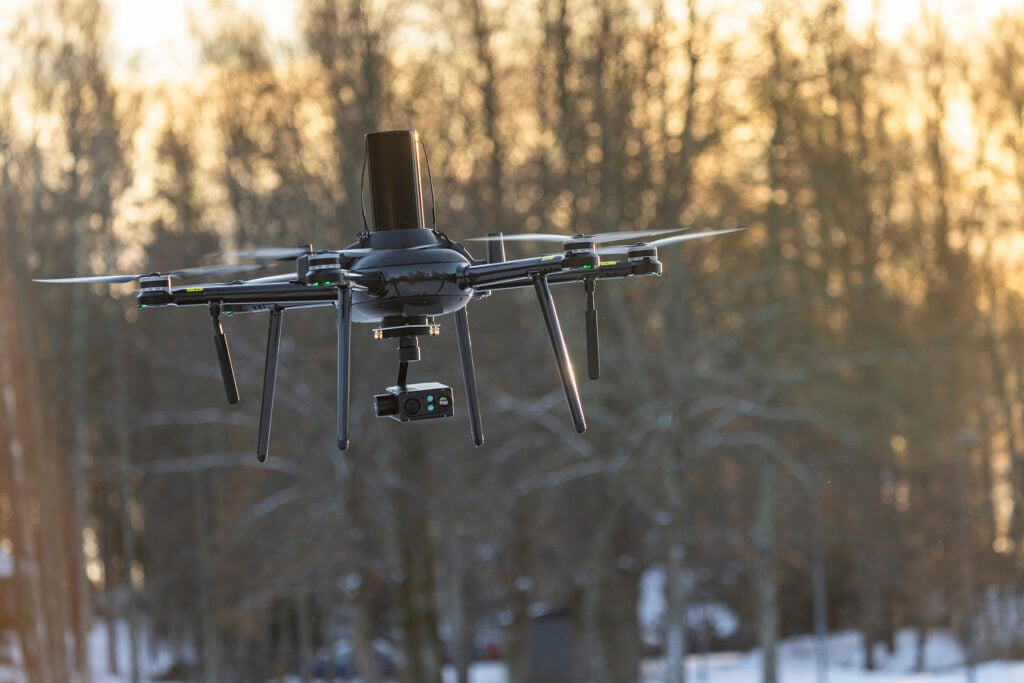
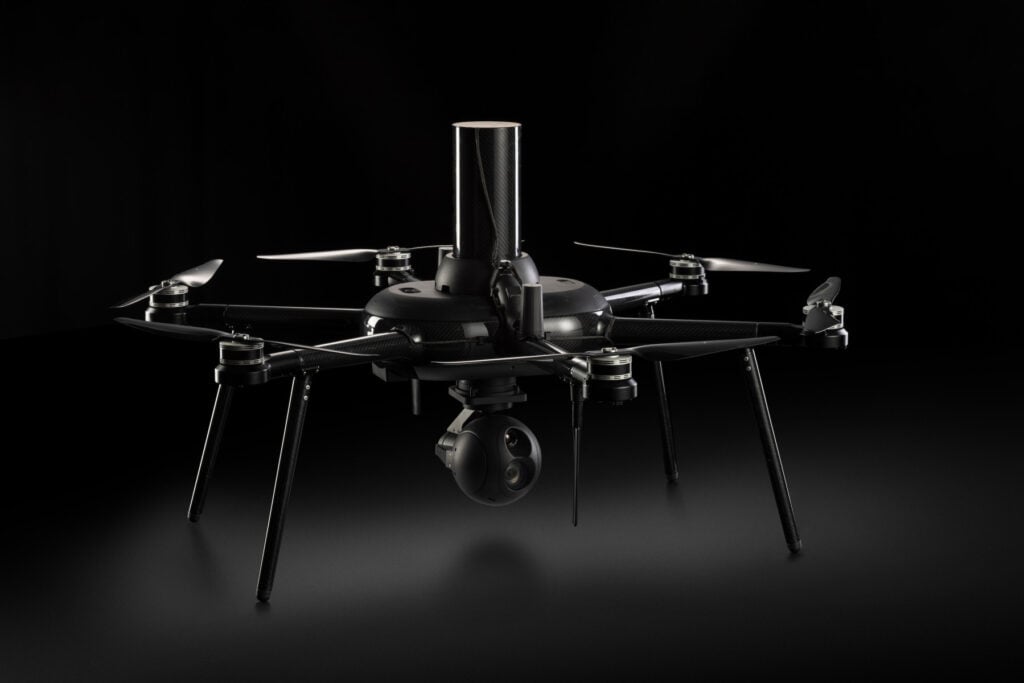
Reflecting this integrated approach, Nokia Drone Networks combines automated docking, LTE and 5G connectivity, optical and thermal sensors, remote pilot workstations, geofencing and flight management. Its 5.2 XLR platform provides an operating radius of up to 10 kilometers and incorporates US-sourced batteries and motors, temperature control, air-traffic awareness and an automatic parachute deployment system.
The inclusion of US-sourced, NDAA compliant components also reflects a wider procurement shift. Public safety agencies have historically relied on lower-cost Chinese platforms, but US policy and security requirements are creating an opening for alternatives from US and European manufacturers that can meet applicable compliance requirements. Ali noted that suppliers must still remain price-competitive while demonstrating regulatory readiness and lower security and lifecycle risks.
The regulatory picture is also becoming clearer. DFR programs still rely on Part 107 waivers for Beyond Visual Line Of Sight operations (BVLOS), but the June 2025 executive order on American drone dominance reinforced the federal push toward routine BVLOS operations, national competitiveness and counter-drone security.
DFR Deployments in Practice
Ali identified Yonkers Police Department and Summerville Police Department as examples of DFR in practice. Yonkers operates two Nokia drone-in-a-box systems integrated with CAPE software and the city’s Crime Control Center, allowing aerial video to be combined with 911 information, radio traffic and other camera feeds before being shared with officers and supervisors. The drones are described as being able to reach anywhere in the city in under three minutes.
Summerville uses the same technology stack for priority calls, traffic collisions, missing-person searches, fire assessment and disaster response, with drones reaching most of the town in under three minutes. During a train derailment, aerial imagery was used to assess possible gas leaks in minutes, compared with six to eight hours for an initial ground-based evaluation, while reducing responder exposure.
Managed Services and Wider Adoption
Managed service models could provide another route to adoption by giving agencies access to the complete aviation stack, including aircraft, docks, pilots, connectivity, flight-management software, system integration, maintenance, cybersecurity and data governance. This may appeal to departments that lack the resources or expertise to manage every element internally.
Similar operator-led approaches are also emerging beyond the US. Ali pointed to Nokia ECE partner Citymesh’s network of 70 drone-in-a-box units operating across 35 emergency zones in Belgium, alongside Nokia’s collaboration with e& on a service-based platform in the UAE, as examples of how DFR-style services can be delivered at wider scale. The same model could support fire and rescue, disaster response, major-event security, utilities, transport networks and critical-infrastructure inspection wherever faster situational awareness can reduce risk.
Ali also expects the market to consolidate around a small number of suppliers able to operate the full aviation stack at scale, rather than compete primarily through standalone aircraft hardware.
The market is therefore moving beyond standalone drone-in-a-box hardware toward integrated systems combining dispatch, connectivity, flight operations, security and data management. Ali also stressed that suppliers will need to keep investing in technology, regulatory compliance and partner ecosystems, including relationships with operators, system integrators and public safety software providers.
Public trust will remain central, with clear launch policies, auditable flight records and transparent data practices needed to demonstrate that drones are being deployed for defined operational purposes rather than routine surveillance.
The US DFR market won’t be won by the cheapest drone, but by suppliers offering secure, regulation-ready platforms that can remain commercially competitive and support deployments at scale.
To learn more about the Nokia Drone Networks solution, visit the Nokia Drone Networks website.