Tactical edge computing systems must process increasing volumes of sensor data while operating within strict size, weight, power, and thermal constraints. EIZO Rugged Solutions is addressing these requirements with the Condor T5-IOX 3U VPX single-board computer (SBC), combining NVIDIA Jetson IGX Thor processing, Blackwell GPU acceleration, high-bandwidth sensor interfaces, and networking within a modular OpenVPX architecture.
For sensor-driven mission systems, processing performance is only one consideration. Data must move efficiently between sensors and computing resources, intensive workloads must execute with minimal latency, and results must be distributed throughout the platform without relying on continuous access to centralized processing infrastructure.
As AI inference and sensor-processing workloads become more complex, embedded architectures must accommodate greater computing demands while remaining suitable for rugged, SWaP-constrained environments.
3U VPX Architecture for Edge Computing
Based on the VITA 46 VPX and VITA 65 OpenVPX standards, 3U VPX provides a modular architecture combining high-speed serial connectivity, standardized module-to-backplane interfaces, and a compact rugged form factor.
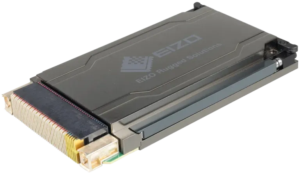
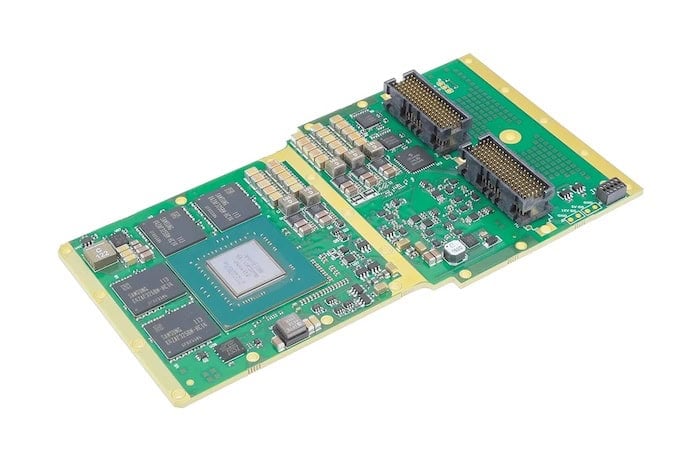
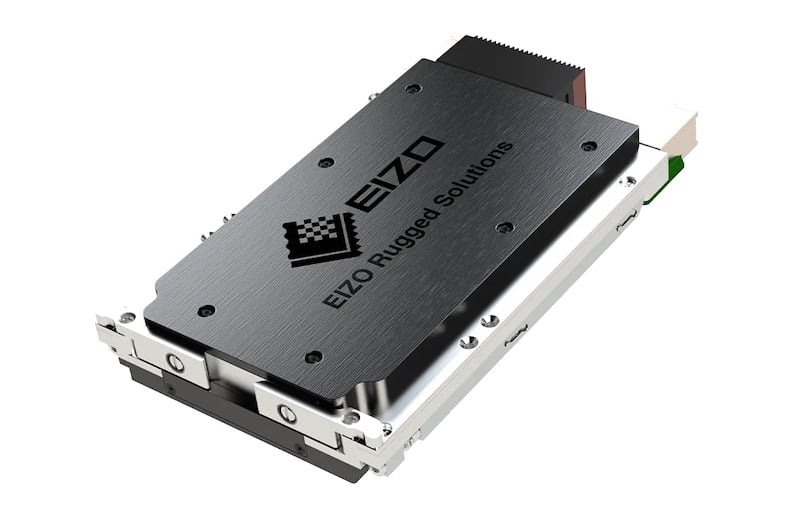
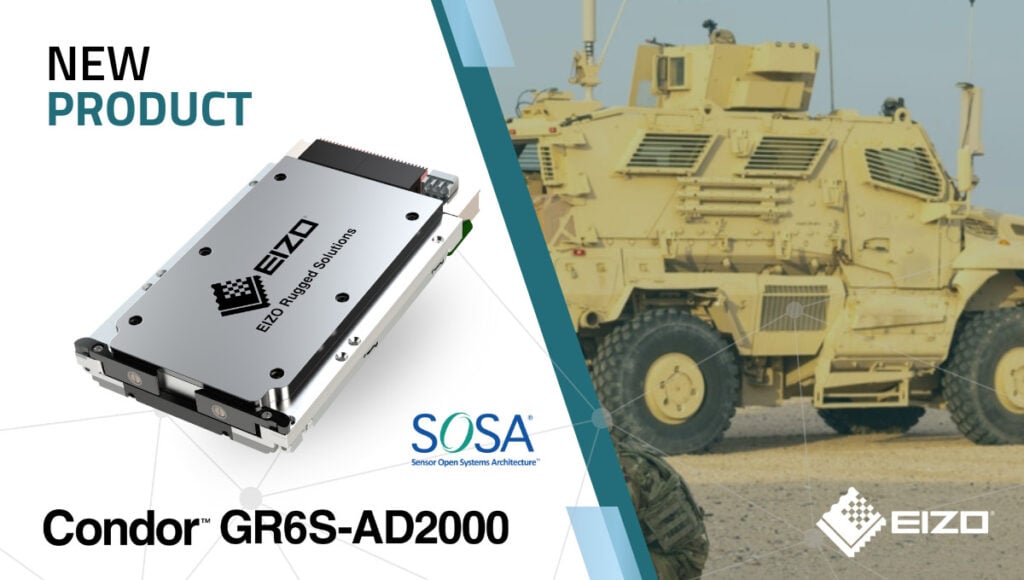
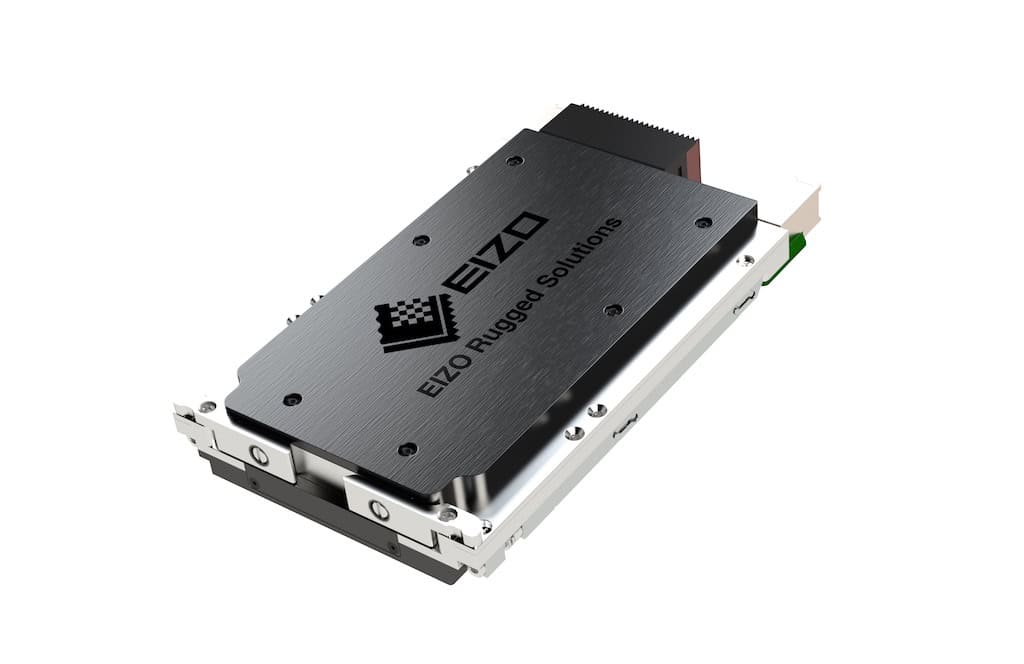
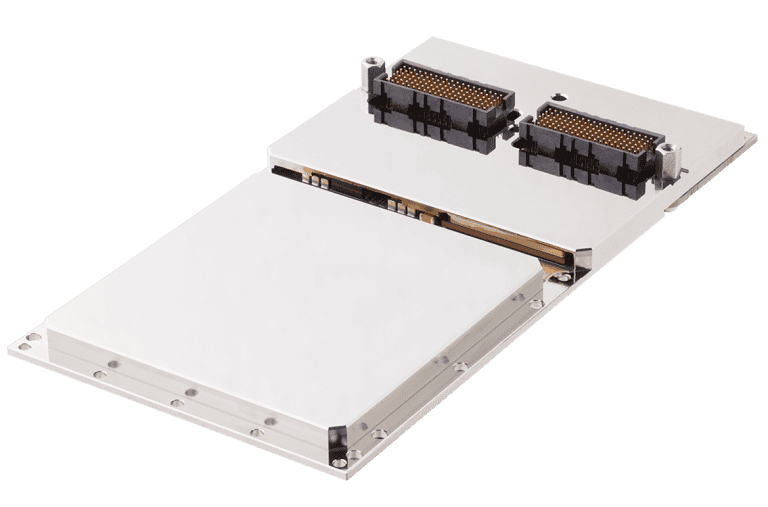
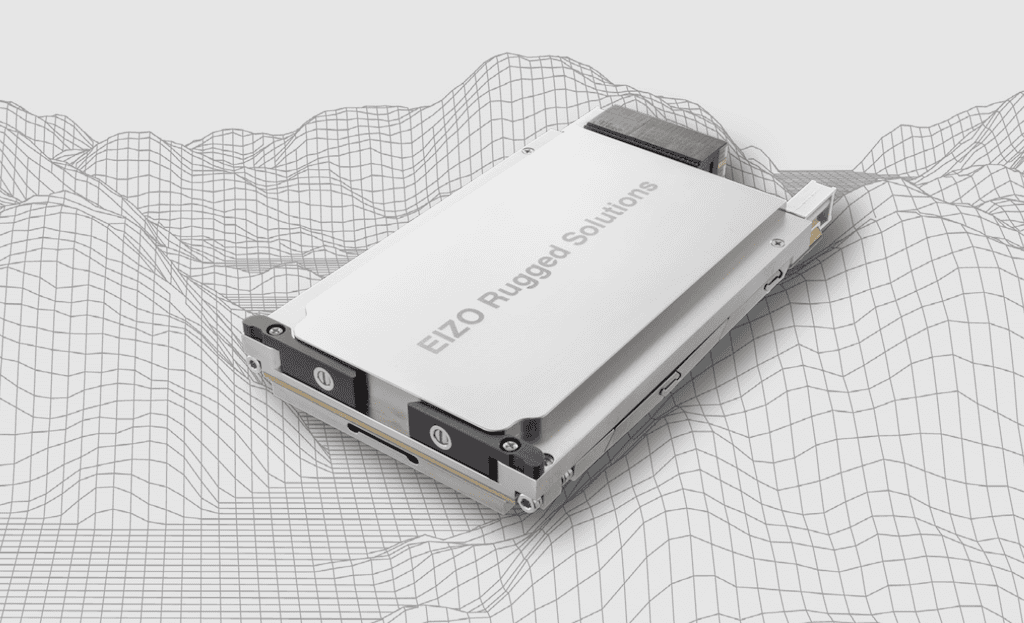
Condor T5-IOX 3U VPX single board computer powered by the NVIDIA Jetson Thor Platform.
This allows CPU processing, GPU acceleration, networking, sensor I/O, and storage resources to operate within a common system architecture.
The Condor T5-IOX 3U VPX integrates the NVIDIA Jetson IGX Thor T5000 system-on-module (SoM) into a rugged OpenVPX SBC. It combines an NVIDIA Blackwell GPU, a 14-core Arm Neoverse V3AE CPU, up to 128 GB of LPDDR5X memory, high-speed networking, video acquisition, and system I/O.
With up to 273 GB/s of memory bandwidth, the platform provides capacity and throughput for data-intensive edge applications.
The Jetson IGX Thor’s unified memory architecture allows the CPU and GPU to access the same physical memory pool, reducing repeated transfers between separate memory spaces. For applications processing high-resolution imagery, multiple sensor streams, and AI models, this can reduce data-transfer overhead between CPU- and GPU-accelerated workloads.
The 128 GB memory capacity also supports larger AI models, datasets, and concurrent processing functions within the mission payload.
Blackwell GPU Acceleration for Sensor Processing
The NVIDIA Jetson IGX T5000 delivers up to 2,070 FP4 TFLOPS of sparse AI compute performance, providing substantial acceleration within a single 3U VPX slot.
This processing capacity supports workloads including AI inference, computer vision, multi-sensor fusion, video and signal processing, and real-time analytics.
As sensor resolutions, sensor counts, and AI model complexity increase, the Condor T5-IOX provides additional compute headroom for concurrent processing without immediately requiring separate GPU cards or external computing resources.
Executing workloads locally also reduces the need to transfer large quantities of raw sensor data to remote infrastructure. Processing information closer to its source can minimize unnecessary data movement and latency while allowing higher-level information to be distributed across the platform.
Consolidating processing and I/O functions on one SBC may also reduce the number of discrete components required. Within fixed slot, power, and cooling limits, this creates opportunities to reserve additional VPX slots for FPGA processing, RF interfaces, storage, networking, or further GPU acceleration.
SOSA-Aligned Modular Integration
The Condor T5-IOX was developed in alignment with the Sensor Open Systems Architecture (SOSA) Technical Standard, supporting integration within open, modular mission-computing systems.
Building on OpenVPX and other open standards, SOSA defines common hardware, electrical, mechanical, and system interfaces for sensor and computing applications.
This approach allows appropriately matched plug-in cards, backplanes, and system resources to be integrated through defined interfaces and profiles, reducing dependence on proprietary system architectures.
Within a modular VPX system, the Condor T5-IOX can operate as an AI and general-purpose computing resource alongside complementary modules for GPU or FPGA acceleration, networking, sensor acquisition, storage, and other specialized processing functions.
High-Bandwidth Video and Sensor Connectivity
The Condor T5-IOX incorporates four 12G-SDI video inputs, enabling multiple high-resolution video sensors to connect directly to the SBC.
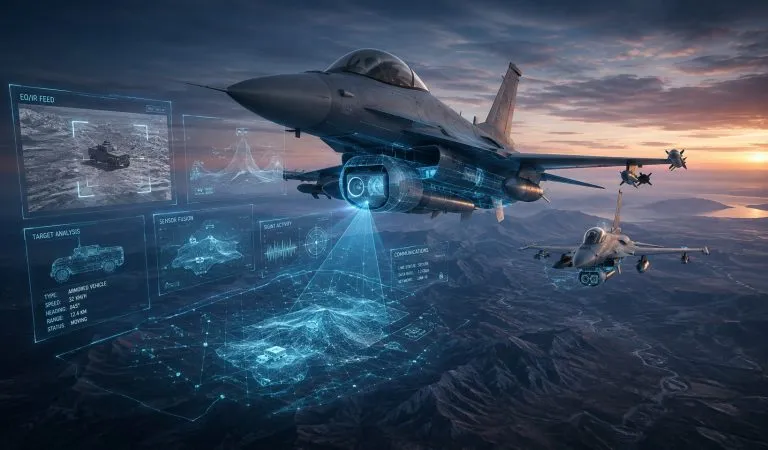
Each interface supports UHD/4K video transmission at up to 60 frames per second over a single connection, providing high-bandwidth acquisition for electro-optical/infrared (EO/IR) cameras, situational awareness sensors, and other digital video sources.
Combining multi-channel video acquisition with Blackwell GPU acceleration allows several stages of the sensor-processing pipeline to operate within one 3U VPX slot.
Incoming video can undergo computer vision processing and AI inference, be correlated with other sensor information, and be distributed through the board’s Ethernet or display interfaces.
This supports applications including multi-camera processing, EO/IR analysis, object detection and classification, image enhancement, sensor fusion, and real-time situational awareness.
Integrating video acquisition and processing on one board can also reduce dependence on separate capture and computing hardware.
High-Speed Data Movement Across the VPX Backplane
Efficient data transfer is essential when multiple sensors and processing resources operate concurrently.
The Condor T5-IOX provides four 25GbE (25GBASE-KR) interfaces, delivering up to 100 Gb/s of aggregate Ethernet bandwidth for exchanging data with compatible network switches and processing resources across the VPX backplane.
PCI Express Gen 5 and Remote Direct Memory Access (RDMA) technologies further support high-throughput communication between system resources while minimizing potential bottlenecks.
Together with the 12G-SDI video inputs, these interfaces provide multiple pathways for moving sensor and application data into and out of the processor.
The combination of high-speed connectivity and GPU acceleration allows the computing architecture to address both the processing and data movement requirements of sensor-intensive workloads.
Multi-Instance GPU for Concurrent Workloads
The NVIDIA Blackwell GPU within the Jetson IGX T5000 SoM introduces Multi-Instance GPU (MIG) technology to the Jetson Thor platform.
MIG partitions GPU resources into isolated instances with dedicated compute, cache, and memory bandwidth, enabling multiple accelerated applications to run concurrently with greater performance predictability and reduced resource contention.
For mixed-workload mission systems, this allows AI inference and computer vision processing to be separated from graphics or visualization tasks, with each application accessing dedicated GPU resources.
Hardware-level isolation is particularly relevant where latency-sensitive sensor processing must operate alongside other accelerated applications.
MIG also supports workload consolidation. Rather than assigning separate GPU hardware to individual processing functions, system integrators can partition available resources and execute workloads in parallel.
Combined with 128 GB of unified memory, 25GbE connectivity, PCIe Gen 5, and video interfaces, this capability supports multiple independent processing functions within a single 3U VPX module.
Scaling Mission Computing at the Tactical Edge
Increasing sensor resolutions, larger AI models, and more demanding processing pipelines require embedded architectures that balance compute performance with memory capacity, connectivity, and data movement.
The Condor T5-IOX combines NVIDIA Jetson IGX Thor processing, Blackwell GPU acceleration, high-bandwidth sensor acquisition, high-speed Ethernet, and GPU resource partitioning within a compact 3U VPX platform.
Its SOSA-aligned OpenVPX architecture also supports integration alongside complementary processing, networking, storage, and sensor-acquisition modules, allowing system resources to be configured around application requirements.
For sensor-driven mission systems operating at the tactical edge, this combination provides a modular foundation for local AI processing and high-throughput sensor data handling while accommodating evolving computing requirements.
Read Empowering Tactical Edge Computing Through a 3U VPX Open Architecture.