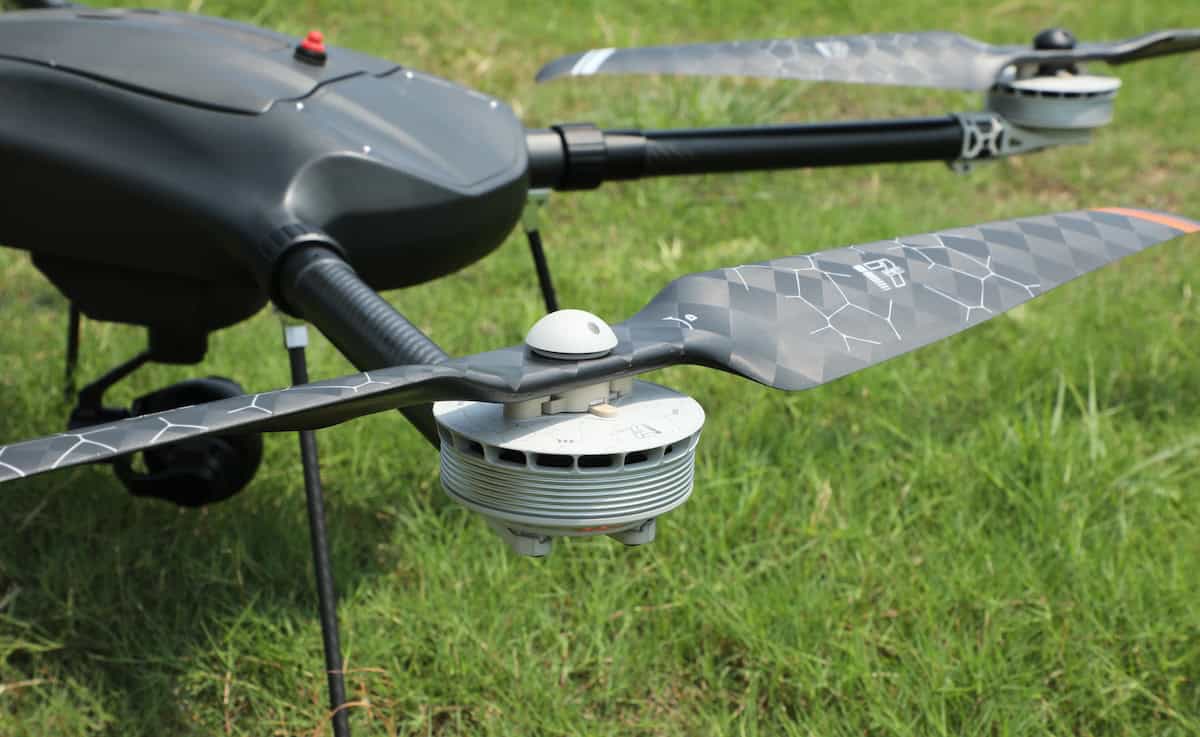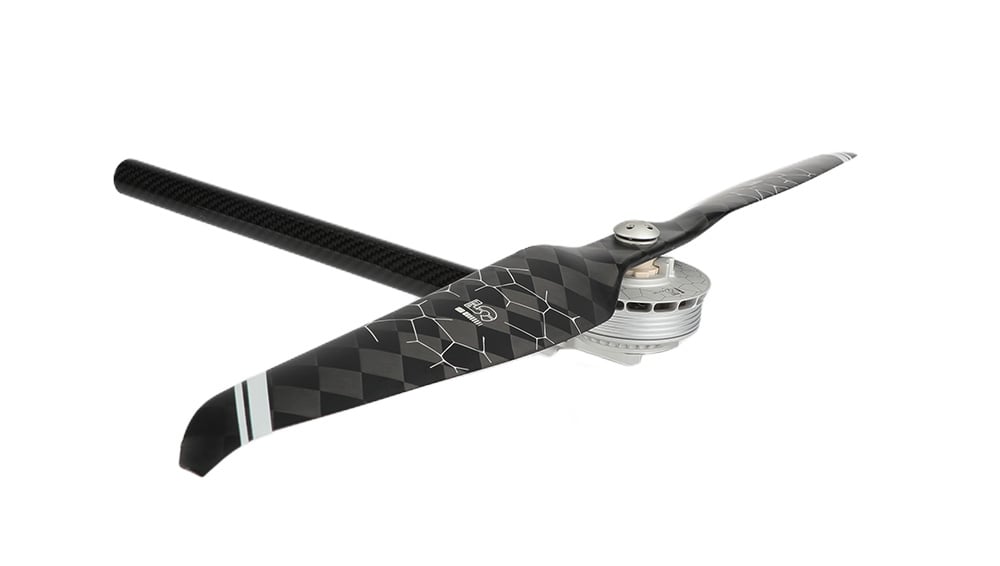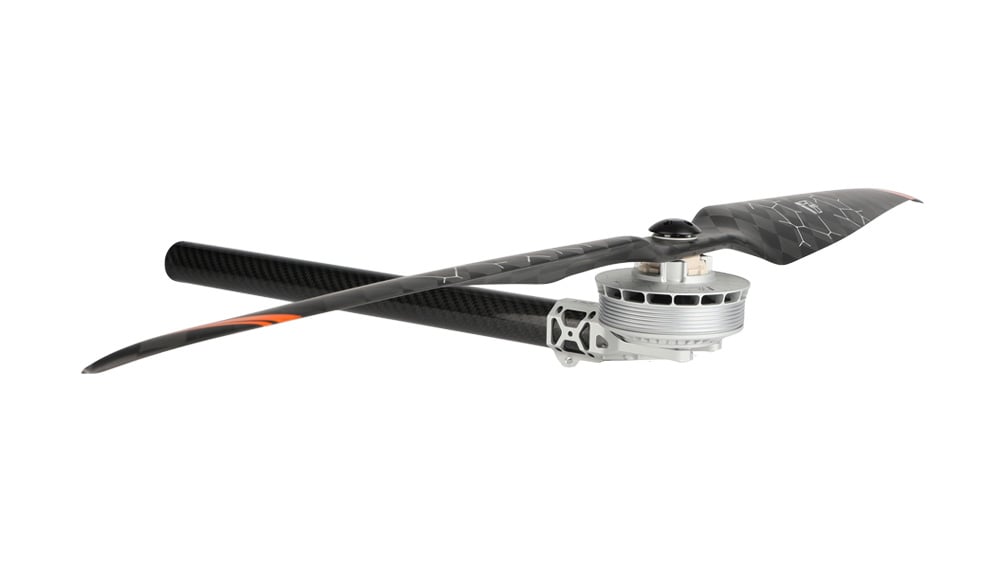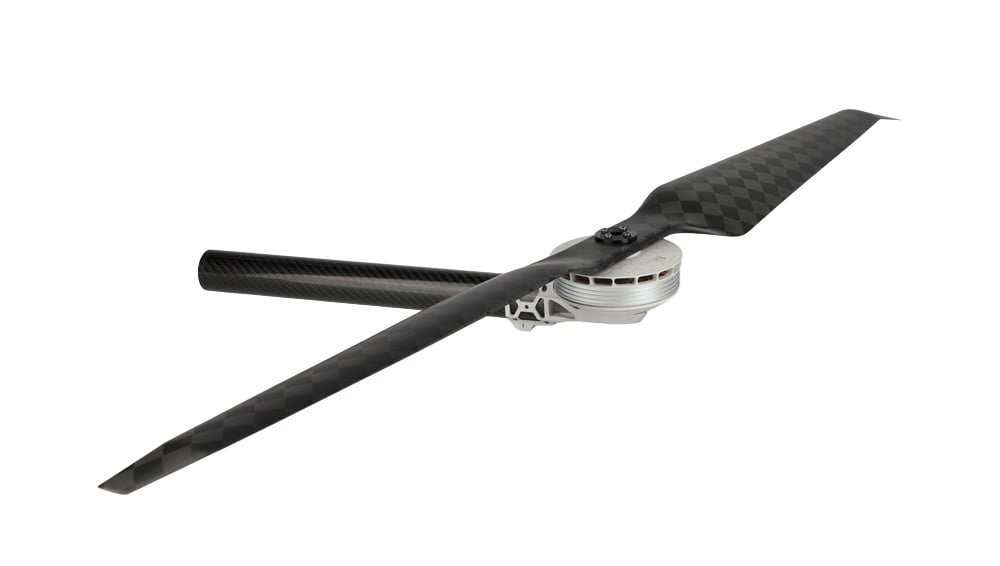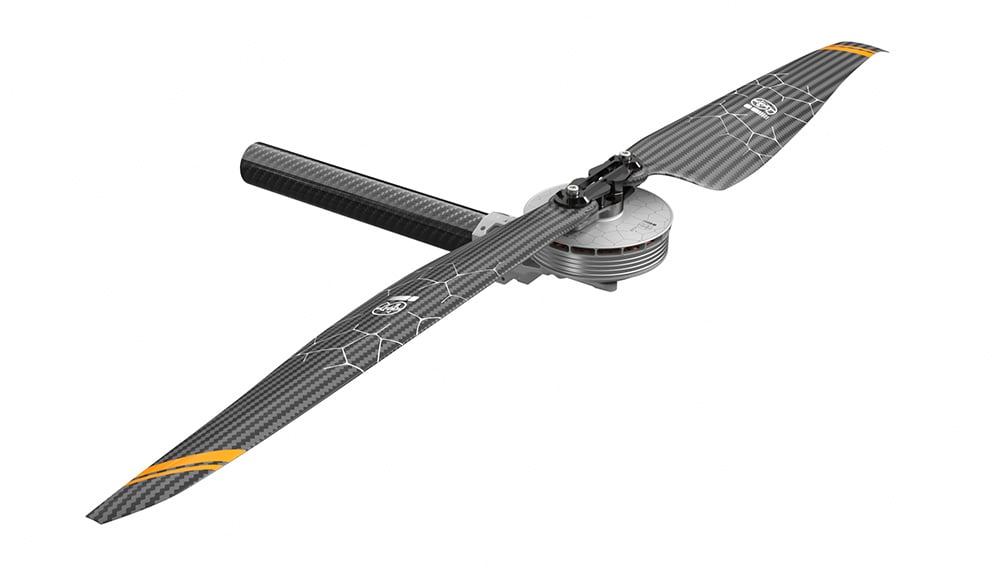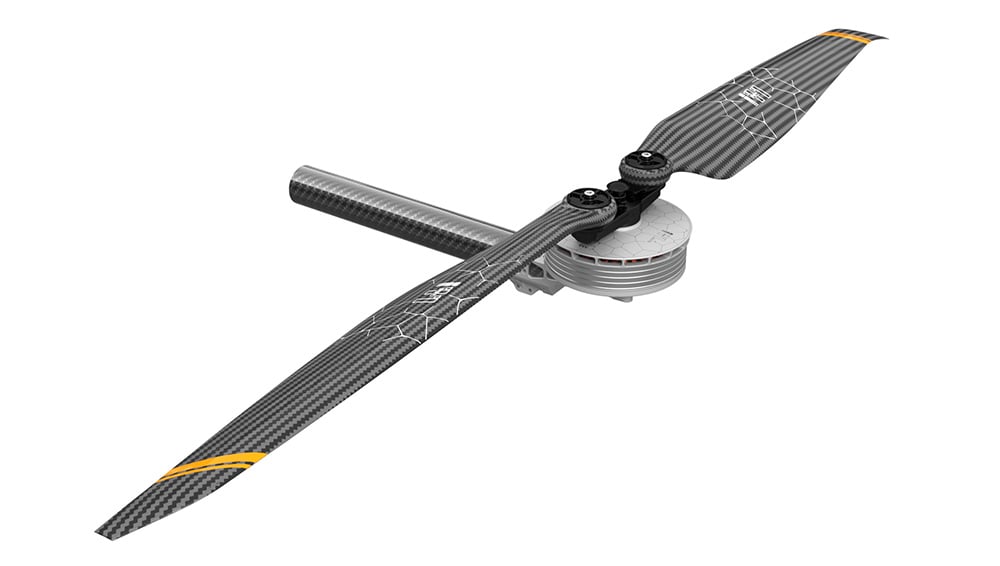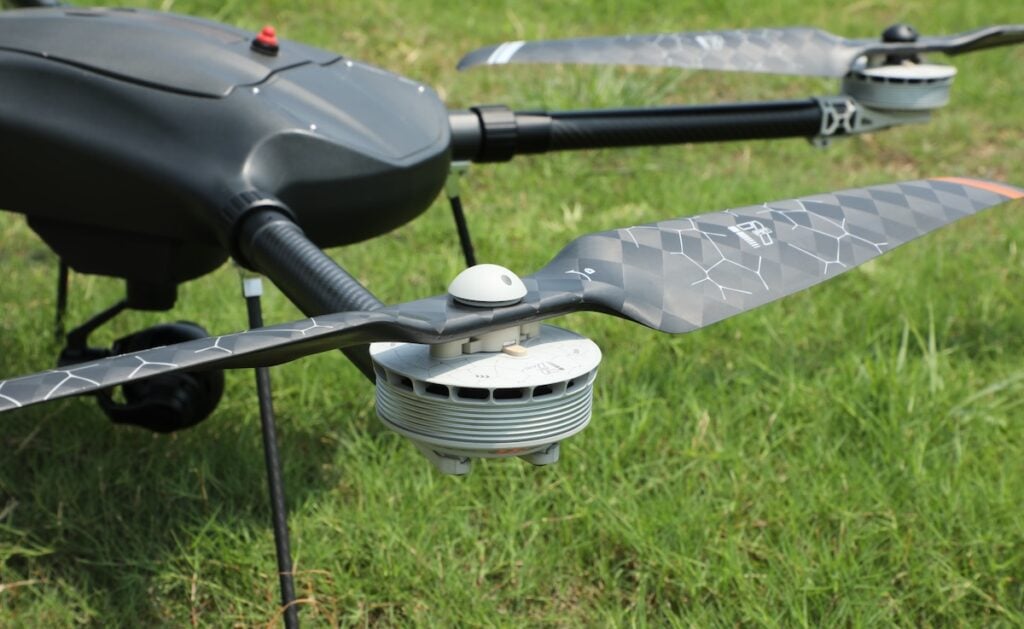


Extending the flight endurance of multirotor UAVs carrying mapping cameras and LiDAR sensors involves balancing battery capacity, payload weight, and propulsion efficiency. IPET System is addressing these requirements through its I-Series integrated propulsion systems, which combine brushless motors, FOC ESCs, and carbon-fiber propellers to improve powertrain efficiency across different UAV payload classes. Read more >>
Commercial multirotors equipped with dedicated surveying sensors often have gross flight times limited to approximately 45 to 50 minutes. After accounting for climbing, positioning, and a 20% to 25% return-to-home battery reserve, the available scanning time can be reduced to approximately 30 minutes.
Increasing battery capacity adds weight and raises the power required to maintain flight. Optimizing the propulsion system provides an alternative approach, particularly for aircraft conducting large-area photogrammetry, LiDAR mapping, and linear infrastructure surveys.
Improving UAV Propulsion Efficiency
Propulsion efficiency depends on the interaction between motor characteristics, propeller geometry, and electronic speed control.
Large-diameter propellers operating at lower rotational speeds can generate greater thrust per watt by moving a larger volume of air at a lower velocity. This can reduce induced aerodynamic losses and is particularly relevant to UAVs operating for extended periods at relatively stable thrust levels.
Motor control also influences sensor performance. High-frequency vibrations caused by irregular motor commutation or propeller imbalance can affect aerial imagery and LiDAR point clouds, contributing to motion blur, rolling-shutter distortion, and measurement noise.
IPET SYSTEM uses field-oriented control (FOC) sine-wave motor control and dynamically balanced carbon-fiber propellers to reduce propulsion-generated vibration.
For heavier UAVs, electrical architecture becomes increasingly important. Higher-voltage configurations, including 12S to 14S systems, allow equivalent electrical power to be delivered at lower current, reducing resistive losses, voltage drop, and heat generation.
The company’s integrated propulsion architecture incorporates the electronic speed controller (ESC) into the motor base, with pre-calibrated firmware matched to the corresponding propeller. This reduces the need for separate component selection and ESC tuning during airframe integration.
Integrated Propulsion for Different UAV Payload Classes
The IPET I-Series comprises five propulsion configurations covering lightweight photogrammetry platforms through to heavy-lift UAVs carrying hyperspectral sensors and survey-grade LiDAR.
I5 and I7 for Photogrammetry and Compact LiDAR
The IPET I5 Integrated Propulsion System is intended for compact surveying UAVs carrying payloads below 1 kg, including Sony A7R or RX1R cameras and MicaSense multispectral sensors.
Suitable for quadcopters with a maximum takeoff weight (MTOW) of 4 to 6 kg, the 350 g assembly combines a 24-inch carbon-fiber propeller with an 8S FOC 20A ESC and supports 6S to 8S LiPo batteries.
The I5 delivers 13.3 g/W efficiency at 1.3 kg hover thrust, with maximum thrust of 4.2 kg per unit. It mounts onto 25 mm carbon-fiber arm tubes.
For larger oblique photogrammetry and compact LiDAR payloads weighing 1 to 2 kg, the IPET I7 supports quadcopters with an MTOW of 10 to 14 kg.
The 528 g unit incorporates a 30-inch quick-release carbon-fiber propeller and a 14S FOC 50A ESC, achieving 12.8 g/W efficiency at 2.6 kg hover thrust and maximum thrust of 7.5 kg. IPET System states that upgrading oblique survey platforms from approximately 80 minutes of flight time to the I7 configuration can extend endurance to 1.5 to 2 hours.
I8 for Survey-Grade LiDAR and Corridor Mapping
The IPET I8 Integrated Propulsion System is configured for UAVs carrying 3 to 5 kg payloads, including RIEGL-series LiDAR scanners, large-format metric cameras, and dual-gimbal sensor assemblies.
It supports quadcopters with an MTOW of 16 to 18 kg and incorporates 36-inch I36-S carbon-fiber propellers with a 14S FOC 50A ESC supporting CAN protocol communications. Weighing 715 g, the assembly mounts onto 35 mm carbon-fiber arm tubes and provides 12.1 g/W efficiency at 4.0 kg hover thrust, with maximum thrust of 11.0 kg.
IPET SYSTEM cites a 100-minute (5-hour, 16-minute) continuous flight record in connection with the I8 propulsion system. This reported result is relevant to long-duration surveying applications, although achievable endurance depends on the complete aircraft configuration.
I9 and I11 for Heavy-Lift Survey Platforms
The IPET I9 supports larger UAVs carrying 5 to 8 kg payloads, including Phase One medium-format cameras and combined LiDAR and electro-optical/infrared (EO/IR) sensor systems.
Designed for quadcopters with an MTOW of 18 to 20 kg, the 994 g propulsion unit features 36-inch folding carbon-fiber propellers and a 14S 50A ESC.
It achieves 12.7 g/W efficiency at 4.5 kg hover thrust, with maximum thrust of 15.0 kg per unit. The assembly mounts onto 50 mm carbon-fiber arm tubes, while the folding propellers facilitate transportation of larger aircraft.
For extra-heavy UAVs, the IPET I11 supports quadcopters weighing 40 to 48 kg and payloads of 10 to 15 kg or more.
Applications include hyperspectral remote sensing, long-range airborne LiDAR, and multirotor platforms carrying combined mapping or emergency delivery payloads.
The I11 weighs 1,385 g and combines 42-inch folding carbon-fiber propellers with a 14S 70A ESC rated for 100A peak current.
It provides 10.0 g/W efficiency at 10.0 kg rated hover thrust and maximum thrust of 26.5 kg per axis. The unit mounts onto 40 mm carbon-fiber arm tubes.
All five systems also support hexacopter configurations, with stated MTOW ranges of 6 to 9 kg for the I5, 15 to 21 kg for the I7, 24 to 27 kg for the I8, 30 to 35 kg for the I9, and 55 to 65 kg for the I11. Octocopter integration is also supported.
Thermal Management and Airframe Integration
The I-Series incorporates an active downwash cooling arrangement that directs propeller-generated airflow across the motor coils and integrated ESC MOSFETs.
The propulsion systems feature an IP46 ingress protection rating and a stated operating temperature range of -30°C to 65°C, supporting deployment in environments involving heat, dust, and humidity.
Each unit is supplied with pre-calibrated FOC firmware matched to its carbon-fiber propeller. Installation involves mounting the assembly onto a compatible carbon-fiber arm tube and connecting the power and flight-controller signal lines.
The systems are intended for integration with mainstream UAV autopilots.
For aircraft development and propulsion selection, IPET SYSTEM provides 3D STEP models, mechanical drawings, and thrust-efficiency curves through its Download Center.
The company also offers power-budget simulations based on aircraft MTOW, battery chemistry, and mission requirements, allowing engineering teams to evaluate propulsion configurations against their intended UAV applications.