



AMCORIS has outlined how Epson Inertial Measurement Units (IMUs) and accelerometers can support robotic motion control, providing direct motion feedback for vibration suppression and navigation, alongside sensor options for safety-related functions.
By measuring movement at the tool, robot link or chassis, these sensors complement conventional joint encoders, capturing residual vibration, flex and slip that encoder data alone cannot detect.
Improving Motion Feedback in Robotic Systems
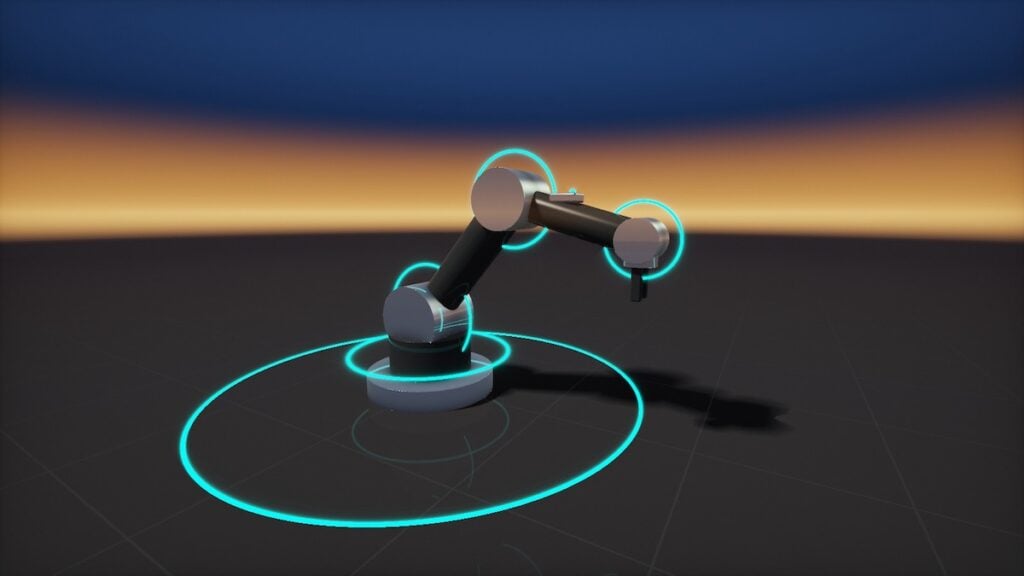
While joint encoders report angular position, they do not directly measure actual movement at the end effector or chassis. IMUs provide additional feedback through angular rate and acceleration measurements, allowing controllers to identify differences between commanded and actual motion.
This information can be used to damp vibration, shorten settling time and correct heading in real time, while recorded motion data can support diagnostics and predictive maintenance.
Applications span industrial robot arms, collaborative robots, Autonomous Mobile Robots (AMR), automated guided vehicles, legged and humanoid robots, pick-and-place systems, and service and inspection robots.
Selecting IMUs for Different Robotics Applications
The Epson range supplied by AMCORIS includes compact six-axis IMUs for motion feedback and navigation, alongside a low-noise accelerometer for vibration analysis.
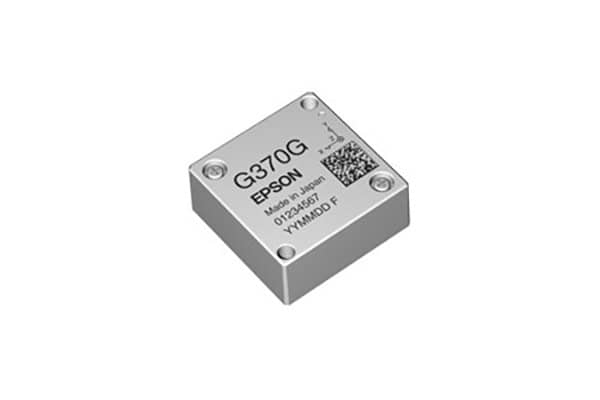
For robot arms, end effectors and AMRs with tight space and power budgets, the M-G366PDG provides 1.2 °/h typical gyro bias instability and a maximum output rate of 2 kSps. The M-G370PDG is identified for precise heading in AMR navigation over long runs, offering 0.8 °/h typical gyro bias instability and a maximum output rate of 2 kSps.
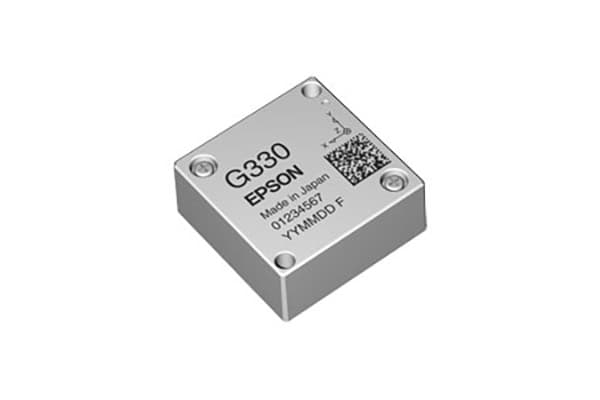
The M-G330PDG provides an option for cost-sensitive mobile and service robots, with 3 °/h typical gyro bias instability. All three IMUs share compact 24 × 24 × 10 mm packages and weigh 10 g.
For safety-related functions in industrial and agricultural robotics, the M-G355QDG complies with IEC 61508 SIL 1. Meanwhile, the M-G552PC7 provides native CANopen support and IP67 protection for heavy mobile robots and vehicles with a CAN bus.
The range also includes the M-A352AD10 low-noise accelerometer, which provides 0.2 µg/√Hz noise density for vibration analysis of robot structures and drives.
The M-G366PDG, M-G370PDG, M-G330PDG and M-G355QDG provide UART/SPI connectivity, while the M-G552PC7 supports CANopen.
Inertial Sensor Integration in Autonomous Systems
Two integration projects illustrate the application of Epson inertial sensors in autonomous navigation environments affected by GNSS interruptions or the absence of GNSS signals.
For high-precision UAV corridor mapping along powerlines, dense canopy caused interruptions to GNSS signals. AMCORIS integrated a custom-tuned Epson M-G370PDG evaluation unit into the customer’s navigation stack, providing high-accuracy inertial measurements for continuous positioning and sensor fusion.
The reported results included uninterrupted Inertial Navigation System (INS) operation during GNSS outages, improved Simultaneous Localization and Mapping (SLAM) performance, accurate geo-referencing and stable flight operation, even under high wind conditions.
In a separate autonomous mining AGV project, integration of an Epson M-G552PC with native CANopen support enabled direct communication with the vehicle’s navigation controller without additional interface hardware.
The reported results included seamless CANopen integration, reliable dead reckoning, reduced system complexity and continuous navigation in GNSS-denied underground environments.
AMCORIS provides support throughout the process, from Epson sensor selection and evaluation to integration into robot controllers.
To learn more about AMCORIS’ IMUs for robotic motion control, visit the AMCORIS website.