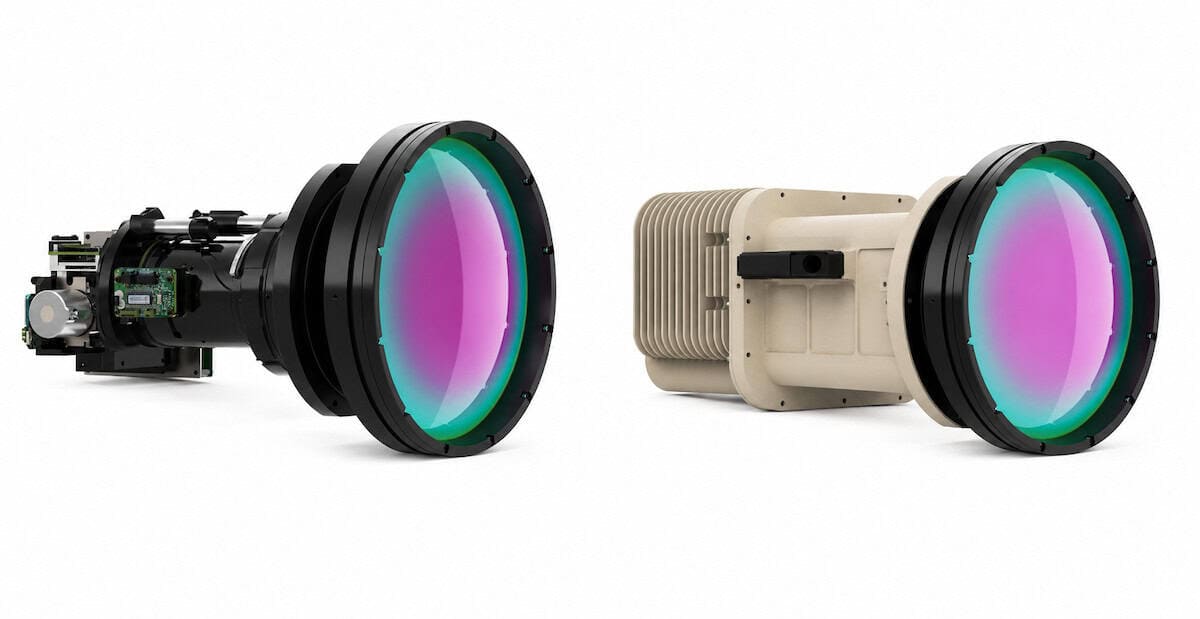
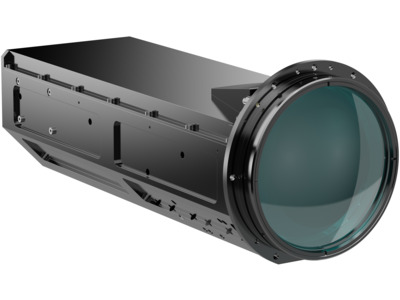
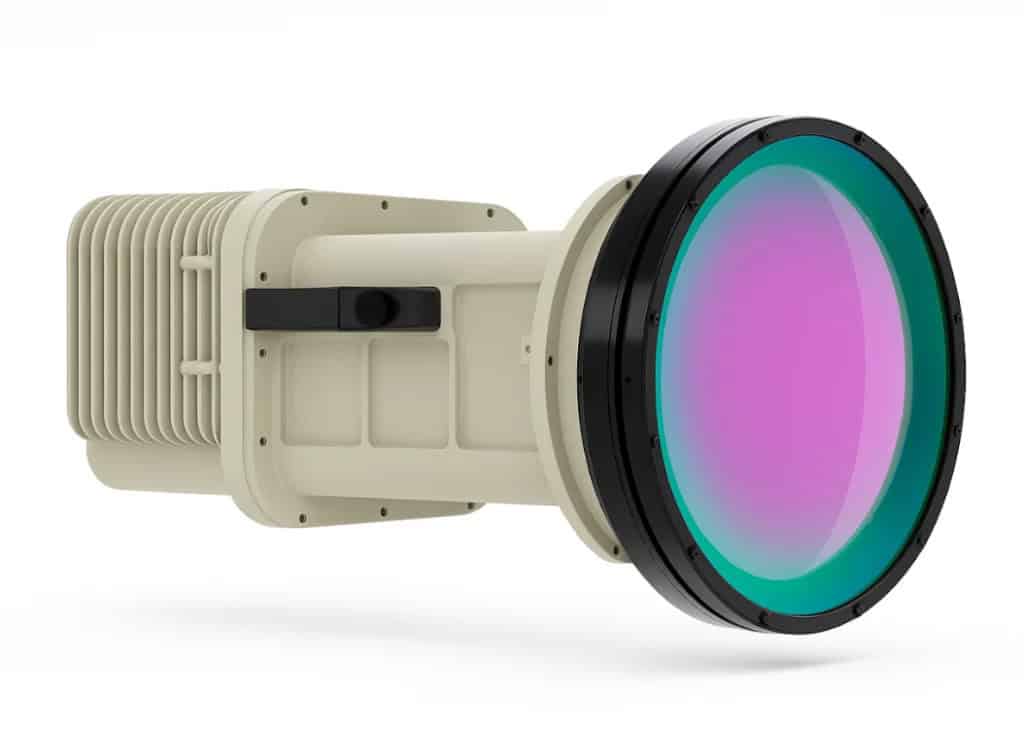
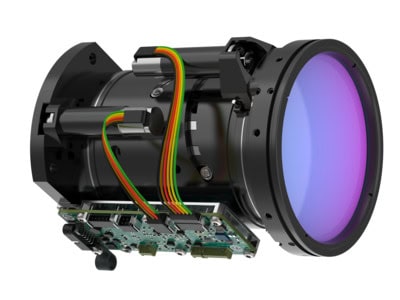
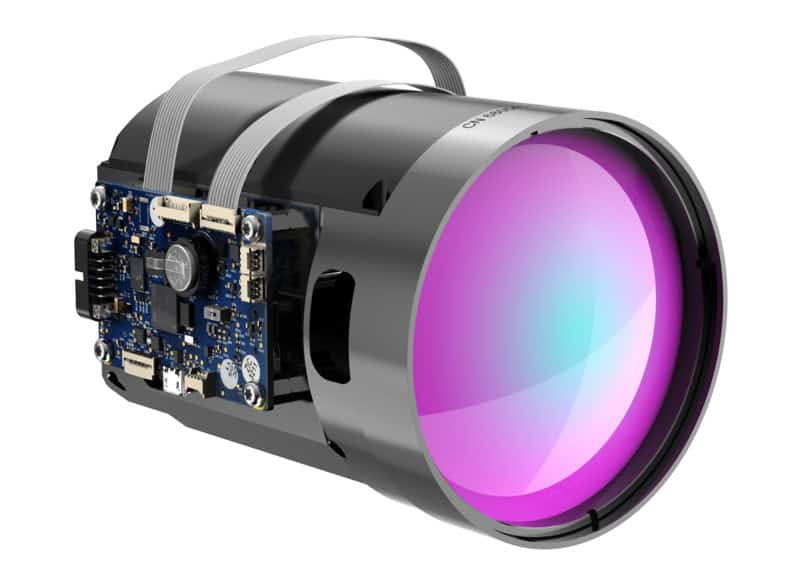
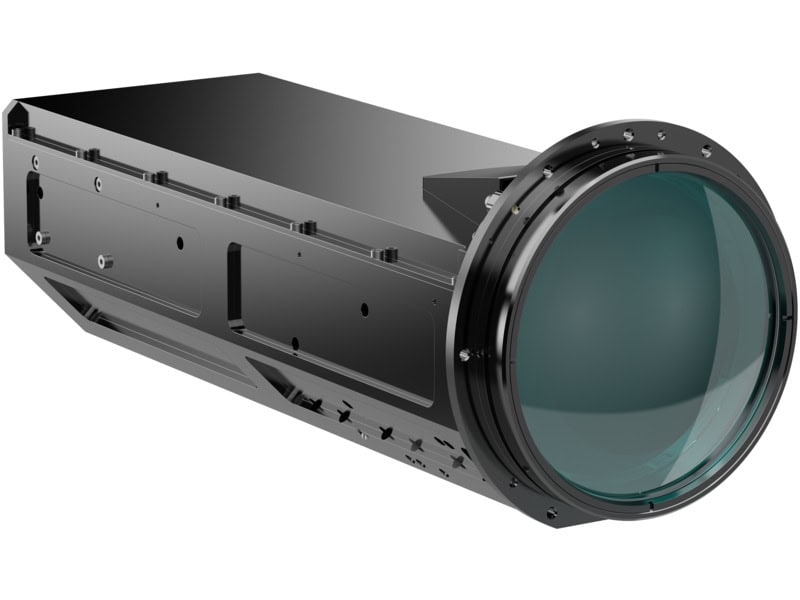
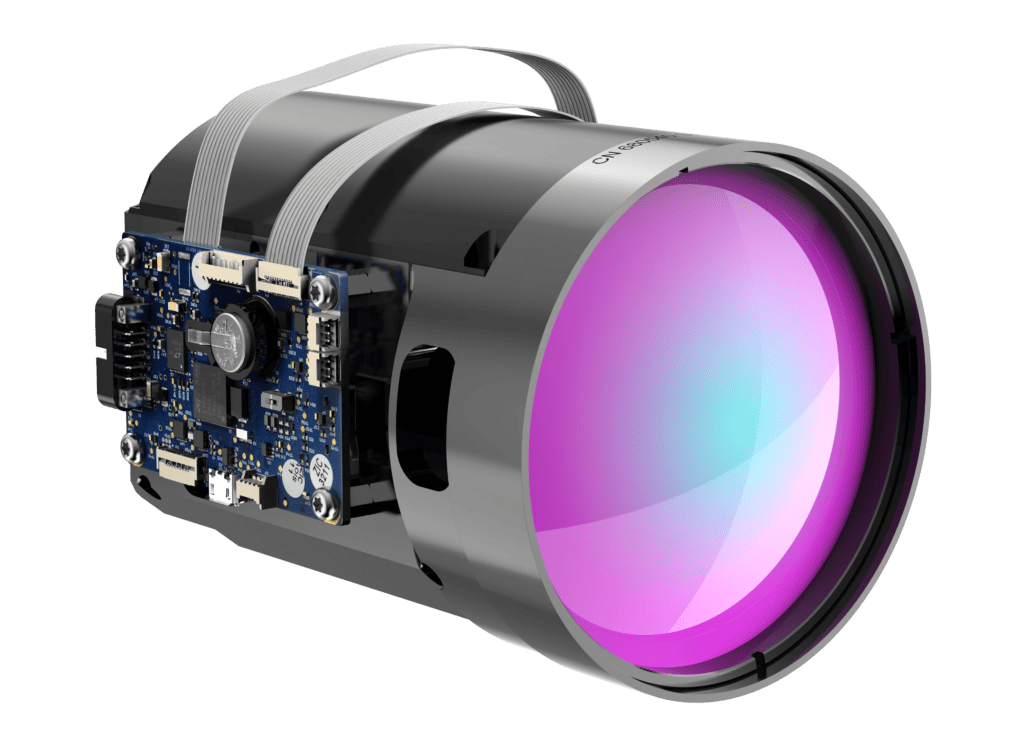
MKS-Ophir designs and manufactures low-Size, Weight and Power (SWaP), ruggedized Mid-Wave Infrared (MWIR), Long-Wave Infrared (LWIR), and Short-Wave Infrared (SWIR) lens assemblies for Unmanned Aerial Vehicles (UAVs), as well as high-performance thermal imaging camera systems for long-range surveillance, security, and Counter-UAS (C-UAS) applications.

Ophir LWIR optics integrated into a drone payload. Image credit: MKS Ophir.
In this exclusive Q&A, UST sat down with Doron Barness, Ph.D., Sr. Director of R&D/Engineering at Ophir Optics and Spectra-Physics Lasers, MKS Inc., to discuss Germanium availability, the development of Germanium-reduced LWIR optics, and evolving optical architectures for autonomous and defense imaging systems.
Germanium has long been a key material for LWIR thermal imaging systems. What impact is the current global shortage having on the infrared optics and defense sectors?
Germanium has played a central role in LWIR optical systems due to its excellent transmission characteristics in the 8-12 µm band.
Today, the market is shifting, prompting the industry to re-evaluate traditional material usage and optical design approaches. As demand for infrared imaging continues to grow, particularly across Intelligence, Surveillance and Reconnaissance (ISR), C-UAS, and airborne autonomous platforms, the emphasis is moving toward greater design flexibility and long-term program efficiency.
This is accelerating a broader transition within the sector from material-dependent optical design toward performance-driven optical architectures. For system designers, this evolution is less about any single material and more about enabling consistent, scalable, high-performance solutions across a wide range of applications.
How is MKS-Ophir responding to the growing challenges around Germanium availability for defense imaging programs?
MKS-Ophir has taken a forward-looking engineering approach focused on reducing dependency on conventional design constraints while maintaining performance. The company has invested in re-engineering its LWIR optical architectures, with a focus on system-level performance optimization, design flexibility across platforms, and efficient, scalable production.
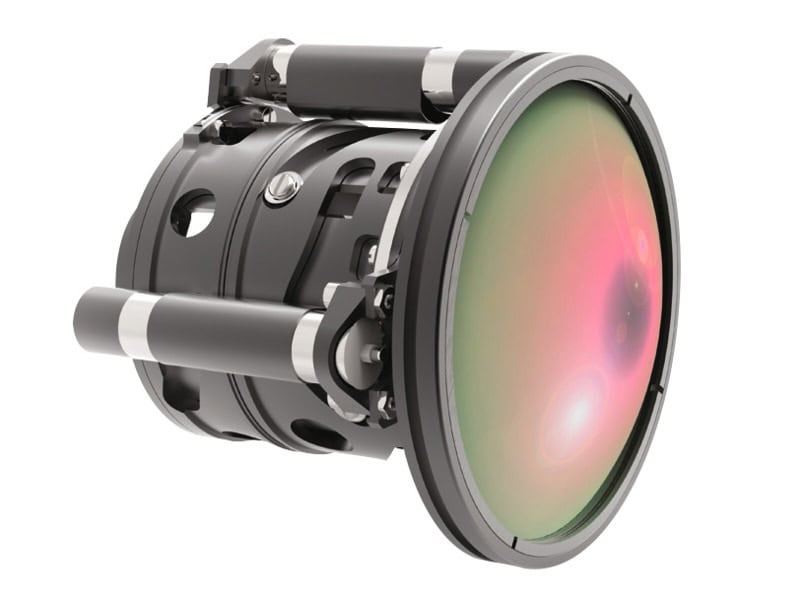
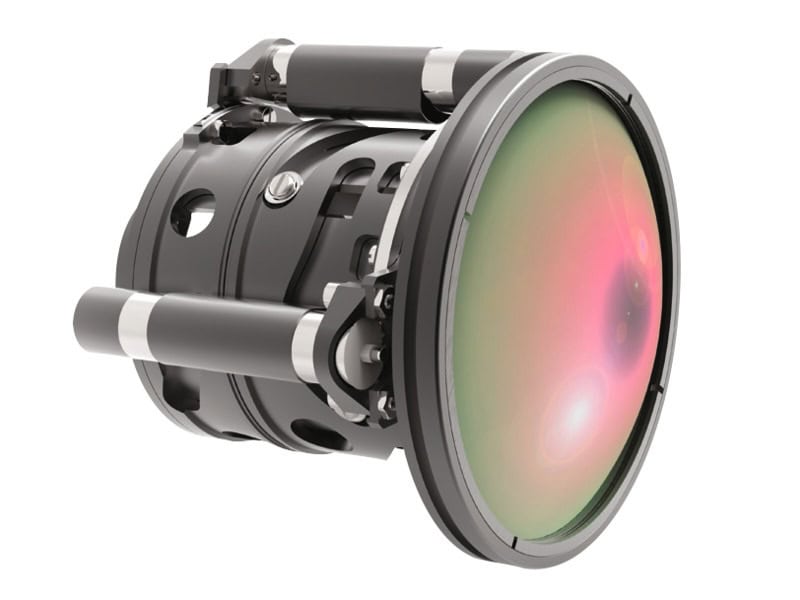
This work resulted in a new generation of Germanium-reduced LWIR optics, including the Ophir® LightIR 15-75 mm f/1.2 zoom lens and a full range of fixed-focus lenses. The objective is to enable high-performance imaging systems that are adaptable, repeatable, and aligned with modern program requirements. The redesigned optics were developed with integration continuity in mind, with a focus on maintaining the existing form factor as much as possible to support a smooth transition for existing customers.
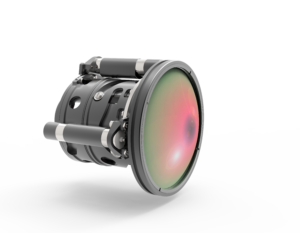
Ophir LightIR 15-75mm f/1.2 LWIR continuous zoom Lens re-engineered for reduced-Germanium use . Image credit: MKS Ophir.
What are these Germanium-reduced designs, and what advantages do they offer for thermal imaging developers?
The Germanium-reduced designs represent a complete rethinking of LWIR optical architecture. Instead of relying heavily on a single material, the optics are based on a multi-material design approach, with optical power distributed across different infrared materials and optimized through advanced modeling.
This approach reduces reliance on germanium as a critical raw material, while providing high optical performance without traditional design constraints, greater flexibility in system design and integration, improved repeatability across production units, and compatibility with modern detector formats, including VGA 12 µm and beyond.
What were the main engineering challenges in reducing reliance on Germanium while maintaining performance?
The primary challenge was maintaining high image quality and detection performance while fundamentally changing the optical architecture and maintaining the existing form factor as much as possible. This required addressing optical power distribution across multiple materials, aberration correction across wide field-of-view ranges, high transmission in the LWIR band, and thermal and environmental stability.
MKS-Ophir addressed these challenges through advanced optical modeling and optimization techniques, multi-element lens design strategies, and high-performance coatings such as Diamond-Like Carbon (DLC) for durability and environmental protection. The result is an optical system that maintains high transmission of approximately 85-91%, fast apertures, including f/1.2, for enhanced sensitivity, and consistent imaging performance across operational conditions.

Precision assembly of an infrared optical component. Image credit: MKS Ophir.
How do these Germanium-reduced solutions compare with traditional designs in terms of performance and integration?
From a system perspective, performance remains aligned with the expectations of modern LWIR imaging systems. High transmission and fast apertures support long-range detection and low-noise imaging, while consistent image quality is maintained across wide and narrow Field-Of-View (FOV) configurations. The designs also support low SWaP requirements, with the zoom lens weighing 349 g, and are optimized for UAVs, gimbals and mobile platforms.
From a manufacturing perspective, the design approach supports consistent optical performance across production volumes and more efficient scaling for multi-platform deployment. The optics are also designed for integration with modern detectors and payload systems, with adapter solutions supporting compatibility with existing platforms.
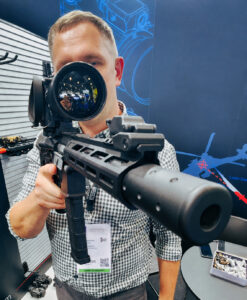
Ophir LWIR optics demonstrated in a handheld thermal imaging application. Image credit: MKS Ophir.
Overall, the transition is seamless from a performance standpoint while offering greater flexibility at the system level.
Looking ahead, do you see the industry moving toward broader material diversification and new optical architectures?
This shift is already underway. The industry is moving toward more advanced and flexible optical design methodologies, where performance is achieved through system-level optimization rather than reliance on a single material.
Continued progress is expected in multi-material optical architectures, compact and high-efficiency lens systems for autonomous platforms, and integration-optimized designs for multi-sensor payloads. For developers and integrators, this translates into greater design freedom and the ability to build more capable and adaptable imaging systems.
MKS-Ophir is continuing to expand its portfolio in this direction, focusing on high-performance, scalable optics that support the next generation of autonomous and defense platforms.
Thank you for your time. It has been a pleasure speaking with MKS-Ophir, and we look forward to seeing how its Germanium-reduced LWIR optics and evolving optical designs support future autonomous and defense platforms.