Motion Reference Units (MRU) for Unmanned Marine Systems
Motion reference units provide critical attitude and heave data to stabilize unmanned maritime platforms - USV, ROV and AUV. These sensors are foundational for maintaining navigation integrity during high-sea-state operations and complex subsea maneuvers.
This category details leading providers and manufacturers of motion reference unit solutions, including MEMS and FOG-based systems. The following guide explores technical considerations for specifying an MRU motion sensor within maritime applications.
If you design, build or supply Motion Reference Units MRU, create a profile to showcase your capabilities and connect with visitors who have an active requirement for your solutions.
Survey-grade gyrocompass & motion sensor for marine navigation & stabilization
Survey-grade gyrocompass & motion sensor for marine navigation & stabilization
...n into complex marinesystems. Certified to IMO and IMO-HSC standards, the unit provides dependable... ... for demanding marine navigation, positioning, and stabilization applications. Built on Exail’s...
Motion Reference Units (MRU) for Unmanned Marine Systems
Overview by
Sarah Simpson
Updated:
A motion reference unit is a specialized inertial sensing system optimized for the complex dynamics of maritime environments. It estimates a platform’s attitude, including roll, pitch, and frequently heading-aided yaw, while providing heave, surge, and sway outputs to facilitate precise motion compensation. For unmanned platforms, the MRU serves as the primary truth source for systems that must remain stable relative to Earth, including payload line-of-sight, hydrographic measurement arrays, and directional communication links.
Unlike general-purpose inertial sensors, these units are specifically tuned for wave-driven dynamics. They utilize sophisticated filtering and heave algorithms designed to remain robust against the unique motion spectra of sea-going vessels. Successful procurement requires mapping the device specifications to a specific mission error budget, whether for stabilization, survey uncertainty, or Dynamic Positioning (DP) performance. Engineers must validate that the supplier can demonstrate performance across the entire environmental envelope, accounting for the unique vibration and thermal profiles of unmanned maritime architectures.
Unmanned Applications of Motion Reference Units
Unmanned Surface Vessels (USV)
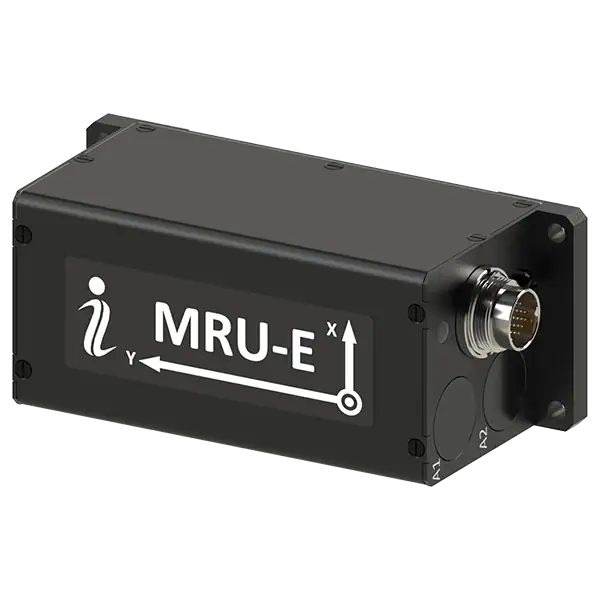
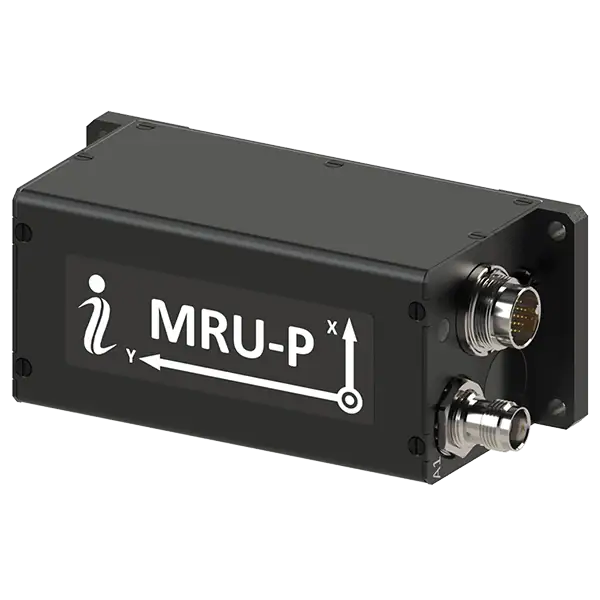
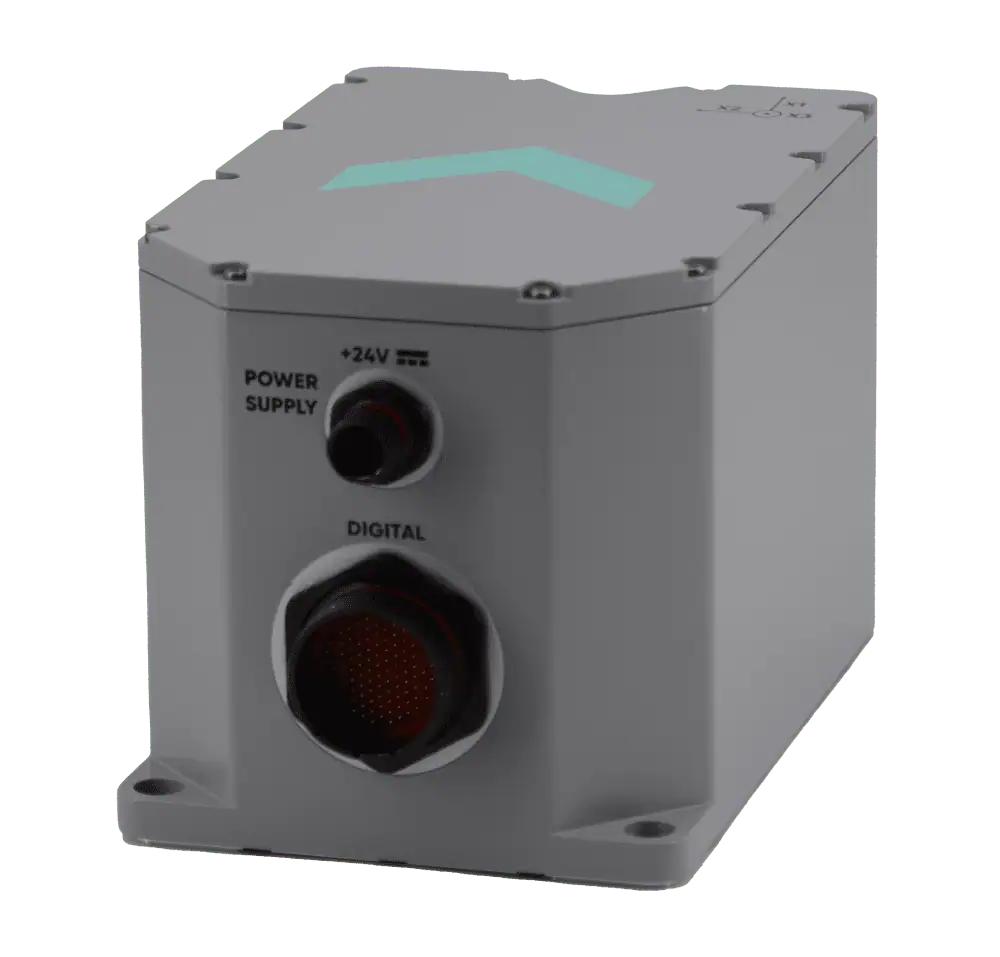
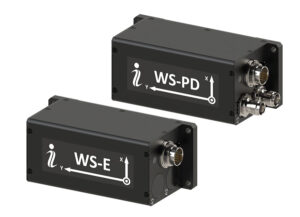
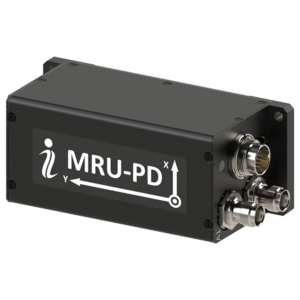
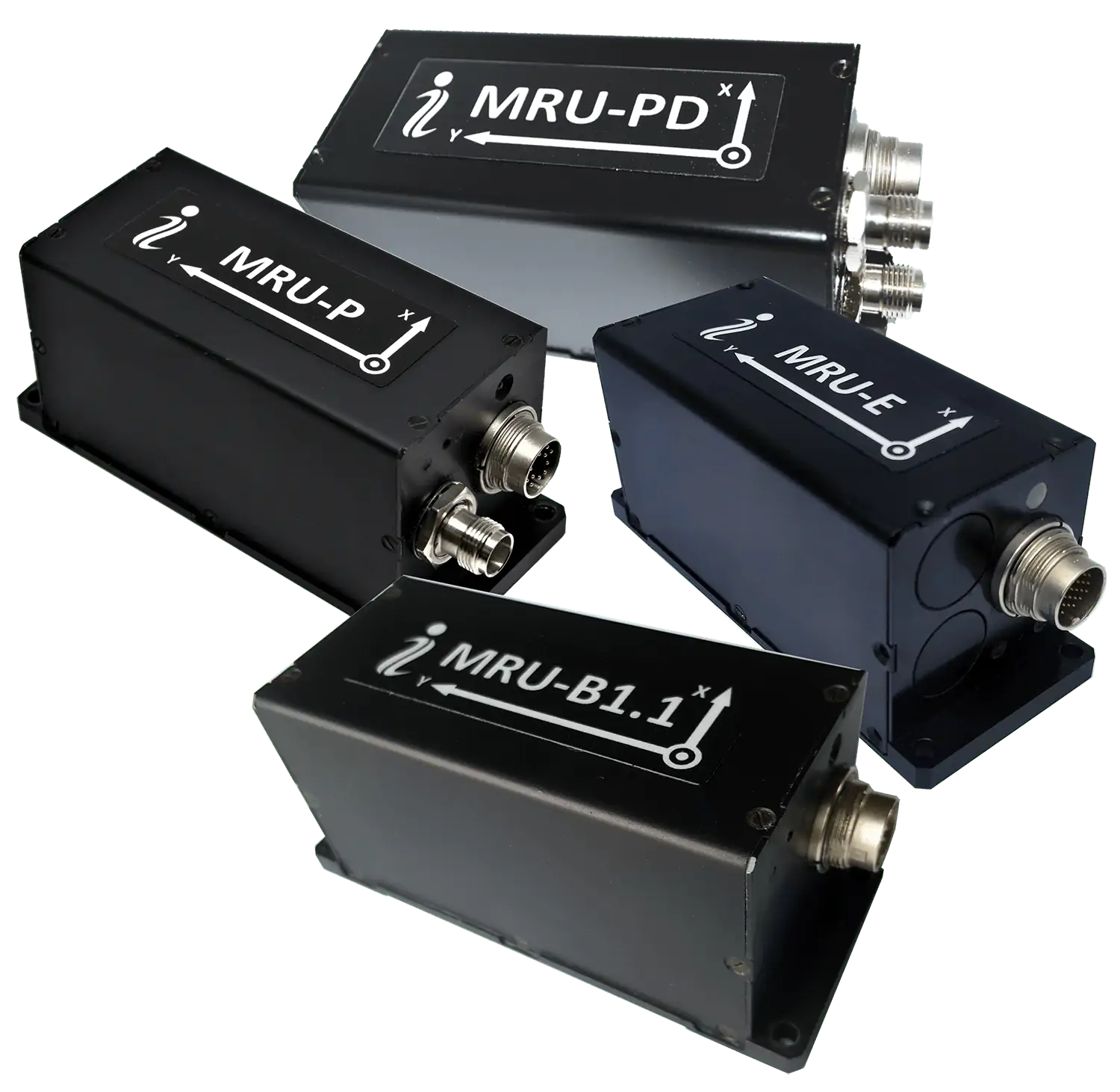
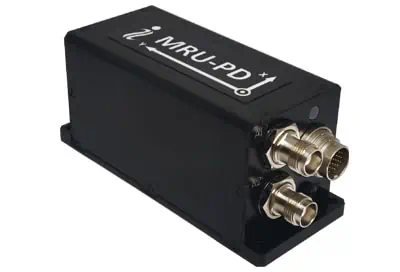
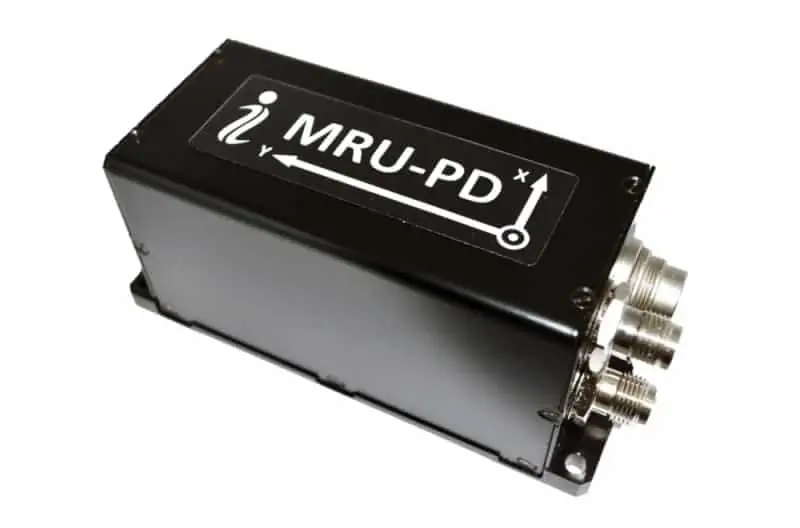
Motion Reference Units (MRU) by Inertial La
USVs expose sensors to the most punishing combination of high-frequency wave excitation, slamming, and restrictive SWaP-C constraints. These factors often cause real-world performance to diverge from theoretical datasheet specifications. The MRU frequently feeds EO/IR gimbal stabilization and radar pointing where latency, jitter, and bandwidth directly dictate pointing error.
For hydrographic survey, the marine motion reference unit provides the heave and attitude outputs necessary to compensate for bathymetry and sonar measurements. Here, the technical differentiator is stable behavior across varying wave periods and vessel speeds. Engineers must also consider the distinction between real-time heave for active control loops and delayed heave processing, which offers significantly higher accuracy for post-processed survey data.
UUVs and AUVs
In subsea architectures, an MRU is typically used as a reference to aid other navigation elements. It supports sensor alignment for sonar or camera mounting geometry and provides attitude inputs for DVL/INS fusion.
A critical procurement nuance is determining when a standard MRU is appropriate versus a higher-grade Inertial Navigation System (INS). Long-duration, low-aiding missions demand bias stability that often exceeds typical MRU-class devices, particularly if GNSS surfacing is infrequent. Subsea integration also prioritizes:
Timing Determinism: Reducing navigation error growth caused by time offsets between MRU and DVL timestamps.
Mechanical Alignment: Modeling lever-arms and mounting misalignments that can dominate the total error budget.
Remotely Operated Vehicles (ROV)
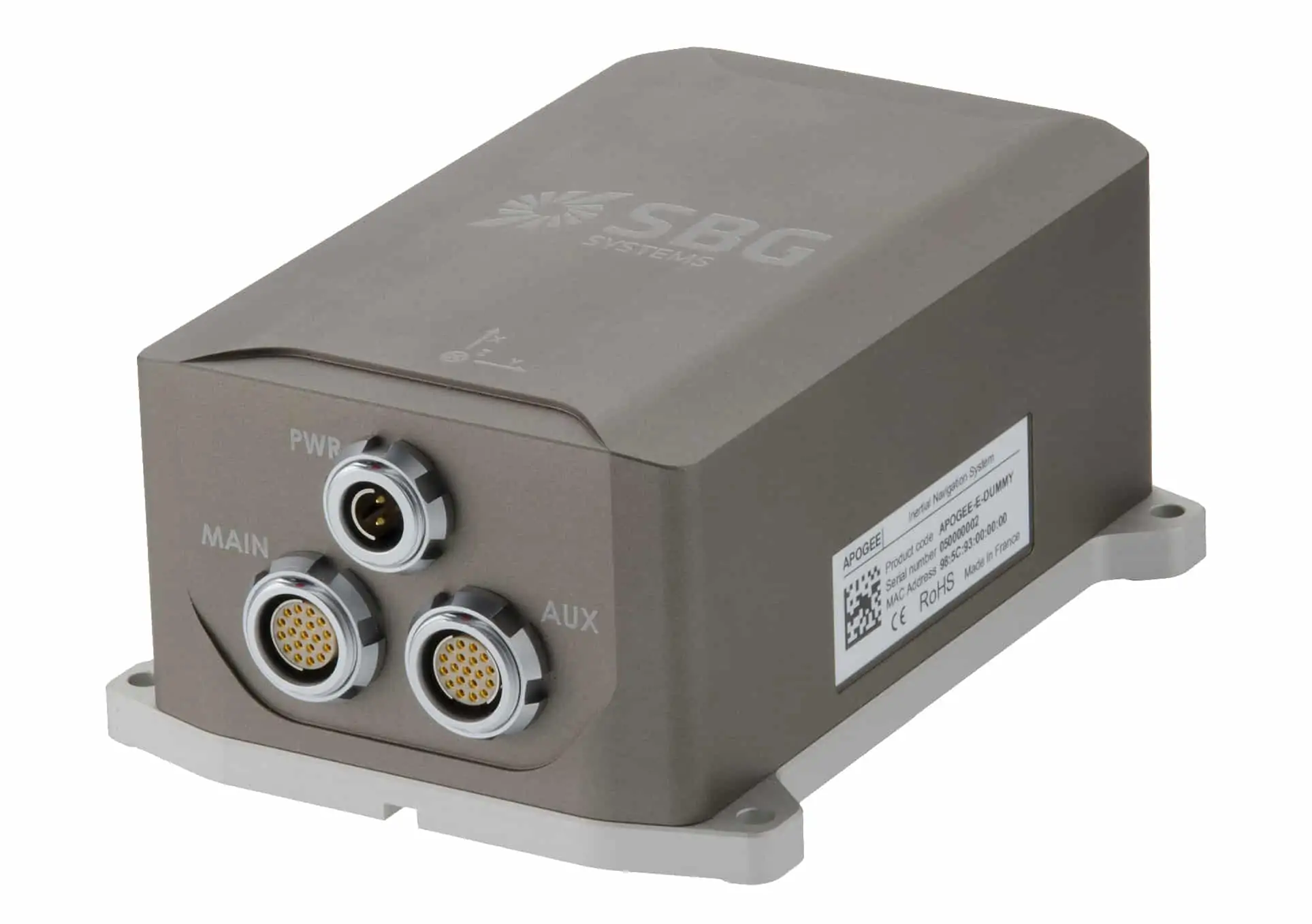
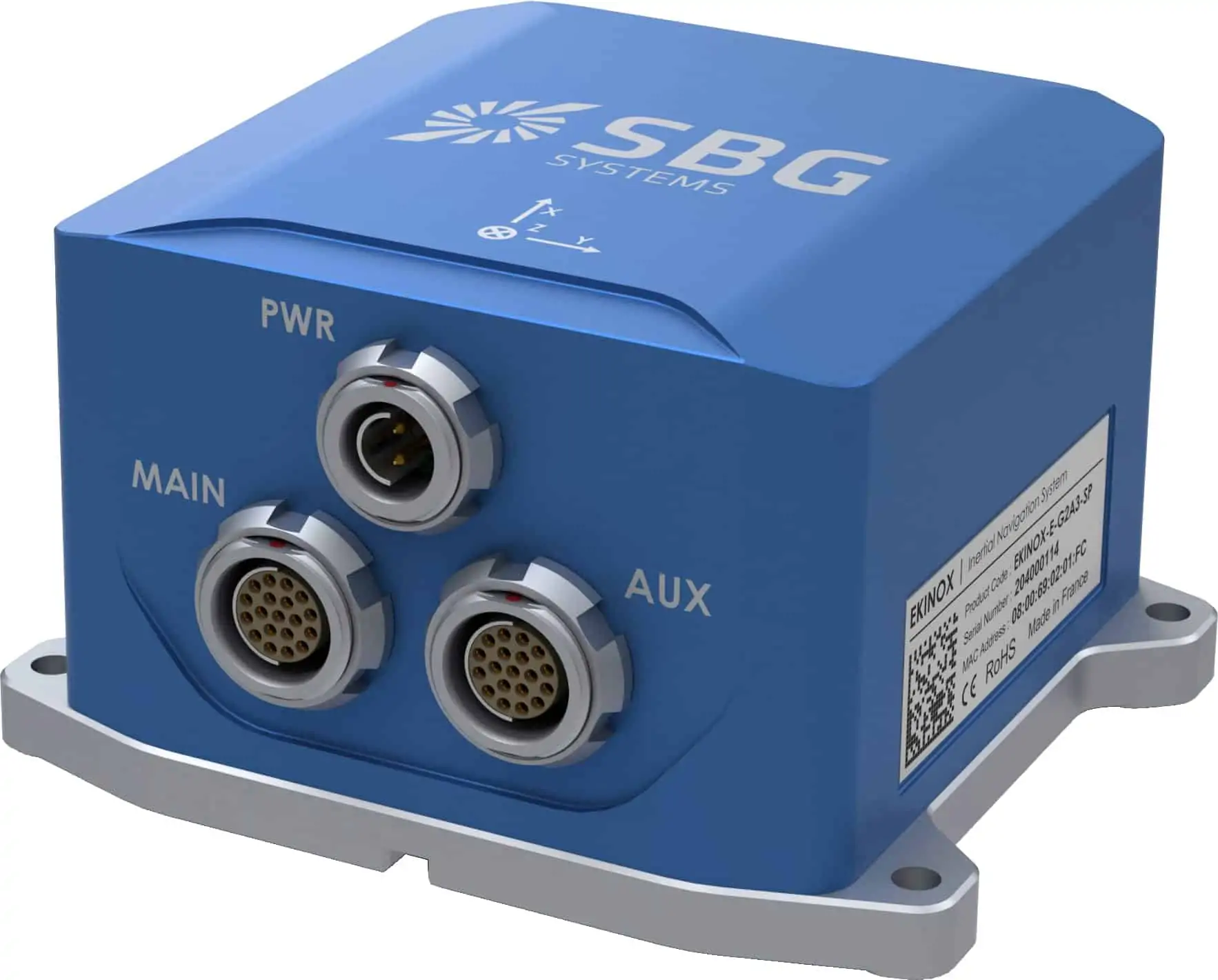
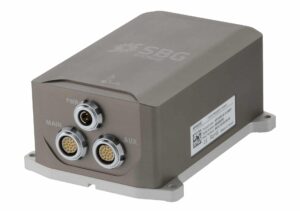
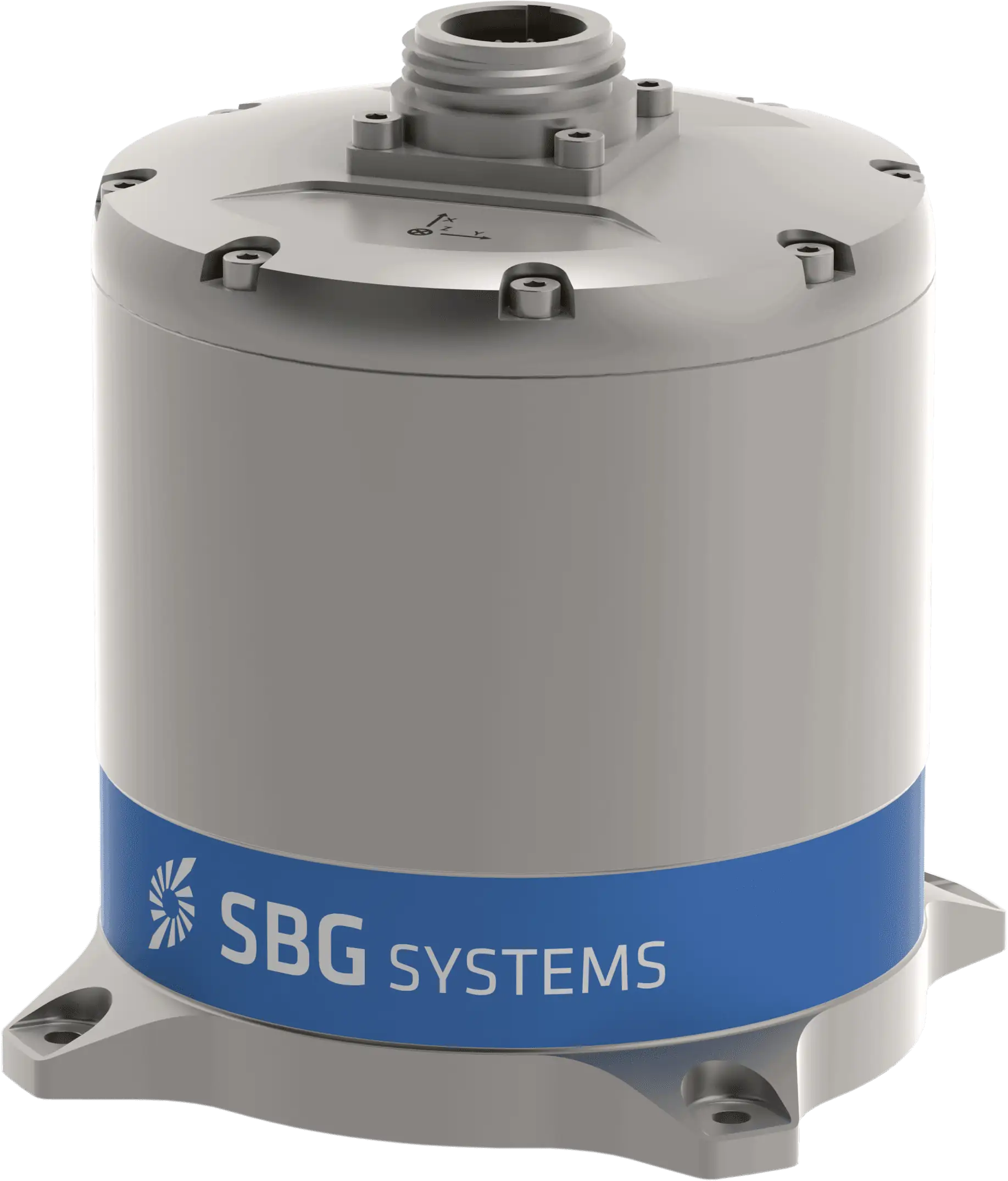
Ekinox Subsea Series MRU INS by SBG Systems
ROVs introduce strong interactions between vehicle motion and tooling. Thruster-induced vibration and sudden manipulator movements can inject disturbances that challenge standard filtering. A unit tuned exclusively for wave motion may respond poorly to impulsive events unless its bandwidth is specifically configured for ROV dynamics.
Interfacing with the surface vessel’s DP system is also vital. Misalignment of reference frames between the subsea vehicle and the surface support ship can manifest as station-keeping oscillations. Buyers should prioritize deterministic latency and robust sensor health signaling to ensure stable tool positioning at the worksite.
MRU Role in Dynamic Positioning Systems
Within a DP architecture, the MRU functions as a Vertical Reference Unit (VRU). It provides the attitude and angular rate estimates used to stabilize the control solution and compensate for vessel motion that would otherwise corrupt position and heading control. In practical terms, the sensor contributes to:
Motion Compensation: Including heave, surge, and sway.
Redundancy Voting: Enabling fault handling when multiple sensors are installed.
Heading Integrity: While magnetometers provide basic heading, high-reliability DP often requires dual-antenna GNSS integration to meet the truth source requirements for navigation.
Interfaces to DP controllers commonly rely on deterministic serial or Ethernet messaging (NMEA, RS-232, RS-422) with clear health and status outputs for fault handling.
Marine Sector-Specific Challenges
Sea State, Slamming, and High-Frequency Motion
Slamming and structural resonance can saturate sensors or trigger filtering behaviors that appear as lag or overshoot. The correct choice depends on matching the sensor bandwidth to the wave encounter spectrum of the specific hull form. Procurement packages should include guidance on placement and structural stiffness: a high-end sensor poorly installed will often underperform a mid-range unit with proper vibration isolation.
Depth, Pressure, and Thermal Regimes
Internal temperature changes in pressure housings as power draw shifts can create apparent attitude drift. Engineers should require evidence of performance across the expected internal housing temperature range. For subsea programs, the sourcing decision often hinges on system integration support, including recommended housing practices and connector selection that will not creep under repeated pressure cycles.
Magnetic Disturbance and EMI
Unmanned platforms are electromagnetically noisy environments. Thruster drives and payload electronics can inject EMI that corrupts measurements. Compliance with MIL-STD-461 for electromagnetic interference is a critical benchmark for defense-adjacent platforms. If the unit depends on magnetometers for heading, the system must be calibrated to handle magnetic anomalies or operate with reduced reliance on magnetic measurements in ferrous environments.
Corrosion and Ingress
Salt spray and humidity cycling are primary causes of mechanical failure. While IP ratings are a starting point, engineers should look for evidence of long-duration sealing under vibration. Material selection is also a key criterion: marine-grade alloys and proper isolation from dissimilar metals are required to prevent galvanic corrosion.
Technical Sourcing & Integration of MRUs
MRU vs. IMU vs. INS
Mis-procurement often stems from treating these terms as interchangeable. An IMU provides raw or lightly processed gyroscopic and accelerometer data. An INS combines an IMU with estimation algorithms and external aiding (GNSS, DVL) to produce full navigation states. A motion reference unit is a specific derivative optimized for marine dynamics, offering the filtered heave and attitude data required for stabilization.
Alignment and Reference Frames
Even the highest-grade sensor will deliver poor results if reference frames are mishandled. Integration plans must account for:
Lever Arm Compensation: Modeling the distance between the MRU and other sensors like GNSS antennas.
Mounting Tolerance: Managing the mechanical alignment relative to the vehicle’s center of gravity.
Environmental Qualification: Ensuring the unit meets MIL-STD-810 standards for shock, vibration, and salt fog exposure.
Timing Protocols: Utilizing PPS or PTP to manage time alignment between the MRU and downstream consumers.
Selecting a Motion Reference Unit Supplier
The directory at the top of this page features leading global manufacturers and suppliers of MRU sensors for unmanned platforms, and is the primary resource for qualifying vendors against specific mission requirements. When selecting a motion reference unit supplier, prioritize those who provide well-documented noise models and stable, repeatable outputs that integrate cleanly into your existing control stack. Choosing a partner with proven experience in unmanned maritime platform integration ensures the sensor will remain a dependable reference throughout the program lifecycle.
Inertial Labs outlines the critical role of accelerometers in the company's navigation systems, highlighting applications across UAVs, marine navigation, and robotics for precise motion tracking
Visit Inertial Labs’ booth at Eurosatory 2024 to discover advanced inertial navigation systems, precision targeting solutions, and innovative motion-tracking devices for unmanned systems
Jan De Nul integrated SBG Systems' Navsight-Apogee into its survey vessel for bathymetric applications for reliable data in harsh conditions and enhanced positioning
PNI Sensor, a leading developer of sensor modules for UAVs (unmanned aerial vehicles) and robotics, has partnered with Unmanned Systems...
Nov 05, 2020
Advancing Unmanned Systems Through Strategic Collaboration
UST works with major OEMs to foster collaboration and increase engagement with SMEs, to accelerate innovation and drive unmanned systems capabilities forward.