



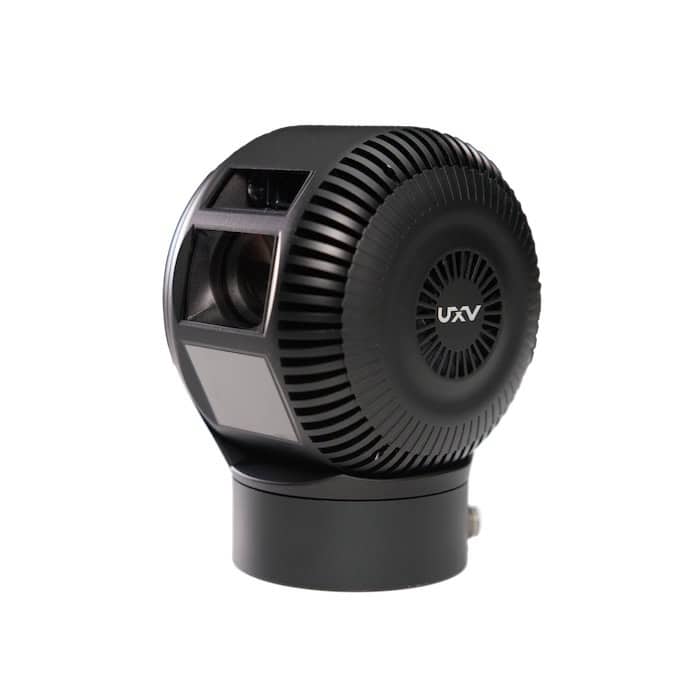
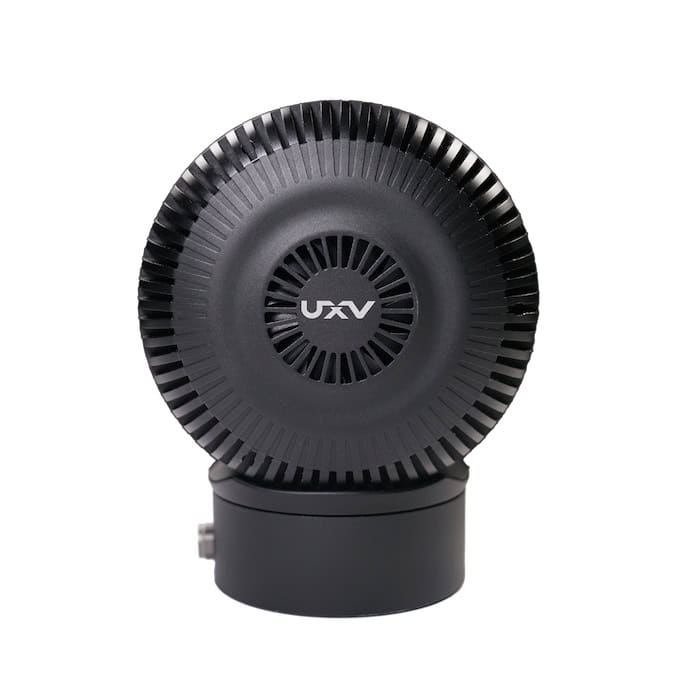
The Optroxa GMB-450 from UXV Technologies is a lightweight, multi-sensor imaging gimbal engineered for advanced defense applications. At just 450 grams, it integrates a high-resolution RGB camera with global shutter, 18x optical and 10x digital zoom, alongside a 640×480 LWIR thermal sensor operating at up to 60 Hz. A built-in laser rangefinder (LRF) and on-board video processor enable mission-critical image processing, while support for multiple communication interfaces ensures platform flexibility. This compact system delivers powerful surveillance and targeting capabilities with minimal payload impact.
Constructed to IP67 and MIL-STD-810H standards, the GMB-450 is built for operational reliability in harsh conditions. It includes continuous 360° gas-filled direct-drive rotation on yaw and pitch axes, with absolute encoders for precise motion control. The gimbal’s open-architecture design supports modular integration and future upgrades. Onboard computing is powered by a 1024-CUDA core NVIDIA Ampere GPU with 16GB RAM and 32 Tensor Cores, enabling edge AI and advanced onboard analytics. The GMB-450 combines cutting-edge performance, rugged design, and lightweight construction in a next-generation EO/IR solution.





