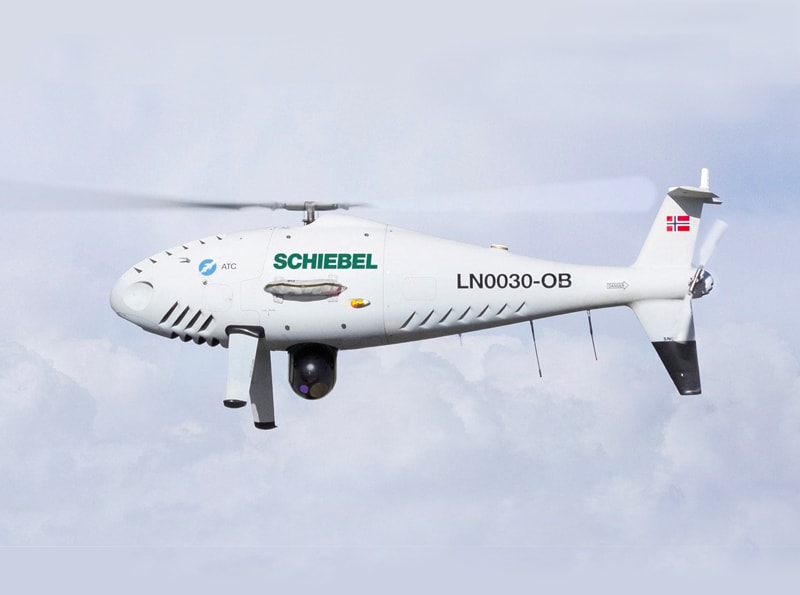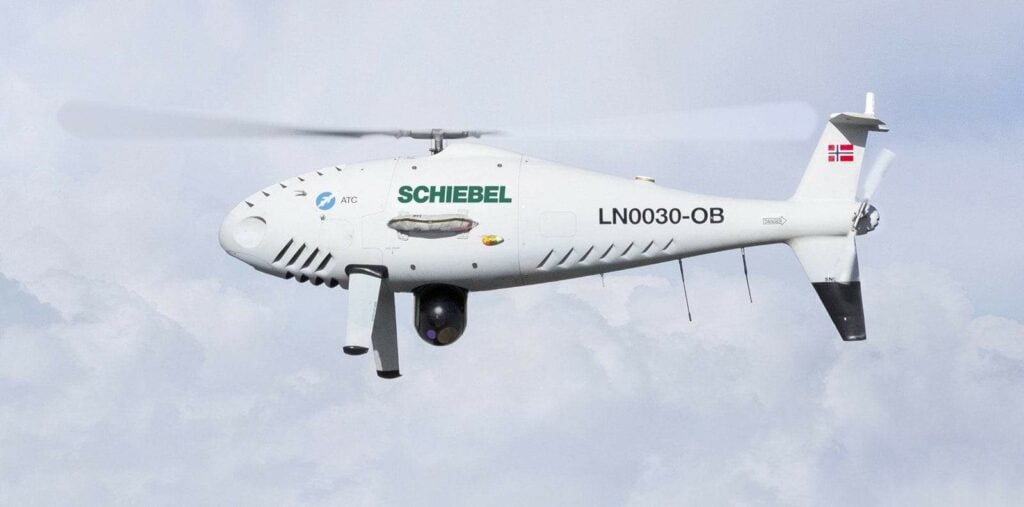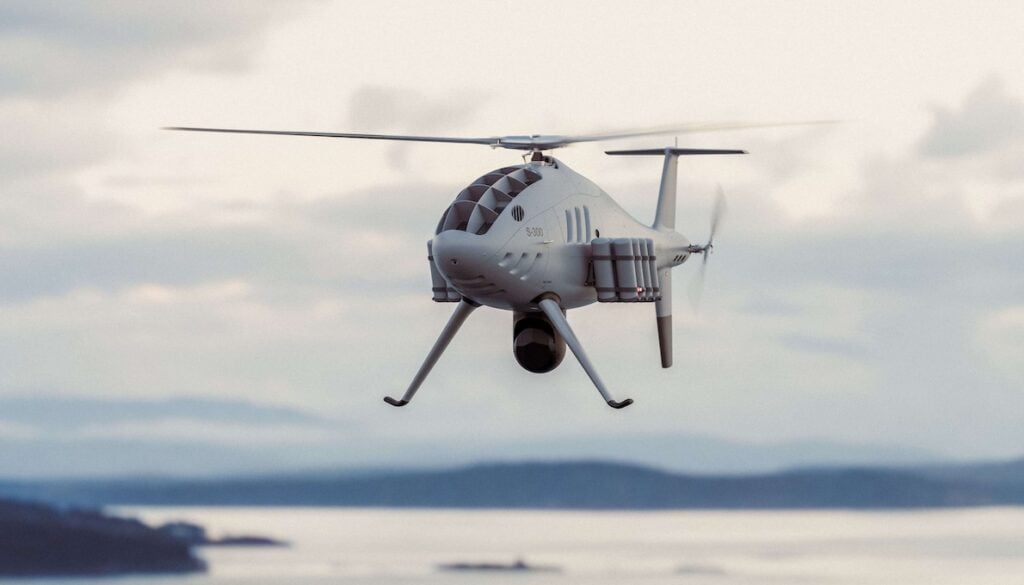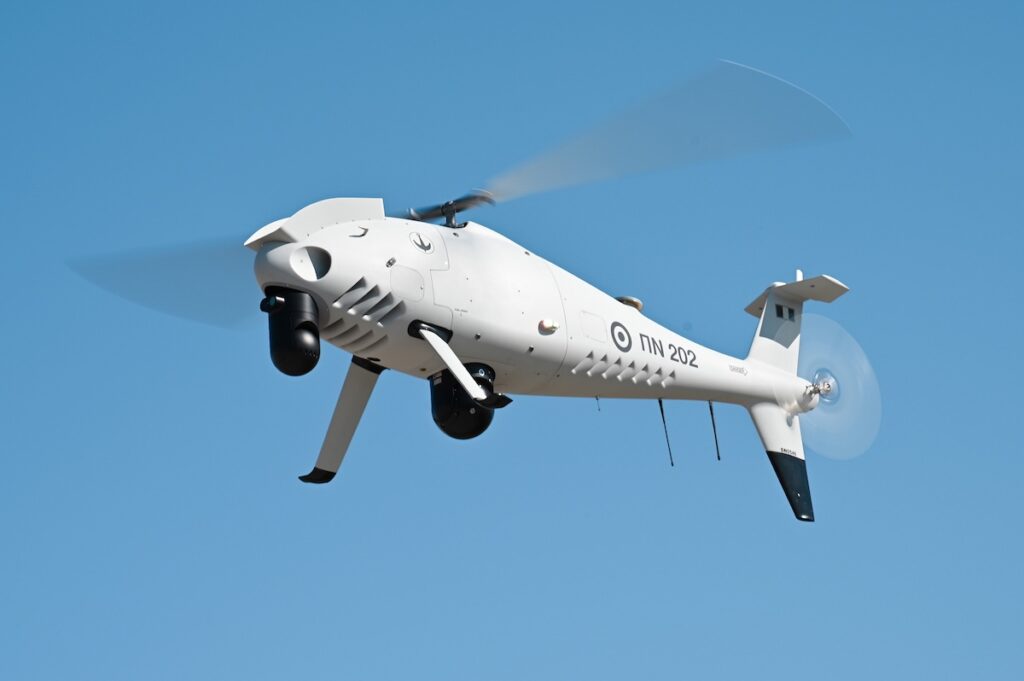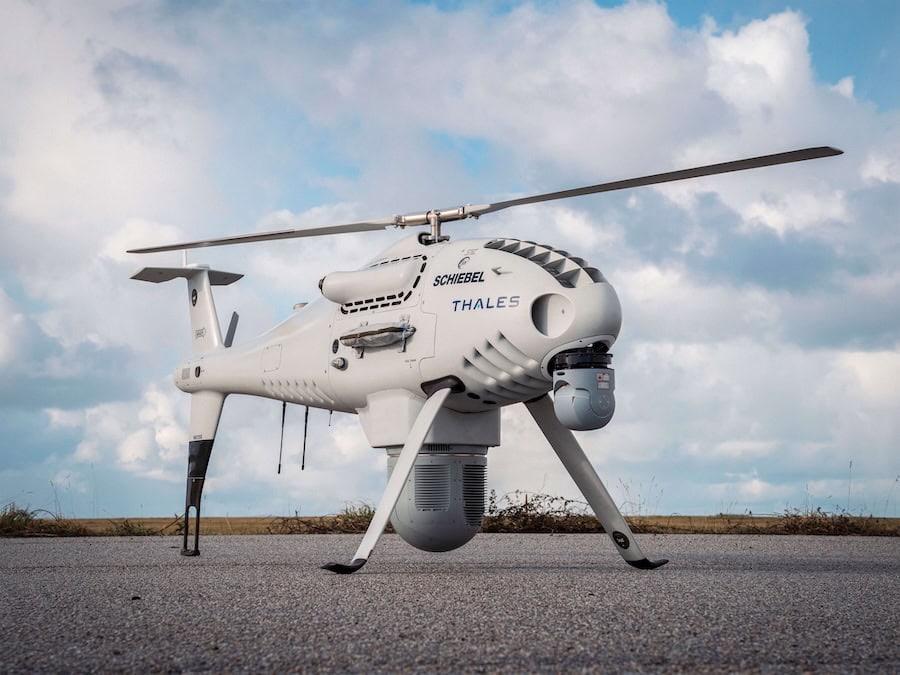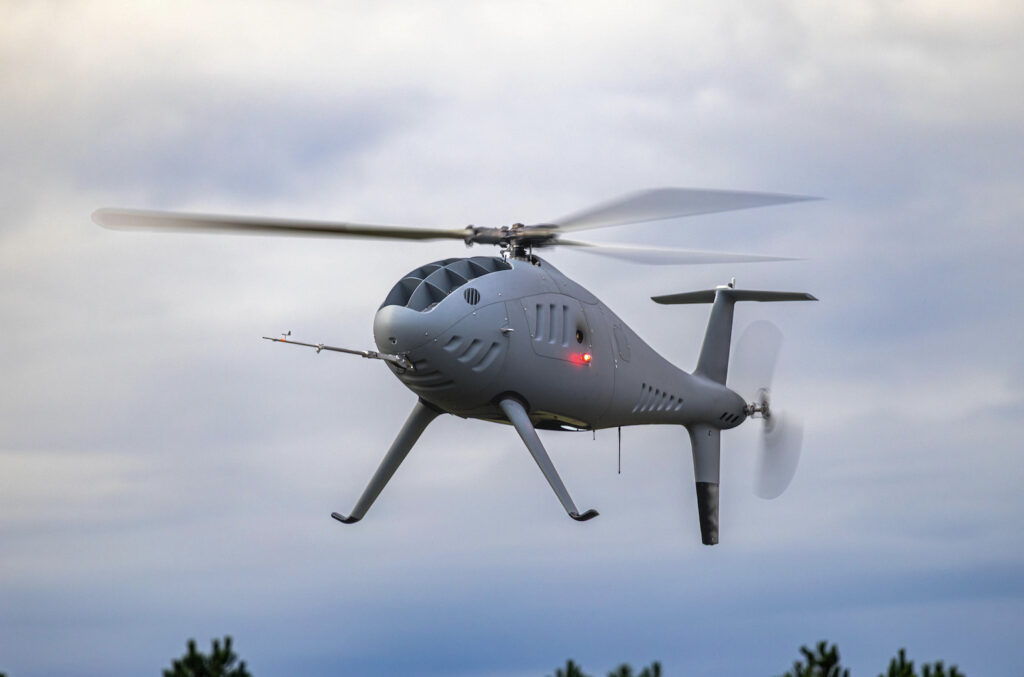



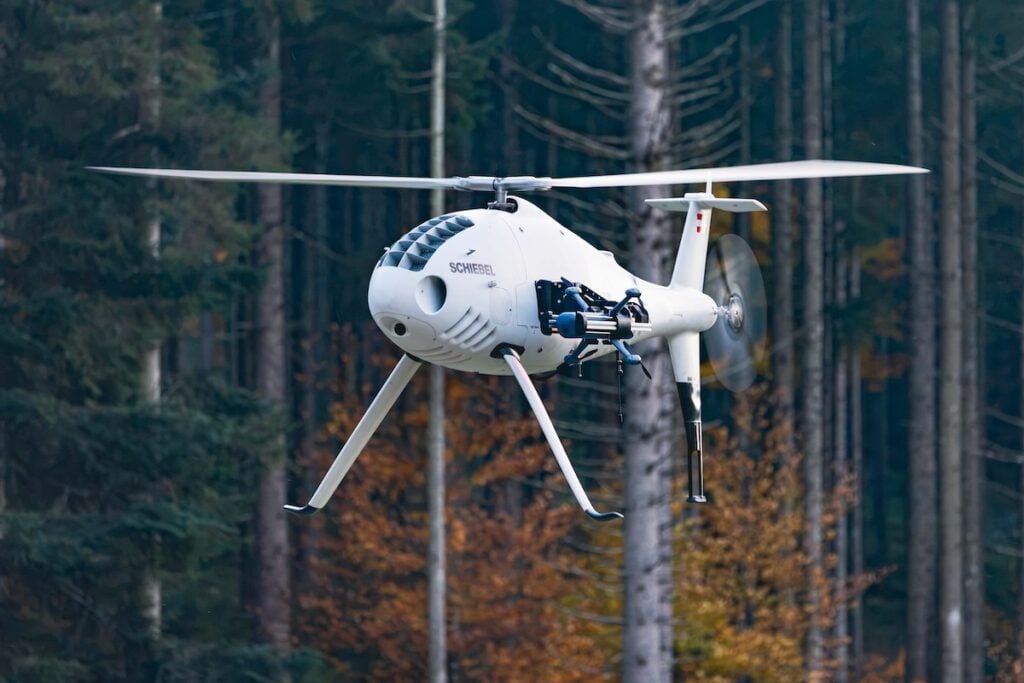
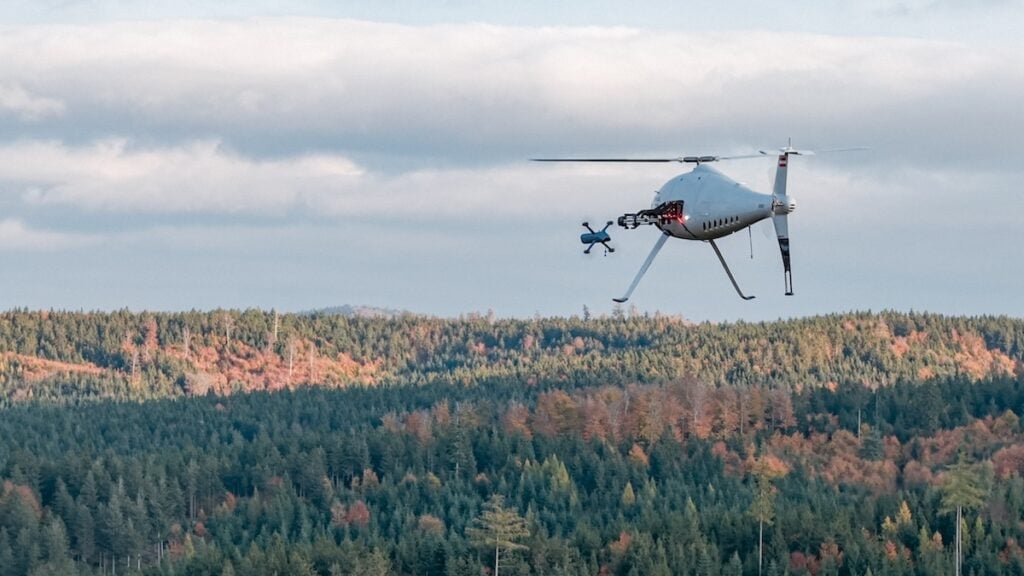
Schiebel and OSIRIS Poland have completed a proof-of-concept demonstration in Austria in which a CAMCOPTER® S-100 Unmanned Air System (UAS) carried, launched, and controlled a smaller unmanned aircraft during forward flight.
During the trial, the CAMCOPTER® S-100 acted as an airborne carrier and launch platform for an inert variant of the OSIRIS HSCD-1 (High-Speed Camera Drone), a small Unmanned Air System (sUAS). Once released in forward flight, the HSCD-1 was operated over a communications link relayed through the S-100, validating the use of the larger UAS as both a drone mothership and an airborne control and video relay.
The architecture pairs the range and endurance of the CAMCOPTER® UAS series with the speed and agility of smaller drones. Conventional ground-based launch and operation constrain the distance and duration over which an sUAS can operate. By transporting a smaller drone closer to its intended target or area of operation and maintaining the communications link after deployment, the mothership configuration extends the operational reach and endurance of the smaller platform.
While the Austrian demonstration used an inert drone, the deployment and relay concept is applicable to high-speed interceptor drones equipped with effectors, loitering munitions, and other sUAS platforms, particularly within the Counter-Unmanned Air System (C-UAS) domain. Alongside the S-100, Schiebel notes that its CAMCOPTER® S-300, S-101, and S-301 systems can similarly serve as airborne carriers, launch platforms, and communications relays for smaller unmanned systems.
“This proof-of-concept demonstrates the incredible potential of combining the mature and proven CAMCOPTER® with smaller, specialised unmanned systems,” said Hans Georg Schiebel, Chairman of the Schiebel Group. “The successful integration of the OSIRIS HSCD-1 demonstrates a concept that can also be applied to high-speed interceptor drones, opening up new possibilities for diverse operational scenarios.”