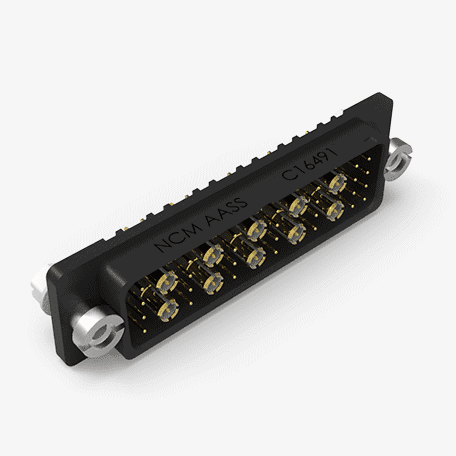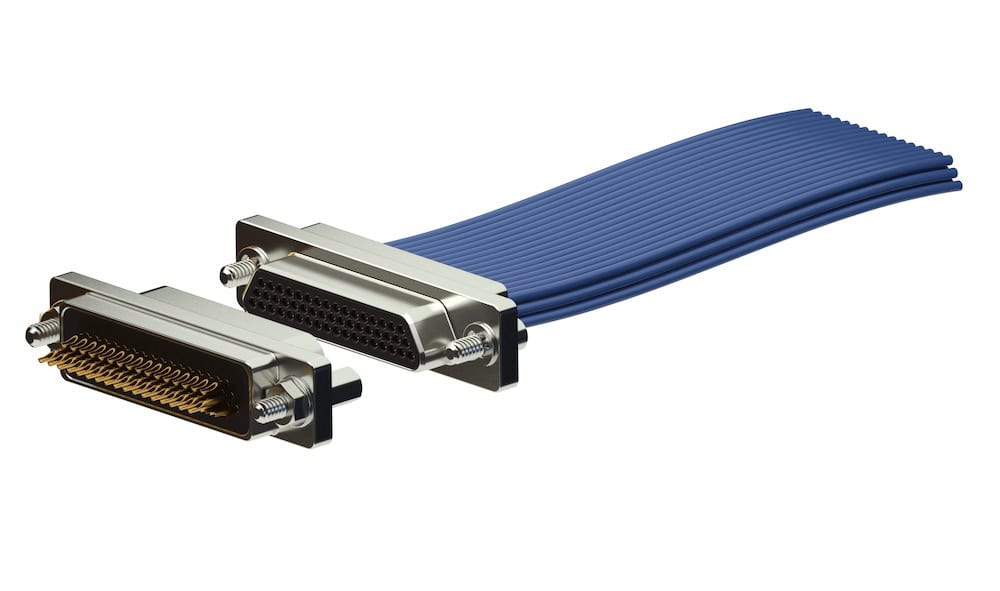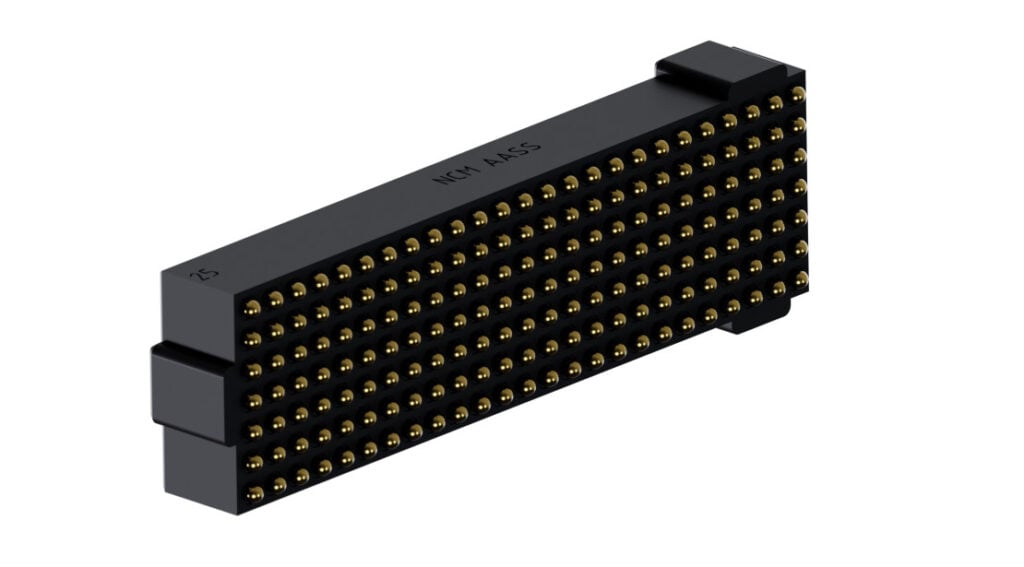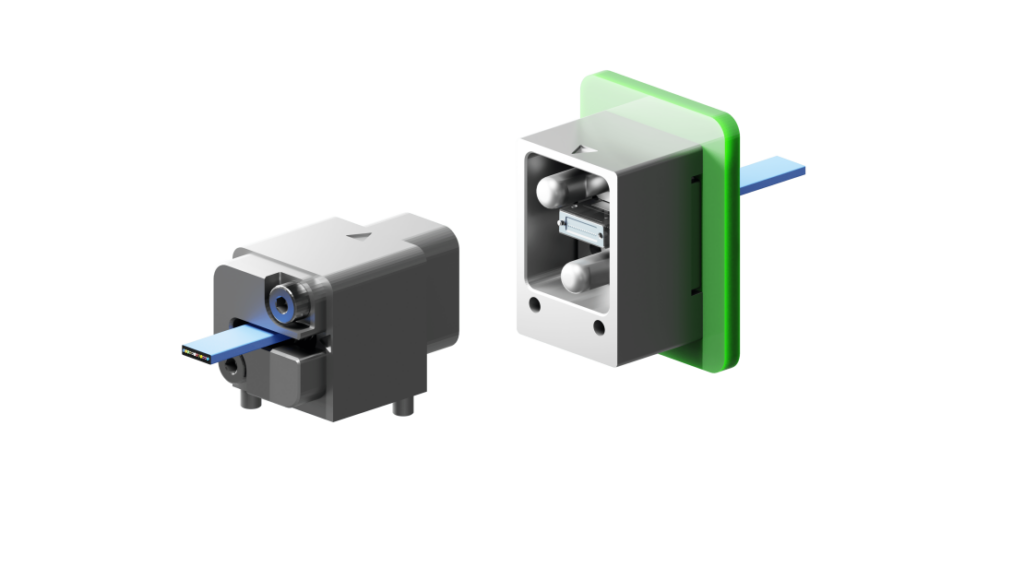
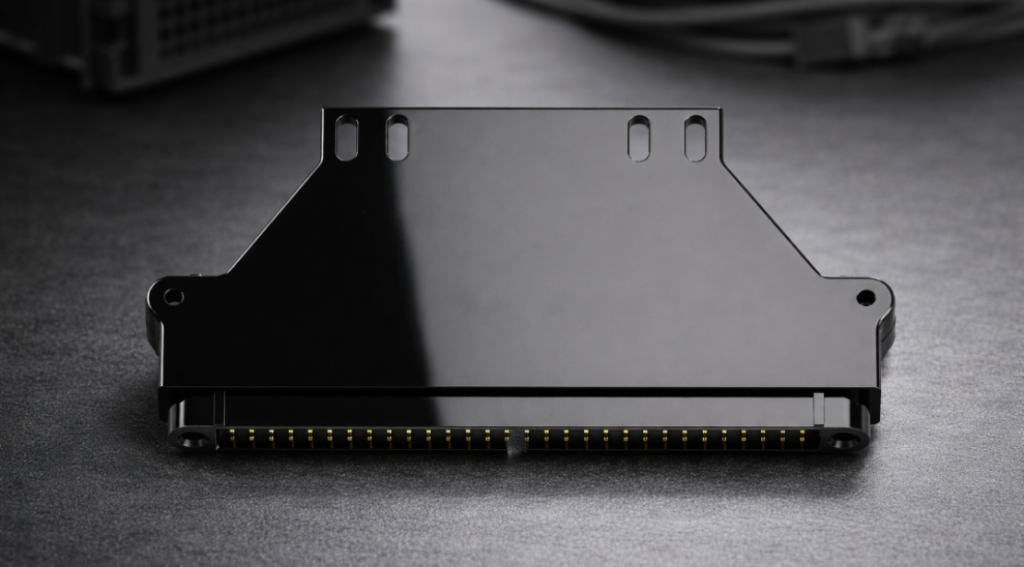
Additive manufacturing is moving beyond prototyping and assembly tooling into serial-production interconnect applications. Nicomatic is applying stereolithography (SLA) to produce 3D-printed backshells, protective caps and accessories for long-term integration, providing an alternative to traditionally machined aluminium components where system requirements permit. Read more >>
Moving Additive Manufacturing into Serial Production
The suitability of 3D printing for production interconnect components depends in part on achieving the surface quality, resolution and repeatability required across production batches.
Rather than the rougher surface finish commonly associated with standard fused deposition modelling (FDM), Nicomatic uses SLA technology for its production backshells and accessories. Stereolithography enables components to be manufactured with high resolution and a smooth surface finish, while providing the repeatability and quality required for serial production.
The approach also avoids the tooling costs associated with injection moulding or machining, allowing additive manufacturing to be considered for production quantities rather than being restricted to mock-ups and prototypes.
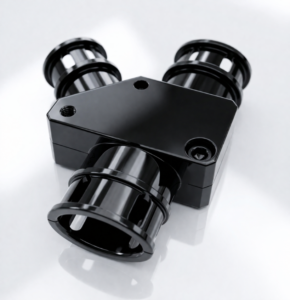
Technical Polymers and ESD Protection
Developments in additive manufacturing materials are also expanding the environments in which printed interconnect components can be used.
Alongside resins combining mechanical strength and flexibility, Nicomatic can manufacture backshells and accessories from materials selected for specific requirements. This includes ESD-safe material for applications where sensitive equipment requires protection against electrostatic discharge.
Material selection can therefore be matched more closely to the mechanical and environmental constraints of the application.
Addressing Complex Interconnect Geometries
One of the principal differences between additive manufacturing and conventional machining is the degree of geometric freedom available when integrating connectors and cable assemblies into space-constrained equipment.
Requirements such as a 45° cable outlet, an ultra-tight bend radius or a complex backshell geometry intended to avoid a mechanical obstacle inside an enclosure can introduce challenges for conventionally machined components.
3D printing allows the backshell geometry to be configured around these integration constraints and subsequently manufactured in production quantities. This can be particularly relevant where the available installation volume dictates cable routing or where conventional component geometries are difficult to accommodate.
Reducing Harness Weight
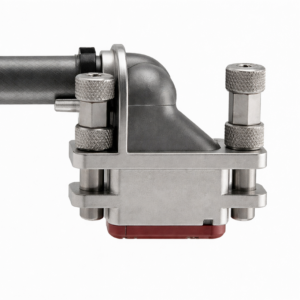 Weight is another consideration when assessing printed polymer components as an alternative to metal backshells and protective caps.
Replacing a metal component with a technical polymer equivalent can significantly reduce the overall weight of a harness. The resulting component can provide mechanical protection and cable retention while reducing mass.
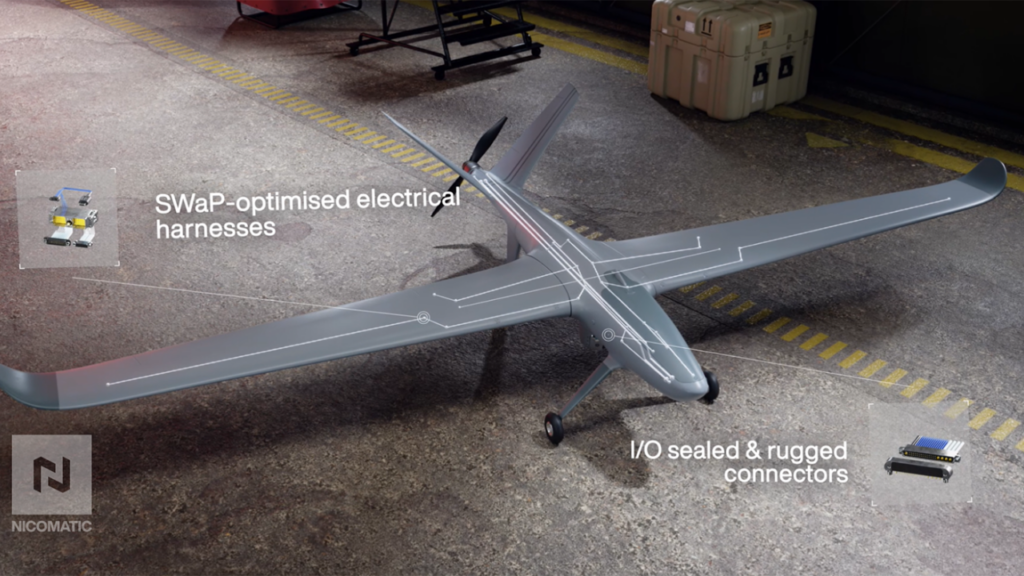
This makes the approach relevant to applications where size, weight and power (SWaP) considerations influence component and system-level design decisions.
Balancing EMI Shielding and Mechanical Requirements
The choice between a 3D-printed polymer backshell and a conventional metal component ultimately depends on the requirements of the interconnect architecture.
Where electromagnetic interference (EMI) shielding is critical, a metal backshell remains essential. A printed polymer component should therefore not be considered a direct replacement in applications where the backshell is required to provide this shielding function.
Where requirements are primarily mechanical or environmental, however, a 3D-printed backshell provides an alternative. These applications can include cable guiding and retention, dust sealing and ESD protection.
Within these constraints, additive manufacturing can also provide lower weight and shorter deployment times while supporting long-term use.
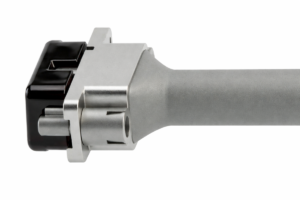 Additive Manufacturing as a Production Option
The transition from prototyping to serial-production additive manufacturing expands the options available when developing interconnect systems around demanding mechanical, environmental and packaging constraints.
SLA production, technical polymers and application-specific geometries allow 3D-printed backshells, protective caps and accessories to address weight optimization and complex integration requirements without changing the fundamental distinction between mechanical protection and EMI shielding.
For applications where metal shielding is not required, the technology provides an additional route for integrating interconnect components into weight-sensitive and geometrically constrained system architectures.
Read Optimisation, Weight and Integration: Why switch to 3D-printed connector backshells for series production? on the Nicomatic website.