



Formlabs’ selective laser sintering (SLS) 3D printing technology is supporting Australian drone manufacturer Boresight in its transition from expendable target drones to more technically advanced UAVs for military applications. Read more >>
Using the Fuse Series ecosystem, Boresight has introduced engineering-grade materials into its manufacturing process while retaining the flexibility and cost efficiency of additive manufacturing.
The expansion follows an opportunity through the Australian Strategic Capability Accelerator (ASCA) program, which was seeking cost-effective, Australian-made performance drones. Boresight’s experience manufacturing low-cost target aircraft provided a foundation for developing more durable systems with different structural and material requirements.
Working with Formlabs’ Australian partner Thinglab, Boresight has expanded its production capabilities to include SLS printing and automated post-processing, allowing the company to manufacture more demanding unmanned aerial vehicles (UAV) components without relying on conventional tooling.
From Expendable Target Drones to Military UAVs
Boresight initially established its manufacturing operations around expendable drones used in military anti-aircraft training exercises. These aircraft provide Australian military personnel with domestically manufactured aerial targets for training against UAV threats.
As the drones are intended to be destroyed during training, minimizing manufacturing costs is a primary requirement. The aircraft must also be reliable and straightforward to deploy across different sections of the military.
Boresight addressed these requirements using fused deposition modeling (FDM) 3D printing with polylactic acid (PLA) filament. This approach allowed the company to produce affordable target drones while avoiding the tooling costs and extended lead times associated with conventional manufacturing methods.
The company’s experience with 3D printing subsequently became relevant when the ASCA program sought cost-effective, Australian-manufactured performance drones.
Having established an efficient production process for expendable aircraft, Boresight was positioned to apply its manufacturing experience to more durable UAVs. However, the new aircraft required stronger, engineering-grade materials than those used in its existing PLA-based target drones.
Justin Olde, CEO of Boresight and a former Army Tank Commander, explained the decision to adopt SLS technology, “When we transitioned to more technically advanced drones, we wanted to keep the flexibility of scalable 3D printing, but we needed a more sophisticated material. It needed to be stronger, engineering-grade, and that’s what the Fuse allowed us to do.”
Engineering-Grade Materials for UAV Components
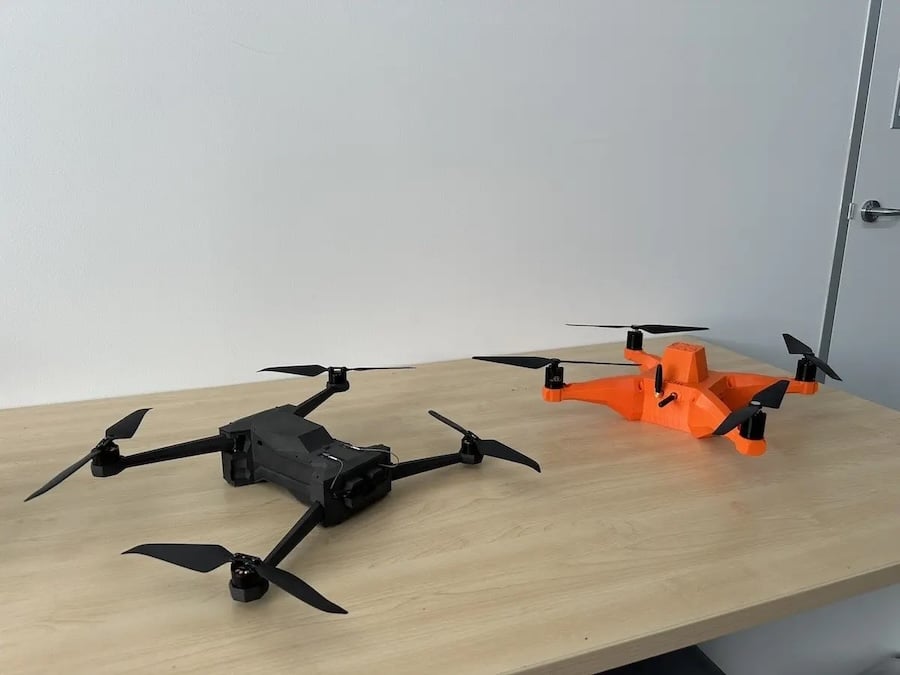
Boresight’s SLS 3D printed drones are more durable and industrial than their FDM target drones.
The transition to more demanding military drone applications required Boresight to evaluate alternative additive manufacturing technologies while maintaining its established cost-conscious production approach.
The company considered other powder bed fusion 3D printers before selecting the Formlabs Fuse Series. Large industrial systems presented substantial upfront costs, with some options approaching half a million dollars.
According to Boresight, the available ASCA contract funding would not have covered this level of investment. Achieving a rapid return would also have required a substantial and immediate increase in production volumes.
The Fuse Series offered a lower-cost alternative that aligned with the company’s existing manufacturing model.
Beyond equipment costs, SLS provided access to engineering-grade materials and greater consistency than Boresight had experienced with its PLA-based FDM process.
With FDM-printed PLA components, variations in material performance had led Boresight to use thicker and heavier structures to achieve the required reliability. The company reports that SLS allows it to make more precise engineering decisions about component geometry and feature thickness.
Olde added, “Probably the biggest contribution of the SLS technology is that we’re getting engineering-grade materials. We can make engineering decisions based on the thickness of the part’s features. Particularly with PLA on the FDM printers, you’re not able to get consistency, so you go thicker and heavier. With SLS you’re able to put that material into a finite engineering analysis program and determine how that feature will perform.”
This allows Boresight to assess how individual component features are expected to perform while balancing structural strength and weight.
The SLS process also supports the manufacture of complex parts with tight tolerances, helping the company maintain consistency during component assembly.
SLS Production of Structural and Functional Drone Parts
Boresight uses the Fuse Series to manufacture a substantial proportion of the components incorporated into its more durable drone platforms.
These include chassis structures, arms, mounts, battery compartments, and camera housings.
The self-supporting nature of the SLS powder bed allows components to be arranged and nested within the build chamber. Boresight uses this capability to achieve high packing densities, including positioning smaller parts within larger components.
Higher packing density helps reduce the manufacturing cost per part, supporting the company’s lean production approach.
The transition to SLS has also given Boresight greater flexibility to produce lightweight components using materials suited to the strength and durability requirements of its new aircraft. These include the need for components that remain simple, lightweight, and strong when used in demanding military environments.
To maintain consistent print quality at production volumes, Boresight follows the maintenance and cleaning procedures recommended for the Fuse Series.
One routine operation involves cleaning the printer’s optical cassette, a process that takes approximately 20 seconds. Regular cleaning helps prevent printing defects such as rippling and pitted surface marks.
Increasing Throughput with Automated Post-Processing
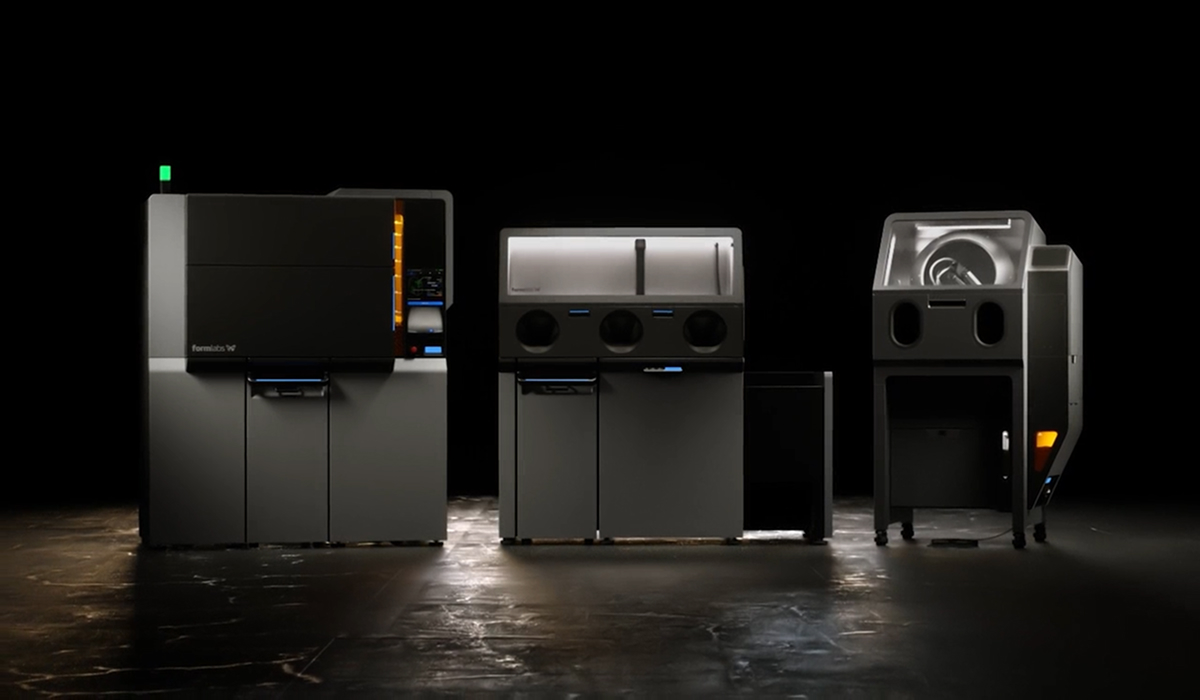
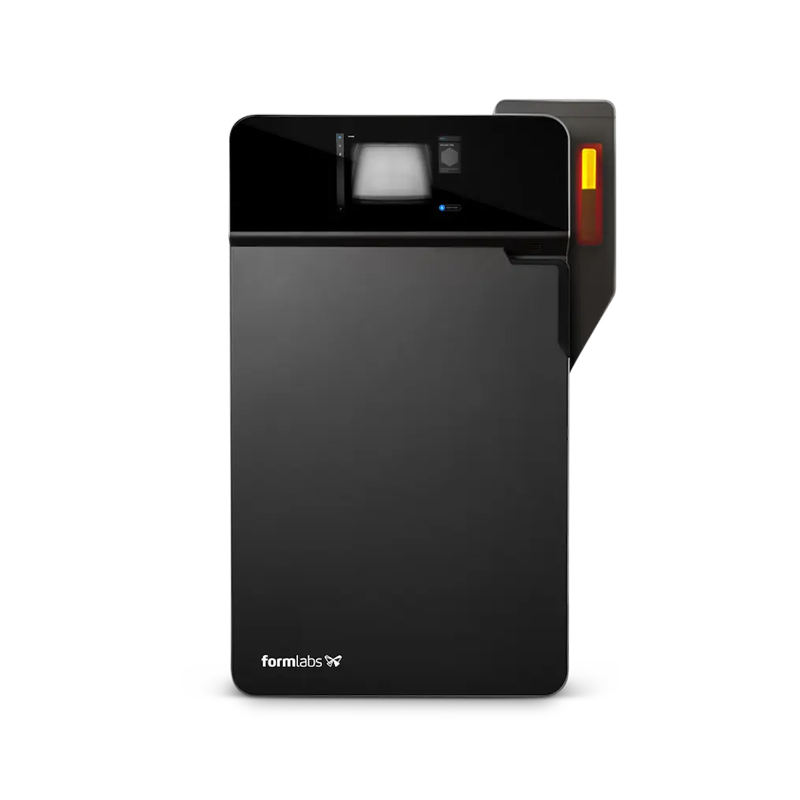
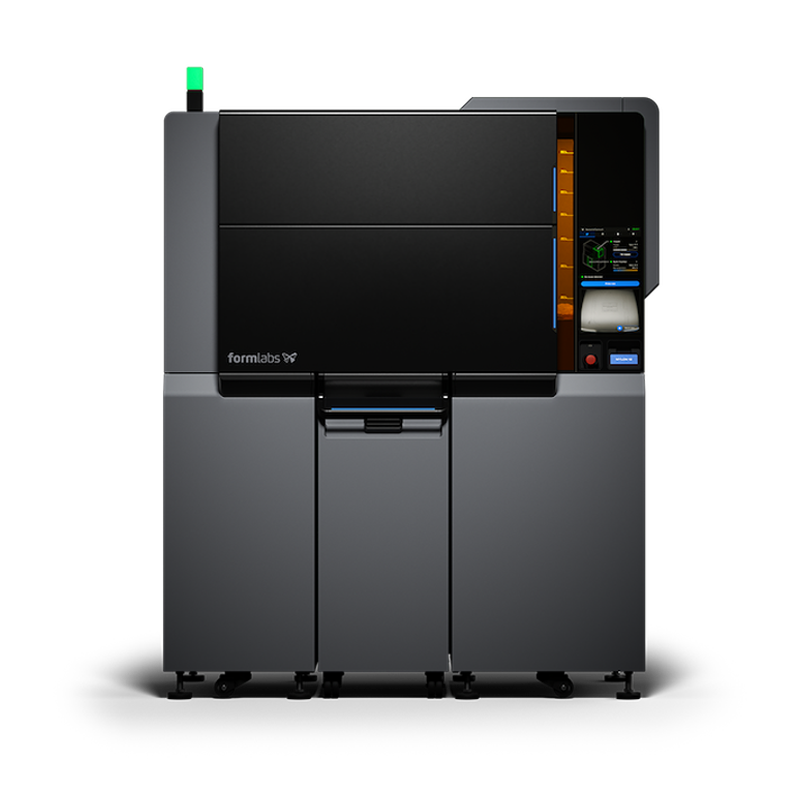
As its SLS manufacturing operations developed, Boresight expanded its equipment configuration to include a second Formlabs Fuse 1+ 30W printer and a Fuse Blast cleaning and polishing system.
The additional printer increased available manufacturing capacity, while the Fuse Blast reduced the manual work required to clean and finish printed components.
According to Formlabs, automated media blasting reduces hands-on post-processing by 80%. For some components, several additional minutes of manual blasting can produce a surface finish nearly indistinguishable from injection-molded plastic.
The introduction of automated cleaning and polishing has improved Boresight’s post-processing workflow, allowing completed builds to move through finishing with less manual intervention. With two printers operating alongside the Fuse Blast system, the company reports improved production capacity, finishing efficiency, and surface quality compared with its previous manual methods.
Together, the two Fuse 1+ 30W printers and Fuse Blast system support Boresight’s production requirements while maintaining the design flexibility associated with additive manufacturing.
Adapting UAV Designs Without Conventional Tooling
Manufacturing flexibility remains important for Boresight because drone configurations may need to change in response to military requirements or modifications introduced by component suppliers.
For example, different military units may require cameras of different sizes, while changes to a rotor blade supplier’s attachment fixture can affect the geometry of associated components.
With conventional manufacturing processes such as injection molding or vacuum molding, modifications of this kind may require tooling revisions or render existing molds obsolete.
Using additive manufacturing, Boresight can revise a digital component design and print an updated version without producing replacement tooling.
The company describes design modifications that can require approximately 10 minutes of reworking before a revised component is printed. This relates to the design adjustment rather than the complete manufacturing turnaround time.
The ability to make such changes is particularly relevant when production volumes do not justify the initial investment associated with conventional tooling.
Boresight estimates that injection-molding tooling for a component such as a drone chassis could cost approximately $100,000. If the aircraft’s payload configuration changes after a year, the manufacturer may not have produced enough components to recover that investment.
Olde, stated, “We’d need to be churning out awfully significant volumes for an injection molding scenario to make sense. The tooling for parts like the chassis could be around $100,000, and if the payload changes after a year, I haven’t gotten nearly the ROI I need on it.”
By retaining an additive manufacturing workflow, Boresight can accommodate smaller production runs and component variations without committing to fixed tooling configurations.
Scaling SLS Manufacturing with Production Demand
Boresight’s adoption of the Formlabs Fuse Series reflects a manufacturing strategy based on expanding production capacity incrementally rather than investing in large industrial systems ahead of demand.
The company has retained FDM printing for its cost-sensitive, expendable target drones while adopting SLS to meet the material and structural requirements of its more technically advanced military aircraft.
The addition of a second Fuse 1+ 30W printer and automated post-processing equipment has allowed Boresight to expand its SLS production capabilities within the same manufacturing ecosystem.
This approach enables the manufacturer to select different additive manufacturing processes according to the requirements of individual UAV applications.
For expendable training targets, low production costs remain a priority. For more durable military drones, the Fuse Series provides access to engineering-grade materials and a manufacturing process that accommodates complex component geometries and design changes.
Boresight’s use of FDM for expendable target drones and SLS for more durable military aircraft illustrates how different additive manufacturing processes can be applied according to component requirements, production volumes, and cost constraints. The company’s incremental investment in SLS equipment also allows it to expand manufacturing capacity without committing to the tooling costs associated with conventional production methods.