
Showcase your capabilities
If you design, build or supply 3D Printers, create a profile to showcase your capabilities and connect with visitors who have an active requirement for your solutions.




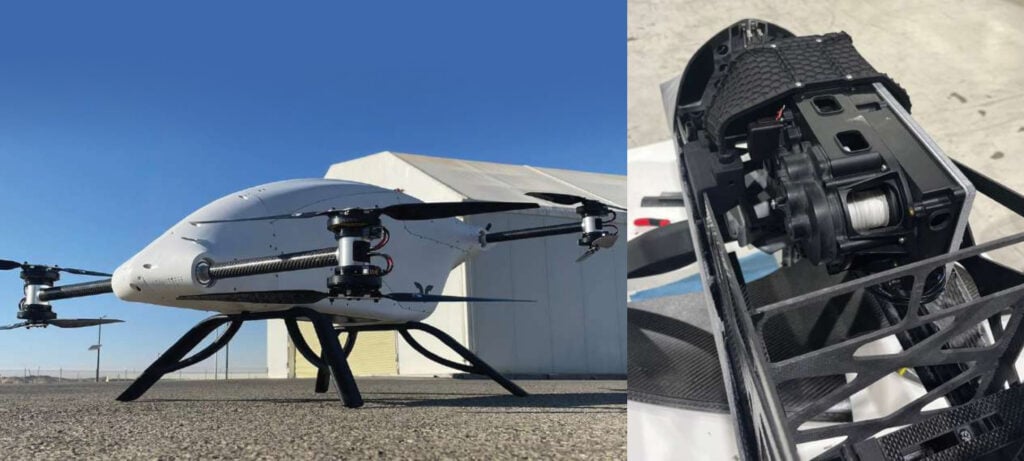
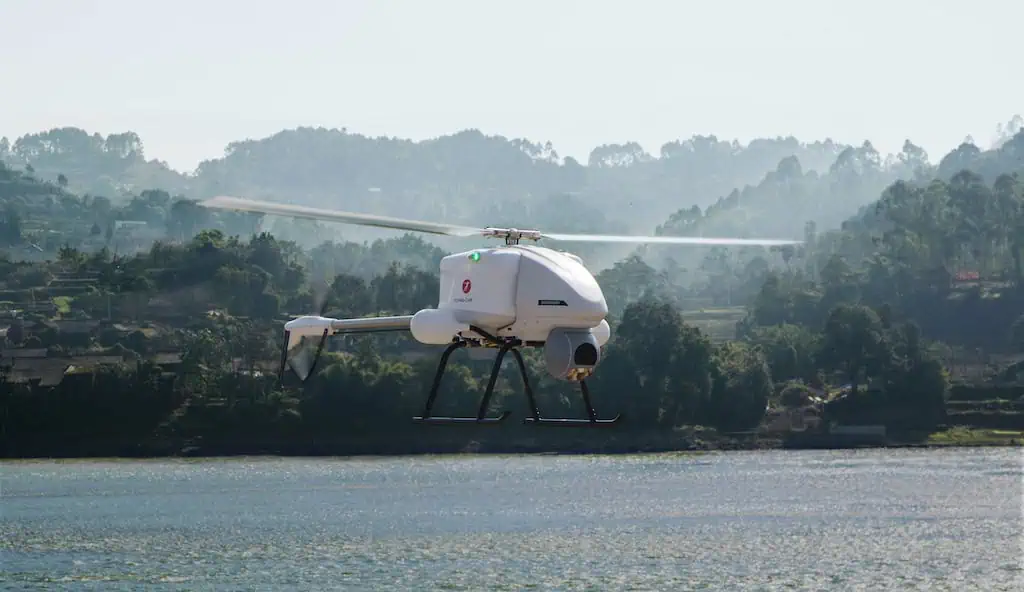
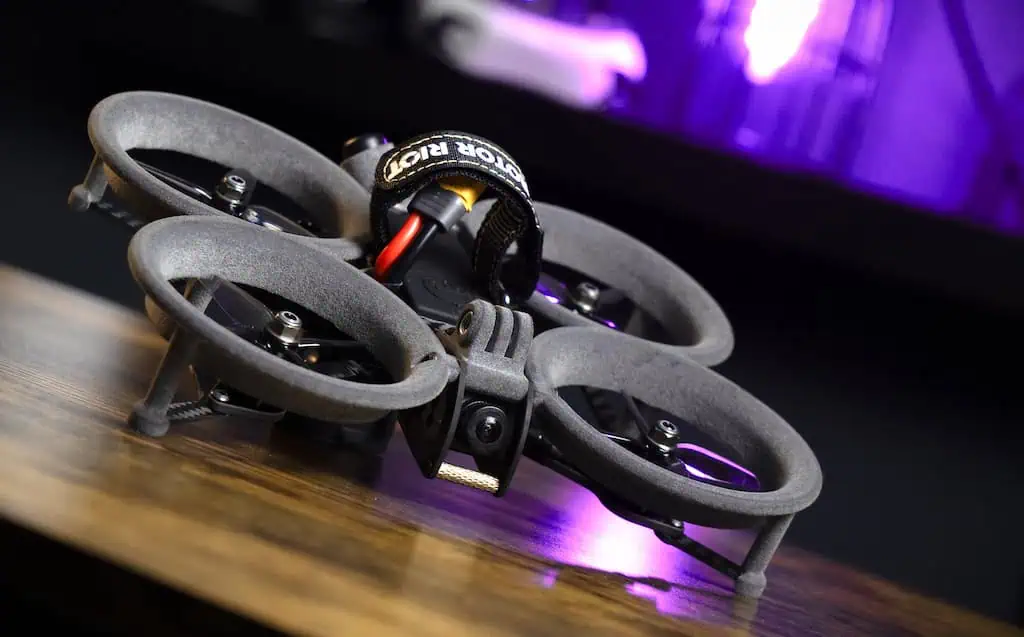
3D printers for drones enable manufacturers to produce functional airframe structures, payload housings, sensor enclosures, tooling, and flight-ready components directly from digital designs. These systems are used across commercial, industrial, and defense programs to accelerate development cycles, reduce tooling requirements, and enable mission-specific customization.
This page showcases leading manufacturers of 3D printers for drone parts, including systems based on FDM, SLS, MJF, SLA, DLP, continuous fiber reinforcement, and metal additive manufacturing technologies.
Read the Technology Overview
Industrial 3D Printing Solutions for UAV Components, Production, Prototyping & Scalable Drone Manufacturing

If you design, build or supply 3D Printers, create a profile to showcase your capabilities and connect with visitors who have an active requirement for your solutions.

An industrial 3D printer for drones is no longer just a prototyping tool. Modern production systems produce functional airframe components, payload structures, sensor housings, and flight-worthy parts directly from CAD models. This capability allows developers to shorten development cycles, eliminate expensive tooling, and rapidly iterate designs in response to operational requirements. Utilizing a dedicated 3D printer for drone fabrication is highly advantageous for low-to-medium volume programs, specialized configurations, and frequent engineering changes.
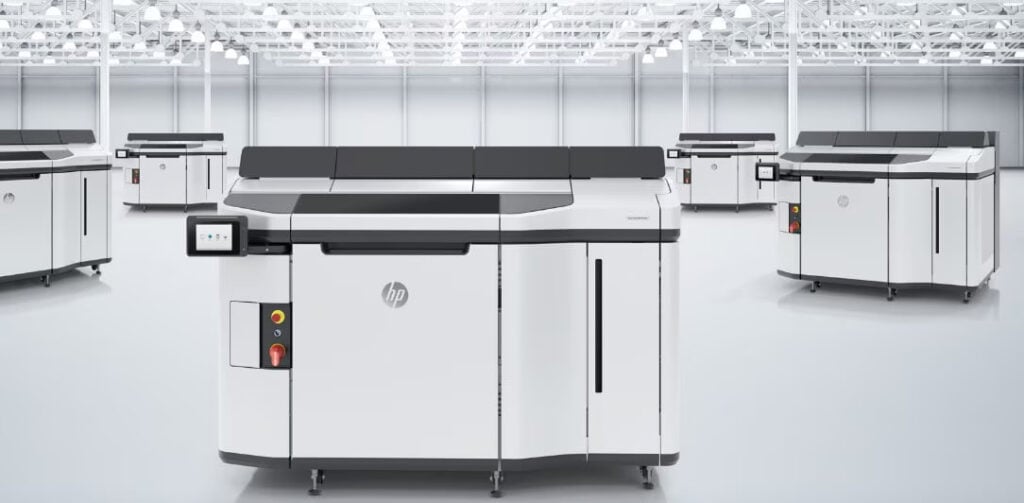
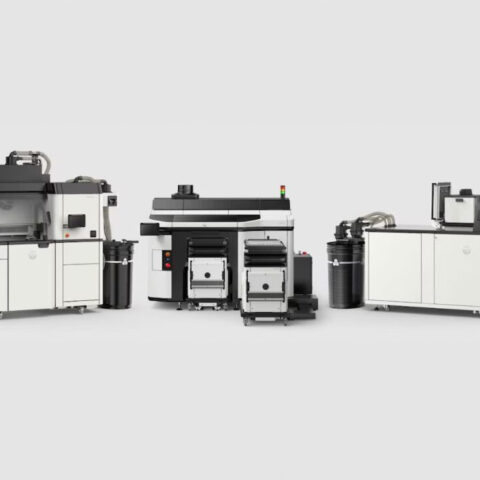
HP Jet Fusion 5600 Series from HP Additive Manufacturing Solutions.
Temperature stability is critical when processing engineering-grade materials. Enclosed, actively heated build chambers minimize thermal distortion and improve inter-layer bonding for high-performance thermoplastics like Nylon, PEKK, PEEK, and ULTEM, ensuring dimensional accuracy and repeatable mechanical properties across production batches.
UAV assemblies require a mix of rigid structural elements, flexible seals, and specific electrical properties. Multi-material systems combine rigid, flexible, or conductive materials within a single continuous workflow, simplifying assembly and enabling advanced component designs.
Integrating continuous carbon fiber, fiberglass, or Kevlar directly into thermoplastics during the print process dramatically increases component stiffness and strength while maintaining low weight. This capability makes these systems highly effective as a 3D printer for drone parts like wing spars, motor mounts, and primary structural enclosures.
Moving from prototyping to full production requires consistent material management. Industrial systems incorporate automated powder handling, filament loading, and integrated drying units to reduce operator intervention, safeguard material purity, and maintain process control.
Humidity and temperature fluctuations affect print quality, especially when processing aerospace-grade materials. Environmental controls maintain stable conditions inside the machine, which is essential for achieving the repeatable mechanical performance needed for flight certification.
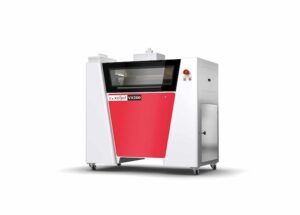
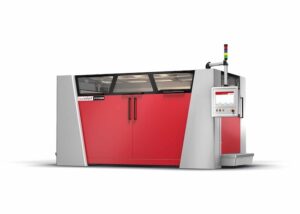
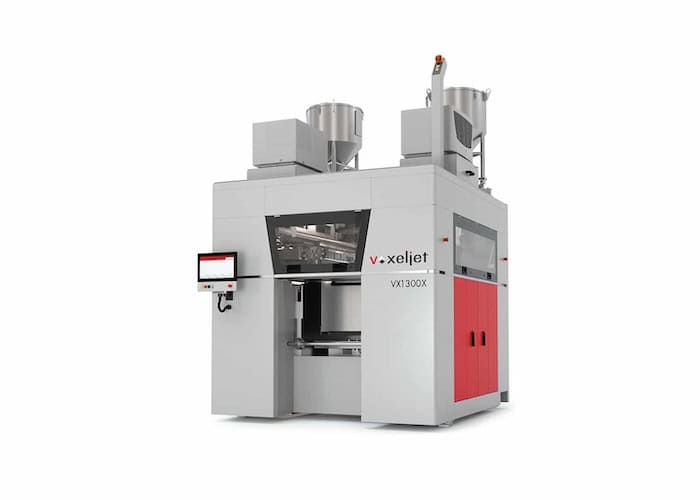
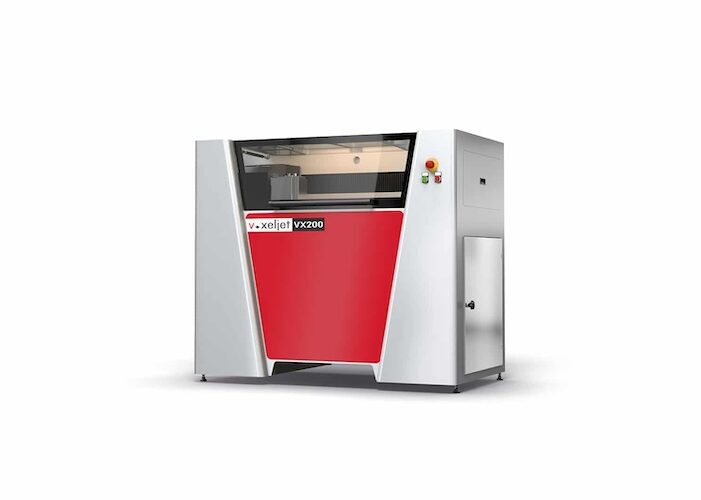
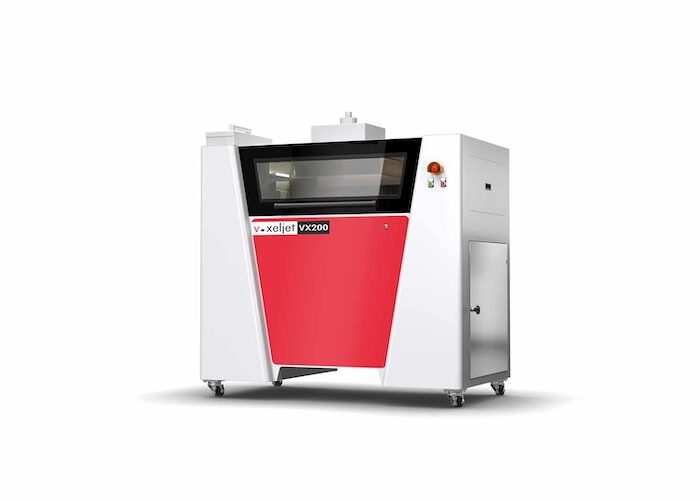
VX200 HSS from voxeljet.
FDM and FFF systems are widely adopted in 3D printing for drones. These printers extrude thermoplastic filament layer by layer, offering a cost-effective method for rapid prototyping, tooling, and manufacturing functional components out of carbon-fiber-reinforced polymers and high-temperature plastics.
SLS uses a laser to fuse polymer powder into functional parts. Because the surrounding un-sintered powder acts as a natural support matrix, it eliminates the need for support structures, allowing for highly complex internal geometries. SLS parts exhibit highly uniform mechanical properties in multiple directions, making them a preferred choice for production-grade UAV airframes and electronics enclosures.
MJF applies fusing and detailing agents to a powder bed before thermal consolidation. This process provides high production throughput and strong isotropic mechanical properties, making it an excellent match for low-to-medium volume production runs where consistency is important.
SLA and DLP systems use light to cure photopolymer resins, delivering exceptional surface finish and precise dimensional accuracy. Drone manufacturers use these methods for detailed sensor housings, electronics enclosures, and aerodynamic test models.
These dedicated systems embed continuous fibers along specific stress lines within a thermoplastic matrix. The resulting strength-to-weight ratios make them ideal for structural components that traditionally required labor-intensive manual composite layups or expensive CNC milling.
For propulsion and high-stress environments, metal systems use aerospace-grade alloys.
These systems are widely used to manufacture propulsion components, complex heat exchangers, and heavy-duty structural brackets.
R&D teams use a 3D printer for UAV development to accelerate concept verification. Engineers can quickly evaluate aerodynamic designs and payload configurations without long tooling lead times, compressing development schedules.
For emerging companies, additive manufacturing provides low-volume production capabilities without heavy capital investment in tooling or production infrastructure, letting teams iterate designs rapidly on tighter budgets.
Established manufacturers integrate 3D printers for rapid drone part production directly into factory workflows. Industrial systems support prototyping, custom assembly fixtures, and end-use component fabrication while reducing lead times across programs.
Military organizations use additive systems to accelerate platform development, support mission-specific customization, and improve supply chain resilience. This reduces dependence on traditional logistics networks during changing operational requirements.
Ruggedized, portable systems allow maintenance personnel to manufacture replacement components close to the point of need. Placing production capabilities close to operational forces reduces logistical burdens and improves mission readiness in contested environments.
3D printers for drones enable the fabrication of a wide range of critical UAV parts, optimizing them for strength, weight, and operational efficiency.
Joint ASTM and ISO standards govern terminology, material testing, and process qualification, providing the baseline frameworks required for consistent manufacturing across the supply chain.
To achieve flight certification, drone manufacturers must demonstrate strict process control and repeatability. This involves comprehensive material validation, non-destructive inspection like micro-CT scanning, and documented quality procedures.
Material traceability is vital for defense and commercial drone programs. Organizations must document the sourcing and processing history of critical components. For defense applications, manufacturers may need to demonstrate compliance with National Defense Authorization Act (NDAA) sourcing requirements for materials, components, and supply chains.


 Searching Companies & Products