


Tilak.io highlights how simulation and digital twin environments can support the development and validation of unmanned systems, enabling engineers to assess Unmanned Aerial Vehicle (UAV) behavior, validate payloads, and examine complex operational procedures before physical deployment.
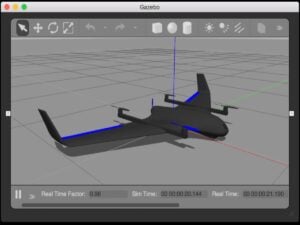 The company outlines the importance of combining mission-specific simulation environments with an understanding of modeling limitations to support effective testing throughout the robotics development lifecycle.
Integrating Simulation into UAV Development
Simulation forms a core part of Tilak.io’s engineering projects, supporting activities from early-stage development through to mission validation, certification support, and accreditation processes.
Automated test scenarios support certification and accreditation activities, while tailored environments allow unmanned platforms and payloads to be evaluated under controlled, mission-specific conditions.
These environments can also model non-standard operational concepts, including custom UAV launch systems involving ramp-based deployments and air-dropped releases.
Through sustained project experience, Tilak.io has developed the technical tooling and applied knowledge to simulate complex UAV behaviors. Modeling these procedures allows system behavior to be examined under controlled, representative conditions.
Understanding Simulation Fidelity and Its Limitations
The reliability of simulation results depends on the accuracy of underlying models, available data, and the assumptions used to represent physical behavior.
Airframe PID controller tuning illustrates these limitations. Tuning these controllers requires detailed aerodynamic modeling, with the necessary accuracy often depending on computational fluid dynamics processes. These can be resource-intensive and may exceed the capabilities of general-purpose simulation platforms.
Even with detailed models, differences between simulated and real-world performance can remain.
Recognizing these constraints is central to Tilak.io’s approach. Understanding where simulation results are reliable, and where limitations exist, informs how virtual testing is interpreted and integrated into broader testing strategies.
Customizing Gazebo for Mission-Specific Testing
General-purpose simulation platforms provide a foundation for robotics testing, but individual projects may require modifications to environmental representations and vehicle dynamics.
Tilak.io customizes Gazebo environments to meet these requirements, working across the full simulation stack to address specific technical objectives.
One application involves integrating satellite imagery tiles to support the development of vision-based navigation algorithms in GNSS-denied conditions.
For fixed-wing UAV applications, aerodynamic parameters are also modified to better approximate real-world flight dynamics. This includes adjusting coefficients and modeled behaviors to support control system research and validation, as well as the development of control laws and system responses.
These modifications allow simulation environments to be configured around specific engineering requirements rather than relying exclusively on default or generalized models.
Reducing Physical Flight Testing Through Simulation
Although simulation provides opportunities to evaluate unmanned systems before deployment, it does not replace physical flight testing.
Instead, targeted virtual testing can help reduce the scope and frequency of flight trials by identifying potential issues earlier in development.
Well-constructed simulation environments support iterative testing and refinement before hardware deployment, helping to minimize risk and improve development efficiency.
This targeted approach can streamline validation workflows while maintaining confidence in system performance, with physical testing remaining an essential part of the wider development process.
Reusable Test Libraries and Non-Regression Testing
Simulation environments can also support ongoing software validation through reusable test scenarios.
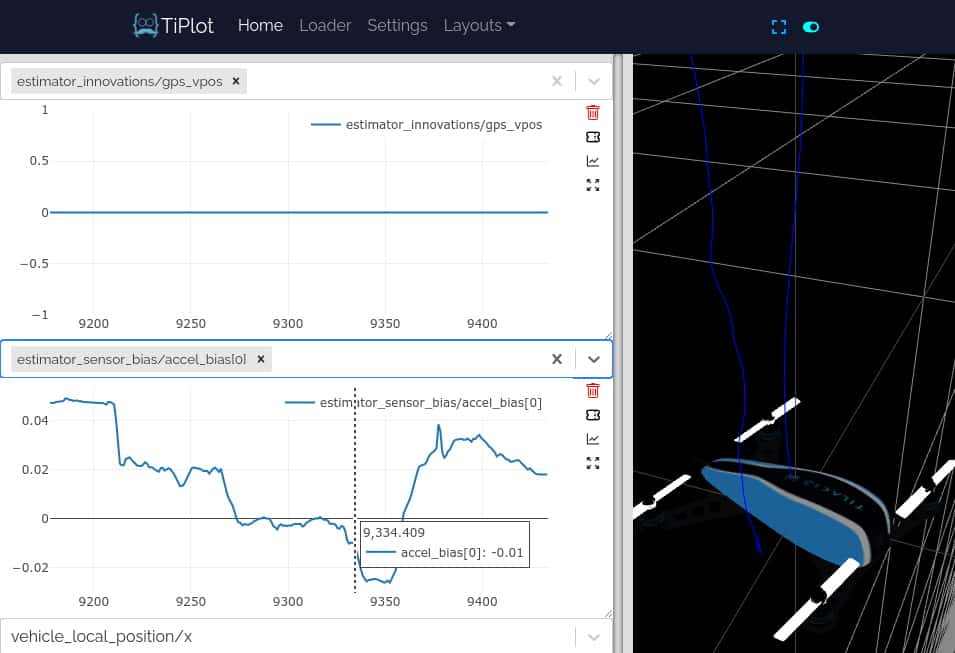
As part of its project work, Tilak.io retains simulation scenarios within a growing library of test cases, including edge conditions and complex mission profiles that can be re-executed as software evolves.
These libraries support non-regression testing, allowing new features and software updates to be evaluated against previously established scenarios.
By repeating tests across successive development cycles, engineers can assess whether existing functionality remains stable as changes are introduced.
The accumulation of reusable scenarios provides a consistent basis for evaluating system behavior and contributes to more robust and reliable performance over time.
Combining Virtual and Real-World Validation
Effective simulation requires an understanding of both the capabilities and limitations of the models being used. Its reliability depends on the accuracy of underlying assumptions and data, alongside the suitability of simulation environments for specific project requirements.
Tilak.io’s work encompasses customized Gazebo environments, modifications to aerodynamic parameters in fixed-wing simulation models, vision-based navigation development in GNSS-denied conditions, automated testing, and the simulation of unconventional UAV launch procedures.
Combined with reusable test libraries, these methods provide a structured approach to evaluating unmanned platforms and payloads throughout development, supporting targeted physical testing and repeatable validation without treating simulation as a substitute for real-world verification.