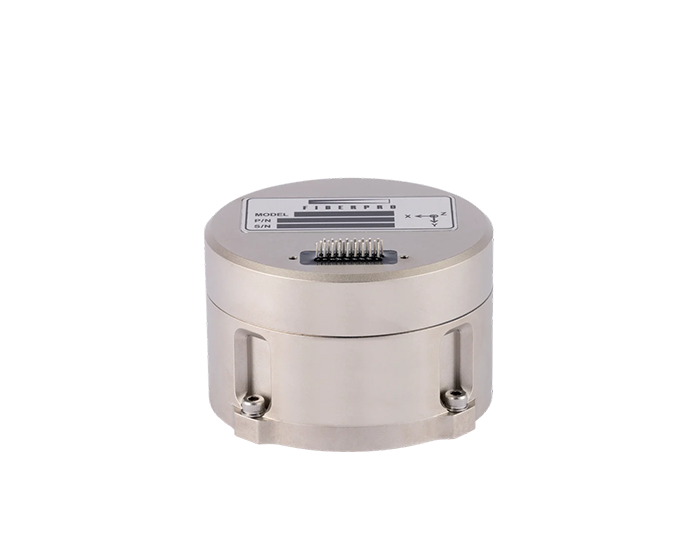
Inertial Measurement Units (IMU)
Discover cutting-edge solutions from 17 leading global suppliers
Aeron Systems is examining one of the persistent challenges in inertial navigation: maintaining position accuracy when GNSS is unavailable and accumulated sensor error begins to degrade the navigation solution.
Satellite positioning remains a valuable source of navigation data wherever visibility to the sky is available, but that dependence becomes a limitation in tunnels, dense urban areas, underground facilities, complex road infrastructure, or environments affected by deliberate GNSS jamming. When satellite updates disappear, the inertial solution must continue independently, and small errors within the gyroscopes and accelerometers begin to accumulate.
For MEMS-based inertial systems, this drift can become significant over relatively short periods. Higher-grade technologies such as fiber-optic gyroscopes and ring-laser assemblies can provide substantially lower drift, but they also bring greater cost, weight, power requirements, and, in some cases, export-control considerations.
Aeron Systems’ DriftLoc™ algorithm approaches the problem from the software side, using real-time estimation to identify changing sensor errors and constrain the resulting position drift rather than relying entirely on more expensive inertial hardware.
Extracting More Information from Vehicle Motion
DriftLoc™ is designed to operate with a single commodity IMU, a modest embedded processor, and a physics-based kinematic model. Rather than accepting the raw inertial measurements at face value, the algorithm continually evaluates how much confidence should be assigned to the available information at each moment.
The system also makes use of behavior inherent to the moving platform. Actions such as slowing, stopping, cornering, remaining stationary, and settling contain information about motion and orientation that may otherwise be discarded by an inertial solution focused only on accelerometer and gyroscope outputs.
DriftLoc™ compares these motion characteristics with the sensor measurements as they occur. The objective is to identify developing inconsistencies early and correct them before they compound into larger navigation errors.
According to Aeron Systems, the process operates in real time using Bayesian estimation and statistical signal-processing techniques to establish mathematical correlations between the platform’s motion and the inertial data.
Aeron Systems also presents DriftLoc™ as operating without GNSS, an odometer, perception sensors, or post-processing, with the system relying on initial coordinates and the INS in pure inertial mode.
Testing DriftLoc™ with the PLX3-N
Aeron Systems tested the algorithm using its compact MEMS-based PLX3-N inertial navigation system installed in a van.
The INS was mounted without a GNSS antenna and allowed 30 seconds in a stationary condition following power-up for alignment. Initial coordinates were then entered through the user interface, using coordinates from a separate GNSS-aided onboard reference system installed for comparison.
From that point, the PLX3-N generated its position in real time using the inertial solution produced with DriftLoc™.
The reported test data extends to 31.4 km of travel and 86.84 minutes of elapsed time. At 31.4 km, the recorded position error was 254.61 meters, equivalent to a 0.81% distance-traveled error.
The error did not increase continuously throughout the test. It varied over both distance and elapsed time, reaching higher values at intermediate points before reducing again by the end of the recorded data. The largest time-based error listed in the results was 363.29 meters at 70 minutes.
The complete distance-traveled and drift-over-time results can remain in Aeron Systems’ original technical article, allowing this feature to focus on the navigation problem, the algorithmic approach, and the vehicle test without reproducing the full datasets.
A Software-Led Approach to Inertial Drift
The test illustrates a different way of approaching GNSS-denied navigation with MEMS hardware. Instead of seeking performance primarily through higher-grade sensors, DriftLoc™ is intended to extract more accurate positioning from MEMS-based inertial measurements through continuous error estimation and the use of platform kinematics.
The approach is intended to constrain accumulated inertial error during periods without GNSS while retaining a MEMS-based hardware configuration.
Visit the Aeron System’s website for more information on DriftLoc™.