



Review Display Systems (RDS) discusses how it approaches the development of customised systems for demanding applications, from defining requirements and prototyping through to production and long-term support. In this Q&A, the company explains how its engineering expertise helps customers overcome complex challenges across unmanned, defence and marine environments.
1. When a customer comes to RDS with a requirement that cannot be met by an off-the-shelf product, how do you approach developing a customised solution from the initial concept through to a production-ready system?
The process starts with understanding the application rather than simply selecting a product. We look at what the equipment needs to do, where it will operate, the environmental conditions it will be exposed to, the interfaces required and any relevant compliance requirements.
From there, we work with the customer to define the system requirements and identify which elements can be based on proven technologies and where genuine customisation is needed. Depending on the application, this can involve selecting or modifying a display, integrating embedded computing, developing a custom electronics solution, designing an enclosure or bringing together connectivity and control elements.
Prototyping and engineering evaluation then allow the solution to be refined before moving into production. Throughout the process, we work closely with the customer to incorporate feedback and address any technical challenges early, with the aim of delivering a solution that is not only suitable for the initial application but is practical to manufacture and support over its intended lifetime.
2. What are some of the most common requirements that drive customers toward a customised solution, particularly when equipment needs to operate in demanding unmanned, defence, or marine environments?
Customisation is often driven by a combination of environmental, mechanical and functional requirements that cannot easily be accommodated by a standard product.
For example, equipment may need to operate across a wide temperature range, withstand shock and vibration, resist water or dust ingress, or remain reliable in challenging marine or defence environments. Customers may also require specific display sizes, brightness levels, viewing angles, touch functionality or optical performance.
There can also be application-specific requirements around embedded processing, communications, power, connectivity, mounting or enclosure design. In unmanned systems particularly, size, weight, power consumption and reliability can all be important considerations.
Rather than treating these requirements individually, RDS looks at how they interact within the complete system and develops the solution around the customer’s application.
3. How far can RDS take customisation beyond the display itself, and how do you bring together elements such as embedded computing, controls, enclosures, connectivity and software into a complete system?
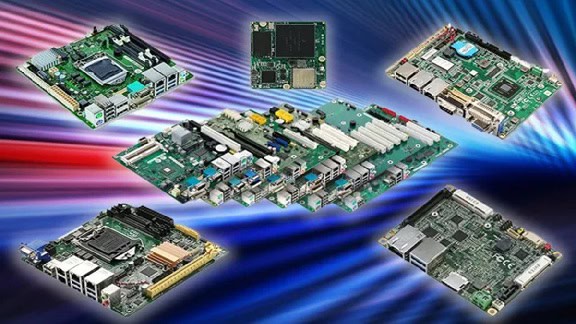
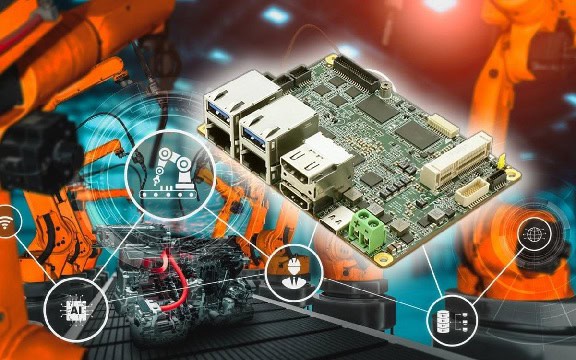
The display is often just one part of the overall human-machine interface. RDS can support customers across a wider range of system elements, including displays and touchscreens, embedded computing, custom electronics, connectivity and mechanical integration.

RDS display solutions.
This can include selecting an appropriate embedded platform, integrating the display and touch interface, developing the electronics required to connect the different elements and considering how everything is packaged within the final enclosure.
Software and operating-system requirements can also form part of the wider system specification, particularly where embedded computing is involved. The benefit of taking this broader approach is that the different elements are considered together rather than being developed as completely separate components.
Where appropriate, RDS can also draw on the wider capabilities of the GTK/Volex group, giving customers access to complementary manufacturing and interconnect capabilities.
4. How do prototyping, testing and customer feedback influence the development of a bespoke system, especially where the final solution must meet demanding environmental or compliance requirements?
Prototyping provides an opportunity to evaluate the solution in the context of the customer’s actual application before committing to production. It allows us to assess factors such as mechanical integration, usability, display performance, connectivity and the interaction between different system components.
Testing is particularly important where equipment needs to operate in demanding environments. Requirements around temperature, shock, vibration, water or dust ingress and electromagnetic compatibility can influence the design from the outset rather than being considered only at the end of development.
Customer feedback is also an important part of the process. A prototype may identify practical considerations that are difficult to establish from a specification alone, so working through these findings with the customer allows the design to be refined before production.
The objective is to move from a working concept to a solution that has been properly considered for its intended operating environment and compliance requirements.
5. For platforms that may remain in service for many years, how do you design customised solutions with long-term availability, component obsolescence and future upgrades in mind?
Long-term support needs to be considered from the beginning of a project, particularly for equipment expected to remain in service for many years.
Where possible, we look at component availability and product lifecycles when selecting the underlying technology. This can influence the choice of display, processor, embedded platform and other critical components.
Designing with future changes in mind can also make upgrades more manageable. A modular approach can allow individual elements to be updated without requiring a complete redesign of the system.
Where a component does become obsolete, having a clear understanding of the system architecture and its interfaces can help identify suitable alternatives and minimise the impact on the wider product.
For customers operating long-life platforms, the objective is therefore not simply to deliver a solution that works today, but to consider how that solution can be supported and evolved over its operational lifetime.
6. Can you give an example of a challenging customer requirement where customisation allowed RDS to solve a problem that a standard product could not, and what were the key engineering decisions behind the final solution?
A strong example was a defence marine customer that needed a portable ground control station for uncrewed surface vehicles. A standard industrial PC could not accommodate its proprietary safety systems, specialist communications, large touchscreen and rugged marine requirements while remaining lightweight and portable.
RDS engineered a customised all-in-one solution using a 21.5-inch PCAP touchscreen, high-performance SBC, robust networking, IP-rated controls and a military-grade keyboard. Carbon fibre was selected to reduce weight without compromising strength, while the mechanical design and thermal management were engineered for demanding defence and marine conditions. Functional prototypes were delivered in under 12 weeks, enabling the customer to move rapidly towards volume production.