

For an unmanned system operator, the display is one of the primary interfaces between human decision-making and the vehicle. Live sensor imagery, navigation information, system health data and control functions may all need to remain accessible through the same human-machine interface, often while the operator is working outdoors or from a mobile ground control station. This makes display selection more than a choice of screen size, resolution or brightness.
For UAVs, UGVs, USVs and other robotic platforms, the display must be considered as part of the wider control system. Environmental exposure, mechanical integration, touchscreen operation, optical performance and long-term component availability can all influence whether the interface continues to perform throughout the operational life of the system.
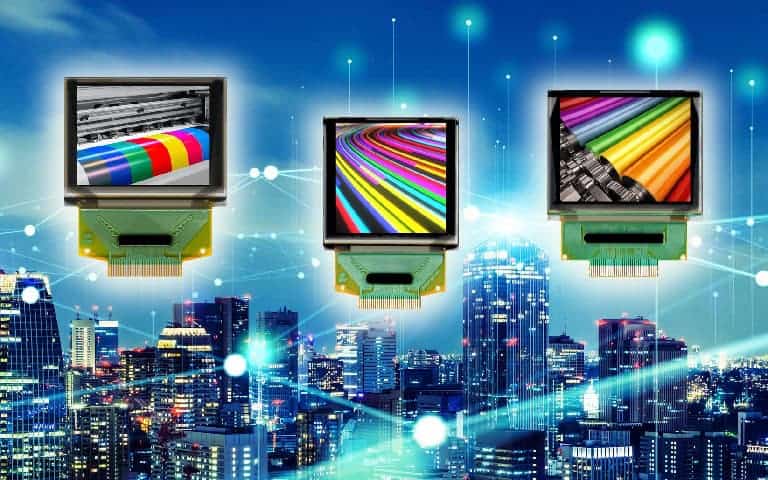
Review Display Systems (RDS) supplies rugged displays and custom HMI solutions for applications including UAV and robotic vehicle ground control stations and handheld controllers, with TFT, OLED, touchscreen and mechanically customized configurations available.
Designing Around the Operating Environment
Commercial displays are typically designed for relatively controlled environments. An unmanned system control interface may experience a very different operating profile.
Depending on the application, equipment can be exposed to wide temperature variations, mechanical shock and continuous vibration, moisture, dust, direct sunlight and repeated handling or transportation. These conditions need to be considered at system level rather than treated as individual specification-box exercises.
Temperature, for example, affects both the display itself and the way the complete enclosure is designed. Thermal management must be considered alongside sealing and mechanical protection so that improving resistance to one environmental condition does not create problems elsewhere.
Similarly, vibration is not simply a question of whether the display panel can survive a specified level of movement. Mounting arrangements, connectors, surrounding metalwork and the complete assembly all contribute to the durability of the finished HMI.
Water or dust entering an enclosure can lead to electrical failures, while mechanical impacts can damage the glass structures within a display. Prolonged UV exposure can also degrade readability if suitable materials and treatments have not been selected.
Ruggedization therefore needs to begin with the intended operating environment and the complete system architecture.
RDS offers display and enclosure configurations designed around environmental requirements including IP sealing, thermal management, shock mounting and protection against environmental and electromagnetic stresses. Many of its display and enclosure solutions are designed to meet requirements associated with MIL-STD-810, MIL-STD-461 and IP65/IP68 protection.
Readability is an Operational Requirement
Surviving the environment is only part of the problem. The information displayed must also remain usable.
An operator may need to interpret imagery or vehicle information in bright outdoor conditions, meaning a display that performs well indoors may be unsuitable for a field-deployed control station. Several elements can be adapted to address this.
Display technology and backlighting influence visibility, while the cover glass, coatings and optical construction can be selected according to the operating environment. Optical bonding and specialist coatings can also form part of the display configuration where improved optical performance or greater mechanical resilience is required.
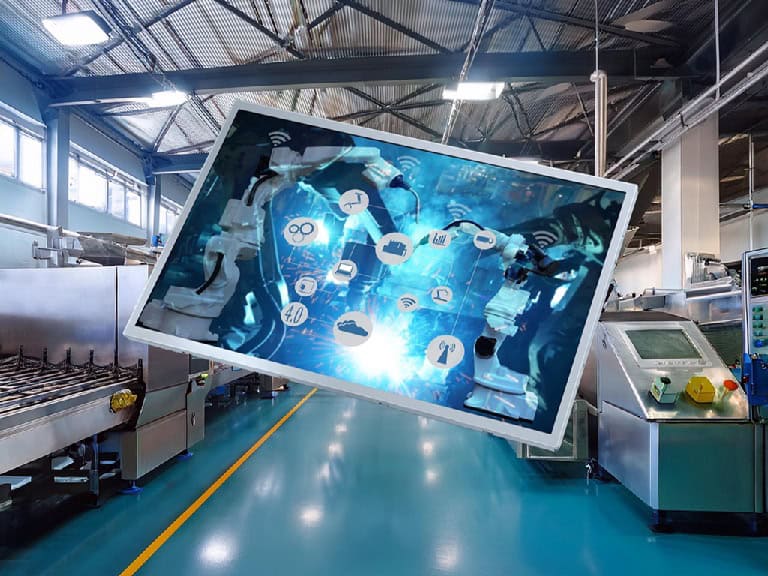
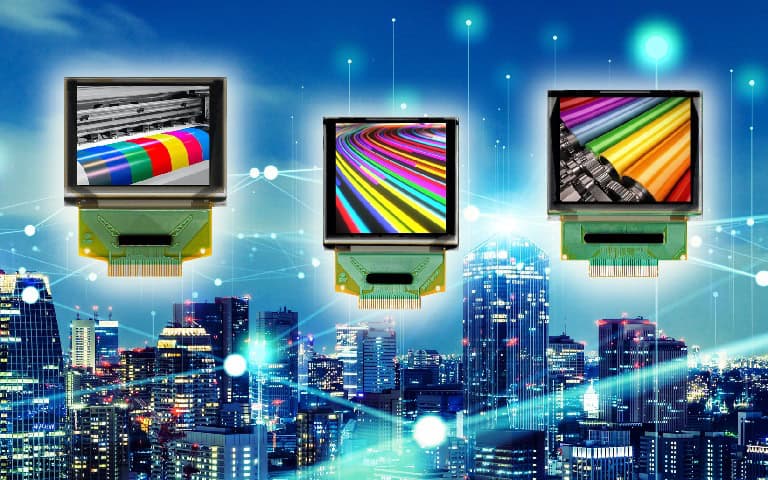
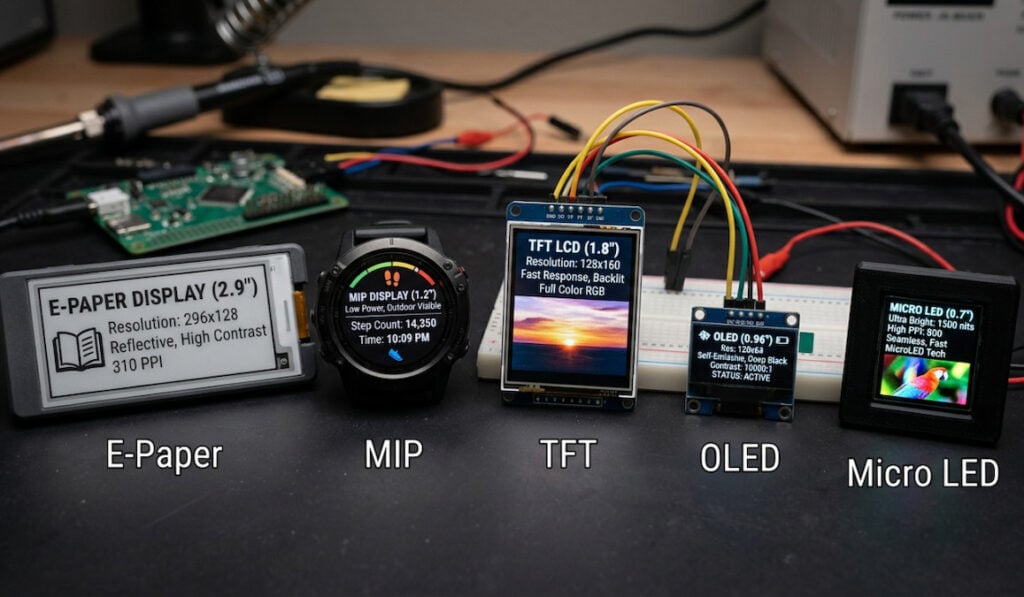
RDS offers TFT LCD solutions ranging from 0.96 to 32 inches and resolutions from 320 × 240 through to 4K, alongside OLED displays ranging from compact character displays to 32-inch 4K models. Special formats including square, round, ultra-wide and other non-standard geometries are also available.
This range is particularly relevant to unmanned systems because there is no single ground-control architecture. A compact handheld controller places very different constraints on its display than a transportable control station or larger multi-screen operator console.
The engineering requirement should therefore determine the display architecture rather than forcing the HMI around an available commercial panel.
Touchscreen Design Needs to Reflect How the System Will Be Used
Touch functionality creates another layer of integration considerations.
 A touchscreen that performs correctly in a controlled environment may not necessarily provide the required interaction when incorporated into field equipment. Operators may be wearing gloves, the screen may be wet or contaminated, and control inputs may need to remain reliable despite the physical conditions surrounding the system.
Different touchscreen technologies can therefore be appropriate for different use cases.
RDS supports projected capacitive (PCAP), resistive and infrared touch technologies as well as customized solutions designed around particular glove types and operating conditions. Touch panels can also be integrated with custom cover glass, controllers and firmware.
For the system designer, this means touchscreen selection should take place alongside the design of the wider HMI rather than being added after the display itself has been selected.
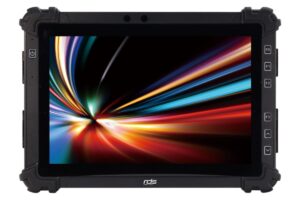
Physical controls may also remain important. RDS provides rugged tablets, keyboards, joysticks and pointing-device solutions alongside its displays, allowing the operator interface to be developed around the requirements of the complete control system.
Mechanical Integration Can Determine Reliability
One of the limitations of selecting a standard display purely from a datasheet is that the panel still has to become part of a finished product. That requires decisions around mounting, connector positioning, protection, enclosure design, thermal management and access to surrounding electronics.
Standard display components can be modified with stronger cover glass, optical treatments and additional mechanical protection. Where a standard configuration cannot meet the requirement, a more extensively customized solution can incorporate bespoke metalwork, mounting arrangements, connectors, sealing and touch interfaces.
This can be particularly valuable in unmanned-system ground equipment, where space is often tightly constrained and displays may need to integrate with embedded computing, power systems, joysticks, keyboards and vehicle-specific control electronics.
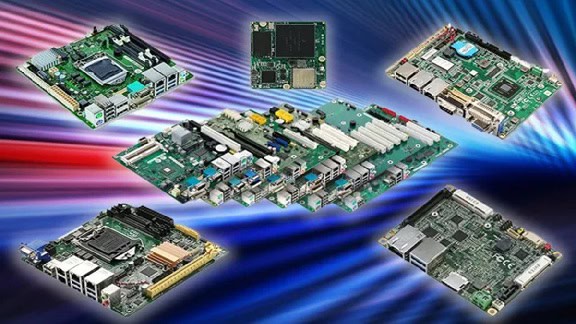
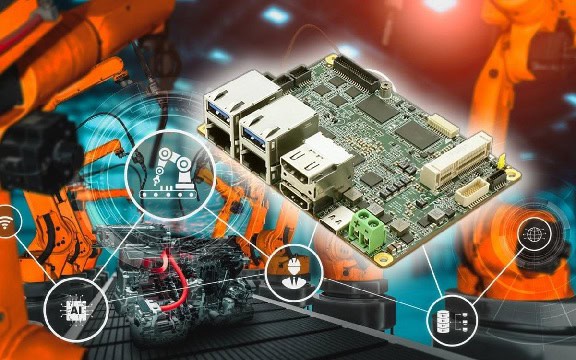
RDS provides bespoke metalwork and mechanical integration for its display solutions, including IP sealing, thermal management, custom housings and EMI shielding depending on the technology and application. The company also provides embedded computing and custom cable and interconnect solutions, enabling the display and HMI to be considered as part of a wider integrated control architecture.
Long-Term Availability Matters as Much as Initial Specification
Environmental performance is not the only consideration for an unmanned-system program. Component lifecycle can become equally important.
 Selecting a display primarily because of its initial purchase price can create problems if the panel has a short production life, inconsistent quality or inadequate technical support. If the component then becomes unavailable, replacing it may involve far more than substituting one screen for another.
Mechanical dimensions, connectors, driver electronics, touch interfaces and enclosure designs may all have been developed around the original display.
For programs expected to remain in production or service for extended periods, long-term availability and obsolescence planning should therefore be part of the selection process from the beginning.
RDS states that it selects panels with long production lives and supports customers with supply-chain management and obsolescence planning as part of its engineering and manufacturing services.
Specifying the Display Around the Mission
The central question for engineers should therefore not be simply, “which rugged display meets the specification?” It should be, “what does the operator need this interface to do, and under what conditions must it continue doing it?”
A display used in a portable UAV controller, vehicle-mounted UGV station or marine USV control system may encounter very different combinations of sunlight, vibration, moisture, temperature, physical handling and operator interaction.
Screen technology, brightness, cover glass, touch functionality, environmental protection, mechanical design, connectivity and lifecycle availability should consequently be evaluated as interconnected elements of the same HMI.
By defining these requirements around the application rather than starting with panel price or an off-the-shelf display specification, engineers can develop operator interfaces that are better aligned with the environmental, mechanical and lifecycle demands of deployed unmanned systems.