
Unmanned aerial vehicles (UAVs) continue to push the boundaries of performance, endurance, and operational capability. At the core of these advancements are the propellers that enable aircraft to fly longer, carry more payload, and operate more quietly. Flyber, a UK-based company, is applying advanced composite engineering to redefine propeller performance for UAVs and the emerging urban air mobility (UAM) sector.
We spoke with Rowan Carstensen, CEO and co-founder of Flyber, to learn how the company is leveraging its expertise in motorsport and aerospace engineering to deliver high-performance, UK-manufactured carbon-fiber propellers. Rowan discussed Flyber’s product innovation, secure manufacturing capabilities, and its expanding role in both commercial and defense unmanned aviation.

Rowan Carstensen, CEO and co-founder of Flyber
Rowan, can you explain what Flyber does in practical terms?
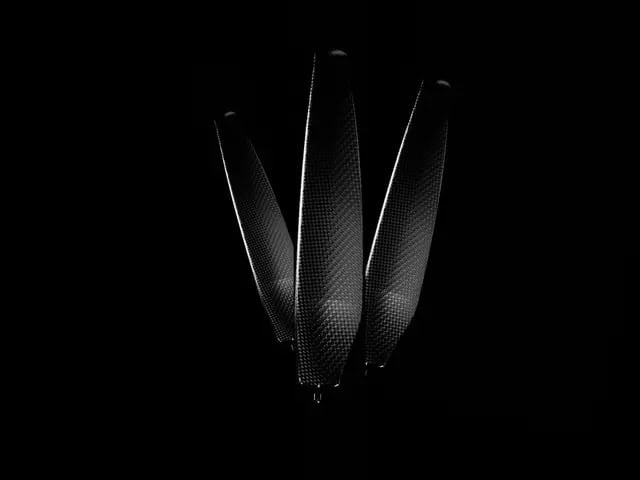
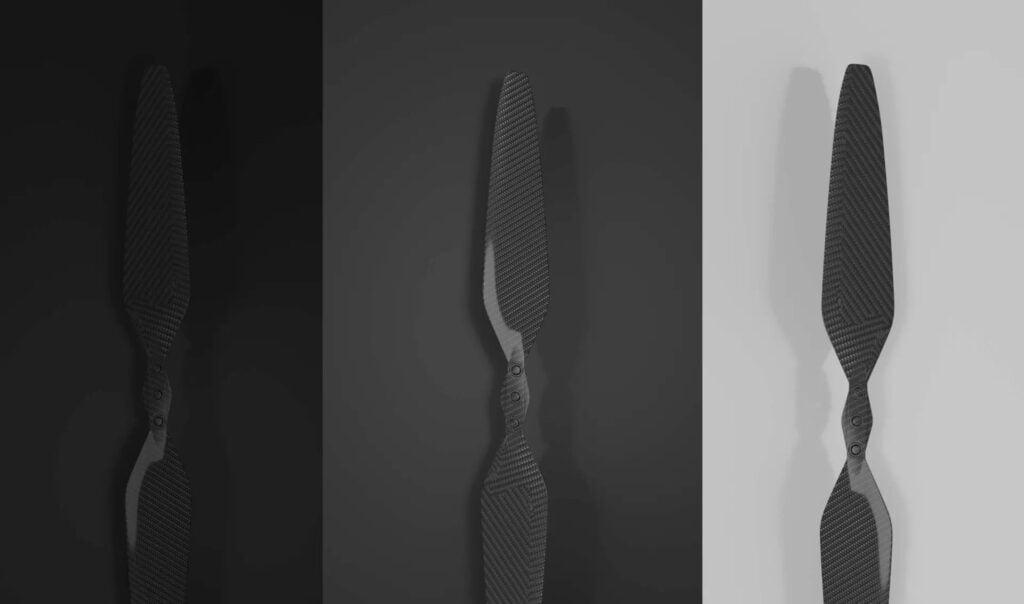
At Flyber, we design, engineer, and manufacture propellers for UAVs, supporting both commercial and defense applications. Our portfolio includes ready-to-ship UAV propellers as well as custom rotor blades for UAM projects. Each product is built from advanced carbon-fiber composites, optimized for stiffness, strength, thrust efficiency, and reduced acoustic footprint.
What makes your propellers different from off-the-shelf alternatives?
Flyber’s propellers are developed using proprietary manufacturing methods combined with engineering precision. Unlike generic off-the-shelf products, our blades deliver better performance in thrust-to-mass ratio, reduced noise, and improved durability, and are engineered for scalability and regulatory compliance to allow for an easy switch for our customers from current suppliers, often situated in high-risk geopolitical areas.
Who are Flyber’s main customers?
We serve diverse use cases across defense and commercial applications. This includes military UAVs, logistics drones, surveillance platforms, and UAM systems like air taxis. Our off-the-shelf props suit mission-critical needs, while our bespoke capabilities support bespoke mission profiles—e.g. ISR, heavy payload lifting, or acoustic stealth.
Can you walk us through Flyber’s engineering process?
Our in-house team manages the entire workflow:
- Design: Aerospace-grade CAD with design-for-manufacturing principles, ensuring agreed performance targets are achieved.
- Simulation: CFD, load modeling, and real-flight data where available.
- Testing: Plans are underway to expand in-house test capabilities.
- Manufacturing: Quality-controlled automation ensures traceability, repeatability, and favorable unit economics.
All Flyber products are produced in the UK, offering secure supply chains and fast lead times.
How does your automotive and motorsport background influence the company?
My experience taught me the importance of weight optimization and manufacturing precision. At Flyber, that translates to designing propellers where every gram matters, but also ensuring they’re production-ready and mission reliable. It’s about bridging high-performance engineering with scalable manufacturing and offering tailored, best-in-class service to our customers.
How does Flyber support sustainability goals?
Our composite propellers reduce aircraft weight and improve efficiency, enabling longer flight times and lower energy consumption. Additionally, our UK-based production minimizes geopolitical risks and reduces waste across the supply chain. We are working on some ‘secret’ sustainability initiatives we can hopefully share with you soon.
What certifications and quality protocols do you follow?
All products undergo rigorous testing to meet aerospace, defense, and civil aviation standards. Flyber is actively pursuing ISO 9001 and Cyber Essentials certification to reinforce its commitment to quality and security.
How does Flyber balance innovation with manufacturability at scale?
Our mission is grounded in scalable innovation, we only develop designs that can be mass-produced reliably, but our team’s knowledge and internal IP, mean we can do so with incredibly complex shapes to make no compromise on aircraft and propeller performance. Our proprietary automation, digital QA, and tooling systems ensure high volumes without compromising precision or schedule flexibility.
What’s next for Flyber in the upcoming year?
We’re expanding our pilot programs with strategic partners, boosting production capacity, growing our engineering team and preparing to commercialize fully both off-the-shelf and bespoke propeller lines. Whether you’re deploying UAV fleets or designing UAM systems, we’re ready to support disruptive mission profiles with scalable precision.
Final Thoughts
With a clear focus on scalable innovation, Flyber is committed to delivering precision-engineered propellers that enhance UAV performance across defense and commercial markets. By combining UK-based manufacturing with advanced composite expertise, Flyber is positioning itself at the forefront of the unmanned aviation sector.
Thank you for your time, Rowan. It’s a pleasure to hear how Flyber is advancing UAV propeller technology, and we look forward to sharing more updates on your innovations in unmanned flight.