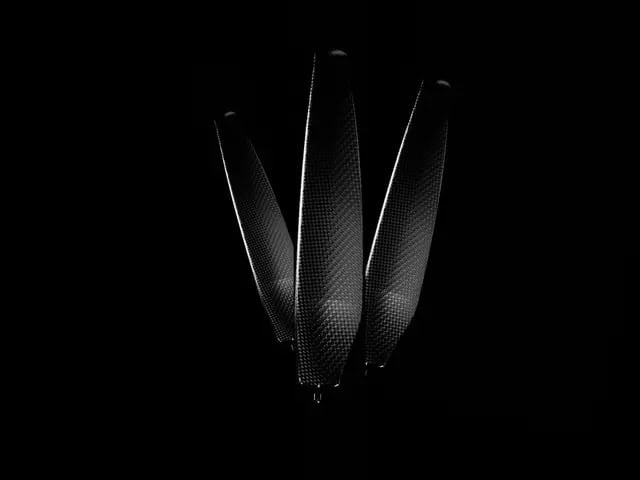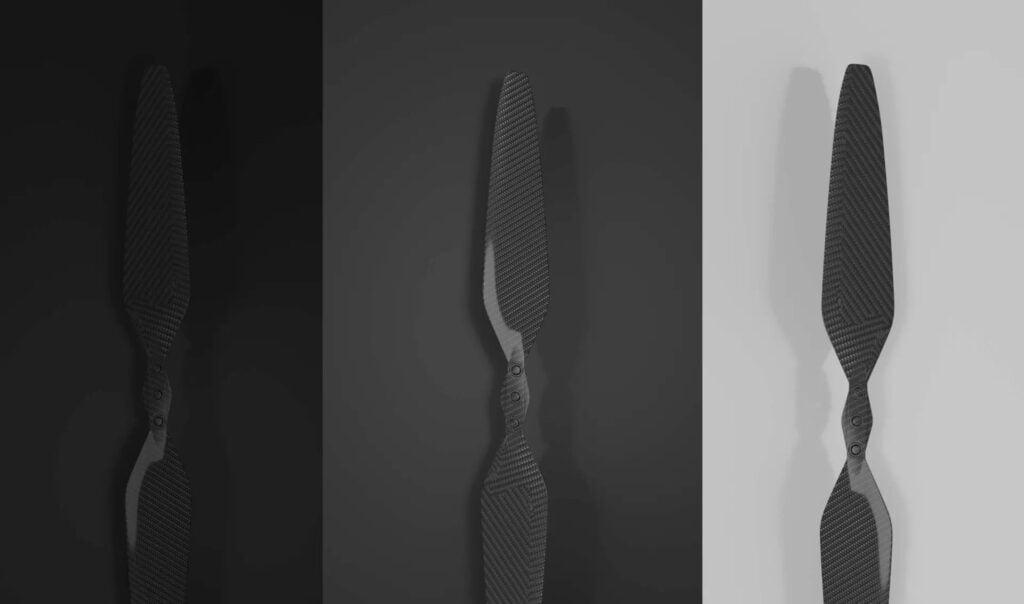
Flyber, a developer of custom-engineered UAV propeller solutions, has successfully delivered its first optimized composite rotor blade prototype for electric and hybrid UAV platforms, advancing air mobility solutions and drone performance.

The blades were developed using high-pressure resin transfer moulding and precise fibre alignment techniques, delivering a uniform structure that outperforms traditional layups.
This prototype combines structural efficiency, reduced weight, and enhanced aerodynamics, making it lighter and more capable in flight. It is designed to generate more lift per watt of power, resulting in longer flight times and quieter field operation.
Flyber collaborated closely with industry partners during the prototyping phase, to incorporate real-world UAV operating requirements into the design. Tight feedback loops allowed the team to fine-tune the blade’s twist profile, edge geometry, and core materials for optimal performance in real-world conditions.
The prototype’s delivery was accompanied by extensive internal vibration and fatigue testing, simulating demanding flight cycles. Early results are promising, demonstrating improved acoustic performance and a measurable increase in efficiency across standard mission profiles.
Rowan Carstensen, Co-founder & CEO of Flyber, stated, “This wasn’t just a delivery milestone – it was proof that our composite expertise can move from concept to real-world application fast. We’re shaping what next-gen flight will feel like.”
Flyber itself emphasizes speed and precision. The company’s vertically integrated model means it can move from concept and CAD to physical blades in weeks rather than months, a capability invaluable for aerospace partners requiring rapid iteration and validation.
Flyber’s Milton Keynes facility handled every stage of the prototype development in-house, including tooling, moulding, quality control, and performance validation.
The delivery of the prototype represents a foundational step. With the first units now in the air, Flyber is scaling up for low-rate production while continuing to validate the blades across various flight regimes and load profiles.
Flyber’s overall goal is to produce blades that don’t just perform well on paper, but deliver reliable, repeatable performance in the sky.